Why Dzibilchantún National Park stands out
Dzibilchantún National Park is best known for the Temple of the Seven Dolls, one of the most recognizable Maya structures in Yucatán, which creates a notable archaeoastronomical phenomenon during the spring and autumn equinoxes when sunlight passes through its doorways. The park is also famous for Cenote Xlacah, one of the few cenotes where visitors can still swim, and for containing one of the densest concentrations of stelae (carved stone monuments) in the Maya world. The site preserves a 16th-century Spanish colonial open chapel built atop the ancient Maya plaza, representing the layered cultural history of the Yucatán Peninsula.
Dzibilchantún National Park history and protected-area timeline
The history of Dzibilchaltún spans over three thousand years of continuous human occupation, beginning in the Preclassic period around 600 BC and continuing through the Classic and Postclassic periods until approximately 1100 AD. The city's golden age occurred during the Late Classic period between 800 and 1000 AD, when it dominated a significant portion of the northwestern Yucatán Peninsula and served as a major regional center with a population exceeding 25,000 inhabitants.
Following the Spanish conquest of Yucatán in the 16th century, a colonial open chapel (capilla abierta) was constructed directly on the ancient Maya plaza, demonstrating the deliberate superimposition of Catholic religious authority over the pre-existing Maya ceremonial space. This architectural superposition illustrates the cultural continuity and transformation that characterized Spanish colonial presence in the region.
Dzibilchantún National Park was formally designated as a protected area in 1987, acknowledging both the archaeological significance of the site and the ecological value of the surrounding landscape. The park is now managed by Mexico's National Commission of Natural Protected Areas (CONANP), which oversees both the preservation of Maya structures and the conservation of the Yucatán dry forest ecosystem.
Dzibilchantún National Park landscape and geographic character
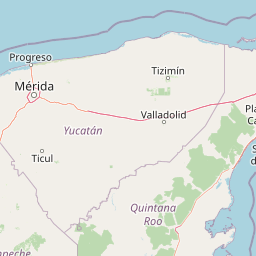
The physical landscape of Dzibilchantún National Park is defined by the flat, karstic terrain characteristic of the Yucatán Peninsula, where the underlying limestone bedrock creates a distinctive environment without surface rivers or streams. The topography consists of low, gently rolling terrain punctuated by numerous cenotes, natural sinkholes formed by the collapse of limestone bedrock that reveal groundwater aquifers beneath the surface. The park's vegetation is classified as Yucatán dry forest, a semi-deciduous tropical forest ecosystem adapted to the region's pronounced dry season and calcium-rich soils.
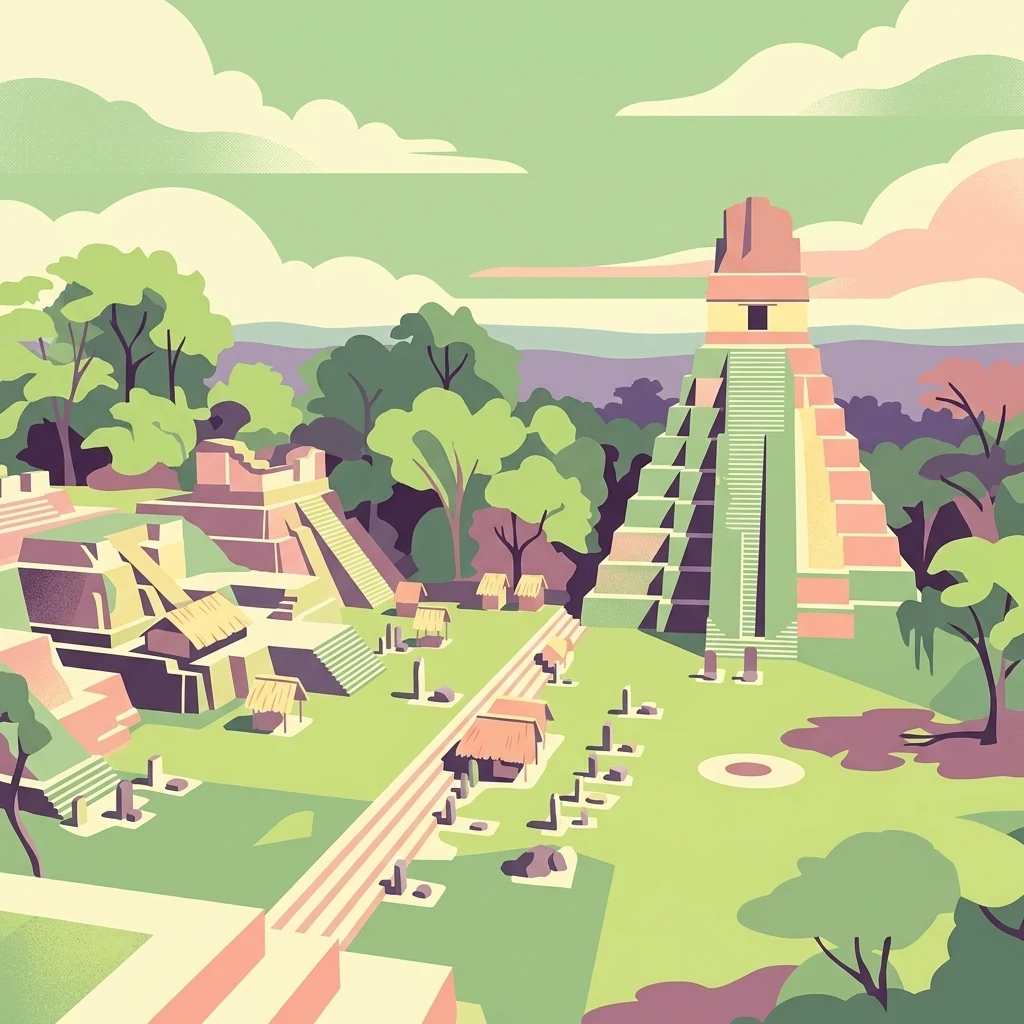
The archaeological zone itself is centered around a large open plaza surrounded by significant architectural structures, with the Temple of the Seven Dolls standing as the most visually prominent feature. A major sacbé, the raised white road that once connected different parts of the ancient city, extends from the temple toward the central plaza and ultimately to Cenote Xlacah. The cenote, whose Maya name means "old town," represents a natural depression in the limestone that provides access to groundwater and creates a distinctive microhabitat within the surrounding forest.
Dzibilchantún National Park ecosystems, habitats, and plant life
The natural environment of Dzibilchantún National Park consists primarily of Yucatán dry forest, a tropical semi-deciduous forest ecosystem adapted to the region's climate patterns characterized by a distinct dry season from November through May. The vegetation includes species adapted to the porous limestone substrate and relatively low nutrient availability, with canopy trees that lose their leaves during the dry season to reduce water loss. The karstic landscape supports specialized plant communities adapted to the shallow soils that develop in the limestone bedrock's crevices and solution pockets.
The cenote ecosystem represents a unique aquatic habitat within the park, providing water resources that support distinct plant and animal communities adapted to the subsurface environment. These cenotes were critically important to ancient Maya settlement patterns, as they provided the only reliable freshwater sources in a region where surface water is absent. The interconnected nature of the cave and cenote systems creates important ecological connections between the surface forest and the underlying aquifer.
Dzibilchantún National Park wildlife and species highlights
The wildlife in Dzibilchantún National Park reflects the biodiversity of Yucatán dry forest ecosystems, with numerous bird species including parrots, toucans, and various raptors that inhabit the forest canopy. The park's cenotes provide habitat for fish species adapted to subterranean aquatic environments, while the forest floor supports populations of mammals including white-tailed deer, collared peccaries, and various small mammals. The region's strategic location between the coastal mangroves and inland forests creates a zone of ecological transition that supports diverse species assemblages.
Birdlife is particularly notable in the park, with both resident species and migratory birds utilizing the forest habitat and cenote edges. The ancient Maya site's maintained areas and surrounding forest create a mosaic of open spaces and canopy cover that supports different ecological communities. While the park is not primarily designated for wildlife conservation, the protected status helps maintain habitat connectivity in a region where agricultural expansion has reduced natural forest cover.
Dzibilchantún National Park conservation status and protection priorities
Dzibilchantún National Park contributes to conservation in Yucatán by protecting both archaeological heritage and the remaining fragments of dry forest that once covered larger portions of the peninsula. The Yucatán dry forest is considered an endangered ecosystem due to extensive agricultural conversion, and protected areas like Dzibilchaltún serve as refuges for native species and preserve ecological processes. The park's management by CONANP balances visitor access to the archaeological site with protection of natural resources, implementing regulations that restrict certain activities within sensitive areas.
The cenote system represents a particularly important conservation focus, as these water bodies face threats from pollution and groundwater depletion across Yucatán. The park provides protection for Cenote Xlacah, though concerns have been raised about wastewater contamination from surrounding residential developments. Archaeological preservation and natural conservation goals intersect at this site, as the Maya structures' long-term survival depends on managing the surrounding landscape's ecological health.
Dzibilchantún National Park cultural meaning and human context
The cultural context of Dzibilchantún encompasses both ancient Maya civilization and the subsequent Spanish colonial period, creating a layered archaeological landscape that illustrates the peninsula's historical transformations. The Maya city functioned as a major regional center from approximately 600 BC through 1100 AD, with its inhabitants engaged in agricultural production, salt trade with coastal communities, and sophisticated astronomical and mathematical pursuits evidenced in their calendar systems and architectural alignments.
The site's name in Yucatec Maya, Ts'íibil Cháaltun, reflects the importance of written records in Maya culture, with the stelae serving as commemorative monuments for rulers and significant events. The discovery of the Temple of the Seven Dolls in the 1950s revealed the depth of archaeological deposits beneath later construction, demonstrating the site's long occupational history and the Maya practice of building new structures atop older ones. The Spanish colonial open chapel represents the imposition of Catholic religious practices following the conquest, illustrating how colonial powers often deliberately positioned new religious structures over indigenous sacred spaces.
Top sights and standout views in Dzibilchantún National Park
The highlights of Dzibilchantún National Park include the Temple of the Seven Dolls, one of the Yucatán Peninsula's most iconic Maya structures, which draws visitors specifically for the equinox phenomenon despite scholarly debate about its intentional astronomical alignment. Cenote Xlacah remains one of the few accessible cenotes where visitors can swim in the crystal-clear waters that the ancient Maya depended upon for survival. The on-site Museum of the Maya People (Museo del Pueblo Maya) houses approximately 700 archaeological and historical artifacts, including stelae and inscriptions from other major Maya cities, making its collection more extensive than those at Chichén Itzá or Uxmal. The extensive network of sacbéob, the white limestone roads that connected different parts of the ancient city, remains visible and walkable, offering insight into Maya urban planning and engineering.
Best time to visit Dzibilchantún National Park
The best time to visit Dzibilchantún National Park is during the cooler, dry season from November through April, when temperatures are more comfortable for exploring the outdoor archaeological site. The park remains open year-round, though the summer months from May through October bring higher temperatures and the rainy season, which can make extended outdoor exploration more challenging. Visitors interested in witnessing the equinox phenomenon should plan to arrive in late March for the spring equinox or late September for the autumn equinox, though these periods also bring larger crowds. The museum is closed on Mondays, so visitors should plan their weekday visits accordingly.