

Mori Atlas logo
Nature reserveFarangia Agias Aikaterinis - Agias Paraskevis

A vital Special Protection Area for avian biodiversity within the Cypriot natural terrain.

Farangia Agias Aikaterinis - Agias Paraskevis: Mapping Protected Mediterranean Gorge Landscapes

Farangia Agias Aikaterinis - Agias Paraskevis represents a key terrestrial nature reserve in Cyprus, distinguished by its rugged gorge topography and Mediterranean scrubland habitats. As a formal Special Protection Area, this site serves as a vital refuge for migratory and resident bird species. Its protected boundaries offer significant insight into the ecological connectivity of Mediterranean gorges and the ongoing efforts to conserve regional avifauna within the Natura 2000 network.

Natura 2000Special Protection AreaCyprusMediterranean ecoregiongorge landscapebird conservation

Farangia Agias Aikaterinis - Agias Paraskevis

Nature reserve

Park overview

Structured park overview, official facts, and landscape profile for Farangia Agias Aikaterinis - Agias Paraskevis

Farangia Agias Aikaterinis - Agias Paraskevis park facts, protected area profile, and essential visitor context

Review the core facts for Farangia Agias Aikaterinis - Agias Paraskevis, including designation, size, terrain, visitor scale, habitats, and operating context in one park-focused overview.

About Farangia Agias Aikaterinis - Agias Paraskevis

Farangia Agias Aikaterinis - Agias Paraskevis is a protected natural area in the Republic of Cyprus that falls under the Natura 2000 ecological network as a Special Protection Area (SPA). The designation centers on protecting wild bird populations in a Mediterranean setting, and the site forms part of the island country's growing infrastructure of formally designated ecologically important areas. It occupies a fully terrestrial extent, covering roughly 1,203 hectares of land in the central-western interior of Cyprus.

The area is named after two Orthodox Christian saints associated with local religious tradition, Agia Aikaterini and Agia Paraskevi, and the Greek term "farangia" refers to gorges, indicating that the site's physical character is shaped by one or more steep-sided valleys within the broader Cypriot landscape. This combination of named cultural reference and natural landscape morphology is common among protected natural sites throughout Greece and Cyprus, where religious toponyms frequently overlay dramatic geological features.

The protection rationale for the site rests on the presence of a significant diversity of protected bird species. Ninety-seven protected bird species are listed as the basis for the site's designation, and an additional six bird species not formally protected have also been documented within its extent. The list spans a broad spectrum of Mediterranean, Palearctic, and migratory birds, including birds of prey such as Bonelli's eagle (Aquila fasciata), the peregrine falcon, the European honey buzzard, and various harriers, alongside passerines, warblers, owls, herons, and a number of species of conservation concern across Europe and the Mediterranean region.

Quick facts and research context for Farangia Agias Aikaterinis - Agias Paraskevis

Farangia Agias Aikaterinis - Agias Paraskevis is a terrestrial Special Protection Area within the Natura 2000 ecological network of the European Union, situated in the Republic of Cyprus. It was formally designated as a bird-focused protected area in October 2007. The site falls within the Mediterranean ecoregion and contains no formally listed habitat types under the Natura 2000 framework, with its protection rationale resting on its importance for birds.

The site's conservation profile is defined by the presence of 97 protected bird species, alongside additional non-protected bird species documented within its boundaries. It is part of the wider system of Natura 2000 sites that collectively support biodiversity conservation across Cyprus and the European Union.

Protection and recognition

Explore documented terrestrial protection scope and conservation data

Farangia Agias Aikaterinis - Agias Paraskevis Protection Status and Recognition

Examine the recorded terrestrial protection scope and management parameters established for Farangia Agias Aikaterinis - Agias Paraskevis. Review structured conservation facts and official designation records to understand the administrative framework governing this protected natural landscape.

Protection details

Protection scope
Terrestrial
Park context

Deeper park guide and search-rich context for Farangia Agias Aikaterinis - Agias Paraskevis

Farangia Agias Aikaterinis - Agias Paraskevis history, landscape, wildlife, and travel context

Explore Farangia Agias Aikaterinis - Agias Paraskevis through its history, landscape character, ecosystems, wildlife, conservation priorities, cultural context, and seasonal travel timing in a structured park guide built for atlas discovery and search intent.

Why Farangia Agias Aikaterinis - Agias Paraskevis stands out

The site is best known for its role as a Special Protection Area for birds in the Mediterranean context of Cyprus. Its designation is linked directly to the conservation of a substantial list of bird species, making it a recognized avifaunal protection zone. The protected area sits within terrain that combines gorges and Mediterranean open landscapes, creating habitat diversity that supports both resident and migratory species. Its specific combination of gorge geography and Mediterranean bird diversity gives it a distinct profile within the broader Cypriot Natura 2000 system, where many sites focus on a narrower set of species or habitat types.

Farangia Agias Aikaterinis - Agias Paraskevis history and protected-area timeline

The site was formally declared a Special Protection Area (SPA) within the Natura 2000 network in October 2007. The designation was made to ensure the long-term protection of a substantial avifaunal community documented within the site. Its establishment is part of the broader implementation of the European Birds Directive across EU member states and candidate states, which obligates the protection of areas important for wild birds. As Cyprus strengthened and formalized its protected-area network in alignment with European Union environmental obligations, sites such as Farangia Agias Aikaterinis - Agias Paraskevis became recognized components of the country's ecological infrastructure. No earlier formal protected status is referenced in available sources, and the 2007 designation stands as the foundational act for its current conservation role.

Farangia Agias Aikaterinis - Agias Paraskevis landscape and geographic character

The site's name, incorporating the Greek word "farangia" meaning gorge, points to a landscape dominated by one or more steep-sided valleys cut into the surrounding terrain. Cyprus's interior topography includes extensive networks of such gorges, often carved by seasonal streams and shaped by the underlying geology, producing dramatic cliffs, rocky outcrops, and water-carved relief. The broader Mediterranean setting of the area implies a landscape of open terrain, sparse vegetation on sun-exposed slopes, and denser plant cover in shaded or moister microhabitats within the gorge system.

While precise elevation and topographic details are limited in the available documentation, the naming convention and regional context suggest that the area combines Mediterranean scrubland or phrygana, rocky exposures, woodland pockets, and seasonal watercourse corridors. Such a setting creates the heterogeneity in microhabitats that supports the diverse birdlife associated with the site's protection designation.

Farangia Agias Aikaterinis - Agias Paraskevis ecosystems, habitats, and plant life

As a terrestrial Mediterranean site within broader Cypriot ecological patterns, the area participates in the characteristic mosaic of habitats found across the island's interior. Although no specific habitat type is formally listed under the Natura 2000 framework for the site, the regional ecoregion is Mediterranean, implying vegetation communities typical of that biogeographical zone, including drought-adapted shrubs, scattered trees, and seasonal herbaceous layers on thinner soils.

The gorge morphology referenced in the name creates microclimatic variation within the site, with cooler, moister conditions in shaded ravines and warmer, drier conditions on exposed slopes and ridges. This internal ecological diversity supports a broader range of niches than uniform surrounding terrain, which likely contributes to the site's ornithological importance. The site's ecological character is defined less by a single dominant habitat than by the interplay of terrain, vegetation, and exposure that defines Mediterranean gorge systems.

Farangia Agias Aikaterinis - Agias Paraskevis wildlife and species highlights

The site's wildlife significance is overwhelmingly defined by its bird fauna. The 97 protected bird species associated with its designation represent a wide taxonomic and ecological spread, encompassing raptors, owls, herons, warblers, flycatchers, wheatears, buntings, larks, swifts, swallows, and other passerines and non-passerines typical of the Mediterranean and wider Palearctic region.

Among the raptors, the site is associated with Bonelli's eagle (Aquila fasciata), the peregrine falcon (Falco peregrinus), the common kestrel (Falco tinnunculus), the Eurasian sparrowhawk (Accipiter nisus), the common buzzard (Buteo buteo), the long-legged buzzard (Buteo rufinus), the western marsh harrier (Circus aeruginosus), the hen harrier (Circus cyaneus), and the European honey buzzard (Pernis apivorus). Nocturnal raptors include the Eurasian scops owl (Otus scops), while the nightjar (Caprimulgus europaeus) is also among the protected species recorded.

Wetland-associated and waterbird species such as the purple heron (Ardea purpurea), squacco heron (Ardeola ralloides), little egret (Egretta garzetta), night heron (Cycticorax nycticorax), little bittern (Ixobrychus minutus), and common kingfisher (Alcedo atthis) indicate that water features play some role within the site, even though formally listed habitats are absent. A wide range of passerines includes the European robin, common nightingale, Cyprus wheatear (Oenanthe cypriaca), black-headed bunting, Cretzschmar's bunting (Emberiza caesia), masked shrike (Lanius nubicus), woodchat shrike (Lanius senator), European bee-eater (Merops apiaster), and the Eurasian golden oriole, among many others. The cross-section of waders, warblers, chats, finches, swallows, larks, and pigeons recorded also points to the site's importance as a seasonal resource for migratory species.

Farangia Agias Aikaterinis - Agias Paraskevis conservation status and protection priorities

The site holds formal recognition as a Special Protection Area under the European Union's Natura 2000 network, with the conservation mandate centered on the protection of wild bird populations. The 2007 designation established a legal and administrative framework to safeguard the area for the long-term persistence of the bird species documented within it.

The absence of formally listed protected habitats under the Natura 2000 framework means that conservation value here is expressed primarily through species protection rather than habitat-type representation. This species-centered designation is consistent with the Birds Directive approach to SPAs, which prioritizes sites important for bird populations regardless of habitat classification. The site's role in the wider Cypriot and Mediterranean conservation network gives it value as a regional contributor to bird population protection in a part of Europe where many bird species face pressures from habitat change, land use intensification, and climate-related environmental shifts. Its position within a national and transnational protected-area system means changes within the site could have broader ecological implications for migratory connectivity and resident bird populations.

Farangia Agias Aikaterinis - Agias Paraskevis cultural meaning and human context

The naming of the site after two Christian saints, Agia Aikaterini (Saint Catherine) and Agia Paraskevi (Saint Paraskevi), reflects a long-standing cultural tradition in Greece and Cyprus of associating dramatic natural features, particularly gorges and caves, with nearby religious sites, monasteries, or chapels. Many such named gorges carry both natural and devotional cultural weight in the region, and the dual-saint naming here suggests the site may incorporate or lie near a gorge historically associated with both saints.

While specific details of religious or traditional use are not elaborated in available documentation, the toponym itself preserves a regional heritage of interconnecting religious identity and landscape. The broader context of Saint veneration and natural landscape in Cyprus adds a layered cultural dimension to the protected natural area beyond its ecological function.

Top sights and standout views in Farangia Agias Aikaterinis - Agias Paraskevis

The site's strongest distinguishing features include its classification as a Special Protection Area within the Natura 2000 network, its designation for the protection of 97 bird species, its gorge-influenced Mediterranean terrain, and its position within the Natura 2000 protected-area framework covering Cyprus. It stands among the country's formally recognized bird-focused conservation zones and represents an example of European protected-area designation applied to a Mediterranean gorge ecosystem.

The combination of an avifaunally significant designation with characteristic Cypriot gorge topography gives the site a distinct ecological and geographical identity. Its relatively compact footprint within a national and transnational conservation framework also makes it a useful reference point for understanding Mediterranean bird-protection strategies.

Best time to visit Farangia Agias Aikaterinis - Agias Paraskevis

As a gorge-based Mediterranean bird protection area, the site's seasonal character would be shaped by the wider climatic rhythm of inland Cyprus, with mild, wetter winters and hot, dry summers. Spring and autumn are typically the most active periods for bird observation in Mediterranean settings, as migratory species pass through or settle temporarily, and breeding activity peaks in spring. Winter months can bring a different bird assemblage, including species that use the area during the colder season.

Visitors interested in birdwatching or understanding the protected area in its fuller ecological context would likely find transitional seasons the most rewarding periods. Summer heat in interior Cyprus can limit activity and reduce bird detectability, though resident species remain present year-round.

Monthly climate preview

Representative monthly temperature ranges and precipitation averages recorded across Cyprus

Long Term Climate Normals and Annual Weather Patterns for Farangia Agias Aikaterinis - Agias Paraskevis

Representative coordinates document sustained monthly shifts in temperature and precipitation across the protected terrain of Farangia Agias Aikaterinis - Agias Paraskevis. Comprehensive meteorological records detail complete twelve month normals for seasonal comparison.
Annual mean19 °C
11 °C27 °C
Jan11°
Feb11°
Mar13°
Apr16°
May20°
Jun24°
Jul27°
Aug27°
Sep25°
Oct21°
Nov17°
Dec13°
Warmest month
August

27.2 °C

Coolest month
January

11.1 °C

Wettest month
December

2.8 mm/day

Driest month
July

0.1 mm/day

Park location guide

Geography guide, regional context, and park location map for Farangia Agias Aikaterinis - Agias Paraskevis

Farangia Agias Aikaterinis - Agias Paraskevis park geography, regions, and map view in Cyprus

Understand where Farangia Agias Aikaterinis - Agias Paraskevis sits in Cyprus through a broader geographic reading of the surrounding landscape, nearby location context, and its mapped position within the national park landscape.

How Farangia Agias Aikaterinis - Agias Paraskevis fits into Cyprus

Cyprus is an island nation in the eastern Mediterranean Sea, positioned at the crossroads of Europe, Africa, and Asia. The Republic of Cyprus governs the southern portion of the island, with Nicosia as its capital and largest city. The island has a complex political situation due to the Turkish occupation in the north and contains British military bases in the south. Cyprus gained independence from Britain in 1960 and is a member of the European Union.

Wider geography shaping Farangia Agias Aikaterinis - Agias Paraskevis in Cyprus

Cyprus is an island located in the eastern Mediterranean Sea, off the coast of the Levant in West Asia. The island lies approximately 75 km south of Turkey, 105 km west of Syria, and 380 km north of Egypt. The terrain varies from mountainous regions in the north and interior to plains and coastal areas. The Troodos Mountains dominate the central and southwestern part of the island. The island has no land borders as it is entirely surrounded by sea.

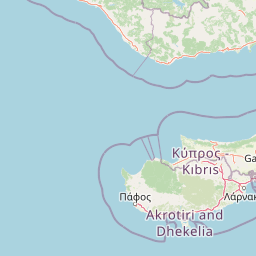
Map view of Farangia Agias Aikaterinis - Agias Paraskevis

Use this park location map to pinpoint Farangia Agias Aikaterinis - Agias Paraskevis in Cyprus, understand its exact geographic position, and read its mapped placement within the surrounding landscape more clearly.

Pigeon | © OpenStreetMap contributors
Park atlas

Compare surrounding Mediterranean conservation zones and regional protected landscapes

Explore Protected Areas and Parks Near Farangia Agias Aikaterinis - Agias Paraskevis

Browse other protected natural areas and regional conservation zones situated near Farangia Agias Aikaterinis - Agias Paraskevis. Extending geographic comparison across the surrounding terrain reveals broader Mediterranean habitat patterns and connected ecological networks.
Nature reserveCyprus
About 1.8 km away#1 closest

North

Periochi Skoulli Nature Reserve: Protected Landscape and Regional Geography in Cyprus

Mediterranean habitats and migratory bird refuge in Paphos

Periochi Skoulli is a highly concentrated nature reserve in Cyprus that safeguards a variety of unique terrestrial habitats. From rare riparian forest galleries and oak woodlands to seasonal wet meadows, this site provides a critical micro-landscape for Mediterranean biodiversity. The mapped boundaries reveal a vital stepping stone for migratory bird routes, representing a focused example of protected terrain within the diverse Paphos regional geography.

Area
1.002 km²
Established
2002
A soft watercolor painting of a curved sandy beach meeting the ocean, with green coastal hills and shrubs in the foreground.
Nature reservePaphos District
About 3.5 km away#2 closest

Northwest

Chersonisos Akama Nature Reserve: Geography and Protected Area Overview in Paphos District

Mapping Mediterranean forest, coastal, and marine ecosystems

Chersonisos Akama stands as an essential protected landscape in northwestern Cyprus. This atlas entry provides geographic insights into its varied terrain, ranging from juniper woodlands and endemic-rich grasslands to its significant offshore reefs and sea turtle nesting beaches. Understand the spatial distribution of this Natura 2000 site and its role in preserving eastern Mediterranean biodiversity.

Area
179.144 km²
Established
2009
Relief
Mixed relief
Climate
Mediterranean
Nature reserveCyprus
About 8.1 km away#3 closest

North

Periochi Polis - Gialia Nature Reserve: Mapped Protected Area in Northwestern Cyprus

Coastal dunes, riparian thickets, and marine conservation zones

Periochi Polis - Gialia is a significant nature reserve along the northwestern coast of Cyprus. The site preserves a rare confluence of marine and terrestrial landscapes, including saline marshes, mobile sand dunes, and riverine galleries that host a wide range of protected bird species and marine wildlife.

Area
17.501 km²
Established
2002
Protected areaCyprus
About 9 km away#4 closest

East

Dasos Pafou: Protected Forest Landscapes and Geographic Terrain of Western Cyprus

Extensive Mediterranean woodland and riparian habitat mosaic

Dasos Pafou serves as a cornerstone of conservation in western Cyprus, protecting a vast contiguous area of pine forests, oak woodlands, and rocky gorges. The site offers a detailed look at the island's diverse ecological character, blending high-altitude conifer stands with deep valley river systems to create a unique Mediterranean landscape atlas.

Area
602.259 km²
Established
2005
Relief
Mixed relief
Climate
Mediterranean
Nature reserveCyprus
About 9.2 km away#5 closest

South

Koili - Mavrokolympos Nature Reserve: Mapping the Protected Landscapes of Interior Cyprus

A vital Mediterranean sanctuary defined by diverse habitats and limestone terrain.

Koili - Mavrokolympos stands as an essential nature reserve in the Cypriot interior, encompassing a dense mosaic of cypress forests, Oriental plane woodlands, and sun-drenched phrygana. This protected area offers deep insight into Mediterranean biodiversity, highlighting the intersection of complex hydrology and rocky, undulating limestone topography within a compact, ecologically significant boundary.

Area
2.968 km²
Established
2002
Relief
Mixed relief
Climate
Mediterranean
Nature reserveCyprus
About 14 km away#6 closest

Southeast

Koilada Ezousas: Protected Inland Valley Landscapes and Map Geography in Western Cyprus

Natura 2000 designated nature reserve in the Paphos district

Koilada Ezousas represents a strategically mapped protected area in western Cyprus, characterized by its extensive inland valley terrain. The site acts as a critical refuge within the Mediterranean ecoregion, supporting a high concentration of raptors and endemic passerines. Understanding its geographic spread provides insight into the broader network of protected corridors across the island.

Area
56.27 km²
Established
2019
Climate
Mediterranean
Scope
Terrestrial
Nature reserveCyprus
About 14 km away#7 closest

Southeast

Kremmoi Ezousas Nature Reserve: Protected Inland Foothills and Bird Habitat in Cyprus

Mapped Mediterranean valley terrain and avian conservation zones

Situated in the inland valleys of western Cyprus, Kremmoi Ezousas functions as a key Special Protection Area within the Mediterranean ecoregion. The reserve supports a complex landscape of scrubland and seasonal watercourses that provide crucial breeding, wintering, and migratory refuge for dozens of bird species including raptors and passerines.

Area
15.7 km²
Established
2008
Climate
Mediterranean
Scope
Terrestrial
Nature reserveCyprus
About 16 km away#8 closest

Southeast

Episkopi Morou Nerou: Mapping the Protected Nature Reserve Landscapes of Western Cyprus

A regional geography of river valleys, riparian galleries, and forest mosaics

Located in western Cyprus, Episkopi Morou Nerou is a notable nature reserve spanning river valleys and Mediterranean scrubland. This protected area supports an array of habitats, from oriental plane forests and poplar galleries to open phrygana and pseudo-steppe grasslands, serving as a critical sanctuary for diverse bird populations and native plant species.

Area
4.193 km²
Established
2002
Relief
Mixed relief
Climate
Mediterranean

Common questions about visiting, size, designation, and location context for Farangia Agias Aikaterinis - Agias Paraskevis

Farangia Agias Aikaterinis - Agias Paraskevis FAQs for park facts, access, geography, and protected area context

Find quick answers about Farangia Agias Aikaterinis - Agias Paraskevis, including protected-area facts, park geography, trail and visitor context, and how the park fits into its surrounding country and regional landscape.
MoriAtlas Explorer

Continue Your Protected Areas Search Across the Global Atlas

Deepen your exploration by continuing the structured search for national parks and protected areas worldwide. Utilize the comprehensive filtering capabilities to compare different conservation landscapes and refine your understanding of global park geography. Discover more about the distribution and characteristics of protected natural areas.

Global natural geography