Why Govind Pashu Vihar National Park stands out
Govind Pashu Vihar is best known as a critical habitat for the snow leopard, one of the rarest and most elusive big cats in the world. The park is also renowned as one of the last strongholds of the bearded vulture in the Himalayas, a species that plays a vital ecological role as a scavenger in high-altitude environments. The Har Ki Doon valley within the park is a famous trekking destination, while the diverse altitudinal range supports a remarkable transition from temperate broadleaf forests through subalpine conifer forests to alpine meadows and rock, making it one of the most ecologically diverse protected areas in the Indian Himalayas.
Govind Pashu Vihar National Park history and protected-area timeline
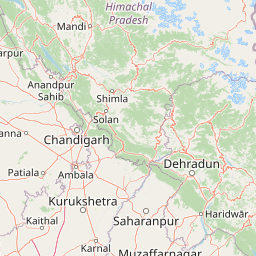
The area that now comprises Govind Pashu Vihar National Park was initially established as a wildlife sanctuary on March 1, 1955, reflecting post-independence India's growing commitment to wildlife conservation. The park was later upgraded to national park status, providing stronger legal protection for its unique ecosystems. The naming of the park after Govind Ballabh Pant connects the protected area to the legacy of one of India's most influential political figures, who played a crucial role in India's independence movement and later as Home Minister in the post-independence government. Prior to India's independence, the British managed the area primarily for timber extraction, building roads, and maintaining forest rest houses for their administrative convenience. After independence in 1947, the state forest department assumed management responsibilities, and regulations increased while commercial timber extraction decreased. Development continued through subsequent decades, with roads extended into the park, schools and administrative buildings constructed, and tourism gradually increased. By 1988, the road had reached Sankri inside the park, and visitor numbers grew from 300 that year to over one thousand by 1990, predominantly domestic tourists. The establishment of the Snow Leopard Project at this sanctuary underscored its importance as a critical habitat for India's endangered alpine wildlife.
Govind Pashu Vihar National Park landscape and geographic character
The landscape of Govind Pashu Vihar National Park is characterized by dramatic topographical variation shaped by the dynamics of the Garhwal Himalayas. The park spans elevations from 1,400 meters to 6,323 meters above sea level, creating a spectacular vertical profile of distinct terrain types. The Har Ki Doon valley, a prominent feature within the park, is renowned for its scenic beauty and serves as a popular destination for trekking enthusiasts. This valley, surrounded by mountain peaks and accessible via forest rest houses at Naitwar, Taluka, and Osla, offers visitors an immersive experience of Himalayan wilderness. The Ruinsiyara high altitude lake provides another significant landscape feature, attracting tourists to its pristine alpine setting. The terrain transitions from forested slopes at lower elevations through rocky alpine meadows to permanent snow and glaciated peaks at the highest levels. The park encompasses a network of valleys, ridges, and sheer mountain faces that define the characteristic Himalayan landscape of this region.
Govind Pashu Vihar National Park ecosystems, habitats, and plant life
The ecological diversity of Govind Pashu Vihar National Park reflects its remarkable altitudinal range and position in the western Himalayas. At lower elevations below approximately 1,400 meters, the park contains western Himalayan broadleaf forests characterized by species including chir pine, deodar cedar, oak, and various deciduous trees. As elevation increases, the vegetation transitions to western Himalayan subalpine conifer forests dominated by blue pine, silver fir, spruce, and yew. Above approximately 2,600 meters, the forests give way to western Himalayan alpine shrub and meadows, where species such as oak, maple, walnut, horse chestnut, hazel, and rhododendron create a distinct alpine character. This vertical zonation of vegetation creates distinct ecological corridors that support diverse wildlife communities adapted to different altitude zones. The park's position in the Garhwal Himalayas places it at a critical biogeographic intersection, making it important for maintaining ecological connectivity across the Himalayan region.
Govind Pashu Vihar National Park wildlife and species highlights
Govind Pashu Vihar National Park supports a rich mammalian and avian fauna, with approximately fifteen species of large mammals and around one hundred fifty species of birds recorded within its boundaries. The park is most renowned as a habitat for the snow leopard, an endangered predator that faces threats from declining wild prey populations, poaching for its pelt and body parts, and conflict with livestock farmers. The Snow Leopard Project, inaugurated by the Indian Government from this sanctuary, aims to provide special conservation measures for this elusive big cat. Other notable mammals include the Asian black bear, brown bear, common leopard, musk deer, bharal, Himalayan tahr, and serow. The smaller mammal community includes Indian crested porcupine, European otter, goral, civet, hedgehog, Himalayan field rat, Hodgson's giant flying squirrel, wild boar, masked palm civet, and Sikkim mountain vole. The avian fauna includes several endangered species such as the golden eagle, steppe eagle, black eagle, bearded vulture, Himalayan snowcock, Himalayan monal pheasant, cheer pheasant, and western tragopan, alongside numerous smaller bird species including owls, pigeons, minivets, thrushes, warblers, bulbuls, parakeets, cuckoos, and finches.
Govind Pashu Vihar National Park conservation status and protection priorities
Govind Pashu Vihar National Park represents one of the most significant conservation areas in the Indian Himalayas, serving as a critical stronghold for several endangered species. The park's designation as a protected area under IUCN Category II reflects its importance in preserving natural ecosystems and biodiversity. The Snow Leopard Project, managed from this sanctuary, represents India's flagship conservation initiative for protecting this endangered predator, addressing the multiple threats facing snow leopards including prey decline, poaching, and human-wildlife conflict. The park also serves as a crucial habitat for the bearded vulture, a species that plays an important ecological role as a high-altitude scavenger. The management of the park involves balancing conservation objectives with the growing interest in eco-tourism, as visitors from across India and abroad are drawn to its natural beauty and wildlife. The park's diverse ecosystems, ranging from broadleaf forests to alpine meadows, require integrated management approaches that address the complex interactions between wildlife populations, habitat integrity, and human activities.
Govind Pashu Vihar National Park cultural meaning and human context
The region surrounding Govind Pashu Vihar National Park has been inhabited by local communities whose relationship with the landscape spans generations. Before independence, the British managed the area primarily for resource extraction, establishing forest rest houses and building roads for administrative and commercial purposes. Following independence, the management paradigm shifted toward conservation and sustainable use, though development continued with the construction of infrastructure including roads to Naitwar, schools, administrative buildings, and a small hospital. Immigration from Nepal and other regions increased following these developments, with new arrivals establishing shops, restaurants, and other services catering to visitors. The forest rest houses at locations such as Har-ki-dun, Naitwar, Taluka, and Osla have long served as staging points for visitors exploring this Himalayan landscape, creating a cultural interface between the protected area and surrounding communities. The park's historical management reflects the broader evolution of wildlife conservation in India from colonial extractive practices to post-independence protection frameworks.
Top sights and standout views in Govind Pashu Vihar National Park
The Har Ki Doon valley stands as the park's most famous trekking destination, offering access to pristine Himalayan scenery and the famous forest rest house set amid wildflower-filled meadows. The Ruinsiyara high altitude lake provides another major attraction for visitors seeking alpine lake experiences. The park's significance as one of the last Himalayan strongholds for the snow leopard makes it a destination of global conservation importance. The bearded vulture population represents a remarkable ecological asset, as this species serves as a vital scavenger in high-altitude ecosystems. The dramatic altitudinal range from 1,400 to 6,323 meters creates unparalleled ecological diversity within a single protected area, supporting distinct forest types and wildlife communities at different elevations. The forest rest houses at Naitwar, Taluka, and Osla provide visitor access to the park's interior regions.
Best time to visit Govind Pashu Vihar National Park
The optimal time to visit Govind Pashu Vihar National Park depends on the experience sought, with each season offering distinct advantages. The summer months from May to June provide pleasant weather at lower elevations and clear mountain views, making this period ideal for trekking in the Har Ki Doon valley and wildlife observation. The monsoon season from July to September brings heavy rainfall to the region, which can cause Landslides and flooding, making this period less suitable for visits. Autumn from September to November offers stable weather conditions and excellent visibility, with the post-monsoon clarity providing stunning mountain vistas. Winter from December to February brings heavy snowfall to higher elevations, creating spectacular winter landscapes but making many trails inaccessible and wildlife more difficult to observe. The park's high-altitude location means temperatures can drop significantly, especially above 3,000 meters, so visitors should prepare for cold conditions regardless of the season chosen.