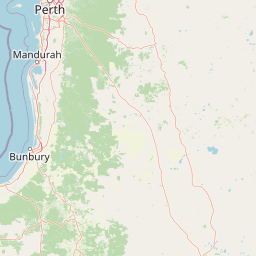
Why Greater Kingston National Park stands out
Greater Kingston National Park is best known as one of just two remaining locations in Australia where original numbat sub-populations survive in the wild. The numbat, a small marsupial that feeds almost exclusively on termites, was driven to the brink of extinction across most of its former range by introduced predators and habitat loss. The Upper Warren area, which includes Greater Kingston National Park along with the Tone-Perup Nature Reserve and adjacent State Forest, represents one of the last strongholds for this endangered species. The park's old-growth jarrah and wandoo woodlands provide the intact forest habitat essential for numbat survival, making the area irreplaceable for conservation efforts targeting species recovery.
Greater Kingston National Park history and protected-area timeline
Greater Kingston National Park was formally established on 8 December 2004 when the Parliament of Western Australia passed legislation creating the reserve. The park was declared as Class A reserve No. 47762, encompassing an area of 21,092 hectares (52,120 acres). This establishment was part of a significant expansion of Western Australia's national park system, with 19 new national parks declared across the state on the same day. This wave of park declarations represented the culmination of extended conservation planning and community advocacy for protecting remaining old-growth forests in the South West region. The creation of Greater Kingston built upon earlier conservation efforts in the area, recognizing that the jarrah forests of the Upper Warren region contained exceptional natural values warranting formal protection. Prior to national park status, the land had been managed as state forest, and the transition to full national park designation reflected evolving understanding of the area's ecological significance, particularly its importance for endangered species conservation.
Greater Kingston National Park landscape and geographic character
The landscape of Greater Kingston National Park is characteristic of the Jarrah Forest bioregion, featuring gently undulating terrain with elevations varying across the park's extensive area. The underlying geology consists largely of laterite-derived soils, which support the distinctive jarrah and wandoo woodland that defines the park's visual character. Jarrah trees dominate the canopy, creating a relatively open forest structure with a sparse understory of shrubs and grasses adapted to the nutrient-poor soils. Wandoo occurs in more localized stands, often in lower-lying or moister areas. The forest structure varies across the park, with some areas showing the more open character of mature woodland while other sections contain denser regrowth following past disturbance. The park's extensive area allows for subtle variations in topography, aspect and soil moisture to create a heterogeneous landscape that supports diverse ecological communities.
Greater Kingston National Park ecosystems, habitats, and plant life
Greater Kingston National Park protects an example of old-growth jarrah forest ecosystem that has become increasingly rare across the South West of Western Australia. The jarrah-wandoo woodlands represent a distinctive Australian forest type, adapted to the Mediterranean climate of the region with its hot dry summers and cool wet winters. These forests support a complex community of native plants and animals that have evolved to depend on the structural features of old-growth woodland, including hollow-bearing trees, fallen logs and diverse understory vegetation. The park's ecological significance is magnified by its role in protecting habitat for species of conservation concern, particularly the numbat. The jarrah forest provides the structural complexity necessary for numbats to find shelter and forage for their termite prey. The Upper Warren area, encompassing Greater Kingston and adjacent conservation reserves, represents one of the most intact forest landscapes remaining in the South West bioregion.
Greater Kingston National Park wildlife and species highlights
The wildlife of Greater Kingston National Park is defined to a significant degree by the presence of the numbat, an endangered marsupial that represents one of Australia's most notable conservation stories. Numbats are uniquely specialized predators, feeding almost exclusively on termites and using their long sticky tongues to extract prey from within timber and soil. Once found across much of southern Australia, numbats now survive in the wild at only two locations, with the Upper Warren population including Greater Kingston National Park representing one of these critical refuges. The park's old-growth jarrah and wandoo woodlands provide the intact forest structure that numbats require, with hollow logs and dead trees offering denning sites and the litter layer supporting termite populations. Beyond numbats, the jarrah forest supports a range of other native species including various marsupials, birds and reptiles, though the Wikipedia source focuses particularly on the numbat significance as the park's defining wildlife value.
Greater Kingston National Park conservation status and protection priorities
Greater Kingston National Park holds exceptional conservation significance as one of only two locations maintaining original numbat sub-populations in Australia. The numbat was formerly distributed across much of southern Australia but underwent catastrophic decline due to predation by introduced foxes and cats, competition from introduced rabbits, and habitat loss through land clearing. By the 1990s, the species was reduced to a handful of remnant populations, with the Upper Warren region representing one of the most significant survivors. The creation of Greater Kingston National Park formalized protection for this critical numbat habitat, working alongside the Tone-Perup Nature Reserve and adjoining State Forest to form a network of conservation lands. The park's Class A reserve status provides strong legal protection, while its inclusion within the broader jarrah forest bioregion connects it to regional conservation planning. The park demonstrates how protected area establishment can serve as a foundation for species recovery, though the numbat remains dependent on ongoing active management including predator control.
Greater Kingston National Park cultural meaning and human context
The cultural context of Greater Kingston National Park is not extensively documented in the available source material. The park lies within the traditional lands of Aboriginal people of the South West region, though specific information about indigenous connections to the area is not provided in the Wikipedia entry. The park's recent establishment in 2004 means it does not have the extended historical relationship with European settlement that characterizes some older protected areas in Western Australia. The broader South West region contains significant Aboriginal heritage values, and the jarrah forests have been important to Indigenous communities for thousands of years. The park sits within an area that has been subject to timber harvesting and pastoral use prior to protection, though the focus of available information is on the park's conservation values rather than cultural history.
Top sights and standout views in Greater Kingston National Park
Greater Kingston National Park's standout feature is its role as a refuge for Australia's endangered numbat, representing one of just two remaining wild populations of this distinctive marsupial. The park protects extensive old-growth jarrah and wandoo woodland within the Jarrah Forest bioregion, representing some of the most intact forest remaining in South West Western Australia. As a Class A reserve established in 2004, the park represents a significant conservation achievement, providing durable protection for forest ecosystems and the species they support. The park's location in the Upper Warren area links it with adjacent conservation reserves, forming an important network for biodiversity protection in a region where old-growth forest has been extensively cleared or degraded.
Best time to visit Greater Kingston National Park
The optimal time to visit Greater Kingston National Park would align with the dry summer months typical of Western Australia's Mediterranean climate. The period from late spring through early autumn (approximately October to April) generally offers more comfortable conditions for exploring the forest, with warmer temperatures and lower rainfall. However, the park's primary significance lies in its conservation values rather than as a visitor destination, and detailed information about visitor facilities, access arrangements or seasonal conditions is not provided in the available source material. The numbat is most active during warmer months, potentially offering better wildlife viewing opportunities in summer, though visitors should note that seeing these secretive animals in their forest habitat requires patience and appropriate timing.