Why Irgiz-Turgay Nature Reserve stands out
Irgiz-Turgay Nature Reserve is primarily known for being the heart of conservation efforts for the Betpak-Dala population of the saiga antelope, a critically important ungulate of the Kazakh steppes. The reserve was explicitly created to protect and restore these animals, and saiga populations inside the territory have grown substantially since its founding. The reserve is equally recognized for the scale and ecological diversity of its arid landscapes. Its protected territory spans the Turgay River valley, with its distinctive wetland and willow habitats, and extends outward into vast plains of feather grass, sagebrush, and saltwort vegetation. This combination of riverine wetlands, semi-desert steppes, and northern desert habitats defines the reserve's conservation identity and ecological significance.
Irgiz-Turgay Nature Reserve history and protected-area timeline
The Irgiz-Turgay State Nature Reserve was formally established on 14 February 2007 by Government Resolution No. 109, following growing concern over the dramatic decline of the Betpak-Dala population of the saiga antelope in Kazakhstan. The creation of the reserve occurred at a moment when saiga numbers across the Kazakh steppes had collapsed, and conservationists and government authorities identified the Turgay region as a critical remaining stronghold for the population.
The reserve's territory was assembled from two distinct components. Approximately 52,000 hectares consisted of land previously included within the Turgay State Nature Sanctuary, an earlier protective designation. The much larger remainder of more than 711,000 hectares was drawn from reserve lands of the Irgiz District, combining existing protective land with surrounding unallocated lands to create a single contiguous legal entity for conservation management.
Since its founding, the reserve has had an unmistakable impact on saiga recovery. At the moment of establishment in 2007, the local saiga population numbered roughly seven thousand animals. Subsequent decades saw a dramatic rebound, with populations inside the reserve eventually reported at well over one hundred thousand individuals, a scale of recovery comparable to few other ungulate conservation efforts worldwide.
Its institutional identity was further reinforced when it was recognized as the largest specially protected natural territory in Kazakhstan that operates as a legal person, securing dedicated management capacity and ongoing governmental oversight. Today the reserve stands as both a symbol of saiga conservation and a model for managing immense arid landscapes under a unified protective framework.
Irgiz-Turgay Nature Reserve ecosystems, habitats, and plant life
The nature of Irgiz-Turgay Nature Reserve reflects the character of Kazakhstan's transitional belt between true steppe and northern desert, where life is shaped by aridity, seasonal water, and the extraordinary productivity of brief growing seasons. The reserve's natural systems are organized around three major ecological contexts: the Turgay River valley, extensive dry plains, and distant saltwort-dominated flats.
Along the Turgay River corridor, narrow ribbons of marshy meadow and willow stands create localized pockets of dense vegetation within an otherwise open country. These wetlands are vital to wildlife, providing forage, cover, and water in a landscape where surface moisture is otherwise scarce. They also serve as critical seasonal habitat for migratory and resident birdlife, as well as for mammals navigating the wider desert.
Beyond the river valley, the reserve encompasses sweeping plains dominated by feather grass and wormwood, the classic vegetation cover of the Kazakh semi-desert. Further from the river and toward drier zones, perennial saltwort communities take over, marking the transition into harsher desert conditions. This mosaic of plant communities supports a tightly woven ecological network in which herbivores, predators, and migratory species each depend on shifting access to water and forage across seasons and years.
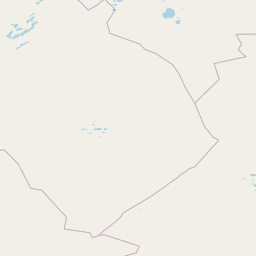
The reserve's geographic division into two clusters tied to the Atanbasy and Alakol lake systems reflects the broader reality of water distribution in this part of Kazakhstan. These clusters concentrate ecological productivity and create the conditions that allow large ungulates, particularly the Betpak-Dala saiga, to persist in the otherwise demanding northern desert environment.
Irgiz-Turgay Nature Reserve wildlife and species highlights
The wildlife of Irgiz-Turgay Nature Reserve is dominated by the presence of the Betpak-Dala saiga antelope, the reserve's central conservation subject. Saiga are uniquely adapted to the open steppes and semi-deserts of Central Asia, and the population protected within Irgiz-Turgay represents one of the largest and most important surviving groups of the species anywhere. The reserve's founding in 2007 coincided with a period of severe saiga decline, and the subsequent recovery inside its boundaries stands as a major conservation outcome.
The riverine wetlands, willow stands, and marshy meadows of the Turgay valley provide habitat for a wide array of bird species, supporting both resident populations and seasonal migrants that depend on these water sources in an otherwise arid landscape. The contrast between dense valley vegetation and open desert steppe creates rich edge habitat that supports raptors, ground-nesting birds, and waterfowl in overlapping seasonal patterns.
The dry plains and saltwort-dominated flats support smaller mammals, reptiles, and invertebrates adapted to the desert environment, while also serving as critical grazing territory for the reserve's large saiga herds. Predators typical of the Kazakh steppe and desert are also part of the reserve's ecological community, maintaining the ecological balance of this open landscape. Together, these wildlife communities give the Irgiz-Turgay reserve a distinctive profile centered on large ungulate conservation within a working arid-land ecosystem.
Irgiz-Turgay Nature Reserve conservation status and protection priorities
Irgiz-Turgay Nature Reserve is one of the most significant conservation units in Kazakhstan, both for its scale and for its contribution to saiga antelope recovery. Established explicitly to safeguard and restore the Betpak-Dala saiga population, the reserve has played a central role in reversing a catastrophic decline that had reduced the local herd to roughly seven thousand animals by 2007. Within the protected territory, saiga numbers have since grown dramatically, demonstrating the value of a dedicated, large-scale protective framework for migratory ungulates.
The reserve's conservation importance extends well beyond saiga. Its protection of the Turgay River valley's wetland and willow habitats preserves vital ecological infrastructure in a region where surface water is otherwise limited. These riparian corridors sustain plant diversity, support breeding habitat for birds, and stabilize ecological processes that benefit the broader desert-steppe landscape surrounding them.
By combining landscape-scale protection with targeted species recovery, the reserve serves as a model for arid-zone conservation in Central Asia. Its designation by the Government of Kazakhstan and its recognition as the largest specially protected natural area in the country operating as a legal entity underscore the institutional commitment behind its work. As climate pressures and land-use change continue to affect Kazakhstan's dry regions, Irgiz-Turgay's protected status offers an essential buffer for some of the country's most distinctive and vulnerable wildlife.
Top sights and standout views in Irgiz-Turgay Nature Reserve
The Irgiz-Turgay Nature Reserve stands out for its sheer scale, its division into the ecologically distinct Atanbasy and Alakol clusters, and its role as the primary refuge for the Betpak-Dala saiga population. Its protected habitats include rare combinations of Turgay River wetlands, willow stands, marshy meadows, and vast plains of feather grass, wormwood, and saltwort vegetation, representing the full ecological range of Kazakhstan's northern desert zone.
Equally notable is the reserve's institutional significance. As the largest specially protected natural area in Kazakhstan functioning as an independent legal entity, it offers a level of management capacity and continuity rarely applied to arid-zone conservation in the region. Its recovery of saiga numbers from thousands to over one hundred thousand is among the most compelling conservation outcomes in modern Central Asia.
Best time to visit Irgiz-Turgay Nature Reserve
The character of Irgiz-Turgay Nature Reserve shifts with the strong seasonality of Kazakhstan's northern deserts. Spring is typically the most ecologically active period, when warming temperatures and snowmelt trigger brief but intense plant growth across the steppe plains and wetland edges, and wildlife activity concentrates near the Turgay River valley and the Atanbasy and Alakol lake systems. Migratory bird presence also tends to peak during this season.
Summer brings heat and aridity across the open plains, with wildlife movement concentrated increasingly around remaining water sources and riparian corridors. Autumn offers cooler temperatures and a return of activity to the dry plains as saiga and other animals shift their grazing patterns. Winters are cold and quiet, with the landscape taking on a stark, open character. Because the reserve is a strictly protected zone, any visitation is typically limited to organized or permitted activities that align with its conservation mission.