
Why Jodły Łaskie Nature Reserve stands out
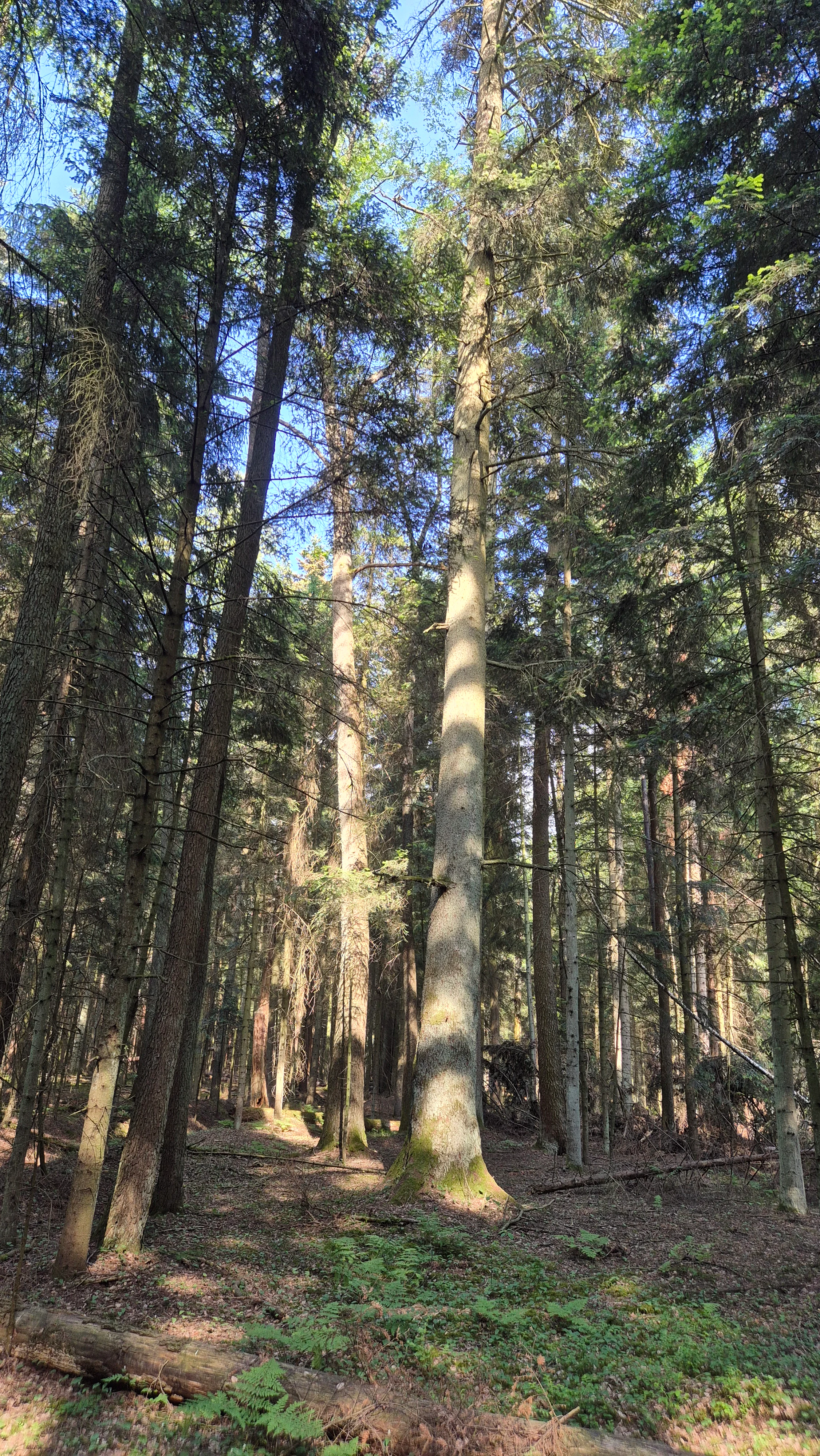
The reserve is best known for preserving what is regarded as a natural and historically significant silver fir stand near the northern limit of the fir's range in Europe. The associated old oaks, mature pines, and veteran firs give the woodland a heritage character that has shaped both its scientific and protective value. A second distinguishing trait is the concentration of different forest community types inside one small site. Grąd oak-hornbeam woodland, łęg floodplain forest, dry coniferous woodland, and mixed coniferous forest all occur within the reserve, creating a mosaic of lowland forest conditions that is unusually diverse for such a compact area.
Jodły Łaskie Nature Reserve history and protected-area timeline
The reserve was established on 9 October 1991 by an order of the Polish Minister of Environmental Protection, Natural Resources, and Forestry. Under the founding legal act, the protected area covered 59.19 hectares, while its current recorded size is 58.39 hectares. The protective purpose recorded in the founding document was the conservation of a natural fir stand near the northern edge of the fir's range and the preservation of a group of old oaks, firs, and pines considered natural monuments.
The reserve was created under the original name Jodły Łaskie. In 2010, it was renamed in honor of Stanisław Kostka Wisiński, who had died in 2009. Wisiński was a Polish forester who served as director of the Regional Directorate of State Forests in Łódź and as director of the IT Department of State Forests, and the reserve's full name now carries the dedication 'of the Outstanding Forester'. This renaming reflects both the institutional importance of forestry in the reserve's history and the role of individual foresters in shaping Polish nature protection.
Jodły Łaskie Nature Reserve landscape and geographic character
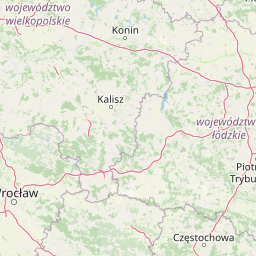
The reserve sits on the Wysoczyzna Łaska, a central Polish lowland mesoregion characterized by gently undulating terrain and a mix of glacial and post-glacial surface features. The local relief is modest, with no dramatic elevation changes, and the landscape surrounding the reserve is largely agricultural, with forest surviving mainly in patches that are too wet, too sandy, or otherwise inconvenient to cultivate.
Within this lowland setting, the reserve represents one of the more persistent forest sections. Its soils and moisture conditions are sufficient to support differentiated woodland types, from drier coniferous stands to moisture-loving gallery elements that reflect the presence of small watercourses or seepage zones within the protected area. The result is a visually varied, low-key forested landscape rather than a single uniform woodland block.
Jodły Łaskie Nature Reserve ecosystems, habitats, and plant life
Ecologically, Jodły Łaskie is best understood as a mosaic forest reserve rather than a single-habitat site. The woodland includes grąd oak-hornbeam communities, which are typical of fertile lowland soils in central Europe, as well as łęg floodplain woodland that reflects wetter conditions along small water features. Dry coniferous woodland and mixed coniferous woodland provide additional structural and compositional diversity, and together these community types give the reserve a layered character that supports a wide range of plant and animal species.
The site is particularly important for the presence of silver fir, a tree whose natural range in Poland has retreated substantially to mountain areas. The reserve's fir population, growing near the northern limit of the species' distribution, is a key biogeographical reference point. The combination of fir with veteran oaks and mature pines gives the woodland an unusually long-lived, multi-generational character that contributes both to habitat continuity and to the persistence of old-forest species.
Jodły Łaskie Nature Reserve wildlife and species highlights
The reserve supports a notable list of protected animal species associated with mature lowland forest. Birds are particularly well represented, with records of black stork, a species of significant conservation concern across Europe that requires quiet, well-wooded landscapes. Raptors such as the common buzzard and the northern goshawk are present, alongside more generalist woodland birds such as the tawny owl. The presence of these species indicates that the reserve retains habitat features such as old trees, semi-open canopy structure, and surrounding feeding areas that are important for breeding and foraging.
The local fauna is consistent with what one would expect from a diversified central European lowland forest: a mix of passerines, birds of prey, and small mammals tied to woodland structure. While the reserve is small, its mosaic of forest types and its old trees provide continuity of habitat that benefits species requiring stable forest conditions.
Jodły Łaskie Nature Reserve conservation status and protection priorities
From a conservation perspective, the reserve's importance lies in its role as a refuge for lowland fir outside the species' main mountain range, combined with its preservation of veteran trees otherwise lacking from the intensively managed agricultural landscape of the Łódzkie region. The site's founding act explicitly frames it as protection for both a biogeographically significant fir population and a collection of heritage oaks, firs, and pines.
Its mosaic of forest community types gives the reserve added conservation value as a reference site for comparing managed and unmanaged lowland woodland in central Poland. Even in its small area, the presence of grąd, łęg, and coniferous forest communities under formal protection makes it useful for tracking long-term changes in forest composition, species occurrence, and the success of conservation efforts aimed at maintaining native tree species in lowland settings.
Jodły Łaskie Nature Reserve cultural meaning and human context
The reserve has a modest but distinct cultural dimension tied to modern Polish forestry. Its 2010 renaming commemorates Stanisław Kostka Wisiński, a forester and senior administrator in the State Forests system, underscoring the close connection between professional forestry and natural heritage protection in Poland. This naming reflects the institutional weight of the forestry service in shaping nature reserves in post-war Poland.
Top sights and standout views in Jodły Łaskie Nature Reserve
Jodły Łaskie's main highlights are its natural lowland fir stand, its veteran oaks and mature pines, and the unusually rich concentration of forest community types inside one small lowland reserve. Its protected list of animal and plant species, ranging from black stork to mountain-region tree species, reinforces its standing as a compact but diverse site of central European forest heritage.
Best time to visit Jodły Łaskie Nature Reserve
As a small lowland forest reserve in central Poland, the site's character shifts mainly with the seasons rather than with a sharp high or low tourist window. Late spring and early summer tend to highlight the full foliage of deciduous trees such as oak and hornbeam and the activity of woodland birds. Autumn brings noticeable seasonal color and stronger fruiting among oaks and other broadleaf species.
Winter visits offer a quieter view of the woodland structure itself, with old oaks, firs, and pines becoming more visible once leaves have dropped, which is useful for appreciating the heritage trees that the reserve is meant to protect. Any visit should be planned around the site's role as a nature reserve, rather than as a destination with formal visitor facilities.