

Mori Atlas logo
Nature reserveKoilada Ezousas

A critical Natura 2000 protected area defined by its diverse Mediterranean inland valley mosaic

Koilada Ezousas: Mapping the Protected Inland Valley Landscapes of the Paphos District in Cyprus

Koilada Ezousas encompasses a significant terrestrial valley landscape in western Cyprus, spanning over 5,600 hectares within the Paphos district. This protected nature reserve functions as a core component of the regional Natura 2000 network, offering vital corridors for migratory and endemic bird populations. The terrain features a complex mosaic of scrublands, agricultural zones, and seasonal watercourses that define its importance as a Mediterranean conservation landscape.

CyprusPaphos districtNatura 2000Special Protection Areabird sanctuaryinland valley

Koilada Ezousas

Nature reserve

Park overview

Structured park overview, official facts, and landscape profile for Koilada Ezousas

Koilada Ezousas park facts, protected area profile, and essential visitor context

Review the core facts for Koilada Ezousas, including designation, size, terrain, visitor scale, habitats, and operating context in one park-focused overview.

About Koilada Ezousas

Koilada Ezousas is a designated bird protection area in western Cyprus, occupying a broad inland valley landscape in the Paphos district. As part of the European Union's Natura 2000 network, it functions specifically as a Special Protection Area (SPA), a category reserved for sites of international importance for bird conservation. With a total extent of approximately 5,627 hectares, the entire site lies on land and falls within the broader Mediterranean ecoregion that characterizes much of Cyprus's natural environment.

The valley takes its name from the village and area of Ezousas, and its geographic center lies in the foothills and lower elevations typical of inland western Cyprus. Although the Wikidata record for the site does not identify any formally protected habitat types within it, the underlying landscape provides a mosaic of conditions that supports a remarkably diverse bird community. The area combines elements of Mediterranean scrubland, cultivated land, woodland patches, and seasonal water influences, all of which contribute to the year-round and seasonal value of the site for birds.

Designated in April 2019, Koilada Ezousas joined the Natura 2000 network at a time of growing international focus on protecting ecological connectivity across the eastern Mediterranean. Its inclusion was justified primarily by the presence of 74 protected bird species recorded on site, plus an additional three bird species identified beyond those formally listed. The site's value, therefore, lies not in the designation of any single flagship species but in the breadth and complementarity of the bird community it sustains.

In practical terms, Koilada Ezousas contributes to a wider pattern of inland Cypriot valleys that together support the migratory and breeding cycles of birds moving between Europe, Africa, and the Middle East. For visitors interested in birdwatching, the area offers a quiet, rural setting where Mediterranean birdlife can be observed across multiple seasons, complementing the more widely known coastal and mountain sites of Cyprus.

Quick facts and research context for Koilada Ezousas

Koilada Ezousas is a Special Protection Area (SPA) located in the Paphos district of western Cyprus, near coordinates 34.8064°N, 32.5289°E. The site covers approximately 5,627 hectares of entirely terrestrial landscape within the Mediterranean ecoregion. It was designated as a Natura 2000 SPA in April 2019, with the designation based on the protection of 74 animal species alongside three additional bird species identified on site. Its conservation value is driven almost entirely by avifauna rather than by formally protected habitat types.

Protection and recognition

Documented terrestrial protection scope and Natura 2000 recognition records

Koilada Ezousas Protection Status and International Recognition Data

Terrestrial protection status records detail the conservation scope and management framework established for Koilada Ezousas. Official international recognition data indexes the designated Natura 2000 network bindings associated with the protected landscape.
Park context

Deeper park guide and search-rich context for Koilada Ezousas

Koilada Ezousas history, landscape, wildlife, and travel context

Explore Koilada Ezousas through its history, landscape character, ecosystems, wildlife, conservation priorities, cultural context, and seasonal travel timing in a structured park guide built for atlas discovery and search intent.

Why Koilada Ezousas stands out

Koilada Ezousas is best known for supporting one of the most species-rich assemblages of protected birds among Cyprus's Natura 2000 sites. The valley's avifaunal importance spans raptors such as the Bonelli's eagle, northern goshawk, Eurasian hobby, peregrine falcon, and griffon vulture, alongside a wide variety of passerines, water-associated species, and Mediterranean endemics and near-endemics including the Cyprus wheatear (Oenanthe cypriaca) and Cyprus warbler (Sylvia melanothorax). The site also stands out as a stronghold for several shrikes, including the lesser grey shrike, masked shrike, and woodchat shrike, and provides habitat for European rollers, European bee-eaters, and red-rumped swallows, all of which are characteristic summer visitors to inland Cyprus. The combination of breeding pairs, passage migrants, and winter visitors gives the valley a bird profile that is both diverse and seasonally dynamic.

Koilada Ezousas history and protected-area timeline

Koilada Ezousas does not have a long documented institutional history as a protected area. Its formal recognition as a Special Protection Area under the Natura 2000 framework occurred in April 2019, when the site was designated to safeguard the populations of 74 protected animal species, virtually all of them birds. The site is identified under the Natura 2000 code CY4000021, linking it officially to the broader Cypriot and European network of protected natural areas.

Prior to its Natura 2000 designation, the valley around Ezousas would have functioned primarily as a rural inland landscape used for traditional agriculture and small-scale settlement. Its ecological importance, particularly for raptors and migrating passerines, was formally recognized only with the 2019 designation, placing it among the more recently added but strategically valuable bird protection areas in Cyprus.

Koilada Ezousas landscape and geographic character

Koilada Ezousas occupies an inland valley setting in western Cyprus, centered at approximately 34.8064°N, 32.5289°E. Its surroundings combine elements of the foothills and low-lying inland topography typical of the Paphos district, with the Mediterranean ecoregion framing the general environmental character of the area.

The terrain itself suggests a mosaic of Mediterranean landscapes: agricultural land, patches of natural vegetation, scrubby slopes, and likely seasonal watercourses or damp zones that support the bird species for which the site is protected. While no formally protected habitat types are listed within the site's boundary, this landscape complexity is itself part of the reason the area supports such a varied avifauna.

Koilada Ezousas ecosystems, habitats, and plant life

The ecological identity of Koilada Ezousas is closely tied to the Mediterranean ecoregion in which it sits. Cyprus as a whole is known for its Mediterranean flora, shrublands, and mixed agricultural-natural mosaic, and the Ezousas valley reflects these broader patterns in a localized form.

Although the site does not contain formally protected habitat types under its Natura 2000 designation, the natural conditions that exist within the valley, including scrub, cultivated fields, and likely riparian influences, provide a layered environment that supports the breeding, feeding, and resting needs of a wide range of bird species. The site's nature value is thus best understood not through a single dominant habitat but through the interaction of multiple small-scale Mediterranean environments that together sustain high bird diversity.

Koilada Ezousas wildlife and species highlights

The wildlife profile of Koilada Ezousas is overwhelmingly shaped by its avifauna. The site's formal Natura 2000 designation rests on the protection of 74 bird species, with an additional three bird species also identified within the area. This makes it one of the more species-rich bird protection sites in Cyprus.

The protected bird community includes a significant number of raptors, reflecting the valley's value as a hunting and breeding ground for birds of prey. Species recorded include the northern goshawk (Accipiter gentilis), Eurasian sparrowhawk (Accipiter nisus), Bonelli's eagle (Aquila fasciata), common buzzard (Buteo buteo), long-legged buzzard (Buteo rufinus), western marsh harrier (Circus aeruginosus), pallid harrier (Circus macrourus), griffon vulture (Gyps fulvus), peregrine falcon (Falco peregrinus), Eurasian hobby (Falco subbuteo), red-footed falcon (Falco vespertinus), black kite (Milvus migrans), European honey buzzard (Pernis apivorus), and the barn owl (Tyto alba).

The passerine list is equally extensive, encompassing nightingales, wheatears (including the endemic Cyprus wheatear, Oenanthe cypriaca), warblers, chats, flycatchers, pipits, swallows, and several shrike species. The shrikes alone include the great grey shrike-related lesser grey shrike (Lanius minor), masked shrike (Lanius nubicus), woodchat shrike (Lanius senator), and red-backed shrike (Lanius collurio). The site also supports European bee-eaters (Merops apiaster), European rollers (Coracias garrulus), hoopoes (Upupa epops), and common kingfishers (Alcedo atthis).

Water-associated and reedbed species add another dimension to the valley's bird profile, suggesting the presence of suitable wetland or riparian microhabitats. These include the purple heron (Ardea purpurea), squacco heron (Ardeola ralloides), little bittern (Ixobrychus minutus), night heron (Nycticorax nycticorax), Eurasian reed warbler (Acrocephalus scirpaceus), and several dabbling ducks such as the Eurasian wigeon (Mareca penelope), northern shoveler (Spatula clypeata), and garganey (Spatula querquedula). The little gull (Hydrocoloeus minutus) is also recorded, hinting at occasional waterbird passage through the valley's airspace and water features.

Koilada Ezousas conservation status and protection priorities

Koilada Ezousas is a conservation site of clear international relevance, anchored within the European Natura 2000 network as a Special Protection Area for birds. Its principal conservation significance lies in the protection of 74 bird species, including species of European conservation concern such as the Bonelli's eagle, peregrine falcon, griffon vulture, European roller, and several shrike and warbler species. The site's designation in April 2019 reflects a formal recognition of the valley's role in maintaining viable populations and migratory pathways for these species.

In the broader context of Cypriot conservation, Koilada Ezousas strengthens the representation of inland, non-coastal habitats within the island's protected area network. While coastal cliffs, salt lakes, and mountain forests of Cyprus have historically drawn more conservation attention, inland valleys like Ezousas add a complementary dimension of habitat and species protection that is essential for full ecological coverage.

Koilada Ezousas cultural meaning and human context

The valley of Ezousas is associated with a rural inland area of the Paphos district, a region historically shaped by agriculture, small villages, and traditional Cypriot land use. While the available source material does not provide detailed cultural or historical information about the site, the valley's character is rooted in the rural heritage of western Cyprus, where natural landscapes and human settlement have long coexisted. The valley's naming after the local settlement of Ezousas reflects this layered relationship between place, community, and environment.

Top sights and standout views in Koilada Ezousas

Koilada Ezousas is notable for combining a substantial inland area of more than 5,500 hectares with a remarkable breadth of protected bird species, all within a single valley landscape. Its list of raptors alone, including Bonelli's eagle, griffon vulture, peregrine falcon, and several harriers, places it among the more diverse raptor sites in Cyprus. The presence of Mediterranean endemics and near-endemics such as the Cyprus wheatear and Cyprus warbler further strengthens the site's identity as a bird-focused conservation area of regional importance.

Best time to visit Koilada Ezousas

The best time to experience Koilada Ezousas depends largely on the birdlife sought. Spring, roughly from April through May, is typically the most rewarding period across Cyprus for observing breeding migrants, displaying raptors, and recently arrived summer visitors such as European rollers, bee-eaters, and red-rumped swallows. Early autumn, from late August through October, brings passage migrants through the island, while winter months can offer sightings of colder-climate visitors such as the redwing and the occasional pallid harrier. Rural inland valleys like Ezousas generally reward quieter, slower visits in mild weather, when bird activity is concentrated around any available water and edge habitats.

Monthly climate preview

Measured temperature and precipitation records across twelve months

Koilada Ezousas Climate Normals and Long-Term Weather by Month

Koilada Ezousas exhibits a documented annual rhythm of recorded monthly mean temperatures and precipitation rates based on historical data. Examining the complete twelve-month profile provides detailed meteorological context for analyzing long-term environmental patterns at this representative coordinate.
Annual mean19 °C
11 °C27 °C
Jan11°
Feb11°
Mar13°
Apr16°
May20°
Jun24°
Jul27°
Aug27°
Sep25°
Oct21°
Nov17°
Dec13°
Warmest month
August

27.2 °C

Coolest month
January

11.1 °C

Wettest month
December

2.8 mm/day

Driest month
July

0.1 mm/day

Park location guide

Geography guide, regional context, and park location map for Koilada Ezousas

Koilada Ezousas park geography, regions, and map view in Cyprus

Understand where Koilada Ezousas sits in Cyprus through a broader geographic reading of the surrounding landscape, nearby location context, and its mapped position within the national park landscape.

How Koilada Ezousas fits into Cyprus

Cyprus is an island nation in the eastern Mediterranean Sea, positioned at the crossroads of Europe, Africa, and Asia. The Republic of Cyprus governs the southern portion of the island, with Nicosia as its capital and largest city. The island has a complex political situation due to the Turkish occupation in the north and contains British military bases in the south. Cyprus gained independence from Britain in 1960 and is a member of the European Union.

Wider geography shaping Koilada Ezousas in Cyprus

Cyprus is an island located in the eastern Mediterranean Sea, off the coast of the Levant in West Asia. The island lies approximately 75 km south of Turkey, 105 km west of Syria, and 380 km north of Egypt. The terrain varies from mountainous regions in the north and interior to plains and coastal areas. The Troodos Mountains dominate the central and southwestern part of the island. The island has no land borders as it is entirely surrounded by sea.

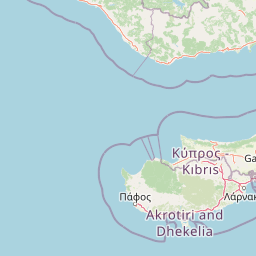
Map view of Koilada Ezousas

Use this park location map to pinpoint Koilada Ezousas in Cyprus, understand its exact geographic position, and read its mapped placement within the surrounding landscape more clearly.

Pigeon | © OpenStreetMap contributors
Recorded earthquake history

Explore the Historical Earthquake Catalogue for Koilada Ezousas

Review documented seismic events recorded near Koilada Ezousas using the MoriAtlas earthquake history collection. Examine historical event dates, magnitudes, and precise epicentre distances to gain a detailed perspective on the seismic activity recorded within the vicinity of this protected valley in western Cyprus.

Koilada Ezousas Earthquake History

Catalogued events

402 events

Strongest magnitude

Magnitude 6.8

Most recent event

Dec 12, 2025

This history includes earthquakes recorded inside the park or within 50 km of its borders

Park atlas

Compare regional valley reserves and connected Mediterranean bird habitats

Exploring Other Parks Near Koilada Ezousas and Surrounding Protected Landscapes

Browsing other parks near Koilada Ezousas reveals wider protected landscapes and regional valley reserves across western Cyprus. Comparing these adjacent natural areas provides deeper geographic context for Mediterranean avian habitats and inland terrain corridors.
Nature reserveCyprus
Park boundaries overlap#1 closest

North

Episkopi Morou Nerou: Mapping the Protected Nature Reserve Landscapes of Western Cyprus

A regional geography of river valleys, riparian galleries, and forest mosaics

Located in western Cyprus, Episkopi Morou Nerou is a notable nature reserve spanning river valleys and Mediterranean scrubland. This protected area supports an array of habitats, from oriental plane forests and poplar galleries to open phrygana and pseudo-steppe grasslands, serving as a critical sanctuary for diverse bird populations and native plant species.

Area
4.193 km²
Established
2002
Relief
Mixed relief
Climate
Mediterranean
Nature reserveCyprus
1.8 km away#2 closest

Southwest

Ekboles Potamon Ezousas, Xerou, Kai Diarizou: Nature Reserve and Coastal Habitat

Natura 2000 protected landscape in southwestern Cyprus

Spanning over 800 hectares, Ekboles Potamon Ezousas, Xerou, Kai Diarizou protects the vital intersections of three river mouths with the Mediterranean Sea. This nature reserve sustains a dense network of avian habitats, ranging from coastal flats to river corridors, and represents a crucial migratory waypoint and breeding ground within the Cyprus landscape.

Area
8.271 km²
Established
2007
Climate
Mediterranean
Scope
Terrestrial
Nature reserveCyprus
About 2.2 km away#3 closest

North

Kremmoi Ezousas Nature Reserve: Protected Inland Foothills and Bird Habitat in Cyprus

Mapped Mediterranean valley terrain and avian conservation zones

Situated in the inland valleys of western Cyprus, Kremmoi Ezousas functions as a key Special Protection Area within the Mediterranean ecoregion. The reserve supports a complex landscape of scrubland and seasonal watercourses that provide crucial breeding, wintering, and migratory refuge for dozens of bird species including raptors and passerines.

Area
15.7 km²
Established
2008
Climate
Mediterranean
Scope
Terrestrial
Nature reserveCyprus
2.6 km away#4 closest

Northwest

Koili - Mavrokolympos Nature Reserve: Mapping the Protected Landscapes of Interior Cyprus

A vital Mediterranean sanctuary defined by diverse habitats and limestone terrain.

Koili - Mavrokolympos stands as an essential nature reserve in the Cypriot interior, encompassing a dense mosaic of cypress forests, Oriental plane woodlands, and sun-drenched phrygana. This protected area offers deep insight into Mediterranean biodiversity, highlighting the intersection of complex hydrology and rocky, undulating limestone topography within a compact, ecologically significant boundary.

Area
2.968 km²
Established
2002
Relief
Mixed relief
Climate
Mediterranean
Nature reserveCyprus
5.6 km away#5 closest

East

Koilada Diarizou Nature Reserve and Mediterranean River Valley Geography

Protected riparian landscapes in the Paphos district of Cyprus

Koilada Diarizou represents a prime example of a Mediterranean river valley protected area in western Cyprus. This nature reserve sustains a mosaic of rocky limestone slopes, cypress woodlands, and seasonal riparian channels that serve as a critical reference point for understanding the island's unique ecological connectivity.

Area
13.58 km²
Established
2002
Relief
Mixed relief
Climate
Mediterranean
Protected areaCyprus
6.9 km away#6 closest

Northeast

Gkremoi Chanoutari Protected Area; Mapping Cyprus Inland Landscapes and Terrain

A critical Mediterranean bird sanctuary within the Troodos foothill region.

Gkremoi Chanoutari encompasses a unique mix of rocky crags, scrubby slopes, and rural hillsides across 2,470 hectares in the interior of Cyprus. This protected area serves as a primary site for cliff-nesting raptors and Mediterranean avifauna, offering a detailed look at the island's complex topography and mountain-to-valley ecological transitions.

Area
24.698 km²
Established
2007
Climate
Mediterranean
Scope
Terrestrial
Nature reservePaphos District
8.1 km away#7 closest

Southeast

Cha-Potami Nature Reserve: Protected Riverine Geography in Paphos District, Cyprus

River valley ecosystems and Mediterranean protected terrain

Cha-Potami spans a twelve-kilometer river stretch characterized by deep, narrow valleys and varied topography. This protected area offers a look into the rich ecological stratification of southwestern Cyprus, from dense riverside corridors and cypress-dotted slopes to rugged, raptor-nesting cliffside gorges that define the local landscape character.

Area
26.266 km²
Established
2000
Relief
Upland
Climate
Mediterranean
A soft watercolor painting of a curved sandy beach meeting the ocean, with green coastal hills and shrubs in the foreground.
Nature reservePaphos District
8.5 km away#8 closest

Northwest

Chersonisos Akama Nature Reserve: Geography and Protected Area Overview in Paphos District

Mapping Mediterranean forest, coastal, and marine ecosystems

Chersonisos Akama stands as an essential protected landscape in northwestern Cyprus. This atlas entry provides geographic insights into its varied terrain, ranging from juniper woodlands and endemic-rich grasslands to its significant offshore reefs and sea turtle nesting beaches. Understand the spatial distribution of this Natura 2000 site and its role in preserving eastern Mediterranean biodiversity.

Area
179.144 km²
Established
2009
Relief
Mixed relief
Climate
Mediterranean

Common questions about visiting, size, designation, and location context for Koilada Ezousas

Koilada Ezousas FAQs for park facts, access, geography, and protected area context

Find quick answers about Koilada Ezousas, including protected-area facts, park geography, trail and visitor context, and how the park fits into its surrounding country and regional landscape.
MoriAtlas Explorer

Continue Your Protected Areas Search Across the Global Atlas

Deepen your exploration by continuing the structured search for national parks and protected areas worldwide. Utilize the comprehensive filtering capabilities to compare different conservation landscapes and refine your understanding of global park geography. Discover more about the distribution and characteristics of protected natural areas.

Global natural geography