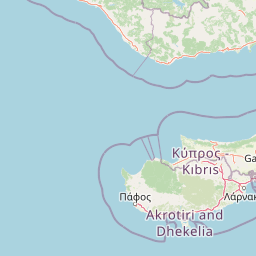
Why Koilada Potamou Maroullenas stands out
Koilada Potamou Maroullenas is best known for its Mediterranean river-valley landscape, where an intermittent watercourse and its riparian galleries of Salix alba and Populus alba cut through typical Cyprus xerophytic vegetation. The site is recognized for preserving a representative sample of Mediterranean phrygana, shrublands, and dry pine forests in a compact, ecologically coherent setting. The site is also notable within the Cypriot Natura 2000 network for its avifauna, with a long list of protected bird species tied to these dryland and valley habitats, including the endemic Cyprus wheatear and species of European conservation concern such as the European nightjar, the red-necked shrike, and the European turtle dove.
Koilada Potamou Maroullenas history and protected-area timeline
The formal protection history of Koilada Potamou Maroullenas is closely tied to Cyprus's participation in the European Natura 2000 network. The site was first designated as a Special Protection Area (SPA) for birds in December 2002, an initial recognition of the area's importance for its bird populations and the habitats that support them.
In September 2006, the site received an additional designation as a Site of Community Importance (SCI), broadening its official protection profile beyond avifauna to encompass its full range of natural habitats. A further step came in September 2015, when it was formally declared a Special Area of Conservation (SAC), consolidating its status as a multi-objective protected site. Through these three overlapping designations, the area has become an integrated component of Cyprus's Natura 2000 network, contributing to broader European-level conservation goals for Mediterranean ecosystems.
Koilada Potamou Maroullenas landscape and geographic character
The landscape of Koilada Potamou Maroullenas is defined by a Mediterranean river valley, where an intermittent watercourse (typical of Mediterranean climate regimes) creates a narrow ribbon of moister habitat through otherwise dry terrain. Along this watercourse, gallery formations of Salix alba and Populus alba stand alongside southern riparian shrub formations of the Nerio-Tamaricetea and Securinegion tinctoriae type, lending the valley floor a markedly greener and more structured appearance compared with the surrounding slopes.
Above the valley floor, the land rises into slopes clothed in characteristic Mediterranean dryland vegetation. Thermos-Mediterranean and pre-desert shrub formations, together with phrygana dominated by Sarcopoterium spinosum, create a low, dense, often spiny shrub layer. On more exposed rocky ground, siliceous slopes with chasmophyte vegetation add a distinctive rugged character, while matorral with Ziziphus and more open pseudo-steppe grasslands of the Thero-Brachypodietea type occupy transitional zones. Where soil and moisture conditions allow, remnants of Mediterranean forests of Olea and Ceratonia and Mediterranean pine forests of endemic mesogenous pines provide taller woody cover, anchoring the site's mosaic of vegetation types.
Koilada Potamou Maroullenas ecosystems, habitats, and plant life
Ecologically, Koilada Potamou Maroullenas belongs to the Mediterranean ecoregion and expresses the typical Mediterranean pattern of high habitat diversity compressed into a small geographic area. Eleven natural habitat types are recognized within the site, spanning aquatic, riparian, shrubland, grassland, rocky, and forest environments. This habitat diversity is the foundation for the site's species richness.
The vegetation mosaic reflects the climatic gradient from the relatively moist valley floor to the drier, sun-exposed slopes. Intermittent river channels with Paspalo-Agrostidion communities and Molinio-Holoschoenion tall herb meadows occupy the wettest locations. These transition into willow and poplar galleries, then into southern riparian scrub, thermos-Mediterranean shrublands and pre-desert formations, phrygana, pseudo-steppes, and matorral with Ziziphus on the drier, sunnier terrain. On rocky substrates, chasmophyte vegetation colonizes siliceous outcrops, while zonal forest vegetation reasserts itself as Mediterranean forests of Olea and Ceratonia, and Mediterranean pine forests of endemic mesogenous pines.
This mosaic supports a broad faunal community, with at least 21 protected bird species, mammals, reptiles, amphibians, invertebrates, and plants documented within or around the site, making the area a representative microcosm of Cypriot Mediterranean biodiversity.
Koilada Potamou Maroullenas wildlife and species highlights
The wildlife profile of Koilada Potamou Maroullenas is dominated by its rich bird community. The site is protected under the European Birds Directive framework for no fewer than 21 bird species, spanning typical Mediterranean valley and dryland birds as well as species of broader European conservation concern. Among them are the European nightjar, the red-rumped swallow, the hen harrier, the common cuckoo, the cinereous bunting and black-headed bunting, the European robin, the peregrine falcon, the olivaceous warbler, the red-backed shrike and the masked shrike (Lanius nubicus), the wood lark, the European bee-eater, the endemic Cyprus wheatear, the black redstart and common redstart, the European turtle dove, the blackcap, the common blackbird, the song thrush, and the Eurasian hoopoe.
Beyond birds, the area supports the Egyptian fruit bat (Rousettus aegyptiacus), a mammal of biogeographical interest as one of the few fruit bats present in the eastern Mediterranean. Reptile diversity is represented by the Cypriot form of the grass snake (Natrix natrix cypriaca) and the Cypriot whip snake or related Coluber cypriensis, both of which reflect the island's distinctive herpetofauna. The site also harbors the Jersey tiger moth (Euplagia quadripunctaria), a protected invertebrate of European conservation interest, while a small number of additional mammal, reptile, amphibian, and plant species supplement the overall faunal and floral inventory.
Koilada Potamou Maroullenas conservation status and protection priorities
Koilada Potamou Maroullenas carries significant conservation weight within the Cypriot Natura 2000 network because it concentrates a wide range of Mediterranean habitat types into a relatively small area. Its eleven recognized natural habitats include several that are prioritized at the European level, such as Mediterranean rivers with intermittent flow, thermos-Mediterranean shrublands, Mediterranean pine forests, riparian galleries, and Mediterranean forests of Olea and Ceratonia. Protecting these habitats in a single coherent unit gives the site disproportionate value per hectare for landscape-level biodiversity conservation in Cyprus.
The site's triple Natura 2000 designation, as a Special Protection Area for birds, a Site of Community Importance, and a Special Area of Conservation, underscores its role in conserving both individual protected species and the habitat complexes on which they depend. Of particular conservation relevance is the presence of the endemic Cyprus wheatear and other bird species of European concern, as well as endemic or range-restricted Cypriot reptile subspecies. The site thus functions as an important node for the long-term maintenance of Mediterranean dryland and river-valley biodiversity at both national and European scales.
Top sights and standout views in Koilada Potamou Maroullenas
The site's most distinctive qualities lie in the compact but exceptionally varied mosaic of Mediterranean habitats it preserves, ranging from intermittent river channels and willow-poplar galleries to phrygana, matorral, rocky chasmophyte slopes, and pine-Olea-Ceratonia forests. Within this small area, the protected landscape captures virtually the full ecological transition from a Mediterranean river valley to surrounding dryland shrublands and zonal forest formations.
Equally important is the site's role as a refuge for protected birds, including the endemic Cyprus wheatear and species of European conservation concern such as the European nightjar, red-backed shrike, masked shrike, and European turtle dove. The presence of the Egyptian fruit bat, Cypriot reptile subspecies, and the Jersey tiger moth further enhances the site's biodiversity profile, making it a high-value, multi-habitat conservation unit within Cyprus's Natura 2000 network.
Best time to visit Koilada Potamou Maroullenas
Koilada Potamou Maroullenas lies within the Mediterranean climatic zone of Cyprus, where summers are hot and dry and winters are mild and wetter. The most ecologically expressive period for visiting such a habitat mosaic is spring, when Mediterranean wildflowers, phrygana, and herbaceous layers are at their most active and bird activity, including breeding songbirds and the presence of migratory species, is typically at its peak.
Late autumn and winter can also be attractive for observing riparian and woodland birds in the valley's wetter galleries, when the intermittent watercourse is more likely to carry flow and the surrounding vegetation shifts toward a greener seasonal character. As a small, low-contrast inland valley site, it generally rewards visits in the cooler parts of the day during warmer months, when bird activity and comfortable walking conditions align best.