Why La Mauricie National Park stands out
La Mauricie National Park is best known for its expansive network of interconnected lakes and rivers that support one of Quebec's premier canoe-camping experiences. The park's canoe circuit provides access to roughly 200 backcountry camping sites reachable only by water, traversing a dozen lakes connected by historic portage trails through pristine boreal wilderness. The common loon serves as the park's emblematic species, with its haunting calls echoing across the lakes during summer months. The landscape features the striking Wapizagonke Lake with its distinctive Pines Island, a notable geological feature in the park's interior. The park also preserves evidence of Indigenous presence through cave paintings at Lake Wapizagonke, representing rare archaeological evidence of Native American spiritual practices in the region.
La Mauricie National Park history and protected-area timeline
Human presence in the La Mauricie area dates to the Archaic period, between 7000 and 3000 BC, with archaeological evidence concentrated around the lakes of Antigamac and Wapizagonke. Indigenous peoples including the Attikamekw and Algonquian peoples inhabited the Saint-Maurice River basin until the 17th century, relying on fishing, hunting, and trapping for subsistence. The Abenaki also utilized the area for hunting and trade through the mid-19th century. European industrial activity began in the early 1800s with selective logging of white and red pines, which continued until 1925 when trees of commercial diameter became scarce. The industry then shifted to pulpwood production, fundamentally transforming the region's forest composition through both harvesting and extensive white spruce planting on 426 hectares. Major forest fires in 1910 and 1954 further shaped the landscape. At the end of the 19th century, wealthy American tourists established private hunting and fishing clubs on the territory, with the Shawinigan Club opening in 1883, followed by the Laurentian Club in 1886 and Club Commodore in 1905. These exclusive clubs introduced numerous exotic fish species into the lakes and maintained control over the territory until the park's creation. The federal-provincial agreement that established La Mauricie National Park on August 21, 1970, terminated the activities of all 16 private clubs operating within the park's boundaries.
La Mauricie National Park landscape and geographic character
The physical geography of La Mauricie National Park reflects its position in the Grenville Province of the Canadian Shield, one of seven geological provinces comprising this ancient continental crust. The park's terrain consists of a gently west-sloping plateau composed of Precambrian metamorphic rocks approximately 955 million years old, with elevation ranging from 150 metres near the Saint-Maurice River to nearly 500 metres in the interior. These ancient rocks are strewn with valleys and geological faults that have been subsequently shaped by glacial activity during the Wisconsin glaciation. The retreating glaciers left behind recent deposits that now fill the lower valley areas, creating the hydrological conditions that support the park's extensive lake network. Approximately 150 lakes dot the landscape, varying from small acidic bog ponds at higher elevations to larger clear-water lakes in the valleys. The hydrographic network drains entirely into the Saint-Maurice River via the Matawin River, the Shawinigan River, and the Rivière à la Pêche. Notable features include the scenic Wapizagonke Lake with its central Pines Island, and Lac de la Tourbière representing the bog wetland ecosystems within the park.
La Mauricie National Park ecosystems, habitats, and plant life
The ecological character of La Mauricie National Park exemplifies the Eastern forest-boreal transition, where boreal and temperate forest elements intermingle across the landscape. The park contains more than 440 vascular plant species, 68 lichen species, and over 85 moss species, including 27 species of rare or special interest plants. Forest covers 93 percent of the territory, with 30 tree species distributed according to site conditions: sugar maple and yellow birch dominate the well-drained illuminated slopes, while balsam fir, various pine species, and spruces occupy rocky cliffs and wetland areas. The park lies within the Southern Laurentians ecoregion at the national level, part of the larger Southern Boreal Shield ecoprovince. This position at the northern treeline of deciduous forest in Quebec creates a unique ecological interface that supports species adapted to both boreal and temperate conditions. The park also includes the endangered butternut tree among its flora, representing a species at risk within the protected landscape.
La Mauricie National Park wildlife and species highlights
La Mauricie supports a diverse mammalian community including moose, American black bear, North American beaver, North American river otter, American marten, Canada lynx, eastern wolf, coyote, red fox, fisher, American mink, snowshoe hare, raccoon, porcupine, and groundhog. The park's aquatic environments serve as nesting habitat for common goldeneye, common merganser, American black duck, and the common loon, which serves as the park's emblematic species. Mixed forests support ruffed grouse, blue jay, black-capped chickadee, purple finch, ovenbird, black-throated blue warbler, veery, red-eyed vireo, eastern wood pewee, and yellow-bellied sapsucker. Raptors observed in the park include osprey, broad-winged hawk, barred owl, and great horned owl. Eight species at risk inhabit the park: eastern whip-poor-will, common nighthawk, chimney swift, olive-sided flycatcher, Canada warbler, peregrine falcon, and rusty blackbird. The park also hosts five reptile species including the endangered wood turtle, along with fourteen amphibian species. Fish diversity is relatively limited due to the relatively recent geological history of the lakes, with brook trout being the most common species.
La Mauricie National Park conservation status and protection priorities
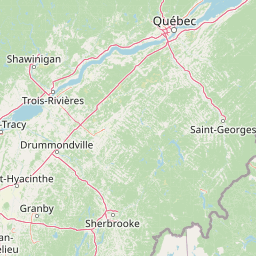
La Mauricie National Park functions as a protected area within Quebec's larger network of conservation lands, bordered by the Mastigouche Wildlife Reserve, Zec du Chapeau-de-Paille, and Saint-Maurice Wildlife Reserve. The park protects representative ecosystems of the Eastern forest-boreal transition, preserving biodiversity at the interface between boreal and temperate forest zones. Eight species at risk receive protection within the park's boundaries, including birds such as the Canada warbler and peregrine falcon, as well as the endangered wood turtle, one of Canada's rare reptile species. The park's conservation value is enhanced by its position within a larger complex of protected lands that create wildlife corridors across the Quebec landscape. Historical conservation efforts include the cessation of private club activities in 1970, which ended the practice of introducing exotic fish species that had threatened native populations including the only French population of Arctic char within the park.
La Mauricie National Park cultural meaning and human context
The La Mauricie region holds deep Indigenous heritage, with the Attikamekw and Algonquian peoples historically occupying the northern and southern basins of the Saint-Maurice River respectively. The Saint-Maurice River itself carries multiple Indigenous names: the Attikamekw know it as Tapiskwan Sipi meaning "River of the threaded needle," while the Wyandot called it Oquintondili and the Abenaki referred to it as Madôbalodenitekw. Archaeological evidence of Indigenous presence includes cave paintings at Lake Wapizagonke, representing rare spiritual and cultural expressions from the Archaic period. The name "Mauricie" itself derives from the Lordship of Maurice Poulin La Fontaine, granted to his wife in 1676 near the river's mouth, with the river previously known as "River Three Rivers" before adopting its current toponym throughout the 18th century. The private hunting and fishing clubs established in the late 19th century by wealthy American tourists left a lasting legacy in the park, with the Wabenaki and Andrew lodges from the Laurentian Club being acquired by Parks Canada in 1972 and converted into visitor accommodations.
Top sights and standout views in La Mauricie National Park
The park's signature experience is its canoe-camping circuit, which provides access to approximately 200 backcountry campsites reachable only by paddling through a chain of a dozen lakes connected by historic portages. Wapizagonke Lake offers the iconic view of Pines Island rising from its centre, while the network of 150 lakes provides diverse paddling experiences from open water paddling to intimate bog ponds. The common loon's haunting call across the lakes creates an emblematic wilderness soundscape. The regenerated forests now display vibrant autumn colour displays along trails such as the route to Lake Gabet. The park's proximity to major Quebec cities makes it accessible for weekend wilderness getaways while maintaining a remote backcountry character. Historical features including the former Laurentian Club lodges provide human heritage context within the natural landscape.
Best time to visit La Mauricie National Park
The optimal visiting season runs from May through October, when the park's network of lakes and trails becomes fully accessible. Summer months (June to August) offer the warmest conditions for paddling, swimming, and camping, with long daylight hours enabling extended canoe circuits. Autumn (September to October) transforms the landscape with spectacular fall colour as sugar maple and yellow birch display vibrant red, orange, and gold foliage. This season offers exceptional photography opportunities and cooler temperatures comfortable for hiking. Spring melt typically opens the interior lakes by late May, though some backcountry routes may remain water-high into early June. Winter visits are possible for cross-country skiing and snowmobiling on established trails, though the park's primary season for most visitors aligns with the ice-free months. The shoulder seasons of late spring and early fall typically offer fewer crowds while maintaining excellent outdoor conditions.