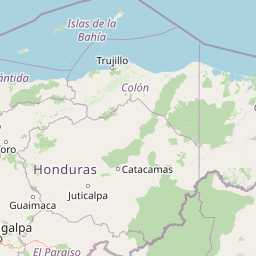
Why La Tigra National Park stands out
La Tigra National Park is best known as Honduras' pioneering national park and as a vital cloud forest watershed that supplies Tegucigalpa with a significant portion of its drinking water. The park protects one of the most accessible cloud forest ecosystems in Central America, offering visitors the opportunity to walk through mist-laden trails surrounded by towering oaks, pines, and the sacred ceibo tree revered by the Maya civilization. The park is renowned for its birdlife, particularly the resplendent quetzal, and for the dramatic landscapes of the Honduran highlands where the cloud forest creates an almost perpetual ethereal atmosphere.
La Tigra National Park history and protected-area timeline
La Tigra National Park was officially established on January 1, 1980, through decree No. 976-80, making it the first national park in Honduras. However, the protection of this mountain forest dates back much further, with evidence of conservation awareness beginning in the early 1920s when the water resources of La Tigra were recognized as essential for the growing capital city. The weirs constructed in Jutiapa during that period serve as historical evidence of early efforts to manage and protect the watershed. The park's creation represented a significant milestone in Honduran environmental policy, as it established a model for subsequent protected areas throughout the country. The governance structure through AMITIGRA represents an innovative approach that involves local communities in the management and stewardship of the reserve, ensuring that conservation efforts are integrated with the needs of people who live in and around the protected area.
La Tigra National Park landscape and geographic character
The landscape of La Tigra National Park is defined by its position in the Honduran highlands, where elevations ranging from 1,800 to 2,185 meters create a cool, moist environment distinctly different from the tropical lowlands below. The terrain is characterized by steep slopes, narrow valleys, and ridges covered in dense cloud forest vegetation. Constant mist and fog create an almost perpetual atmospheric quality, with moisture dripping from leaves and creating the characteristic drip tip adaptations seen in cloud forest plants. The forest canopy includes towering oaks and pines, while the understory features an incredible density of ferns, bromeliads, and epiphytic plants that thrive in the humid conditions. The park's four access points lead visitors through varying terrain, with the main routes connecting Tegucigalpa to El Hatillo, Valle de Ángeles, San Juancito, and Cantarranas, each offering different perspectives on this mountainous landscape.
La Tigra National Park ecosystems, habitats, and plant life
The cloud forest ecosystem of La Tigra represents one of the most ecologically significant habitat types in Central America. These high-altitude tropical forests receive moisture primarily from cloud immersion rather than direct rainfall, creating unique conditions that support specialized plant and animal species. The vegetation includes diverse tree species such as oak, encino, pine, and ceibo—the sacred tree of the Mayan civilization—along with an extraordinary abundance of epiphytes including bromeliads, ferns, mosses, and fungi that carpet every surface. The forest structure creates distinct vertical zones, from the canopy where birds and arboreal mammals move through epiphyte-laden branches to the forest floor where decomposing organic matter supports a complex soil ecosystem. This cloud forest also functions as a critical watershed, capturing atmospheric moisture and releasing it gradually as clean water that supplies Tegucigalpa and surrounding communities.
La Tigra National Park wildlife and species highlights
La Tigra National Park supports remarkable wildlife diversity despite its relatively compact size. The bird population is particularly impressive, with over 200 species recorded, including both migratory species that visit from North America and resident tropical birds. The park is especially notable for populations of the resplendent quetzal, a bird considered sacred by the Maya and now cherished as a symbol of Central American forests. Mammal species number at least 31, with six classified as endangered, two as threatened, and two considered rare. The reptile and amphibian populations include approximately 13 reptile species—two considered rare and two venomous—along with three amphibian species. The diverse wildlife reflects the park's role as a protected corridor in the Central American isthmus, where species from North and South America mix in these highland forests.
La Tigra National Park conservation status and protection priorities
La Tigra National Park holds significant conservation importance as the first protected area designated under Honduras' national park system, establishing a precedent for nature conservation throughout the country. The park's cloud forest ecosystem represents a habitat type that has been significantly reduced throughout Central America due to agricultural expansion, logging, and development pressures. Beyond its biological significance, the park serves critical ecosystem services by providing clean water to Tegucigalpa and surrounding communities, supplying over 30 percent of the capital's water needs and 100 percent of water for neighboring villages. This watershed function demonstrates how biodiversity protection directly supports human well-being. The division of the park into nucleus and buffer zones reflects a zoning approach that concentrates strict protection in the most sensitive core area while allowing sustainable use in the surrounding region.
La Tigra National Park cultural meaning and human context
The cultural significance of La Tigra National Park extends to the pre-Columbian heritage of Honduras, particularly through the presence of the ceibo tree—a species revered by the Mayan civilization as a sacred symbol. The area has been inhabited and used by local communities for generations, with historical evidence of water management infrastructure dating to the 1920s that reflects early recognition of the watershed's importance. The park's management through AMITIGRA involves local communities in conservation efforts, creating a model where protection works in harmony with the needs of people who depend on the forest's resources. Communities such as Jutiapa and El Rosario are integral to the park's operation, providing visitor services and maintaining traditional relationships with the land.
Top sights and standout views in La Tigra National Park
La Tigra National Park offers visitors the opportunity to experience one of Central America's most accessible cloud forests, with a network of eight trails spanning over 23 kilometers through the nucleus zone. The canopy adventure activity provides an thrilling perspective on the forest, featuring one kilometer of cables, seven ziplines, two hanging bridges, and ten platforms elevated up to 25 meters above the forest floor. The park's two visitor centers—at Jutiapa and El Rosario—provide eco-lodge accommodations and educational exhibits, including a museum at the El Rosario facility. The presence of the resplendent quetzal makes this a destination of particular interest for birdwatchers, while the historical significance as Honduras' first national park adds cultural depth to the natural experience.
Best time to visit La Tigra National Park
The cloud forest of La Tigra maintains its characteristic misty conditions throughout the year, though visitor experiences vary by season. The dry season from November through April typically offers clearer views and more comfortable hiking conditions, though morning mist remains common. The wet season from May through October brings more frequent rainfall but also creates the most dramatic cloud forest atmosphere, with mist rolling through the canopy and waterfalls flowing more robustly. Year-round temperatures are cool for the tropics due to the high elevation, ranging from mild daytime conditions to cooler evenings. The park's proximity to Tegucigalpa makes it accessible for day trips, though staying at one of the eco-lodges allows for deeper exploration of the trails and better opportunities to observe wildlife during the quieter early morning hours.