
Why Little Jacks Creek Wilderness stands out
Little Jacks Creek Wilderness is best known for its dramatic, deeply incised river canyons carved into high basalt plateaus, with walls reaching roughly 1,000 feet in depth. The area is recognized for its largely undisturbed sagebrush steppe habitat, its wild river segment along Little Jacks Creek, and its role as part of the Owyhee Canyonlands, one of the most significant American wilderness expansions of the early twenty-first century.
Little Jacks Creek Wilderness history and protected-area timeline
Little Jacks Creek Wilderness did not exist as a protected area until the late 2000s. For most of its history, the surrounding landscape was used for ranching and widely seen as remote, dry public land with relatively little formal protection. Congressional interest in safeguarding large blocks of southwestern Idaho canyon country grew through the early 2000s, ultimately culminating in the Omnibus Public Land Management Act of 2009.
On March 30, 2009, President Barack Obama signed the Act into law, creating Little Jacks Creek Wilderness along with five other wilderness areas in Owyhee County: the Bruneau-Jarbidge Rivers, Big Jacks Creek, North Fork Owyhee, Owyhee River, and Pole Creek wildernesses. Together, these six units are often referred to as the Owyhee Canyonlands Wilderness Areas. In a single legislative act, Idaho gained more than 517,000 acres of new wilderness, with Little Jacks Creek contributing roughly 50,929 acres to that total.
Wilderness designation under the 1964 Wilderness Act brought a firmly protected status that prohibits motorized vehicles, mechanical equipment, new roads, buildings, logging, and mining. Camping, fishing with proper permits, and seasonal hunting are allowed, but the area is otherwise managed to preserve its undeveloped character. The creation of the wilderness filled a long-standing gap in protection for the Owyhee landscape and ensured that Little Jacks Creek and its canyon system would remain in a largely unaltered state.
Little Jacks Creek Wilderness landscape and geographic character
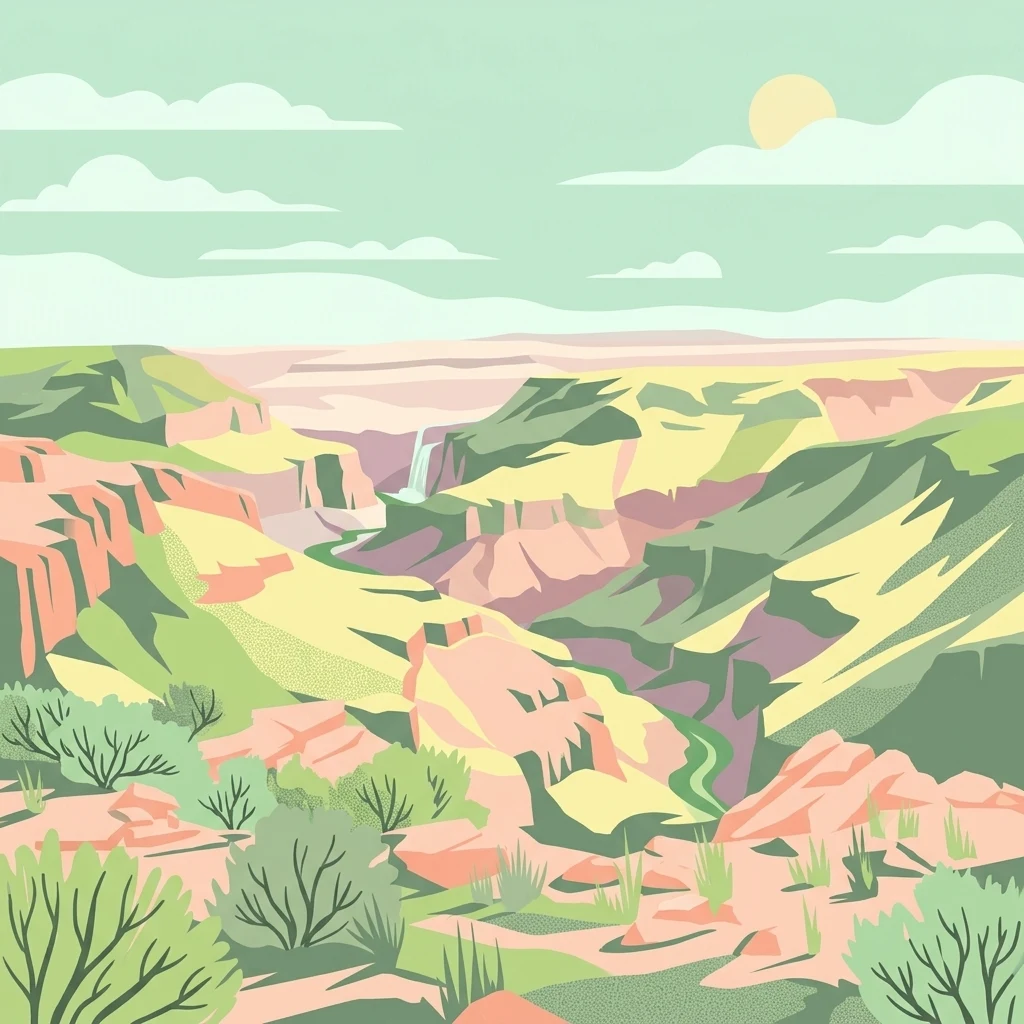
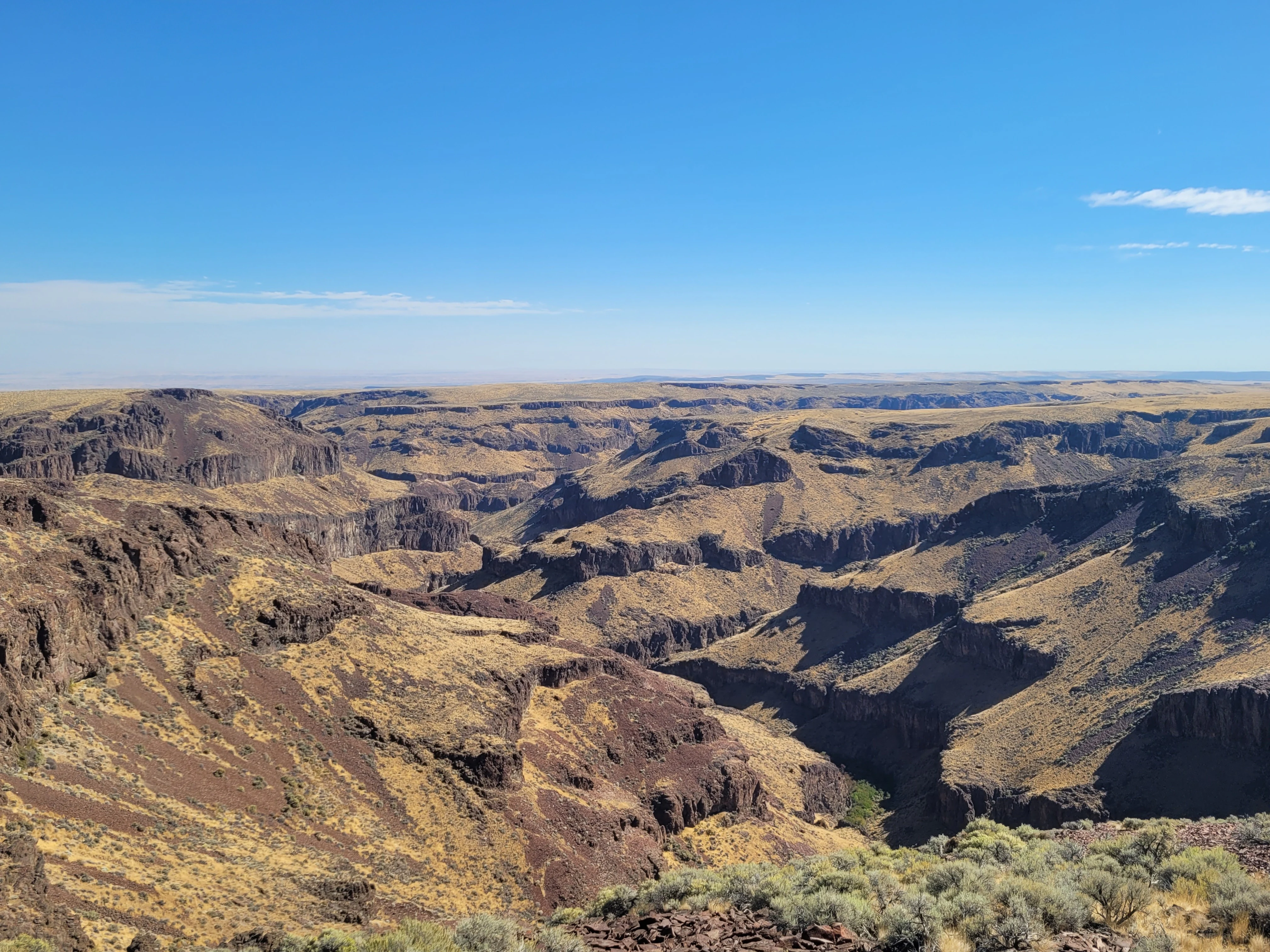
The landscape of Little Jacks Creek Wilderness is dominated by high, flat basalt plateaus broken abruptly by deep, narrow canyons. The plateau surfaces are rolling and largely treeless, covered with grasses and sagebrush that emphasize the openness of the terrain. Where streams such as Little Jacks Creek have cut downward over time, the surface drops into gorges that, in several places, reach depths of approximately 1,000 feet.
Geologically, the area combines dark basalt flows with prominent exposures of red rhyolite. A distinctive large brown basalt dome rises above the surrounding terrain and serves as one of the more recognizable landforms within the wilderness. The colour contrast between the rust-toned rhyolite cliffs, the darker basalt layers, and the muted greens and greys of the desert vegetation gives the canyons a layered, painterly appearance.
Canyons are the central landscape feature of the wilderness. Rattlesnake Canyon is one of many tributary gorges that feed into the Little Jacks Creek system. The combination of steep walls, narrow bottoms, and sparsely vegetated rims produces a landscape that feels both immense and contained, with long sight lines across the plateau interrupted by sudden, dramatic drops into rock-walled drainages.
Little Jacks Creek Wilderness ecosystems, habitats, and plant life
Little Jacks Creek Wilderness lies within the Owyhee Desert, part of the broader northern Basin and Range ecoregion, which stretches across much of the inland American West. This ecoregion is defined by alternating basins and fault-block ranges, arid climate, and vegetation adapted to low rainfall and large temperature swings. In the wilderness, the characteristic vegetation is sagebrush steppe, with scattered grasses and hardy desert shrubs covering the plateau surfaces.
Despite the arid setting, the canyon bottoms and permanent streams support a different ecological world. Cooler, moister microclimates along Little Jacks Creek and its tributaries allow native fish such as Columbia River redband trout to persist in isolated stream reaches. Riparian vegetation along these waterways contrasts with the open uplands, creating narrow ribbons of green habitat that are ecologically significant in an otherwise dry landscape.
The combination of sagebrush uplands, rocky canyon walls, and riparian corridors produces a mosaic of habitats unusually compressed into a relatively small geographic area. This diversity, paired with the absence of roads and development, makes the wilderness an important stronghold for species that struggle in more fragmented parts of the surrounding region.
Little Jacks Creek Wilderness wildlife and species highlights
Wildlife in Little Jacks Creek Wilderness reflects the broader character of the northern Basin and Range, with species strongly tied to sagebrush country and rugged canyon terrain. Mule deer move through the plateau and canyon-edge habitats, using the mix of open range and cover that the landscape provides. Mountain quail are among the more distinctive upland birds present in the area, occupying the rougher, brushier draws.
Sage grouse, a species closely tied to healthy sagebrush ecosystems, also inhabit the wilderness and surrounding lands. Their presence underscores the ecological importance of the unbroken sagebrush steppe that the wilderness protects. Along the streams, native Columbia River redband trout occupy the cooler, permanent waters of Little Jacks Creek and its tributaries, representing one of the more localized wildlife values of the area.
Birds of prey, smaller mammals suited to arid environments, and a variety of reptiles typical of the high desert likely inhabit the canyons and plateaus as well. The relatively undisturbed nature of the landscape, combined with the absence of motorized access, gives the area refuge value that is increasingly rare across the broader region.
Little Jacks Creek Wilderness conservation status and protection priorities
Little Jacks Creek Wilderness plays a meaningful role in the conservation of the northern Basin and Range, a region facing substantial pressure from grazing, mineral development, invasive species, and habitat fragmentation. By locking in protections under the 1964 Wilderness Act, the designation preserves a large, contiguous block of sagebrush steppe and canyon habitat from new roads, motorized use, logging, and mining.
The wilderness is part of the larger Owyhee Canyonlands complex designated in 2009, which collectively added more than 500,000 acres of wilderness in Idaho. This scale matters: many wildlife species of the region, including sage grouse and mule deer, require large, connected landscapes, and the Owyhee Canyonlands now provide one of the more intact such blocks in the state. The protection of roughly twelve miles of Little Jacks Creek as a wild river further strengthens the conservation profile of the area, safeguarding both the stream itself and its associated riparian habitat.
In a regional context, the wilderness helps buffer some of the most ecologically important features of the Owyhee Desert, including canyon-stream ecosystems that support isolated native trout populations. While the area is not immune to external threats such as invasive grasses and changing climate, its protected status gives it a durable level of security that is unusual for lower-elevation desert landscapes in the western United States.
Little Jacks Creek Wilderness cultural meaning and human context
The human cultural context of Little Jacks Creek Wilderness is shaped primarily by ranching and the long-standing identity of southwestern Idaho as open, sparsely populated range country. The area lies within traditional grazing landscapes, and ranching heritage remains one of the most visible cultural threads in the broader Owyhee region.
The wilderness itself, however, contains little in the way of built cultural features. Its remoteness, lack of roads, and absence of structures reflect both its ruggedness and the conservative, hands-off approach that wilderness designation imposes on land use. As such, the cultural significance of the area today is as much about what is intentionally absent from the landscape as about any specific heritage feature within it.
Top sights and standout views in Little Jacks Creek Wilderness
Little Jacks Creek Wilderness stands out for the sheer depth and drama of its canyon system within an otherwise flat, expansive plateau landscape. The interplay of basalt and red rhyolite, the roughly 1,000-foot canyon walls, and the unbroken sagebrush uplands above create a striking visual contrast.
Equally significant is its role within the 2009 Owyhee Canyonlands designation, a major moment for wilderness conservation in Idaho. The wilderness also protects a wild river segment of Little Jacks Creek, ensuring that its ecological and scenic qualities remain intact for the long term.
Best time to visit Little Jacks Creek Wilderness
Spring and early summer tend to be the most accessible seasons in the Owyhee region for visiting Little Jacks Creek Wilderness, when cooler temperatures and occasional spring moisture improve conditions for徒步 hiking and horseback travel and bring brief greening to the sagebrush steppe. Wildlife is generally easier to observe as animals concentrate around remaining water sources during this period.
Late summer and early autumn can also be rewarding, with stable, dry weather and clear views across the plateau edges into the canyons, though temperatures rise sharply. Winter brings snow to the higher elevations and can make access difficult due to remote road conditions, but offers exceptional solitude for experienced visitors prepared for cold, narrow daylight hours and unpredictable weather in the high desert.