

Mori Atlas logo
Nature reserveMadari - Papoutsa

Analyzing the rugged terrain, endemic pine forests, and ecological connectivity of this upland Mediterranean protected area.

Madari - Papoutsa Nature Reserve: Mapped Protected Landscapes and Highland Geography in Central Cyprus

Madari - Papoutsa Nature Reserve serves as a crucial protected landscape within the inland highlands of Cyprus. This site spans over four thousand hectares of diverse terrain, ranging from siliceous rocky slopes to dense coniferous woodlands and endemic juniper formations. By preserving essential habitats for protected bird species and endemic flora, the reserve maintains habitat connectivity across the mountainous backbone of the island, offering a clear window into the Mediterranean ecoregion and its complex geological history.

Natura 2000Special Area of ConservationMediterranean ecoregionMountain habitatsPine forestJuniper woodland

Madari - Papoutsa

Nature reserve

Park overview

Structured park overview, official facts, and landscape profile for Madari - Papoutsa

Madari - Papoutsa park facts, protected area profile, and essential visitor context

Review the core facts for Madari - Papoutsa, including designation, size, terrain, visitor scale, habitats, and operating context in one park-focused overview.

About Madari - Papoutsa

Madari - Papoutsa occupies a significant position within the protected natural heritage of Cyprus, representing one of the island's principal inland refuges of Mediterranean biodiversity. The site is centred in the central highlands and forms part of the broader upland corridor that anchors Cyprus's most ecologically important terrestrial ecosystems. Its inland mountain setting, away from the coastal lowlands that dominate much of the island's land use, gives it a distinct natural character shaped by altitude, rock exposure, and relict forest communities.

The protected area encompasses eleven natural habitat types recognised under the European habitat classification framework. These range from chasmophytic vegetation on siliceous rocky outcrops to extensive endemic juniper forests, Mediterranean pine woodlands featuring endemic black pines and mesogean pines, cypress forest, and shrubby formations of Quercus alnifolia and Sarcopoterium spinosum phrygana. The site also includes rarer relict habitats featuring Platanus orientalis and Liquidambar orientalis, which are unusual for the eastern Mediterranean and ecologically valuable as fragments of an older woodland flora. Together, these habitats create a layered landscape of rocky slopes, pine-clad ridges, juniper woodlands, and ancient broadleaf stands.

Madari - Papoutsa is administered under the Natura 2000 framework, the European Union's coordinated network of protected natural areas. Its designation as a Site of Community Importance in 2004 and its later confirmation as a Special Area of Conservation in 2015 reflect both the ecological richness of the site and its importance for the long-term conservation of Mediterranean habitats in Cyprus. Within the country's Natura 2000 network, the site stands out for the diversity of its natural habitats and the unusually high number of protected bird species that depend on its forests, cliffs, and shrublands.

Quick facts and research context for Madari - Papoutsa

Madari - Papoutsa is a Cyprus-based Natura 2000 site classified as both a Site of Community Importance and a Special Area of Conservation, covering approximately 4,578 hectares entirely on land. It lies within the Mediterranean ecoregion and protects eleven natural habitat types, ranging from siliceous rocky slopes with chasmophytic vegetation to endemic juniper forests, Mediterranean pine woodlands with endemic pines, and relict stands of oriental plane and sweetgum.

The site was first proposed as a Site of Community Importance in May 2004 and was formally designated as a Special Area of Conservation in September 2015. Two plant species and sixty-four animal species form the core of its conservation interest, supported by additional records of plants, amphibians, mammals, invertebrates, and reptiles documented within its boundaries. The protected area serves as a key upland refuge for Cyprus-endemic subspecies and for migratory and resident bird communities of the central highlands.

Protection and recognition

Explore documented terrestrial protection metrics and official Natura 2000 listings.

Madari - Papoutsa Protection Status and International Recognition Records

Madari - Papoutsa holds established terrestrial protection status backed by official Natura 2000 designation records established in 2015. Conservation researchers evaluate these documented administrative boundaries and recognition frameworks to understand regional protected area management scopes.

International recognition

Protection details

Protection scope
Terrestrial
Designated year
2015
Transboundary protection
No
Park context

Deeper park guide and search-rich context for Madari - Papoutsa

Madari - Papoutsa history, landscape, wildlife, and travel context

Explore Madari - Papoutsa through its history, landscape character, ecosystems, wildlife, conservation priorities, cultural context, and seasonal travel timing in a structured park guide built for atlas discovery and search intent.

Why Madari - Papoutsa stands out

Madari - Papoutsa is especially known for its Mediterranean pine forests dominated by endemic black pines, its stands of endemic juniper woodland, and its communities of Quercus alnifolia shrubland and relicts of oriental plane. Among its most celebrated natural values is the presence of the Cypriot endemic Crocus cyprius, alongside the island-endemic Chionodoxa lochiae, both of which are anchored to its rocky slopes and woodland clearings. The site is equally recognised for its rich birdlife, with fifty-nine protected bird species recorded, including raptors such as Bonelli's eagle, Eleonora's falcon, and peregrine falcon, along with many passerines represented by Cypriot endemic or sub-endemic forms such as the Cyprus wheatear and the Cypriot subspecies of the short-toed treecreeper. This combination of pine woodland, juniper formations, and highland rock habitats creates one of the most ecologically distinctive upland complexes in Cyprus.

Madari - Papoutsa history and protected-area timeline

The conservation history of Madari - Papoutsa is closely tied to Cyprus's participation in the European Natura 2000 network. The site was formally proposed and accepted as a Site of Community Importance in May 2004, an early step that recognised its ecological significance at the European level and committed Cyprus to its protection. This designation placed the site within the broader framework used by European Union member states and associated countries to identify and safeguard their most valuable natural areas.

The site received an additional and stronger layer of protection in September 2015, when it was formally classified as a Special Area of Conservation. This status reflects a more rigorous conservation regime aimed at maintaining the habitats and species for which the site was originally identified. The eleven habitat types and the suite of protected species, including two plants, two mammals, two reptiles, one invertebrate, and fifty-nine bird species, were central to this designation and continue to define the conservation priorities of the area today.

Madari - Papoutsa landscape and geographic character

The landscape of Madari - Papoutsa is defined by the rugged topography of inland Cyprus, where elevated terrain, exposed rock, and forested ridges combine to create a varied and visually striking environment. Siliceous rocky slopes with chasmophytic vegetation form the geological backbone of parts of the site, supporting specialised plant communities adapted to thin soils and intense sunlight. Eastern Mediterranean scree slopes add to the structural diversity of the terrain, producing harsh yet ecologically rich microhabitats along cliffs and rockfall zones.

Above the rocky base, the site rises into forested ridges and highland slopes dominated by Mediterranean pine forests with endemic pines, including endemic black pines and endemic mesogean pines. Junipers, both as full forest and as arborescent matorral, occupy much of the drier upland, while cypress forests and oak formations create additional woodland zones. Relict fragments of Platanus orientalis and Liquidambar orientalis woodland and stands of Quercus alnifolia give the landscape a sense of botanical depth and historical continuity within the eastern Mediterranean context.

Madari - Papoutsa ecosystems, habitats, and plant life

Ecologically, Madari - Papoutsa sits firmly within the Mediterranean ecoregion and reflects the typical diversity of habitats associated with upland Cyprus. Its forest cover includes Mediterranean pine formations with endemic pines, endemic juniper woodlands, cypress forests, oak shrublands, and stands dominated by Quercus alnifolia, an oak species particularly associated with the higher elevations of the island. The alternation of woodland, phrygana, and rocky slopes creates the ecotonal richness that supports much of the site's ecological importance.

A particularly distinctive feature of the site is the presence of relict broadleaf woodland composed of oriental plane and oriental sweetgum, a habitat type that is uncommon in the eastern Mediterranean and reflects a more ancient woodland character. Combined with chasmophytic rock vegetation, Sarcopoterium spinosum phryganas, juniper matorral, and scree communities, the natural area hosts a layered sequence of habitats ranging from deep-rooted woodland to exposed lithic environments. These varied habitats support correspondingly varied plant and animal communities and are the foundation of the site's biodiversity value.

Madari - Papoutsa wildlife and species highlights

Madari - Papoutsa is notable for the richness of its birdlife, with fifty-nine protected bird species documented across its forests, rocky slopes, and shrublands. Raptors are a key component of this diversity, with species such as Bonelli's eagle, Eleonora's falcon, peregrine falcon, northern goshawk, Eurasian sparrowhawk, and European honey buzzard using the site for hunting, breeding, or passage. Large soaring species such as the griffon vulture also occur in the area, reflecting the importance of the open and rocky terrain for scavengers and for thermal soaring.

The site is equally significant for passerines, including several species with Cypriot endemic or sub-endemic subspecies. The Cyprus wheatear, the Cyprus form of the short-toed treecreeper (Certhia brachydactyla dorotheae), and the Cypriot subspecies of the coal tit (Periparus ater cypriotes) are particularly notable, alongside species such as the black-headed bunting, Ruppell's warbler, Cyprus warbler, spectacled warbler, and the masked shrike. Beyond birds, the site supports two bat species, the greater horseshoe bat and the lesser horseshoe bat, two reptile species including the Cypriot endemic Coluber cypriensis, and a notable invertebrate, Euplagia quadripunctaria.

Madari - Papoutsa conservation status and protection priorities

From a conservation perspective, Madari - Papoutsa is one of the most important upland protected areas in Cyprus, particularly because of the diversity of its habitats and the unusually high number of protected species it shelters. Its designation as both a Site of Community Importance and a Special Area of Conservation under Natura 2000 places it within the European Union's most rigorous framework for terrestrial nature protection, with implications for habitat management, species monitoring, and long-term ecological integrity.

The site's conservation value is enhanced by the presence of endemic and restricted-range taxa, including the plant species Crocus cyprius and Chionodoxa lochiae, the reptile Coluber cypriensis, and several bird subspecies endemic to Cyprus. The eleven natural habitat types it protects include several that are uncommon elsewhere in the European Union network, such as the Platanus orientalis and Liquidambar orientalis woodland habitat and the various Mediterranean pine and juniper formations with endemic pines. Together, these features make the site a key reference area for the conservation of Mediterranean upland biodiversity in the eastern Mediterranean.

Top sights and standout views in Madari - Papoutsa

Madari - Papoutsa stands out among Cyprus's protected areas for its unusual concentration of Mediterranean forest types within a relatively compact highland setting, ranging from endemic pine woodland to ancient relict broadleaf and juniper formations. The site's botanical profile is strengthened by two strictly protected plant species of Cypriot significance, while its zoological value is anchored by fifty-nine protected bird species and a suite of endemic or sub-endemic taxa.

The combination of Natura 2000 SAC status, eleven distinct habitat types, and a strong roster of protected species gives the site a particularly prominent position within Cyprus's network of natural areas. Its rocky slopes, pine ridges, juniper woodlands, and rare plane and sweetgum relicts collectively illustrate the natural complexity of the Cypriot highlands.
Monthly climate preview

Long-term temperature ranges and precipitation data across the representative park coordinate

Madari - Papoutsa Climate Normals, Measured Temperatures and Monthly Precipitation Patterns

Historical averages for Madari - Papoutsa show sustained temperature progression alongside shifts in monthly precipitation totals from NASA POWER data records. Reviewing the complete twelve-month profile provides detailed meteorological context for regional climatological studies.
Annual mean20 °C
10 °C30 °C
Jan10°
Feb11°
Mar13°
Apr17°
May22°
Jun27°
Jul30°
Aug30°
Sep27°
Oct22°
Nov17°
Dec12°
Warmest month
July

29.8 °C

Coolest month
January

10.5 °C

Wettest month
December

2.7 mm/day

Driest month
July

0 mm/day

Park location guide

Geography guide, regional context, and park location map for Madari - Papoutsa

Madari - Papoutsa park geography, regions, and map view in Cyprus

Understand where Madari - Papoutsa sits in Cyprus through a broader geographic reading of the surrounding landscape, nearby location context, and its mapped position within the national park landscape.

How Madari - Papoutsa fits into Cyprus

Cyprus is an island nation in the eastern Mediterranean Sea, positioned at the crossroads of Europe, Africa, and Asia. The Republic of Cyprus governs the southern portion of the island, with Nicosia as its capital and largest city. The island has a complex political situation due to the Turkish occupation in the north and contains British military bases in the south. Cyprus gained independence from Britain in 1960 and is a member of the European Union.

Wider geography shaping Madari - Papoutsa in Cyprus

Cyprus is an island located in the eastern Mediterranean Sea, off the coast of the Levant in West Asia. The island lies approximately 75 km south of Turkey, 105 km west of Syria, and 380 km north of Egypt. The terrain varies from mountainous regions in the north and interior to plains and coastal areas. The Troodos Mountains dominate the central and southwestern part of the island. The island has no land borders as it is entirely surrounded by sea.

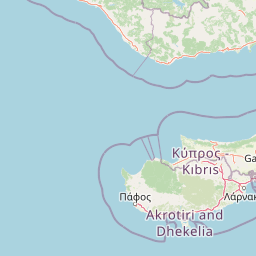
Map view of Madari - Papoutsa

Use this park location map to pinpoint Madari - Papoutsa in Cyprus, understand its exact geographic position, and read its mapped placement within the surrounding landscape more clearly.

Pigeon | © OpenStreetMap contributors
Recorded earthquake history

Review the Madari - Papoutsa Earthquake History and Seismic Catalogue

Browse a structured collection of historical earthquake records associated with the Madari - Papoutsa protected area. This MoriAtlas resource provides clear access to past seismic data for the Cyprus highlands, allowing for focused geographic analysis of recorded events without relying on predictive or hazard-based metrics.

Madari - Papoutsa Earthquake History

Catalogued events

263 events

Strongest magnitude

Magnitude 5.6

Most recent event

Nov 13, 2025

This history includes earthquakes recorded inside the park or within 50 km of its borders

Park atlas

Compare adjacent highland reserves and connected mountain habitats across the region.

Explore Parks Near Madari - Papoutsa and Surrounding Protected Landscapes

Browse other protected areas near Madari - Papoutsa to evaluate similar Mediterranean pine forests and rugged upland terrain. Comparing nearby reserves reveals broader ecological patterns across the rugged interior mountain backbone of Cyprus.
Nature reserveNicosia District
Park boundaries overlap#1 closest

East

Fountoukodasi Pitsilias Nature Reserve: Geographic Overview and Protected Mountain Terrain

A dense Mediterranean ecological mosaic in the Troodos range

Located within the Pitsilia region, Fountoukodasi Pitsilias encompasses a vital protected area where traditional agricultural terraces meet mature pine and oak forests. The site mapping reveals a network of stream valleys that support high levels of endemic biodiversity and unique riparian vegetation. This area serves as a primary reference for understanding the intersection of human-shaped cultural landscapes and preserved natural habitats in the Cypriot mountains.

Area
50.04 km²
Established
2006
Relief
Mountain
Climate
Mediterranean
Nature reserveCyprus
1.9 km away#2 closest

North

Periochi Atsa - Agios Theodoros Nature Reserve: Inland Cyprus Protected Area and Mapping

Essential Mediterranean habitat for breeding and migratory birds

Located in the heart of Cyprus, this nature reserve protects nearly 3,000 hectares of Mediterranean terrain. Its primary function is maintaining ecological stability for 45 species of birds, including raptors and Mediterranean specialists. This site represents a key component of the inland protected area network, essential for understanding the environmental geography of the eastern Mediterranean basin.

Area
29.242 km²
Established
2008
Climate
Mediterranean
Scope
Terrestrial
Nature reserveCyprus
6 km away#3 closest

Southeast

Dasos Lemesou Nature Reserve: Protected Mediterranean Landscapes and Geography in Cyprus

Analyzing habitat diversity across the southern Cypriot interior.

Dasos Lemesou is a vital nature reserve and Natura 2000 site in southern Cyprus, defined by rocky ridges, seasonal watercourses, and twelve distinct habitat types. This area offers an in-depth view of Mediterranean forest character, including rare serpentine grasslands and pine woodland ecosystems. Explore its geographic distribution and protected boundaries to understand its role in regional biodiversity conservation.

Area
48.32 km²
Established
2002
Relief
Mixed relief
Climate
Mediterranean
Protected areaCyprus
About 6 km away#4 closest

North

Merras-Petromoudkia Protected Area: Mapping the Mediterranean Landscapes of Central Cyprus

An Essential Protected Habitat for Birds and Mediterranean Matorral

Merras-Petromoudkia functions as a terrestrial protected landscape in the heart of Cyprus, featuring a complex interplay of phrygana vegetation, arborescent matorral, and riparian galleries. This site provides critical refuge for numerous bird species within the Mediterranean ecoregion, maintaining a low-intensity mosaic of open steppe and woody cover that remains essential for regional avian flyways.

Area
12.378 km²
Established
2022
Relief
Upland
Scope
Terrestrial
Nature reserveCyprus
About 6.1 km away#5 closest

South

Periochi Koiladas Xylourikou: Inland Valley Protected Area and Bird Conservation Site

Mapped Mediterranean landscape in central Cyprus

Periochi Koiladas Xylourikou represents a significant protected nature reserve situated in the central valley landscapes of Cyprus. This site provides an essential habitat for a wide array of raptors and migratory songbirds, serving as a key component of the regional Natura 2000 network that links Mediterranean ecological corridors across the island interior.

Area
32.031 km²
Established
2007
Climate
Mediterranean
Access
Access unknown
Protected areaCyprus
About 6.2 km away#6 closest

West

Ethniko Dasiko Parko Troodous: A Protected Mediterranean Mountain Forest in Central Cyprus

Mapped ecosystems and geographic terrain of the Troodos massif

Ethniko Dasiko Parko Troodous anchors conservation efforts across the central mountains of Cyprus. The park contains a diverse array of protected landscapes, including endemic pine forests, juniper woodlands, and rare serpentine grasslands that sustain a wide range of flora and fauna. By integrating mountainous topography with riparian galleries, the area forms a core component of the regional Natura 2000 network, serving as a primary site for understanding Mediterranean montane biodiversity and forest resilience.

Area
90.088 km²
Established
2005
Relief
Mountain
Scope
Terrestrial
Nature reserveCyprus
6.6 km away#7 closest

East

Periochi Tzionia: Protected Landscape Mapping and Geographic Context in Cyprus

A Natura 2000 designated nature reserve in the Cyprus interior.

Periochi Tzionia serves as a significant terrestrial protected area, defined by its function within the Mediterranean ecoregion. This nature reserve provides essential structural support for diverse bird communities, serving as a pillar of regional conservation efforts in Cyprus through its role in the EU Birds Directive framework.

Area
68.428 km²
Established
2008
Climate
Mediterranean
Scope
Terrestrial
Nature reserveCyprus
About 8.3 km away#8 closest

Northeast

Periochi Mitserou - Agrokipias Nature Reserve: A Detailed Geographic and Habitat Overview

Protected Mediterranean landscape in central Cyprus

Analyze the geography and habitat structure of Periochi Mitserou - Agrokipias, an inland protected area in Cyprus. This site features a unique convergence of pseudosteppe, shrubland, and forest galleries that provide essential refuge for native bird and plant species, serving as a key representative of local Mediterranean ecosystems.

Area
6.127 km²
Established
2002
Relief
Mixed relief
Climate
Mediterranean

Common questions about visiting, size, designation, and location context for Madari - Papoutsa

Madari - Papoutsa FAQs for park facts, access, geography, and protected area context

Find quick answers about Madari - Papoutsa, including protected-area facts, park geography, trail and visitor context, and how the park fits into its surrounding country and regional landscape.
MoriAtlas Explorer

Continue Your Protected Areas Search Across the Global Atlas

Deepen your exploration by continuing the structured search for national parks and protected areas worldwide. Utilize the comprehensive filtering capabilities to compare different conservation landscapes and refine your understanding of global park geography. Discover more about the distribution and characteristics of protected natural areas.

Global natural geography