Mori Atlas logo
National parkMariusa National Park

A complex network of tidal channels, floodplain forests, and Atlantic coastal landscapes.

Mariusa National Park: Mapping the Protected Orinoco River Delta Swamp Forests of Venezuela

(Parque nacional Mariusa)

Mariusa National Park encompasses a significant portion of the expansive Orinoco River Delta in eastern Venezuela, protecting a rare ecosystem of tidal swamp forests and flooded lowlands. This protected area creates a labyrinthine environment where massive river distributaries meet the Atlantic Ocean, resulting in dynamic hydrological patterns. Within these boundaries, visitors gain insight into the intricate terrain of the Orinoco Delta, defined by seasonal floodplains and dense tropical vegetation that shape one of the most distinctive wetland landscapes in South America.

River deltaWetlandsTropical forestSwamp ecosystemsIUCN Category IISouth American parks

Mariusa National Park

National park

Park overview

Structured park overview, official facts, and landscape profile for Mariusa National Park

Mariusa National Park park facts, protected area profile, and essential visitor context

Review the core facts for Mariusa National Park, including designation, size, terrain, visitor scale, habitats, and operating context in one park-focused overview.

About Mariusa National Park

Mariusa National Park represents one of Venezuela's most ecologically significant protected areas, preserving a portion of the vast Orinoco Delta where the country's principal river system completes its 2,150-kilometer journey from source to ocean. The park safeguards the Orinoco Delta swamp forests, a recognized ecoregion of global conservation importance. The delta itself is the product of immense Quaternary-era sedimentary accumulation, built up over countless centuries as the river deposited material across its broad alluvial fan. Within the park's boundaries, the landscape is dominated by a complex network of caños, the local term for the delta's secondary river channels that branch and rejoin as they carry both fresh river water and salt tidal waters through the forest. The park takes its name from Mariusa Island along the Atlantic coastline, though the more extensive floodable lands of Redonda Island, situated between the Macareo and Mariusa caños, constitute the core of the protected area. This intricate delta system, divided into the two principal branches of Rio Grande and Brazo Manamo, forms one of the largest river deltas in the world and supports an extraordinary concentration of biodiversity adapted to its unique tidal wetland conditions.

Quick facts and research context for Mariusa National Park

Mariusa National Park occupies the central Orinoco Delta in eastern Venezuela, where the river's extensive distributary system meets the Atlantic coast. The protected area was established on June 5, 1991 and encompasses approximately 3,310 square kilometers of wetland and lowland forest habitat. The delta ecosystem is fed by over 200 tributary rivers and covers roughly 40,000 square kilometers in total, making the Orinoco the eighth largest river system globally. The park is situated within the traditional territory of the Warao indigenous people, who have inhabited this delta landscape for centuries.

Protection and recognition

Documented protection scope and international recognition records

Mariusa National Park Protection Status and Conservation Framework

Mariusa National Park brings together documented protection status, management parameters, and international recognition records within a structured conservation framework. Protected area designations and official recognition data provide clear context for environmental administration and territorial oversight.

Protection details

Protection scope
Mixed
Park context

Deeper park guide and search-rich context for Mariusa National Park

Mariusa National Park history, landscape, wildlife, and travel context

Explore Mariusa National Park through its history, landscape character, ecosystems, wildlife, conservation priorities, cultural context, and seasonal travel timing in a structured park guide built for atlas discovery and search intent.

Why Mariusa National Park stands out

Mariusa National Park is best known for protecting one of the world's great river delta ecosystems, where the Orinoco River creates an expansive network of tidal channels, floodplain forests, and swamp environments. The park encompasses the unique Orinoco Delta swamp forests ecoregion, characterized by dense tropical vegetation, complex hydrological patterns driven by Atlantic tides, and extraordinary biodiversity found nowhere else on Earth. Its tidal jungles, which flood twice daily with Atlantic waters pushing through the delta channels, create a distinctive flooded forest landscape unlike any other protected area in the Americas.
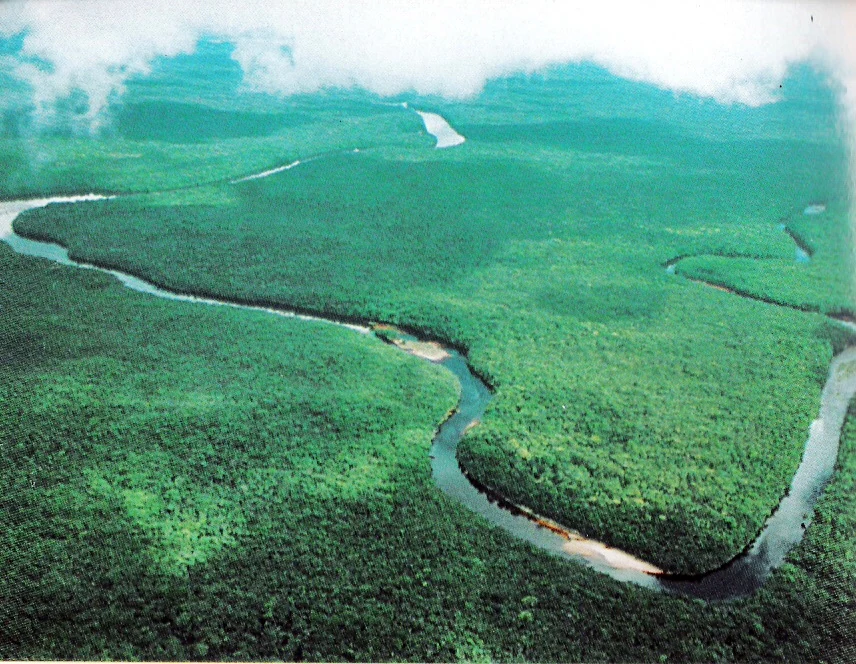
Aerial view of a meandering river flowing through dense green forest with distant mountains partially covered by clouds
Aerial view of winding rivers through dense forest in the Orinoco Delta

Mariusa National Park history and protected-area timeline

Mariusa National Park was established on June 5, 1991, designated as a national park under Venezuelan protected area legislation with IUCN Category II classification. The park's creation reflected growing recognition of the Orinoco Delta's ecological significance and the need to preserve its unique wetland ecosystems from development pressures. Prior to formal protection, the delta region had long been inhabited by Warao communities whose traditional livelihoods centered on fishing, hunting, and sustainable use of the delta's resources. The establishment of the park formalized conservation of this extraordinary landscape while recognizing the Warao's ongoing connection to the territory. The park was originally referred to in some contexts as Delta del Orinoco National Park, though the official designation under Venezuelan law is Parque nacional Mariusa, reflecting the park's geographic core around Mariusa Island.

Mariusa National Park landscape and geographic character

The landscape of Mariusa National Park is defined by its position within the Orinoco Delta, one of the world's great river delta systems. The terrain consists almost entirely of low-lying floodplain and swamp forest, intersected by an intricate network of distributary channels known locally as caños. These channels carry both the fresh waters of the Orinoco River system and the salt waters of the Atlantic Ocean, creating a unique tidal environment where saltwater intrudes far inland twice daily. The park encompasses both permanently flooded swamp areas and seasonal floodplain forests that inundate during the river's high water periods. The coastline along the Atlantic is punctuated by barrier islands including Mariusa Island, with Redonda Island representing the largest landmass within the park's floodable zone. The overall delta covers approximately 40,000 square kilometers and is fed by over 200 tributary rivers, creating a vast hydrological system that shapes every aspect of the landscape.

Mariusa National Park ecosystems, habitats, and plant life

The Orinoco Delta swamp forests protected by Mariusa National Park represent one of the most distinctive ecoregions in tropical South America. This wetland ecosystem is characterized by dense tropical forest adapted to either permanent or seasonal inundation, with trees and vegetation specifically adapted to the complex tidal hydrology. The interplay between freshwater river flow and Atlantic tidal influence creates a dynamic environment supporting specialized plant and animal communities. The delta's position at the interface between continental South America and the Caribbean Sea contributes to its biological significance, serving as a zone where species from multiple biogeographic origins converge. The park protects representative samples of this unique swamp forest ecosystem, preserving the ecological processes and biodiversity that define this remarkable corner of Venezuela.

Mariusa National Park wildlife and species highlights

The Orinoco Delta supports remarkable wildlife diversity within its tidal jungle and swamp forest environments. The flooded forest habitat provides critical habitat for numerous species adapted to the wetland conditions, including aquatic mammals, reptiles, and an extraordinary diversity of bird species. The delta's position along major migratory flyways makes it significant for neotropical bird populations, while its isolated jungle environment supports endemic species found nowhere else on Earth. The tidal channels harbor fish species important both ecologically and for local Warao fishing communities, while the forest canopy supports diverse mammal populations. The park's wildlife reflects the delta's unique position as a flooded forest environment where terrestrial and aquatic ecosystems intermingle in complex patterns shaped by the twice-daily tidal cycles.

Mariusa National Park conservation status and protection priorities

Mariusa National Park plays a critical role in preserving one of South America's most important wetland ecosystems. The Orinoco Delta swamp forests represent a globally significant ecoregion recognized for their ecological uniqueness and biodiversity value. The park's protection preserves not only the forest ecosystems but also the hydrological processes that sustain them, including the tidal dynamics that define the delta's character. Conservation of this area helps maintain the ecological integrity of the broader Orinoco Delta, which serves as a critical filter between the river system and the Atlantic Ocean. The park's designation as an IUCN Category II protected area reflects its primary conservation mandate while providing a framework for managing this remarkable wetland landscape.

Mariusa National Park cultural meaning and human context

The Mariusa National Park region is the ancestral homeland of the Warao people, indigenous communities who have inhabited the Orinoco Delta for generations. The Warao have developed intricate relationships with the delta's seasonal rhythms, tidal patterns, and abundant natural resources, building a culture deeply intertwined with the wetland environment. Their traditional livelihoods including fishing, hunting, and the use of forest resources are woven into the ecological fabric of the delta. The park exists within this living cultural landscape, where Warao communities continue to maintain connections to the territory even as formal protected area status restricts certain activities. The delta region represents one of the most culturally distinctive areas of Venezuela, where the rhythms of human life continue to follow the tidal cycles of the Orinoco.

Top sights and standout views in Mariusa National Park

Mariusa National Park protects a portion of one of the world's great river deltas, where the Orinoco River's vast network of channels meets the Atlantic Ocean. The park's tidal swamp forests, flooded twice daily by Atlantic waters pushing through the delta, create a flooded forest landscape found nowhere else on Earth. This is the most extensive delta in Venezuela and among the largest in the world, fed by over 200 tributary rivers and covering nearly 40,000 square kilometers. The park preserves the Orinoco Delta swamp forests ecoregion, a globally significant ecosystem of extraordinary biological uniqueness. Warao indigenous communities maintain traditional connections to this landscape, adding cultural depth to the ecological significance.

Best time to visit Mariusa National Park

The Orinoco Delta experiences distinct wet and dry seasons that affect visitor conditions and wildlife viewing opportunities. The dry season from approximately December through April typically offers easier navigation through the delta channels and more accessible wildlife viewing as higher ground remains above flood levels. During this period, the forest understory is less dense and water levels are lower, allowing better appreciation of the delta's intricate channel network. However, the wet season brings the delta to life in a different way, with the forest flooded across vast areas and the true character of this wetland ecosystem on full display. Each season reveals different aspects of the delta's complex ecology, though access to the park's remote interior remains challenging year-round.
Monthly climate preview

Examine long-term representative temperature and monthly precipitation averages for Mariusa National Park

Mariusa National Park Climate Normals and Annual Temperature Patterns

Historical data recorded at a representative coordinate reveals sustained monthly average temperatures between twenty-six and twenty-eight degrees Celsius alongside distinct precipitation variations across the year. Reviewing the complete twelve-month record provides deeper insight into long-term climate normals and regional weather rhythms.
Annual mean27 °C
26 °C28 °C
Jan26°
Feb26°
Mar27°
Apr28°
May28°
Jun27°
Jul27°
Aug27°
Sep27°
Oct27°
Nov27°
Dec26°
Warmest month
April

27.5 °C

Coolest month
January

26.1 °C

Wettest month
June

7.1 mm/day

Driest month
March

1.2 mm/day

Park location guide

Geography guide, regional context, and park location map for Mariusa National Park

Mariusa National Park park geography, regions, and map view in Venezuela

Understand where Mariusa National Park sits in Venezuela through a broader geographic reading of the surrounding landscape, nearby location context, and its mapped position within the national park landscape.

How Mariusa National Park fits into Venezuela

Venezuela is a country in northern South America with coastline along the Caribbean Sea and Atlantic Ocean. It borders Colombia, Brazil, Guyana, and Trinidad and Tobago. The country has an area of approximately 916,445 km² and a population of about 31.8 million. Caracas is the capital and largest city. Venezuela consists of 23 states and the Capital District.

Wider geography shaping Mariusa National Park in Venezuela

Venezuela is located on the northern coast of South America. The continental territory is bordered by the Caribbean Sea and Atlantic Ocean to the north, Colombia to the west, Brazil to the south, and Guyana to the east. Trinidad and Tobago lies to the northeast. The country includes various islands and islets in the Caribbean Sea known as the Federal Dependencies.

Map view of Mariusa National Park

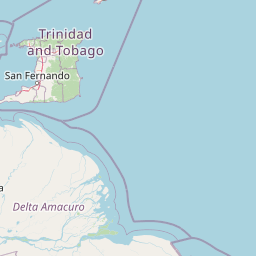
Use this park location map to pinpoint Mariusa National Park in Venezuela, understand its exact geographic position, and read its mapped placement within the surrounding landscape more clearly.

Pigeon | © OpenStreetMap contributors

Visualizing the tidal swamp forests and delta terrain of eastern Venezuela

Mariusa National Park Landscape Photos and Scenery Views

Photographic records reveal the complex river channels, tidal floodplains, and dense lowland jungles defining the protected delta environment. Visual exploration helps observers understand the unique hydrological patterns and swamp ecosystems shaping the regional geography.

Aerial view of a meandering river flowing through dense green forest with distant mountains partially covered by clouds

Park atlas

Compare surrounding regional geography and connected wetland ecosystems

Explore Parks Near Mariusa National Park and Related Protected Landscapes

Browse protected areas and wetland reserves connected to the Orinoco River Delta landscape. Regional park comparison reveals broader ecological patterns across tropical floodplains.
National parkDelta Amacuro
Mapped location lies within the park boundary#1 closest

North

Parque nacional Mariusa: A Detailed Geographic Study of Orinoco Delta Wetlands

Mapped tidal channels and protected wetland geography

Located in Delta Amacuro, Parque nacional Mariusa represents a key protected area where the Orinoco River meets the Atlantic. Its geography is defined by a dynamic system of caños, seasonally flooded rainforests, and mangrove forests that support high ecological complexity. This atlas entry provides an overview of the park boundaries and the physical terrain that shapes this critical Venezuelan protected landscape.

Area
3,310 km²
Established
1991
IUCN
II
Water
Water-dominated
Nature reserveEstado Bolívar
About 99 km away#2 closest

South

Reserva forestal de Imataca: Geographic Overview of a Major Venezuelan Nature Reserve

Mapping the Sierra de Imataca and regional forest ecosystems

Reserva forestal de Imataca serves as a key conservation zone, characterized by the Sierra de Imataca and a dense network of major rivers. This large-scale protected area provides an essential look at the tropical wilderness and upland forest terrain found within Estado Bolivar, mapping out a significant slice of the Venezuelan Guayana region.

Area
38,219 km²
Established
1961
Relief
Mountain
Climate
Tropical
National parkDiego Martin
About 136 km away#3 closest

North

Chaguaramas National Park in Diego Martin: Coastal Landscape and Protected Area Geography

Mapping the peninsular terrain and northern coastal boundaries of Trinidad

Chaguaramas National Park is defined by its strategic coastal position between the Caribbean Sea and the Gulf of Paria. As a significant protected area in the Diego Martin region, it features a blend of coastal flats and forested foothills that extend from the Northern Range. This overview examines the geographic layout, terrain features, and protected boundaries that define the identity of this unique Trinidadian landscape.

Established
1961
Scope
Terrestrial
Water
Major water bodies
National parkSucre
About 136 km away#4 closest

Northwest

Península de Paria National Park: Venezuela's Protected Landscape Geography and Atlas Context

Explore mapped park boundaries and regional geographic setting.

Discover Península de Paria National Park, a vital protected area within the Sucre region of Venezuela. This page offers a detailed look at the park's geographic identity, focusing on its mapped boundaries and its significance as a national park for atlas-based exploration. Understand its landscape context and its contribution to Venezuela's network of protected lands, providing a clear geographic overview for researchers and explorers.

Area
375 km²
Established
1978
IUCN
II
Relief
Mountain
National parkSucre State
About 168 km away#5 closest

Northwest

Turuépano National Park: National Park Protected Landscape and Geographic Context

Explore the mapped boundaries and natural terrain of Sucre State's national park.

Investigate Turuépano National Park, a protected national park situated within Sucre State, Venezuela. This entry provides detailed geographic context and information on its mapped protected-area boundaries, essential for understanding its role in the region's natural landscape atlas. Explore the specific terrain and protected land features that define this significant Venezuelan park.

Area
726 km²
Established
1991
IUCN
II
Relief
Lowland
National parkMonagas
About 207 km away#6 closest

West

Cueva del Guácharo National Park: Venezuela's Protected Natural Landscape

Mapping protected areas and natural terrain in Monagas.

Cueva del Guácharo National Park represents a distinct protected landscape within Venezuela's Monagas region. This entry provides essential context for understanding the park's geographic scope, mapped boundaries, and role as a national park. It is designed to facilitate detailed atlas exploration of protected natural areas and their regional landscape context, offering a foundation for understanding Venezuela's conservation geography.

Area
627 km²
Established
1975
IUCN
II
Relief
Mountain
Protected areaBarima-Waini
About 245 km away#7 closest

Southeast

Shell Beach: Coastal Protected Area Geography and Barima-Waini Map Context

Atlantic shoreline nesting habitats and regional ecological boundaries.

Spanning 120 kilometers of Guyana's northern coast, Shell Beach represents a significant protected area dedicated to marine conservation. Its geography features a continuous chain of sandy beaches, offshore foraging waters, and adjacent coastal forest ecosystems, all managed through a community-based model within the Barima-Waini Region.

Area
31.77 km²
Established
2011
IUCN
VI
Relief
Lowland
Nature reserveGrenada
About 299 km away#8 closest

North

Mount St. Catherine Forest Reserve: Protected Volcanic Landscapes and Cloud Forest Geography

Highland terrain and watershed ecosystems in Grenada

Spanning 934 hectares across Grenada's central massif, Mount St. Catherine Forest Reserve protects the island's tallest peak and most vital watershed catchment zones. This area features a dramatic volcanic landscape characterized by steep ravines, thermal springs, and an altitudinal transition from mature rainforest to fragile elfin woodland at the summit.

Area
9.34 km²
Relief
Mountain
Climate
Tropical
Access
Moderate access

Common questions about visiting, size, designation, and location context for Mariusa National Park

Mariusa National Park FAQs for park facts, access, geography, and protected area context

Find quick answers about Mariusa National Park, including protected-area facts, park geography, trail and visitor context, and how the park fits into its surrounding country and regional landscape.
MoriAtlas Explorer

Continue Your Protected Areas Search Across the Global Atlas

Deepen your exploration by continuing the structured search for national parks and protected areas worldwide. Utilize the comprehensive filtering capabilities to compare different conservation landscapes and refine your understanding of global park geography. Discover more about the distribution and characteristics of protected natural areas.

Global natural geography