Why Masaya Volcano National Park stands out
Masaya Volcano National Park is best known for being Nicaragua's first national park and one of the most accessible active volcanic systems in the world. The park features the persistently active Santiago crater, which continuously emits sulfur dioxide and offers visitors the rare opportunity to observe glowing lava within a volcanic caldera. The nested caldera structure, comprising multiple craters including Masaya, Nindiri, Santiago, and San Pedro, represents a rare geological formation. The presence of a lava tube accessible to visitors, where bats roost and visitors can observe the glow from the active vent, makes this park distinctive among Central American protected areas.
Masaya Volcano National Park history and protected-area timeline
Masaya Volcano has a documented history of eruptions and human interaction spanning centuries. The floor of the caldera shows evidence of resurfacing within the past millennium through poorly vegetated 'a'ā lava flows, though only two significant lava eruptions have occurred since the sixteenth century. In 1670, an overflow from the Nindiri crater created a one-kilometer-wide lava lake, while a second major eruption in 1772 issued from a fissure on the flank of the Masaya cone. Since 1772, surface lava activity has been confined primarily to the Santiago pit crater, with possible activity in Nindiri crater in 1852. The modern era has seen several notable explosive events, including a 1999 event detected through satellite imagery, a significant 2001 explosion that sent rocks up to 60 centimeters in diameter as far as 500 meters from the crater and damaged vehicles in the visitor area, and a 2003 eruption that produced a plume reaching 4.6 kilometers in height. In 2020, the park gained international attention when tightrope daredevil Nik Wallenda walked across a steel cable over the caldera, demonstrating the enduring fascination this active volcanic system holds for the public and scientific communities alike.
Masaya Volcano National Park landscape and geographic character
The landscape of Masaya Volcano National Park is defined by its dramatic volcanic topography and the interplay between active geological processes and the ecosystems they support. The park protects a nested caldera system dominated by Las Sierras shield volcano, which contains the larger caldera formation. Within this structure, the Masaya and Nindiri cones rise as prominent features, hosting pit craters that create a complex terrain of steep-walled depressions and volcanic ridges. The Santiago crater remains actively degassing, producing the continuous emissions that are characteristic of the park. The caldera floor, particularly in areas distant from the active vent, supports limited vegetation on basaltic lava flows that date from the past thousand years. A notable geological feature within the park is a lava tube formed by ancient lava flows, which provides visitors with the opportunity to explore an underground volcanic passage while observing bats and the glow emanating from the active crater above.
Masaya Volcano National Park ecosystems, habitats, and plant life
The ecological character of Masaya Volcano National Park reflects the harsh conditions created by ongoing volcanic activity combined with the more hospitable zones that exist away from the active vents. The continuous emission of sulfur dioxide from the Santiago crater influences air quality and creates acid rain conditions that affect vegetation patterns throughout the park. In areas where volcanic gases are less concentrated, the park supports tropical dry forest vegetation adapted to the regional climate. The lava tubes within the park provide critical habitat for bat colonies, which represent one of the most prominent wildlife groups in the protected area. These bats play important ecological roles as pollinators and insect controllers in the surrounding landscape. The varied elevation range from 100 to 630 meters supports transitions between different ecological zones, though the primary habitat type remains volcanic grassland and shrubland with patches of dry forest.
Masaya Volcano National Park wildlife and species highlights
The wildlife of Masaya Volcano National Park is most notable for its bat populations, which have adapted to roost within the park's lava tubes and volcanic cavities. These bats represent the most visible and significant faunal presence in the park, using the dark, stable conditions of the underground passages as daytime roosting sites. The surrounding tropical dry forest and volcanic scrubland support additional wildlife including various reptile species, small mammals, and numerous bird species adapted to the region's conditions. While the park does not harbor large populations of megafauna due to its volcanic character and proximity to human populations, the bat colonies serve as important ecological components that contribute to seed dispersal and insect control in the broader Masaya region.
Masaya Volcano National Park conservation status and protection priorities
Masaya Volcano National Park holds significant conservation value as Nicaragua's first and largest national park, representing the country's commitment to protecting its natural volcanic heritage. The park is one of 78 protected areas in Nicaragua and serves as an important site for scientific research on volcanic processes, gas emissions, and their environmental impacts. The ongoing monitoring of sulfur dioxide emissions and degassing patterns provides valuable data not only for understanding Masaya's behavior but also for evaluating broader questions about volcanic contributions to atmospheric chemistry and acid rain formation. The park's accessibility makes it an important educational destination, allowing visitors and students to directly observe volcanic activity and understand geological processes that shape the Central American Volcanic Belt.
Masaya Volcano National Park cultural meaning and human context
Masaya Volcano carries cultural significance rooted in the indigenous history of the region. The volcano was historically known as Popogatepe in the Nawat language, reflecting its importance in the cultural memory of the region's original inhabitants. The name Masaya itself derives from Spanish colonial naming, but the volcanic landscape has been a landmark for local communities for centuries. The park's establishment in 1979 marked an important moment in Nicaragua's environmental protection movement, occurring during a period of national transformation following the revolution. The continued interest in the volcano, including high-profile events like the 2020 tightrope walk, demonstrates how Masaya remains embedded in both the natural and cultural identity of Nicaragua.
Top sights and standout views in Masaya Volcano National Park
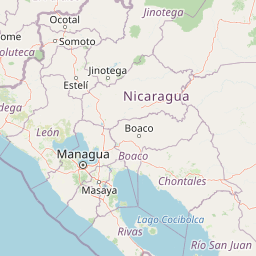
The most compelling highlight of Masaya Volcano National Park is the opportunity to witness an active volcanic caldera up close, with the Santiago crater providing continuous views of degassing activity and potential lava emergence. The park's status as Nicaragua's first national park establishes its historical significance within the country's protected area network. The nested caldera system, with its multiple craters and volcanic cones, represents a geological formation of considerable scientific interest. The accessible lava tube offers a unique underground perspective on volcanic processes. The park's proximity to Managua makes it a practical destination for visitors seeking to experience active volcanism without extensive travel.
Best time to visit Masaya Volcano National Park
The dry season from December through April generally offers the most comfortable conditions for visiting Masaya Volcano National Park, with lower humidity and reduced rainfall making outdoor exploration more pleasant. However, this period may also mean more limited visibility of any active lava features due to clearer skies and potentially less atmospheric distortion. The wet season from May through November brings more dramatic cloud formations and potential for observing the volcano through different weather patterns, though heavy rains can affect trail conditions and visibility. Year-round, the volcanic gases present at the Santiago crater mean that visitors should be prepared for potentially strong sulfur dioxide odors, particularly during calm weather conditions when gases accumulate more readily in the crater basin.