
Mori Atlas logo
Nature reserveModrzewiowa Góra

Mapping the old growth larch and oak woodland within the rolling Wieluńska Upland terrain

Modrzewiowa Góra Nature Reserve: Protected Forest Landscapes in Silesian Voivodeship, Poland

Modrzewiowa Góra Nature Reserve stands as a preserved island of old growth forest within the agricultural landscape of Silesian Voivodeship. This protected area harbors a rare, mature community of Polish larch and ancient oak trees that serve as a living genetic archive for the region. The site offers deep insight into the natural composition of mixed woodland found across the rolling hills of the Wieluńska Upland, providing a distinct geographic and botanical reference point for the surrounding Polish countryside.

forest reservemixed woodlandPolish larchancient oaksold-growth forestnature reserve
A flat vector illustration depicting a waterfall falling from a cliff face into a river, surrounded by a pine forest and mountains at sunset.

Modrzewiowa Góra

Nature reserve

Park overview

Structured park overview, official facts, and landscape profile for Modrzewiowa Góra Nature Reserve

Modrzewiowa Góra Nature Reserve park facts, protected area profile, and essential visitor context

Review the core facts for Modrzewiowa Góra Nature Reserve, including designation, size, terrain, visitor scale, habitats, and operating context in one park-focused overview.

About Modrzewiowa Góra Nature Reserve

Modrzewiowa Góra Nature Reserve is a compact protected forest in the rolling landscape of the Wieluńska Upland, within the historically wooded-edge context of the Polish Jura region. Although small at 49 hectares, the reserve carries an outsized significance for forest conservation in the area because it preserves a mixed woodland that has been allowed to develop with minimal interference, maintaining the structure and species mix that local forests would have displayed under natural conditions.

The reserve takes its name, meaning "larch mountain," from the dominance of Polish larch in its tree cover. Roughly 650 larch trees, many of them between 100 and 170 years old, form the upper canopy and shape the character of the woodland. Beneath and among them stand veteran oaks more than two centuries old, contributing to a layered, uneven-aged forest profile that contrasts with the more uniform plantations typical of the surrounding managed forests.

Ecologically, the reserve is classified as a phytocoenotic site, meaning its primary value lies in preserving an intact plant community rather than any single species or landform. It functions as a reference point for understanding the natural composition of forests in this part of the Silesian Voivodeship and as a reservoir of local tree genetics, particularly for Polish larch. For visitors and researchers, it offers a quiet example of how a relatively small area can sustain long-lived woodland character in a landscape that is otherwise dominated by agriculture and commercial forestry.

Quick facts and research context for Modrzewiowa Góra Nature Reserve

Modrzewiowa Góra Nature Reserve is located in the Silesian Voivodeship in southern Poland, within Kłobuck County and Gmina Panki, near the village of Zwierzyniec Trzeci. It lies on the Wieluńska Upland, a mesoregion of the broader Polish Jura system, and is administered by the Kłobuck Forest District under the Zwierzyniec forest division.

Designated on 17 May 1957, it covers 49.27 hectares and protects a phytocoenotic forest community recognized as a natural local ecotype. The reserve's most prominent features are approximately 650 Polish larch trees aged 100 to 170 years, accompanied by oaks exceeding 200 years in age, set within a mixed woodland framework.

Protection and recognition

Examine documented terrestrial conservation frameworks and official designation records.

Modrzewiowa Góra Protection Status and International Recognition Overview

Modrzewiowa Góra holds documented terrestrial protection status within a managed natural framework. Official records compile available designation details and administrative recognition metrics for this protected landscape.

Protection details

Protection scope
Terrestrial
Transboundary protection
No
Park context

Deeper park guide and search-rich context for Modrzewiowa Góra Nature Reserve

Modrzewiowa Góra Nature Reserve history, landscape, wildlife, and travel context

Explore Modrzewiowa Góra Nature Reserve through its history, landscape character, ecosystems, wildlife, conservation priorities, cultural context, and seasonal travel timing in a structured park guide built for atlas discovery and search intent.

Why Modrzewiowa Góra Nature Reserve stands out

The reserve is best known for its rare, well-preserved stand of Polish larch, with several hundred mature specimens of regional genetic importance, standing among ancient oaks in a mixed, naturally structured forest. Its old larch-oak combination gives it value as both a botanical site and a genetic archive for native Polish woodland.
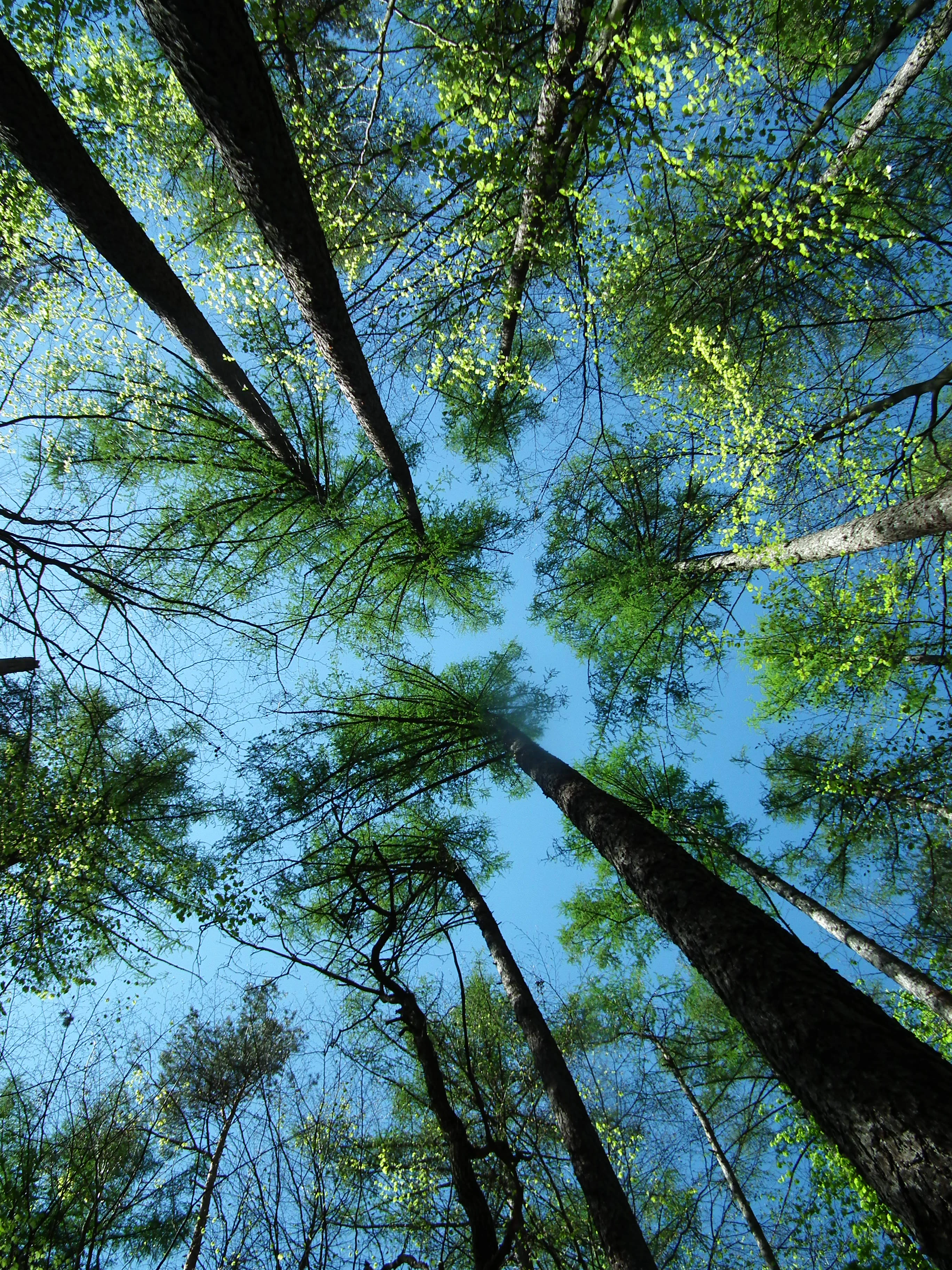
A low angle, upward-looking view of mature larch trees forming a canopy against a bright blue sky.
A low angle perspective looking up through the canopy of the forest in Modrzewiowa Góra Nature Reserve.

Modrzewiowa Góra Nature Reserve history and protected-area timeline

Modrzewiowa Góra was formally designated as a nature reserve on 17 May 1957 by order of the Minister of Forestry and the Wood Industry, during a period in which Poland expanded its network of small forest reserves to protect representative woodland communities. Its establishment recognized that the existing larch-and-oak stand at the site represented a natural local ecotype worth conserving rather than converting to production forestry.

Since its designation, the reserve has remained under the management of the state forest service, currently the Kłobuck Forest District, within the Zwierzyniec forest administrative unit. Its long-term purpose has been to maintain the forest in as natural a state as possible, allowing the mature larch and oak trees that were already old at the time of protection to continue shaping the woodland canopy across subsequent generations.

Modrzewiowa Góra Nature Reserve landscape and geographic character

The reserve sits within the Wieluńska Upland, a gently undulating limestone terrain that forms part of the wider Kraków–Częstochowa Jura. The topography is moderate rather than dramatic, with low hills and shallow valleys typical of an upland agricultural region. The reserve itself occupies a forested hill or ridge feature that gives the site its name and stands out against the surrounding farmland.

Within the reserve, the landscape is shaped less by geology than by vegetation. The mixed canopy of larch and oak creates an uneven, organic profile, with light gaps between mature trees and a gradual transition into understory and ground flora. The forest floor carries the structural signature of old-growth woodland, with fallen wood, varied light conditions, and a rich herb layer. Outside the reserve boundary, the landscape quickly becomes more open and agricultural, making the wooded reserve a clearly defined green island in a working countryside.
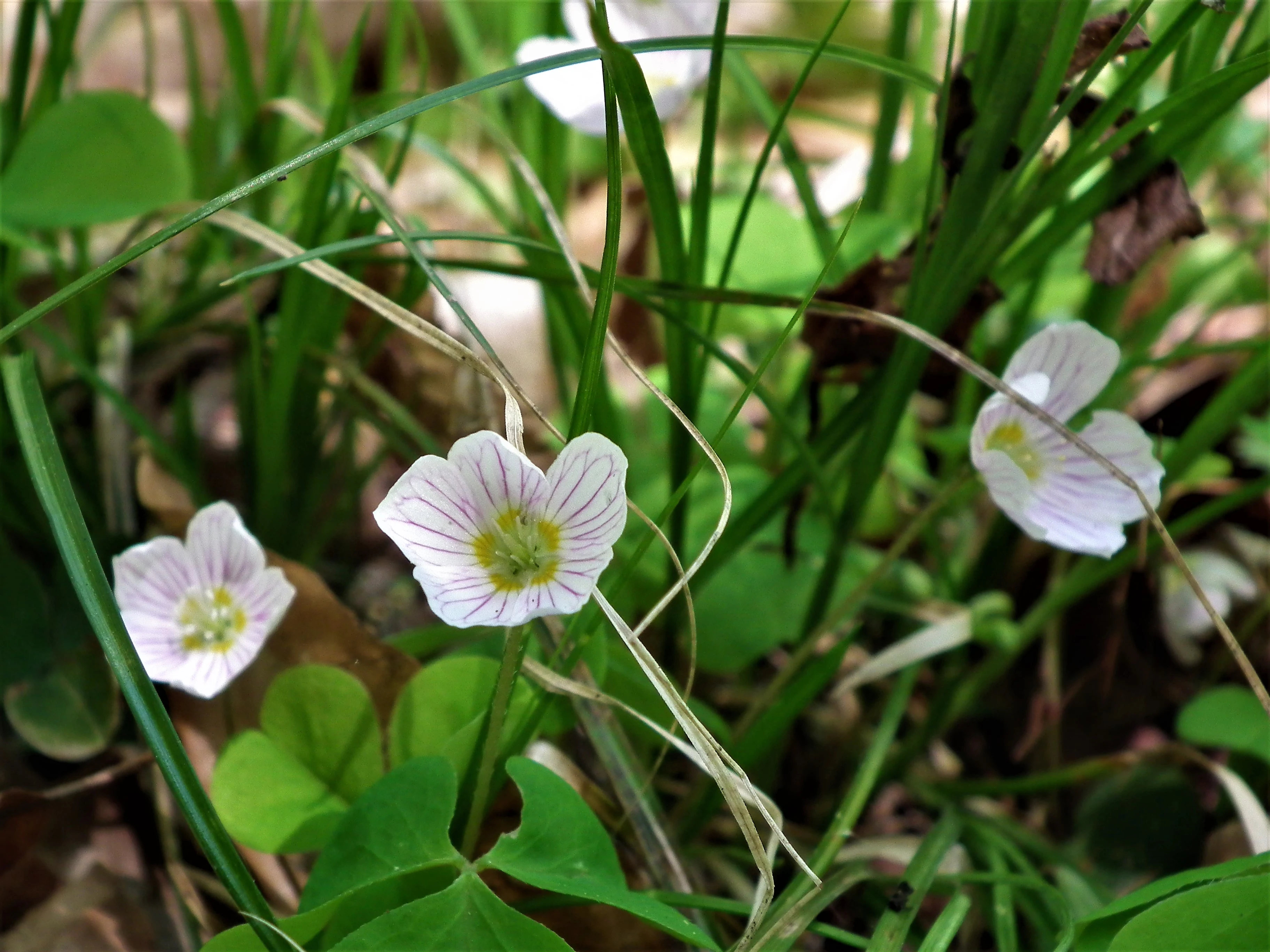
Close-up view of delicate white wood sorrel flowers with faint purple veins among green clover-like leaves and grasses.
Wood sorrel (Oxalis acetosella) blooming on the forest floor in Modrzewiowa Góra Nature Reserve.

Modrzewiowa Góra Nature Reserve ecosystems, habitats, and plant life

The reserve protects a mixed forest community that has been recognized as a natural local ecotype, meaning the species composition and structure reflect what would be expected for this region without major human intervention. The canopy is dominated by Polish larch, a coniferous deciduous species, interspersed with broadleaf trees including ancient oaks that exceed 200 years of age. This mixture of conifers and broadleaves creates a layered, structurally diverse forest rather than a single-species stand.

The protected woodland supports species-rich understory and ground flora. Among the notable plant species present are kruszyna pospolita, a shrub of woodland edges and damp forest; marzanka wonna, a fragrant herb characteristic of mature deciduous forests; konwalia majowa, lily of the valley, which thrives in shaded, undisturbed woodland; and szczawik zajęczy, wood sorrel, visible in spring across the forest floor. Together these indicate a forest that has maintained stable, shaded, humus-rich conditions over many decades.
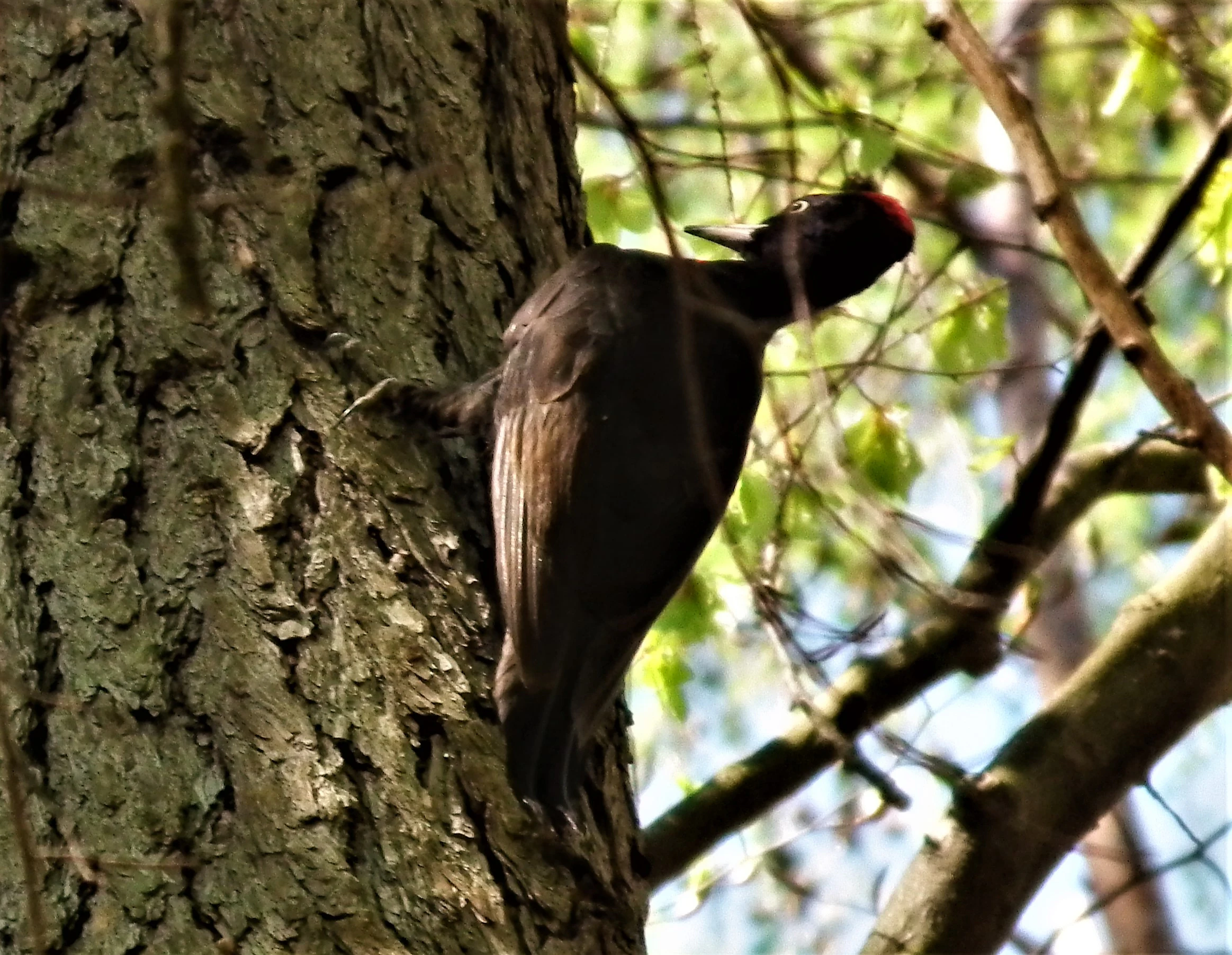
A black woodpecker clinging to the bark of a tree trunk, seen from a side profile with a red patch on its head.
A black woodpecker perched on a tree trunk in the Modrzewiowa Góra nature reserve.

Modrzewiowa Góra Nature Reserve wildlife and species highlights

The reserve supports a range of protected and characteristic woodland species. Invertebrates of conservation interest include ground beetles of the biegaczowate family, the striking tęczniki (Calosoma) beetles, and the butterfly mieniak tęczowiec, which depends on old deciduous woodland habitats.

Amphibians are also present, with newts and toads recorded in the damp microhabitats of the forest. Bird life includes several species tied to mature woodland and old trees: the kobuz and pustułka as smaller raptors; the long-eared owl; and both the green woodpecker and the rare black woodpecker, the latter requiring large, decaying trees and undisturbed forest surroundings. The presence of these species reflects the structural quality of the woodland and the continuity of its old trees.

Modrzewiowa Góra Nature Reserve conservation status and protection priorities

The reserve's conservation value rests on its role as one of the few sites in this part of the Silesian Voivodeship where a natural, locally adapted forest community has been allowed to persist without being converted to plantation forestry. By safeguarding around 650 mature Polish larch and a substantial number of ancient oaks, the reserve preserves genetic resources for both species, including local ecotypes that may be of particular interest for future forest restoration and adaptation.

Its phytocoenotic designation underlines that the site is valued as a working example of an intact plant community rather than a single species or scenic feature. The reserve contributes to habitat continuity in the Wieluńska Upland, where small woodland fragments are otherwise isolated within an agricultural matrix. Maintaining old trees and standing dead wood within the reserve supports cavity-nesting birds, saproxylic invertebrates, and the broader food web associated with old-growth forest structure.

Top sights and standout views in Modrzewiowa Góra Nature Reserve

The reserve's most distinctive highlight is the veteran stand of Polish larch growing alongside ancient oaks, a combination rarely preserved at this scale in the surrounding agricultural landscape. A second highlight is the site's role as a genetic and ecological reference point, illustrating what a naturally composed mixed woodland of the Wieluńska Upland looks like. The presence of species such as the black woodpecker and the Calosoma beetles further signals the maturity and ecological integrity of the forest, making the reserve a small but unusually rich example of old-style Polish woodland.

Best time to visit Modrzewiowa Góra Nature Reserve

Spring and early summer are particularly rewarding in the reserve, because woodland ground flora such as lily of the valley and wood sorrel become visible on the forest floor, and the mixed canopy is at its most photogenic with fresh larch needles. Late spring and early summer also tend to be the most active period for woodland birds and insects, increasing chances of observing woodpeckers, ground beetles, and butterflies in suitable conditions.

Autumn brings its own appeal, with larch turning yellow before needle fall and the forest displaying its full seasonal cycle. Winter visits offer the quietest experience and the clearest views into the forest structure, when the absence of foliage emphasizes the shape of veteran oaks and the spacing of mature larch trees.

Monthly climate preview

Monthly temperature ranges and precipitation averages recorded at a representative station

Modrzewiowa Góra Climate Normals and Long Term Weather Rhythm

Representative coordinate records show average temperatures shifting from negative winter minimums to warm summer highs alongside steady precipitation totals. Examining the complete twelve month profile helps trace long term climate norms across the protected terrain.
Annual mean9 °C
-3 °C20 °C
Jan-3°
Feb-1°
Mar
Apr
May14°
Jun18°
Jul20°
Aug20°
Sep15°
Oct
Nov
Dec-2°
Warmest month
July

20.2 °C

Coolest month
January

-3.1 °C

Wettest month
July

2.6 mm/day

Driest month
January

1.4 mm/day

Park location guide

Geography guide, regional context, and park location map for Modrzewiowa Góra Nature Reserve

Modrzewiowa Góra Nature Reserve park geography, regions, and map view in Poland

Understand where Modrzewiowa Góra Nature Reserve sits in Poland through a broader geographic reading of the surrounding landscape, nearby location context, and its mapped position within the national park landscape.

How Modrzewiowa Góra Nature Reserve fits into Poland

Poland, officially the Republic of Poland, is a Central European country spanning from the Baltic Sea in the north to the Carpathian Mountains in the south. It borders Germany, Czech Republic, Slovakia, Ukraine, Belarus, Lithuania, and Kaliningrad Oblast. The country has a temperate climate, diverse landscapes, and is known for its rich history, cultural heritage, and strong economic position within the EU.

Wider geography shaping Modrzewiowa Góra Nature Reserve in Poland

Poland occupies 312,696 km2 in Central Europe, extending from the Baltic Sea coast in the north to the Sudetes and Carpathian Mountains in the south. It borders Germany to the west, Czech Republic and Slovakia to the south, Ukraine and Belarus to the east, and Lithuania and Kaliningrad Oblast to the northeast. The landscape includes lowland plains, uplands, and mountain ranges.

Map view of Modrzewiowa Góra Nature Reserve

Use this park location map to pinpoint Modrzewiowa Góra Nature Reserve in Poland, understand its exact geographic position, and read its mapped placement within the surrounding landscape more clearly.

Pigeon | © OpenStreetMap contributors

Location context for Modrzewiowa Góra Nature Reserve

Silesian Voivodeship

Visualizing the ancient larch and oak canopy of the Wieluńska Upland

Modrzewiowa Góra Landscape Photos and Protected Forest Scenery

Examine detailed photographs of the mixed woodland canopy and mature tree stands that define Modrzewiowa Góra. Visual records illustrate the distinct forest structure and upland terrain characterizing this protected natural reserve.

A low angle, upward-looking view of mature larch trees forming a canopy against a bright blue sky.

A red rectangular sign with white text reading REZERWAT PRZYRODY MODRZEWIOWA GÓRA stands on a wooden post in a deciduous forest.

Close-up view of delicate white wood sorrel flowers with faint purple veins among green clover-like leaves and grasses.

A black woodpecker clinging to the bark of a tree trunk, seen from a side profile with a red patch on its head.

Park atlas

Compare nearby forest reserves and protected landscapes across the upland terrain

Explore Other Parks Near Modrzewiowa Góra and Surrounding Regional Protected Areas

Continue browsing other protected areas near Modrzewiowa Góra to examine related forest reserves and woodland ecosystems throughout the wider upland territory. Expanding your view across regional conservation zones provides deeper geographic context for native Polish tree genetics and mixed woodland habitats.
Protected landscapeŁódź Voivodeship
About 12 km away#1 closest

North

Załęczański Park Krajobrazowy: Mapping the Karst Landscape and Warta River Geography

A comprehensive look at protected karst features in central Poland.

Spanning the Wieluńska Upland, Załęczański Park Krajobrazowy serves as a central protected landscape renowned for its geological diversity. From the Warta River meanders and oxbow lakes to the concentrated cave systems and pulsating karst springs, this geography provides an in-depth look at the intersection of river dynamics and limestone terrain within the Polish Jura.

Area
147.5 km²
Established
1978
Relief
Upland
Climate
Temperate
A watercolor painting showing a soft landscape with green fields, a cluster of trees, and a small lookout tower against a plain white background.
Nature reserveŚląskie
About 13 km away#2 closest

Southeast

Dębowa Góra Nature Reserve: Geographic Profile of an Urban-Adjacent Protected Forest

Preserving ancient mixed woodland in the Śląskie Voivodeship

Located in the town of Kłobuck, Dębowa Góra serves as a critical nature reserve shielding a fragmented but authentic relic of old-growth oak and hornbeam forest. The site occupies the elevated topography of the Wieluńska Upland, providing an important contrast to the surrounding industrial landscape through its ancient trees and protected understory vegetation.

Area
0.054 km²
Established
1953
Relief
Upland
Climate
Temperate
Nature reserveŁódź Voivodeship
About 24 km away#3 closest

North

Dąbrowa w Niżankowicach Nature Reserve: Protected Forest Landscapes and Regional Geography

A vital oak forest sanctuary in Poland's Łódź Voivodeship.

Dąbrowa w Niżankowicach preserves a mosaic of acidophilous oak woodlands and rare flora within the Łódź Voivodeship. This nature reserve functions as a concentrated site for vegetation-focused conservation, maintaining natural forest structures that have become increasingly scarce throughout the wider Wyżyna Wieluńska landscape. Its mapped boundaries highlight a significant ecological island within a predominantly agricultural region.

Area
1.025 km²
Established
1983
Relief
Upland
Climate
Temperate
Nature reserveLodzkie Voivodeship
About 31 km away#4 closest

North

Rezerwat przyrody Mokry Las: Protected Oak-Hornbeam Forest and Regional Geography

A botanical forest refuge in the Kotlina Szczercowska basin.

Situated in the Pajęczno County of central Poland, Rezerwat przyrody Mokry Las is a dedicated nature reserve protecting a complete stand of oak-hornbeam forest. The area stands as an island of mixed deciduous and coniferous woodland within the gentle terrain of the Kotlina Szczercowska, offering a clear view of regional botanical conservation and forest ecology.

Area
0.146 km²
Established
1983
Relief
Lowland
Climate
Temperate
A soft watercolor painting of a wide, rolling landscape with green hills, patches of trees, and subtle pink ground tones.
Protected areaPoland
About 35 km away#5 closest

East

Przełom Warty koło Mstowa: Mapping the Protected River Corridor and Limestone Geography

A critical geological breakthrough in the Częstochowa Upland.

This protected area features a twelve kilometer river gorge carved by the Warta. The terrain is characterized by dramatic limestone outcrops such as the Brama Mirowska, paired with rich meadow habitats and oak hornbeam forests. Explore the intersection of geology and conservation within this key corridor of the Polish Jura, where river dynamics meet ancient upland landscapes.

Relief
Upland
Climate
Temperate
Scope
Terrestrial
Water
Major water bodies
A soft watercolor painting of a rolling landscape featuring light-colored limestone cliffs, green hills, and a winding path, rendered in pale pastel tones.
Nature reserveSilesian Voivodeship
About 36 km away#6 closest

Southeast

Ostoja Olsztyńsko-Mirowska: A Detailed Map and Geographic Overview of the Protected Reserve

Karst limestone formations and diverse forest habitats in Silesian Voivodeship.

Ostoja Olsztyńsko-Mirowska stands as a centerpiece of the Częstochowa Upland, characterized by its dramatic mogotes, caves, and sheltered xerothermic grasslands. This atlas-focused entry details the area's topographic complexity, ranging from the wooded ridges of Sokole Góry to the historic limestone spurs housing medieval ruins. Uncover the ecological dynamics of this protected landscape where beech forest stands and rare cave systems form a critical regional biodiversity network.

Area
22.109 km²
Established
2008
Relief
Upland
Climate
Temperate
Protected landscapeLodzkie Voivodeship
About 36 km away#7 closest

North

Osjakowski Zespół Przyrodniczo-Krajobrazowy: River Valley Geography and Protected Terrain

A vital wetland corridor within the Lodzkie Voivodeship landscape network.

Located in central Poland, this protected landscape safeguards a representative stretch of the Warta river valley. It acts as an essential ecological bridge, connecting surrounding regional parks through a diverse mosaic of floodplain habitats, riparian forests, and riverine terrain that host unique bird and plant communities.

Area
24.92 km²
Established
1998
Relief
Lowland
Scope
Terrestrial
Protected areaSilesian Voivodeship
About 51 km away#8 closest

Southeast

Ostoja Złotopotocka: Mapping the Protected Habitats and Limestone Geography of Silesian Voivodeship

Natura 2000 protected zone in southern Poland

Ostoja Złotopotocka encompasses a rich mosaic of natural habitats across the Częstochowa Upland. From the calcareous rock faces and deep karst caves to the expansive beechwood forests and inland sand dunes, this area serves as a primary site for ecological conservation. Use this resource to understand the complex terrain, boundary layout, and structural diversity that define this protected landscape within the Polish region.

Area
27.48 km²
Relief
Upland
Climate
Temperate
Access
Access unknown

Common questions about visiting, size, designation, and location context for Modrzewiowa Góra Nature Reserve

Modrzewiowa Góra Nature Reserve FAQs for park facts, access, geography, and protected area context

Find quick answers about Modrzewiowa Góra Nature Reserve, including protected-area facts, park geography, trail and visitor context, and how the park fits into its surrounding country and regional landscape.
MoriAtlas Explorer

Continue Your Protected Areas Search Across the Global Atlas

Deepen your exploration by continuing the structured search for national parks and protected areas worldwide. Utilize the comprehensive filtering capabilities to compare different conservation landscapes and refine your understanding of global park geography. Discover more about the distribution and characteristics of protected natural areas.

Global natural geography