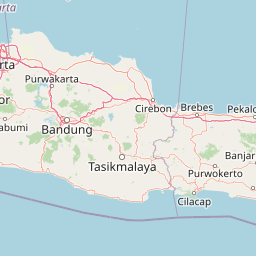
Why Mount Ciremai National Park stands out
Mount Ciremai National Park is best known for containing the highest peak in West Java, a dramatic volcanic cone that attracts hikers and nature enthusiasts seeking panoramic views from the summit. The park's significance extends beyond recreation to encompass critical conservation values, including habitat for three endangered flagship species: the Javan leopard, Javan surili (a leaf monkey), and Javan hawk-eagle. The mountain also functions as a biodiversity corridor bridging western and central Java, occupying a geographical gap in the island's mountain chain. Its role as a hydrological engine, feeding major river systems that support agricultural irrigation and domestic water supply for millions of people in the surrounding lowlands, further distinguishes its importance.
Mount Ciremai National Park history and protected-area timeline
The conservation history of Mount Ciremai spans nearly a century, evolving through distinct phases of forest management before achieving national park status. The area first received formal protection during the Dutch colonial period when the mountain forests were designated as protected forest through a 1930 decree, with boundary demarcation completed in 1939 and officially ratified in 1941. Following Indonesian independence, the forests were reclassified as production forest under the management of Perhutani, the state forestry enterprise, serving timber production objectives through the latter half of the twentieth century. The transformation toward conservation accelerated in 2003 when portions of the production forest were redesignated as protected forest, creating the institutional groundwork for full protected area status. Local governments in Kuningan and Majalengka subsequently submitted proposals to the central government in 2004, citing the mountain's ecological functions as a water catchment and its biodiversity values. The Minister of Forestry issued Decree SK.424/Menhut-II/2004 on October 19, 2004, formally establishing Mount Ciremai National Park as Indonesia's 50th national park. A subsequent decree in 2014, SK.3684/Menhut-VII/KUH/2014, refined the park boundaries to the current extent of 14,841.30 hectares.
Mount Ciremai National Park landscape and geographic character
The physical landscape of Mount Ciremai National Park is defined by its central volcanic peak and the radial drainage patterns that descend from its slopes. The mountain rises abruptly from the surrounding lowlands, creating a dramatic topographical contrast that makes it visible from the northern Java coast. The summit at 3,078 meters represents not only the highest point in West Java but also a geological datum visible across broad stretches of the island. Slopes within the park are predominantly steep to very steep, with approximately 36% of the area exhibiting 16-25% gradient and 36% showing 26-40% gradient, creating challenging terrain for both natural processes and human activity. The underlying geology consists of volcanic deposits from the mountain's eruptive history, with rock formations including Quaternary volcanic rocks, Plio-Pleistocene volcanic materials, and smaller areas of Neogene sedimentary formations. The volcanic soils that have developed on these parent materials support the forest ecosystems that cover most of the park's extent. Multiple streams descend from the mountain in all directions, carving valleys that channel water toward the major river systems of the lowlands.
Mount Ciremai National Park ecosystems, habitats, and plant life
The ecological character of Mount Ciremai National Park reflects Java's position in the Malesia biodiversity hotspot, supporting rich plant and animal communities across its elevational gradient. The park contains distinct vegetation zones corresponding to altitude, from tropical forest below 1,000 meters through montane forest to subalpine vegetation near the summit. Below 1,000 meters, the terrain was historically managed as production forest and now contains plantations of pine and other commercial species, while forests above 1,000 meters retain more natural character as former protection forest. The montane forests feature diverse tree species including saninten (Castanopsis species), pasang (Lithocarpus species), and various members of the Elaeocarpaceae and Euphorbiaceae families. The moist montane forest zone contains particularly high species richness, with epiphytic orchids and other vascular plants adding to the floral diversity. The subalpine zone near the summit features elfin forest characterized by shorter, stunted trees adapted to exposed conditions. The park contains approximately 119 documented plant species including 40 orchid species, representing significant botanical diversity within a relatively limited area.
Mount Ciremai National Park wildlife and species highlights
The fauna of Mount Ciremai National Park includes several species of conservation concern that draw attention from researchers and wildlife enthusiasts. The park provides habitat for the Javan leopard (Panthera pardus melas), a regionally endangered subspecies that persists in the mountainous forests despite intense human pressure across lowland Java. The Javan surili (Presbytis comata), a leaf monkey endemic to Java, inhabits the forest canopy in substantial populations, while the Javan langur (Trachypithecus auratus) also occurs within the park boundaries. The Javan hawk-eagle (Nisaetus bartelsi), designated as Indonesia's national bird, nests in the park's tall trees and can be observed soaring above the canopy. Bird diversity is particularly notable, with the park recognized as an Important Bird Area supporting at least 112 documented species, including numerous restricted-range birds found only in Java's mountain forests. The mammal community also includes the Javan muntjac deer, Javan slow loris, and various smaller species that occupy different forest strata and ecological niches.
Mount Ciremai National Park conservation status and protection priorities
Mount Ciremai National Park serves multiple conservation functions that extend beyond simple species protection to include watershed services and ecological corridor values. The park's designation as a protected area reflects its importance as the primary water source for six river basins that drain to the north Java coast, with the Cimanuk and Cisanggarung basins being the most significant. This hydrological function, described locally as the water tower for the Ciayumajakuning region, provides ecosystem services supporting agriculture, domestic water supply, and coastal ecosystem health across an area inhabited by millions of people. The park's position in West Java creates a conservation corridor linking eastern and western Java's mountain forest ecosystems, compensating for the fragmentation of natural habitat across the densely populated island. The three flagship endangered species, Javan leopard, Javan surili, and Javan hawk-eagle, represent conservation priorities that require the continued protection of forest habitat within park boundaries. Climate change adaptation value is increasingly recognized, as the forest cover helps maintain hydrological function as precipitation patterns become more variable.
Mount Ciremai National Park cultural meaning and human context
The cultural landscape surrounding Mount Ciremai National Park reflects centuries of human interaction with the volcanic uplands and their resource values. The three regencies that share the park, Kuningan, Majalengka, and Cirebon, each have historical connections to the mountain as a source of water, forest products, and spiritual significance. Local communities have traditionally accessed forest resources from the surrounding areas, a pattern that continues today and creates both challenges and opportunities for park management. The Javanese cultural context includes perspectives on mountain landscapes as sacred spaces, though specific sacred sites within the park are not detailed in available sources. The park's establishment process involved substantial engagement with local governments, reflecting the decentralized approach to protected area management in Indonesia's post-reform governance system. Future management will need to balance conservation objectives with the legitimate resource needs of surrounding communities, a common challenge across Java's protected areas.
Top sights and standout views in Mount Ciremai National Park
Mount Ciremai National Park offers visitors the opportunity to climb the highest peak in West Java, a challenging ascent through changing forest environments to reach a summit with sweeping views across the northern Java plain. The park's biodiversity, including populations of Javan leopard, Javan surili, and Javan hawk-eagle, provides wildlife viewing potential for patient observers. The hydrological importance of the mountain, feeding rivers that sustain agricultural productivity across the region, gives visitors insight into the broader ecosystem services that protected areas provide. The mountain's volcanic character, including crater features visible from the summit, adds geological interest to the hiking experience. The park's relatively recent establishment as a national park means that ecosystem recovery continues, with forest condition improving under protection. Multiple trail options from different access points allow visitors to choose routes matching their fitness and time constraints.
Best time to visit Mount Ciremai National Park
The optimal time to visit Mount Ciremai National Park corresponds to the dry season months of May through September, when precipitation is lower and trail conditions are more favorable for hiking. The wet season from October through April brings heavy rainfall that can make trails slippery and increase the risk of landslides on steep slopes, while visibility from the summit is often obscured by clouds. Temperature at the summit can be substantially cooler than the lowlands, particularly during night hours, requiring warm clothing for early morning summit attempts. The climate classification as type C with annual rainfall between 2,500 and 4,500 millimeters means that even during the dry season, some precipitation should be expected, and waterproof gear remains advisable. Weekend visits tend to be more crowded, particularly during Indonesian holiday periods, while weekday visits offer greater solitude on the trails.