
Mori Atlas logo
Natural monumentNa Kopaninách

Examining the ecological significance of managed grassland and rare plant habitats in the Vysočina region.

Na Kopaninách Natural Monument: A Botanical Sanctuary within the Bohemian-Moravian Highlands

(Přírodní památka Na Kopaninách)

Na Kopaninách is a protected natural monument located on a north-facing slope in the Třebíč district of the Czech Republic. This site preserves a rare remnant of traditional communal pasture and hay meadows, providing critical habitat for the endangered Bohemian gentian and other species-rich grassland flora. By maintaining these historical landscapes, the site serves as an important component of regional conservation efforts across the broader Bohemian-Moravian Highlands.

grasslandmeadowspecies habitat reserveBohemian-Moravian Highlandsendemic plantsgentian conservation
A flat-design, vector-style illustration of a mountainous landscape with a waterfall in the center, pine trees and deciduous trees in the foreground, and grassy plains.

Na Kopaninách

Natural monument

Park overview

Structured park overview, official facts, and landscape profile for Na Kopaninách

Na Kopaninách park facts, protected area profile, and essential visitor context

Review the core facts for Na Kopaninách, including designation, size, terrain, visitor scale, habitats, and operating context in one park-focused overview.

About Na Kopaninách

Na Kopaninách is a small but ecologically important protected natural area in the Bohemian-Moravian Highlands of the Czech Republic, centered on a north-facing slope above the village of Radonín. The site preserves a tangible remnant of a once much more widespread traditional landscape, shaped by generations of communal grazing and small-scale haymaking. The protected area encompasses a fragment of abandoned common pasture, regularly mown meadows, and a small grove, forming a mosaic of habitats typical of the higher elevations of the Vysočina Region.

Although the reserve is tiny, covering approximately one hectare, it punches well above its size in botanical and conservation terms. Its principal significance lies in safeguarding one of the few remaining populations of the Bohemian early gentian, a subspecies with a highly restricted distribution within Central Europe. The habitats that support this plant, species-rich, low-productivity grasslands on acidic soils, are themselves increasingly rare in the modern Czech landscape due to changes in land use, abandonment of grazing, and natural encroachment by woody species.

The underlying geology contributes to the character of the site. The bedrock is formed from paragneiss with thin interlayers of quartzite and amphibolite, producing nutrient-poor, slightly acidic soils that have long favored the persistence of specialized grassland flora. This geological setting, combined with traditional management practices, set the stage for a plant community of considerable scientific interest.

The wider context of Na Kopaninách places it within the network of small habitat-focused reserves typical of Central European nature conservation. Rather than offering sweeping scenery, the site functions as a focused refuge for a single highly threatened species and a handful of its botanical associates. Its value lies in precision rather than scale: every square meter contributes meaningfully to efforts to preserve a vanishing ecological and cultural landscape type.

Quick facts and research context for Na Kopaninách

Na Kopaninách is a natural monument (přírodní památka) in the Vysočina Region of the Czech Republic, near the village of Radonín in the Třebíč district. The protected area lies on a north-facing slope at approximately 550 to 570 meters above sea level and covers about 1.04 hectares. It was declared in 1986 by the Regional Authority of the Vysočina Region and is classified at the international level as an IUCN Category IV area focused on the protection of a specific species habitat. The site's bedrock consists of paragneiss with thin layers of quartzite and amphibolite, supporting a fragment of old pasture, hay meadows, and a small grove.

Protection and recognition

Documented territorial boundaries and official conservation status details.

Na Kopaninách Protection Status and Terrestrial Conservation Records

Terrestrial protection records for Na Kopaninách outline the formal conservation status and boundary parameters established for the terrain. Structured regulatory facts clarify the documented management scope without assuming external international recognitions.

Protection details

Protection scope
Terrestrial
Transboundary protection
No
Park context

Deeper park guide and search-rich context for Na Kopaninách

Na Kopaninách history, landscape, wildlife, and travel context

Explore Na Kopaninách through its history, landscape character, ecosystems, wildlife, conservation priorities, cultural context, and seasonal travel timing in a structured park guide built for atlas discovery and search intent.

Why Na Kopaninách stands out

Na Kopaninách is best known for hosting a population of the Bohemian early gentian (Gentianella praecox subsp. bohemica), one of the rarest and most threatened plant subspecies in the Czech Republic. The protected grassland is part of a national rescue program aimed at preserving this critically imperilled species and its associated species-rich meadow habitat. Beyond the gentian itself, the site is valued as a surviving example of a traditional pastoral landscape on the Bohemian-Moravian Highlands, where centuries of low-intensity grazing shaped distinctive botanical communities. The presence of other rare plants such as the intermediate wintergreen (Pyrola media), mountain catsfoot (Antennaria dioica), and lesser butterfly orchid (Platanthera ovina) adds further botanical significance to this very small reserve.
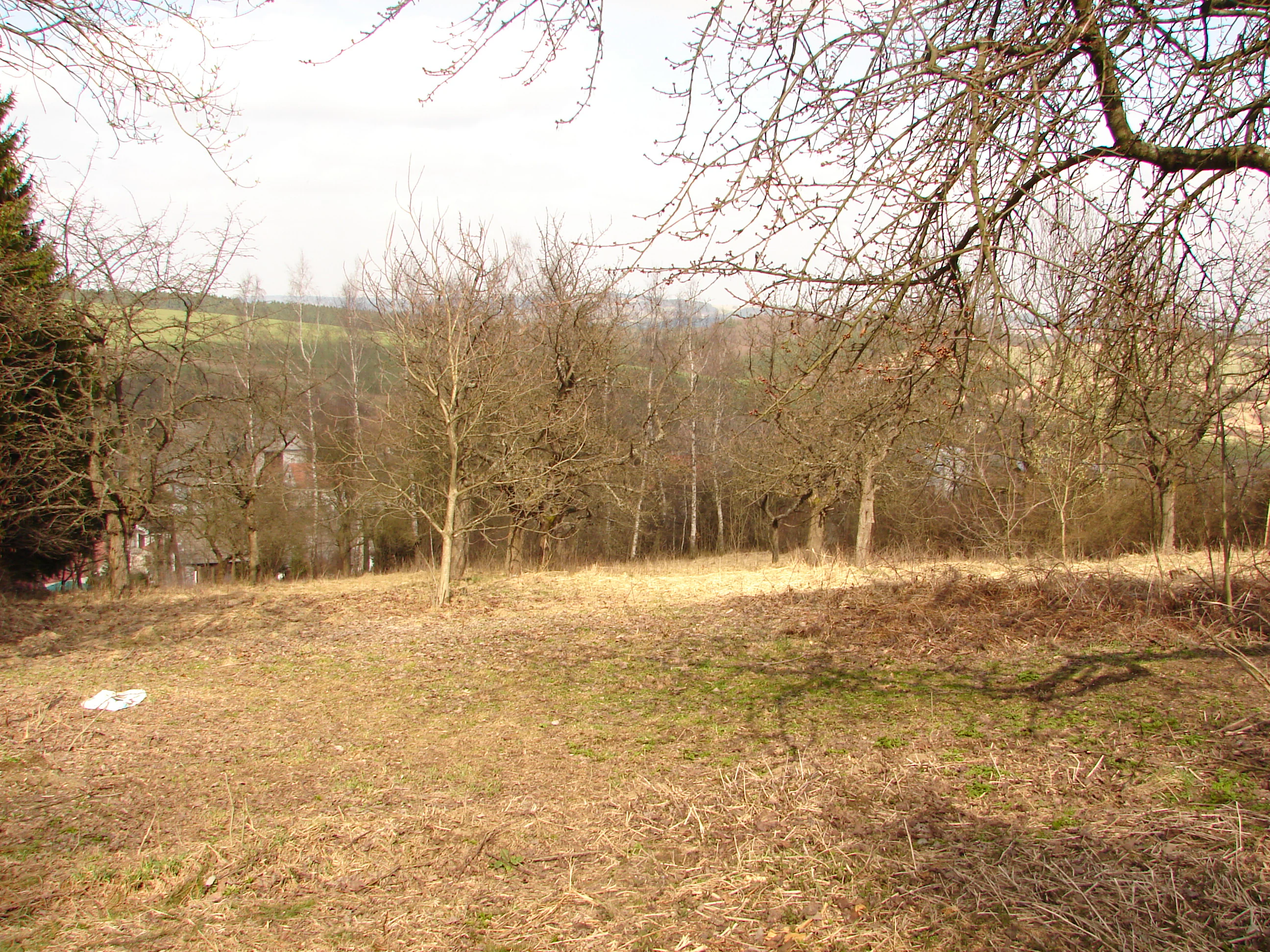
A wide view of a dry, dormant meadow area with several leafless deciduous trees and a small cluster of forest in the background, characteristic of a rural orchard landscape.
A dormant orchard meadow within the Na Kopaninách natural monument.

Na Kopaninách history and protected-area timeline

Na Kopaninách was officially declared a natural monument (přírodní památka) on 1 January 1986 by the Regional Authority of the Vysočina Region. The designation was driven by the botanical importance of the site, especially the presence of the Bohemian early gentian, a highly threatened subspecies already recognized at the time of declaration as requiring targeted protection. From the outset, the site's legal status reflected a conservation approach centered on safeguarding specific species and their habitats rather than protecting scenic landscapes.

In the decades leading up to formal protection and continuing afterward, the landscape around Radonín gradually changed. Traditional communal grazing of sheep and cattle declined, and abandoned pastures began to be colonized by shrubs and trees. During the second half of the twentieth century, the ecological character of many similar sites across the Bohemian-Moravian Highlands shifted dramatically as a result of this rural transformation.

A notable practical intervention came in 2010, when the Chaloupky land association began restoring sheep grazing on the site. Volunteers cleared invasive woody growth from the most valuable parts of the protected area and the adjacent orchard, working to reopen the open grassland habitat that the gentian depends on. This restoration effort connected Na Kopaninách to a broader Czech movement of reviving traditional pastoral land management as a tool for biodiversity conservation.

Na Kopaninách landscape and geographic character

The landscape of Na Kopaninách is modest and intimate rather than dramatic, shaped by the gentle topography of the Bohemian-Moravian Highlands. The protected area lies on a north-facing slope slightly above the village of Radonín, at an altitude of around 550 to 570 meters. This positioning creates cooler, moister microclimatic conditions compared with south-facing slopes nearby, influencing both soil development and vegetation.

Geologically, the slope sits on paragneiss bedrock interrupted by thin bands of quartzite and amphibolite. These relatively hard, nutrient-poor rocks weather into lean, slightly acidic soils that support only low-intensity plant growth. The result is a landscape of thin, species-rich turf rather than dense vegetation, which is precisely the condition required by many of the site's characteristic plants.

The physical character of the site is defined by a small mosaic of land uses: a fragment of an older communal pasture, hay meadows that are still occasionally cut, and a compact grove of trees. The combination of slope, geology, and historical land use gives the area a quiet, textured appearance in which open grassland fringes patches of woodland, reflecting a transitional stage in the long process of pasture abandonment across the region.

Na Kopaninách ecosystems, habitats, and plant life

Ecologically, Na Kopaninách belongs to the broad category of nutrient-poor, semi-natural grasslands that once covered extensive parts of the Bohemian-Moravian Highlands. These habitats, often referred to as species-rich meadows or dry acid grasslands, depend historically on regular grazing or mowing to prevent succession toward shrubland and forest. Today they are among the most threatened habitat types in the Czech Republic, surviving mainly in small, protected fragments like Na Kopaninách.

The vegetation of the site is shaped by both soil chemistry and management history. The slightly acidic, low-fertility soils favor grasses and small forbs typical of traditional sheep pasture, including sheep's fescue (Festuca ovina), matgrass (Nardus stricta), and common thyme (Thymus pulegioides). Mixed among these grasses are flowering plants such as German catchfly (Steris viscaria), maiden pink (Dianthus deltoides), eyebright (Euphrasia rostkoviana), and common St. John's wort (Hypericum perforatum), contributing to the site's botanical diversity.

A key ecological concern is the encroachment of woody species into formerly open areas. Spruce (Picea abies), aspen (Populus tremula), and silver birch (Betula pendula) have been spreading onto parts of the site as grazing pressure declined. This natural succession threatens to shade out the light-demanding grassland species that define the site's conservation value, and is the reason ongoing habitat management, including the clearing of invasive woody growth, is integral to the reserve's ecological future.

Na Kopaninách wildlife and species highlights

While Na Kopaninách is primarily valued for its botanical interest, the site also provides habitat for a modest but ecologically meaningful range of animal species. The mix of dry grassland, meadow edges, and small woodland patches supports reptiles in particular, which benefit from the combination of sunny open areas for basking and nearby vegetation for shelter.

The sand lizard (Lacerta agilis) finds refuge here, using the warm, open ground surface created by sparse grass cover and stony substrate. The smooth snake (Coronella austriaca) has also been recorded on the site, preying largely on lizards and small rodents that inhabit similar dry grassland environments. The presence of these reptiles reflects the broader ecological integrity of the habitat, since both species depend on the maintenance of open, sun-exposed terrain.

Although larger mammals are not specifically documented for the protected area itself, the broader Bohemian-Moravian Highlands landscape surrounding Na Kopaninách supports typical Central European woodland and edge species. The mosaic of small open habitats embedded in a forested region is likely to host common birds, small mammals, and pollinating insects associated with species-rich meadows, although these are not the focus of the site's formal protection.

Na Kopaninách conservation status and protection priorities

Na Kopaninách was established specifically as a species-focused reserve under the Czech system of small protected areas. Its international IUCN classification as a Category IV protected area emphasizes its role as a habitat for a particular species of conservation concern. The principal subject of conservation interest is the Bohemian early gentian (Gentianella praecox subsp. bohemica), a subspecies endemic to the Central European region and classified among the most threatened plants in the Czech flora.

Despite legal protection, the site's gentian population has experienced a significant decline over the past decade, illustrating how fragile even formally protected habitat can be when traditional land use collapses. Recognition of this trend led to the inclusion of the locality in a national rescue program for the gentian, which coordinates active management interventions aimed at stabilizing and, where possible, recovering the population.

Active conservation at Na Kopaninách combines ecological restoration with cultural landscape revival. The reintroduction of sheep grazing and the manual clearing of encroaching spruce, aspen, and birch are central to maintaining the open conditions on which the gentian and associated grassland species depend. These efforts link species protection directly to the broader challenge of sustaining traditional pastoral land use on the Bohemian-Moravian Highlands.

Na Kopaninách cultural meaning and human context

Beyond its ecological significance, Na Kopaninách carries a layer of cultural meaning tied to the rural life of the Bohemian-Moravian Highlands. The site is a fragment of what were once communal village pastures, collectively used for grazing livestock and providing essential resources for small agricultural communities like Radonín. The local nickname "Pálenice" suggests longstanding familiarity with the place among residents, linking the protected area to local identity and everyday landscape memory.

The decline of small-scale livestock farming, common across much of upland Czechia during the late twentieth century, severed many of these cultural-ecological connections. Conservation work at Na Kopaninách, including the restoration of sheep grazing by the Chaloupky land association, reflects a wider movement to reconnect nature conservation with traditional rural land management. In this sense, the reserve embodies both biodiversity protection and a broader effort to preserve the character and skills of historical highland pastoral culture.

Top sights and standout views in Na Kopaninách

Na Kopaninách stands out for the disproportionate ecological importance packed into its very small footprint, with a single hectare of north-facing grassland supporting one of the country's last reliable populations of the Bohemian early gentian. The site illustrates how species conservation in Central Europe often hinges on preserving tiny fragments of historically managed habitat rather than large wilderness areas. The combination of site-specific botanical richness, active restoration through renewed shepherding, and inclusion in a national species rescue program gives this modest reserve a clear and compelling conservation profile.

Best time to visit Na Kopaninách

The seasonal character of the grassland at Na Kopaninách is closely tied to the flowering of its key plant species. Late spring through early summer is generally the period when the Bohemian early gentian flowers, and the open meadow habitat is most visually alive with botanical diversity. Visiting during this window offers the best chance to experience the site at the height of its ecological interest.

Late summer and early autumn tend to be quieter periods botanically, when hay cutting and the aftermath of grazing shape the landscape. The site's small grove and lightly wooded edges may still provide visual interest, and reptile activity around warmer microhabitats can be notable. Because the site is modest in scale and primarily managed for conservation rather than tourism, any visit should be approached with care to avoid disturbing the sensitive grassland and its rare plant population.
Monthly climate preview

Measured temperature and precipitation records across twelve months at Na Kopaninách

Na Kopaninách Climate Normals and Long Term Weather by Month

Historical data compiled from NASA records outlines average monthly temperature ranges and precipitation rates measured at representative elevations in Na Kopaninách. Detailed monthly climate profiles provide deeper context regarding long term environmental rhythms across the terrain.
Annual mean7 °C
-4 °C18 °C
Jan-4°
Feb-2°
Mar
Apr
May12°
Jun16°
Jul18°
Aug18°
Sep13°
Oct
Nov
Dec-2°
Warmest month
July

18.1 °C

Coolest month
January

-3.6 °C

Wettest month
July

2.9 mm/day

Driest month
February

1.3 mm/day

Park location guide

Geography guide, regional context, and park location map for Na Kopaninách

Na Kopaninách park geography, regions, and map view in Czechia

Understand where Na Kopaninách sits in Czechia through a broader geographic reading of the surrounding landscape, nearby location context, and its mapped position within the national park landscape.

How Na Kopaninách fits into Czechia

Czech Republic is a landlocked Central European country with a population of approximately 10.9 million people. The nation was established as an independent state on January 1, 1993, following the dissolution of Czechoslovakia. Its capital and largest city is Prague, with other major urban centers including Brno, Ostrava, Plzeň, and Liberec.

Wider geography shaping Na Kopaninách in Czechia

The Czech Republic is a landlocked country in Central Europe. It is bordered by Germany to the west, Austria to the south, Poland to the northeast, and Slovakia to the southeast. The landscape is predominantly hilly, with the territory covering 78,871 square kilometers.

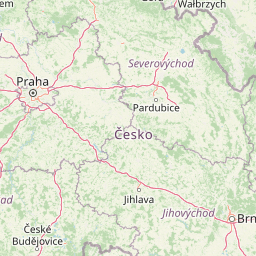
Map view of Na Kopaninách

Use this park location map to pinpoint Na Kopaninách in Czechia, understand its exact geographic position, and read its mapped placement within the surrounding landscape more clearly.

Pigeon | © OpenStreetMap contributors

Location context for Na Kopaninách

Kraj Vysočina

Explore protected area views, terrain features, and rare plant habitats.

Na Kopaninách Photos and Landscape Scenery: Visualizing Protected Habitats

Examine detailed visual documentation of Na Kopaninách photos, showcasing the unique northern slope terrain, native grassland flora, and rare gentian habitats across the protected area. Photographic records provide essential insight into the traditional rural landscape, fragile botanical communities, and conservation efforts shaping the Bohemian-Moravian Highlands.

A wide view of a dry, dormant meadow area with several leafless deciduous trees and a small cluster of forest in the background, characteristic of a rural orchard landscape.

Park atlas

Discover related reserves and regional habitat conservation areas across the highlands

Other Parks Near Na Kopaninách and Protected Landscapes to Compare

Browse protected areas near Na Kopaninách to compare regional grassland reserves and traditional pastoral landscapes. Extending the exploration helps place small habitat conservation sites into the broader geographic context of the Bohemian Moravian Highlands.
Natural monumentKraj Vysočina
About 1.4 km away#1 closest

West

Urbánkův palouk Natural Monument: Protected Highland Landscape and Meadow Geography

Preserved peat meadow terrain in the Czech Republic.

Urbánkův palouk serves as a critical natural monument in Kraj Vysočina, protecting a rare fragment of wet and peat-influenced meadow habitat. Positioned on a highland plateau at 622 meters, this site functions as an ecologically dense refuge for threatened plant species within the traditional Czech-Moravian Highland landscape.

Area
0.01 km²
Established
1990
IUCN
IV
Relief
Lowland
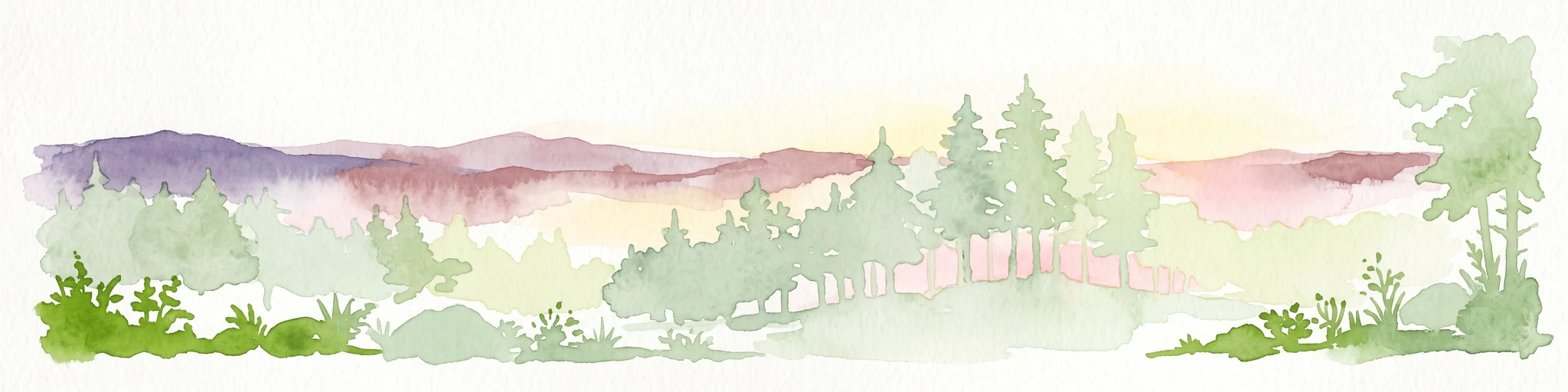
Watercolor painting of a forested hillside with evergreen trees and distant rolling purple mountains.
Protected landscapeJihlava District
About 23 km away#2 closest

Northwest

Přírodní park Čeřínek: Map and Protected Landscape Geography of the Jihlava District

Highland forests, granite outcrops, and peatland ecosystems

Located in the Jihlava District, Přírodní park Čeřínek offers a detailed look at the highland terrain of the Křemešnická vrchovina. The area features a mix of dense spruce woodland, prominent rocky outcrops including Přední skála, and the significant Hojkovské rašeliniště peat bog. This protected landscape serves as a regional anchor for understanding the ecological and topographical character of the Czech-Moravian Highlands.

Area
23 km²
Established
1985
Relief
Upland
Climate
Temperate
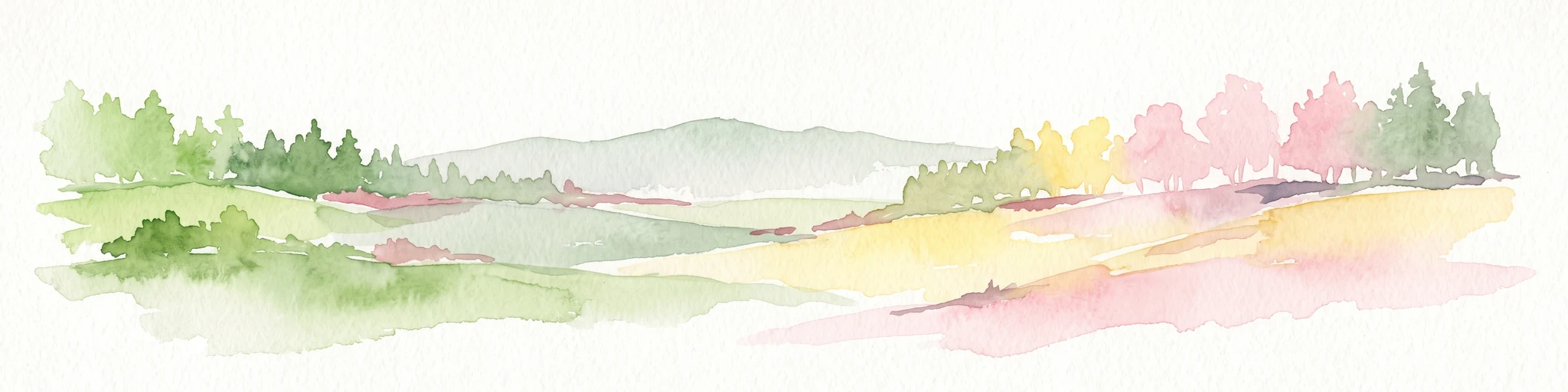
Watercolor painting of a rolling countryside scene featuring green hills, forest edges, and muted pastel tones on a white background.
Protected landscapeVysočina Region
About 25 km away#3 closest

Northeast

Přírodní park Bohdalovsko: Protected Landscape and Wetland Geography in the Vysočina Region

Highland terrain, fishpond mosaics, and protected natural corridors.

Located in the Czech Republic, Přírodní park Bohdalovsko serves as a primary example of a cultural highland landscape. The area features a remarkable concentration of ponds and peatland pockets that anchor local biodiversity, including rare aquatic species and amphibian strongholds. Its geography is characterized by rolling uplands and varied forest-field mosaics that remain integral to the regional conservation framework of the Bohemian-Moravian Highlands.

Area
60.8 km²
Established
2001
Relief
Upland
Climate
Temperate
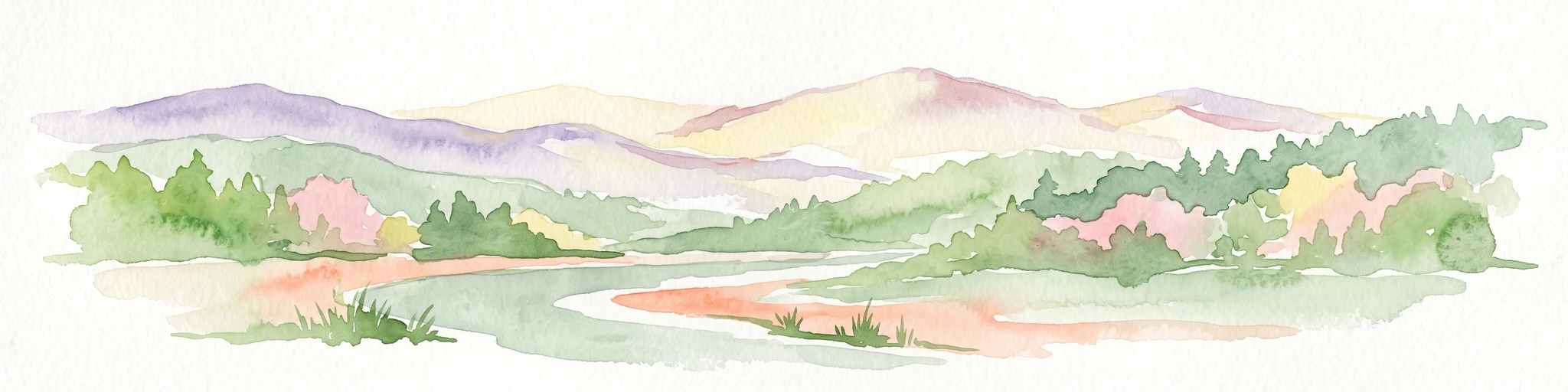
A soft watercolor illustration of a landscape with rolling hills, a meandering stream, and wooded areas against a pale sky.
Natural monumentVysočina Region
About 26 km away#4 closest

Northeast

Rasuveň Natural Monument: Protected Forest Terrain in the Czech Vysočina Region

Mapping upland woodland and fir-beech conservation areas

Rasuveň protects a meaningful remnant of fir-beech forest in the Czech-Moravian Highlands. This natural monument, situated in the Vysočina Region, provides a quiet example of mature upland woodland conservation. Its geographic profile is defined by rolling ridges and crystalline bedrock, offering a dedicated space for observing natural forest structures within an increasingly managed agricultural landscape.

Area
0.207 km²
Established
1989
IUCN
IV
Relief
Upland
Nature reserveCzechia
About 30 km away#5 closest

Northwest

Prameniště Jankovského potoka: Protected Wetland Landscapes in the Czech Vysočina Region

An atlas exploration of highland spring-fed meadow ecosystems and conservation corridors.

Prameniště Jankovského potoka acts as a cornerstone for wetland conservation in the Vysočina Region. The site features a mosaic of nutrient-poor peat meadows and spring-fed stream corridors, providing stable habitats for endangered freshwater pearl mussels and unique highland flora. This protected area offers a clear look at the intersection of traditional meadow management and hydrological restoration in the Czech landscape.

Area
0.658 km²
Established
2018
IUCN
IV
Relief
Upland
A soft watercolor illustration of a marshy landscape featuring light green grassy plains, patches of water, and a hazy treeline in the distance.
Nature reserveKraj Vysočina
About 31 km away#6 closest

West

Rašeliniště Kaliště Nature Reserve: Geographic Overview and Mapped Protected Boundaries

Highland wetland habitat in the Kraj Vysočina region

Rašeliniště Kaliště is a compact but ecologically significant nature reserve characterized by its rare meadow-type peat bog habitat. Located in the Czech-Moravian Highlands, it functions as a primary site for protected moss species and wetland preservation, offering valuable geographic insight into the hydrologic features of the Vysočina landscape.

Area
0.119 km²
Established
1982
IUCN
IV
Relief
Lowland
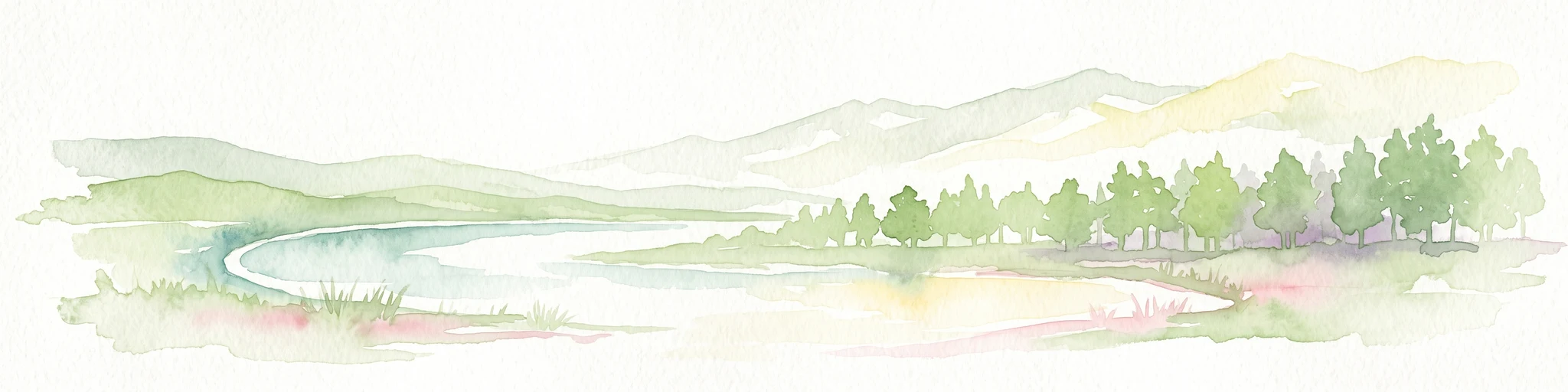
A soft watercolor painting of a serene landscape featuring a calm lake surrounded by trees and gentle rolling hills in the background.
Natural monumentKraj Vysočina
About 34 km away#7 closest

North

Rozštípená skála Natural Monument: Geological Mapping of the Vysočina Gneiss Outcrops

Protected rocky terrain in the Bohemian-Moravian Highlands

Rozštípená skála features a striking gneiss cliff formation split by long weathered fissures. Located in the Vysočina Region, this natural monument provides a focal point for understanding the geological patterns and river valley landscapes that define the mid-altitude terrain of the Czech Republic.

Area
0.008 km²
Established
1974
IUCN
III
Relief
Upland
Natural monumentJihočeský kraj
About 41 km away#8 closest

Southwest

Slavonické rybníky Protected Area: Geography and Wetland Habitat in South Bohemia

Analysis of pond-margin ecosystems and regional borderland terrain

Located near the historic town of Slavonice, Slavonické rybníky encompasses two interconnected fishpond systems that support fragile shoreline vegetation. This nature monument highlights the conservation of traditional Bohemian aquatic habitats and their importance for localized invertebrate populations within the larger mosaic of the Česká Kanada landscape.

Area
0.1 km²
Established
1995
IUCN
III
Water
Major water bodies

Common questions about visiting, size, designation, and location context for Na Kopaninách

Na Kopaninách FAQs for park facts, access, geography, and protected area context

Find quick answers about Na Kopaninách, including protected-area facts, park geography, trail and visitor context, and how the park fits into its surrounding country and regional landscape.
MoriAtlas Explorer

Continue Your Protected Areas Search Across the Global Atlas

Deepen your exploration by continuing the structured search for national parks and protected areas worldwide. Utilize the comprehensive filtering capabilities to compare different conservation landscapes and refine your understanding of global park geography. Discover more about the distribution and characteristics of protected natural areas.

Global natural geography