
Why Naturschutzgebiet Schluchtwald Helle stands out
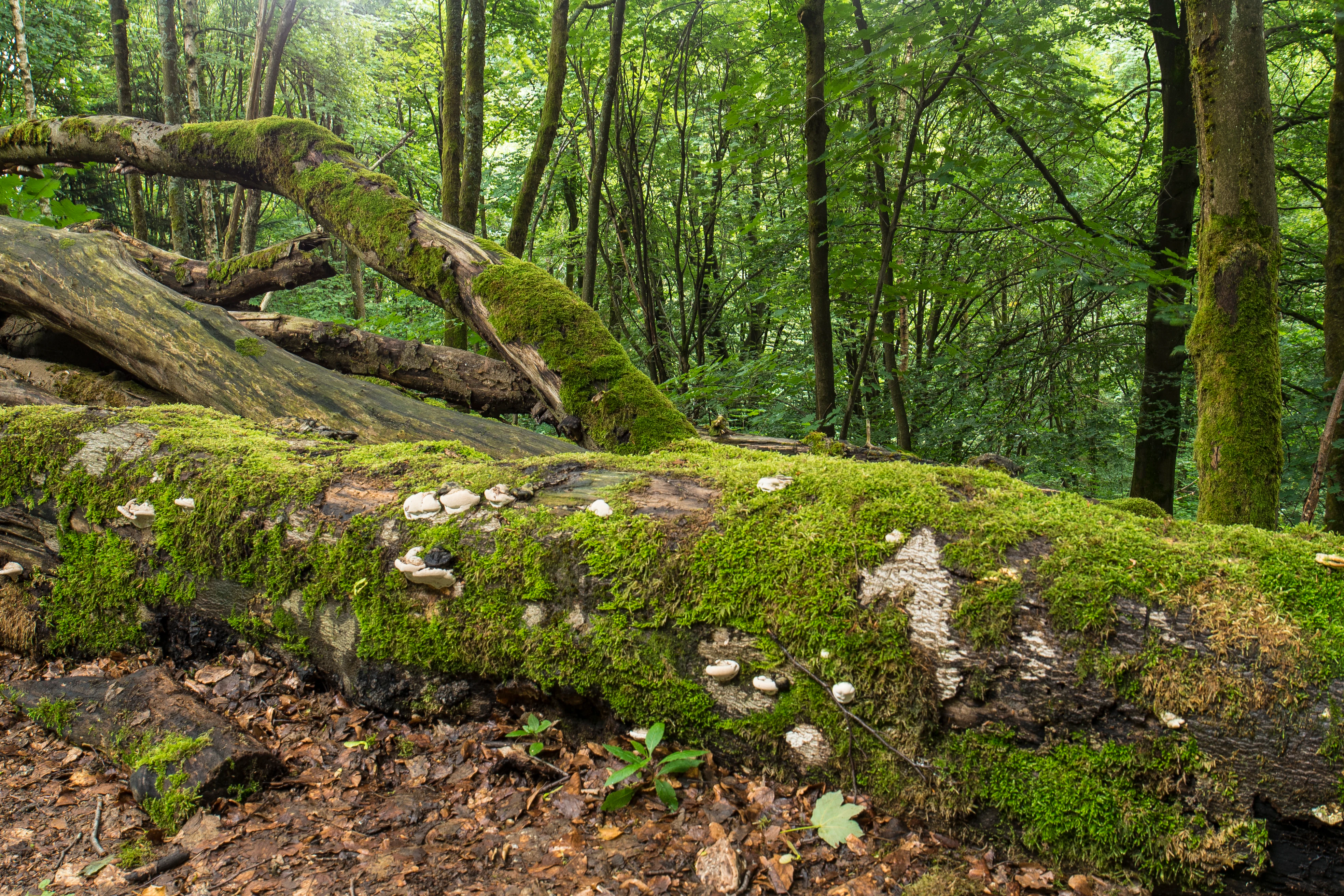
Naturschutzgebiet Schluchtwald Helle is best known for protecting one of the Sauerland's characteristic Schluchtwald, or ravine forest, habitats: a humid, cool, structurally complex woodland that develops along narrow, steep-sided stream valleys. The reserve centers on the spring-fed source of the Helle stream and the surrounding old, mossy broadleaf forest with abundant decaying wood, ferns, and shade-loving wildflowers. The site also stands out for the concentration of montane and submontane plant species found within a small footprint, including rare ferns, characteristic spring flora, and woodland understorey species that depend on the stable, damp microclimate of the ravine. This combination of small size, ecological richness, and dual national and European protection status makes it a representative example of Sauerland ravine forest conservation.
Naturschutzgebiet Schluchtwald Helle history and protected-area timeline
The ravine forest of the Helle valley was recognized as worthy of formal protection through the Winterberg landscape planning process. In 2008, the Hochsauerlandkreis designated the area as a Naturschutzgebiet by incorporating it into the Winterberg landscape plan, which set the conditions for management, allowed uses, and protective objectives for nature reserves across the municipal area.
From its establishment onward, the site has been jointly recognized as an FFH area under the European Union Habitats Directive, which meant that its conservation significance was acknowledged both at the regional level in North Rhine-Westphalia and within the broader European Natura 2000 framework. Management is carried out by the Untere Landschaftsbehörde, the lower landscape authority, of the Hochsauerlandkreis, and supported in practice by specialist conservation bodies including the Biologische Station Hochsauerland and the local Verein für Natur- und Vogelschutz im Hochsauerlandkreis.
In March 2025, the city of Winterberg, the Biologische Station Hochsauerland, and the Verein für Natur- und Vogelschutz im Hochsauerlandkreis agreed on a revised trail concept for the reserve. The plan was prompted by documented damage, including the loss of rare plant sites caused by overuse, trampling from old, informal paths, and high volumes of mountain bike traffic. The new concept provides for closing sensitive paths and excluding mountain bikes from the protected area entirely, marking the most significant management intervention since the reserve's 2008 designation.
Naturschutzgebiet Schluchtwald Helle landscape and geographic character
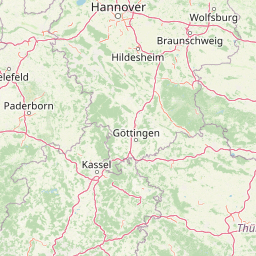
The protected area lies in the wooded highlands east of Winterberg, where the Rothaargebirge and broader Sauerland hills create a dissected terrain of narrow valleys, spring basins, and steep slopes. The Helle stream originates within the reserve and has cut a characteristic narrow ravine through this upland, producing the cool, sheltered conditions under which Schluchtwald vegetation develops.
The valley walls of the Helle rise sharply above the watercourse within a short horizontal distance, giving the protected area its compact but deeply incised topography. In the ravine bottom, perennial seeps, mossy boulders, and accumulated coarse woody debris create a structurally complex surface, while the surrounding slopes are cloaked in closed forest that has been allowed to develop with minimal active management.
Although the site is small at roughly 58 hectares, its steep relief and associated microclimate variation produce a range of habitats within a restricted area, from damp, fern-rich ravine bottoms to drier upper-slope forest on the valley margins. This mosaic of slopes, springs, stream channels, and deadwood-rich forest is the defining physical and visual character of the Schluchtwald Helle landscape.
Naturschutzgebiet Schluchtwald Helle ecosystems, habitats, and plant life
Ecologically, the reserve is defined by its ravine forest character, a forest type that depends on the combination of steep terrain, cold, well-oxygenated, spring-fed running water, high atmospheric humidity, and a forest history with relatively little direct management. The result is a structurally complex woodland rich in mosses, ferns, liverworts, and shade-loving herbaceous plants, and supported by large amounts of standing and fallen deadwood, which is essential for many of the species associated with this habitat.
The documented vascular flora reflects this microlayered habitat. Recorded species include wild garlic, or Bärlauch, opposite-leaved golden saxifrage, hollowroot, woodland forget-me-not related species such as the spring water chickweed, and characteristic spring flora such as white butterbur. Ferns are particularly significant in the reserve: alongside common species like the wood fescue, wood sedge, and greater woodrush, rarer ferns such as the green-stalked strap fern and the lobed shield fern have been recorded, marking the site as a notable refugium for pteridophyte diversity in the region.
At the wider habitat level, the reserve fits into a network of FFH sites across North Rhine-Westphalia that protect representative examples of Annex I habitat types of European conservation interest. The Schluchtwald here is valued not only for its plant diversity but also because the combination of decaying wood, seepage flow paths, and undisturbed forest interior supports a wide range of invertebrates, fungi, and bryophyte communities typical of long-established central European ravine woodland.
Naturschutzgebiet Schluchtwald Helle wildlife and species highlights
Wildlife documentation in the reserve has focused primarily on characteristic birdlife of the upland forest and stream environment. The state agency for nature, environment, and consumer protection of North Rhine-Westphalia has recorded mountain wagtail, known in German as Gebirgsstelze, along the Helle stream, as well as stock dove, referred to as Hohltaube, both of which are considered indicators of relatively undisturbed, structurally varied woodland with mature trees offering nesting cavities.
Although the recorded species list is modest, the ecological value of the reserve for fauna lies in the habitat conditions rather than headline species counts. The combination of perennial running water, dense canopy cover, decaying wood, and a humid microclimate supports invertebrate assemblages, amphibians, and small forest mammals typical of long-established central European ravine forests.
Naturschutzgebiet Schluchtwald Helle conservation status and protection priorities
As a formally designated Naturschutzgebiet within the Hochsauerlandkreis and simultaneously an FFH area under the European Habitats Directive, the Schluchtwald Helle is protected through a layered conservation framework. National designation under the German nature conservation framework gives it binding protection against damaging uses, while its FFH status ties its management to the broader European effort to maintain a coherent network of protected habitat sites.
The stated purpose of the designation is the preservation and development of a forest and habitat for endangered animal and plant species, with explicit acknowledgement that the area qualifies as a nature reserve because of its landscape beauty and uniqueness as well as its ecological value. In practice, this means active efforts to maintain the natural forest structure, including the retention of deadwood, the protection of rare plant populations, and the prevention of disturbance to the source area of the Helle stream.
Pressures on the reserve, particularly from recreational overuse and mountain bike traffic, have prompted renewed management action. The 2025 trail agreement marks a shift toward stricter access control, with core zones to be closed to paths and the entire reserve excluded from mountain bike use, thereby reinforcing the long-term conservation function of what is otherwise a small but ecologically dense protected area.
Naturschutzgebiet Schluchtwald Helle cultural meaning and human context
The Sauerland around Winterberg has a long tradition of small-scale forestry and pasture use, and the cultural landscape is shaped by centuries of interaction between upland farming, woodland management, and the development of mountain villages. The protected ravine forests, with their steep terrain, were typically left as relatively unmanaged woodland even when surrounding slopes were exploited for timber, grazing, or charcoal production.
In the present day, the cultural context of the reserve is largely defined by its role in the regional network of protected areas and by the relationship between conservation institutions and the municipalities of the Sauerland. Cooperation between the city of Winterberg and regional conservation bodies, such as the Biologische Station and the local nature and bird protection association, reflects a tradition of civic engagement with nature conservation in the Hochsauerlandkreis, and the Schluchtwald Helle has become a focal point for discussions about how to reconcile outdoor recreation with the protection of sensitive habitats in a heavily visited upland recreation region.
Top sights and standout views in Naturschutzgebiet Schluchtwald Helle
Naturschutzgebiet Schluchtwald Helle stands out for the unusually dense ecological value packed into a small area: a near-natural Schluchtwald, or ravine forest, surrounding the headwater springs of the Helle stream in the Sauerland uplands near Winterberg. The combination of pristine spring ecology, structurally complex old forest with abundant deadwood, and populations of rare ferns and montane understorey species makes it a representative example of central European ravine woodland.
The dual designation as a German Naturschutzgebiet and an EU FFH site underlines both its regional and European significance, while the 2025 management agreement reflects a renewed commitment to protecting the area from overuse. Visitors and ecologists alike encounter here a small but exemplary Sauerland landscape where forest protection, freshwater conservation, and biodiversity preservation converge within a single compact valley.
Best time to visit Naturschutzgebiet Schluchtwald Helle
The reserve is most rewarding to visit in late spring and early summer, when the spring flora of the ravine forest, including species such as wild garlic and other characteristic woodland plants, is at its peak and the stream channels of the Helle carry steady flow from the spring-fed source area. Cool, overcast days in this period tend to bring out the humid, mossy character of the ravine woodland most strongly, and bird activity along the stream, including species such as the mountain wagtail, is at its most visible.
Late summer and early autumn offer a quieter atmosphere with reduced recreational pressure, cooler temperatures in the shady ravine, and a more muted palette of greens and browns that emphasizes the structural complexity of the forest itself. Winter visits are possible but are more demanding due to steep terrain, and the closed-canopy forest then provides limited visibility of the wider valley, although the mossy, undisturbed character of the woodland becomes more visually prominent in the absence of foliage.