Why Ostoja w Paśmie Brzanki stands out
The site is most renowned for its exceptionally well-preserved Carpathian beech forests, in particular the fertile Carpathian beech forest community (Dentario glandulosae-Fagetum), which alone covers approximately half of the protected territory. These dark, moist, herb-rich woodlands are considered among the most characteristic and ecologically valuable forest types of the Polish Carpathian foothills. Equally important are the stream-side riparian forests and associated wet microhabitats that sustain populations of the Eurasian beaver, the European otter, and several protected amphibian species. The combination of mature deciduous canopy, shaded ravines, and clean watercourses makes the site a textbook example of mixed forest and freshwater habitat protection under Natura 2000.
Ostoja w Paśmie Brzanki history and protected-area timeline
The site was formally established in 2011 as part of Poland's expansion of its Natura 2000 network, building on earlier biodiversity inventories of the Carpathian foothills. Its identification drew on regional studies of valuable habitats and species of the Pogórze Karpackie, including work coordinated by the Institute of Nature Conservation of the Polish Academy of Sciences in Kraków.
The designation did not create new land protections from scratch; rather, it recognized and strengthened the ecological significance of forest already protected within the Park Krajobrazowy Pasma Brzanki. By aligning the area with the EU Habitats Directive framework, the 2011 designation added a habitat- and species-specific layer to the landscape protection that was already in force, anchoring the western Brzanka Range within Europe's larger network of sites of community importance.
Ostoja w Paśmie Brzanki landscape and geographic character
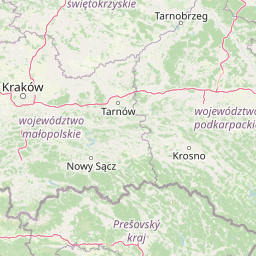
The site sits within the Pogórze Ciężkowickie, a foothill region of rounded ridges, gentle slopes, and shallow valleys that forms the northwestern approach to the Polish Carpathians. In its western Brzanka Range section, the terrain takes the form of elongated, forested ridges separated by narrow, often relatively steep valleys cut by small streams draining toward the Biała and Dunajec river systems.
Forests clothe virtually the entire surface of the area. There are few open plateaus or extensive clearings; instead, beech-dominated woodland wraps continuously over the ridges and down into the valley bottoms. Ravines and shaded gullies break the uniformity in places, creating the cooler, damper microclimate pockets where fern-rich plant communities, including patches of sycamore maple with hart's tongue fern, can establish themselves. The result is a visually dense, deeply forested foothill landscape whose character changes subtly with elevation and slope aspect rather than showing sharp topographic drama.
Ostoja w Paśmie Brzanki ecosystems, habitats, and plant life
Ecologically, Ostoja w Paśmie Brzanki is best understood as a continuous matrix of Carpathian deciduous forest threaded with freshwater habitat. The dominant vegetation type is fertile Carpathian beech forest, which gives the broader forest its tall, closed canopy and rich spring and herb layer. This core habitat is complemented by acidophilous mountain beech forest on more acidic soils, oak-hornbeam lime forest on richer sites, and a small share of sycamore maple forest with the rare hart's tongue fern.
Along the streams and in the valley bottoms, ash-alder riparian forests form narrow green ribbons that connect the upland forest to the watercourses. These riparian corridors are a crucial structural element of the site, supporting shade, bank stability, and the wet microhabitats used by amphibians, while also buffering the small rivers that drain the Brzanka Range. The habitat mosaic is further enriched by hedgerows, forest edges, and small clearings that punctuate the otherwise continuous canopy.
Ostoja w Paśmie Brzanki wildlife and species highlights
While the area is not primarily famous for conspicuous large mammals, its wildlife profile is shaped by species closely tied to mature deciduous forest and clean freshwater. The two flagship mammal species are the Eurasian beaver and the European otter, both of which depend on the stream network and undisturbed riparian corridors. Their presence is widely used as an indicator of functionally healthy lowland and foothill river systems in the Carpathian region.
The site's amphibian fauna is of particular conservation interest. The great crested newt and the Carpathian newt both occur in suitable breeding pools and slow-flowing stream sections, while the yellow-bellied toad inhabits shallow pools and damp, sun-exposed patches along forest tracks and stream margins. Together, these amphibians help anchor the area's importance for freshwater-dependent biodiversity under Annex II of the EU Habitats Directive. Beyond these highlighted species, the mature mixed forests also host typical Carpathian foothill woodland fauna, including a range of forest birds, bats, and small mammals characteristic of well-structured beech and oak-hornbeam stands.
Ostoja w Paśmie Brzanki conservation status and protection priorities
The conservation value of Ostoja w Paśmie Brzanki rests on the combination of habitat quality and habitat extent. The dominance of fertile Carpathian beech forest across roughly half the site places it firmly within the EU priority habitat framework, while the presence of well-developed acidophilous beech forest, oak-hornbeam forest, ash-alder riparian forest, and a rare sycamore-hart's tongue fern stand provides habitat diversity at multiple scales.
Its overlap with the Park Krajobrazowy Pasma Brzanki creates a nested protection regime: a landscape park provides broad protection across the wider range, while the Natura 2000 designation sharpens the focus on the specific habitat types and species of community importance. The site therefore functions simultaneously as a local stronghold for beech forest conservation and as a link in the European network of protected forest and freshwater habitats across the Carpathian foothills.
Ostoja w Paśmie Brzanki cultural meaning and human context
The Brzanka Range and the surrounding Pogórze Ciężkowickie carry a long history of small-scale rural settlement and forest use, with villages in the gminas of Ryglice, Gromnik, and Tuchów traditionally oriented toward mixed agriculture and forest-based livelihoods. While the Natura 2000 site itself is primarily valued for its natural assets, it sits within a cultural landscape in which wooded ridges, parish villages, and historic field-and-forest patterns remain closely intertwined. The Polish-language name Ostoja, meaning refuge or sanctuary, reflects the local framing of the area as a natural haven within a long-inhabited foothill region.
Top sights and standout views in Ostoja w Paśmie Brzanki
The strongest feature of Ostoja w Paśmie Brzanki is the scale and continuity of its Carpathian beech forest, particularly the fertile Dentario glandulosae-Fagetum community, which forms a near-continuous canopy over about half of the site. Equally distinctive is the layered habitat mosaic that combines mountain beech, oak-hornbeam, and rare sycamore-hart's tongue fern communities with ash-alder riparian strips along the streams.
The freshwater element is a second defining highlight. Beaver, otter, great crested newt, Carpathian newt, and yellow-bellied toad each anchor a different aspect of aquatic or moisture-dependent biodiversity, giving the site a strong profile as a refuge for both forest and freshwater species of European conservation concern.
Best time to visit Ostoja w Paśmie Brzanki
The site is best appreciated in late spring through early autumn, when the beech canopy is fully leafed and the forest trails and forest roads around the western Brzanka Range are easiest to walk. Late spring brings the peak display of spring geophytes and ferns in the herb layer of the fertile Carpathian beech forest, while early summer offers lush, shaded walking conditions in the valleys and ravines. Autumn can be rewarding for its changing foliage colors against the backdrop of the rounded foothill ridges, though rainfall and shortened days can make some forest tracks less inviting. Winter visits are possible but require preparation for snow and reduced daylight in this part of the Małopolskie voivodeship.