Why Ostoje Nietoperzy okolic Bukowca stands out
Ostoje Nietoperzy okolic Bukowca is best known for its dedication to bat conservation within a working rural and forested landscape. The site is unusual for explicitly tying protected-area status to specific human structures: four parish church attics in the villages of Bobowa, Bruśnik, Bukowiec, and Paleśnica serve as summer maternity roosts for bats, while a nearby natural cave serves as the winter hibernaculum. The combination of these artificial and natural roosting places, grouped within a single Natura 2000 designation, makes the sanctuary an important regional example of how small-scale, scattered environmental assets can be pooled into one coherent protection framework. The site is also recognised for preserving remnants of natural lowland Carpathian forests that complement its bat-focused mission.
Ostoje Nietoperzy okolic Bukowca history and protected-area timeline
The Ostoje Nietoperzy okolic Bukowca site was formally designated in 2008 as part of the expansion of Poland's Natura 2000 network following the country's accession to the European Union and its subsequent integration into the pan-European ecological monitoring and conservation framework. Its designation reflects the recognition that two Annex II bat species, the lesser horseshoe bat and the greater mouse-eared bat, were relying on a combination of church attics and a natural cave across a stretch of the Pogórze Rożnowskie foothills.
Before its formal designation as a Site of Community Importance, the area had long functioned informally as a bat landscape. Church attics in the region's villages had for centuries provided warm, undisturbed spaces for bat colonies, while the Diabla Dziura cave near Bukowiec offered winter shelter. Conservationists identified this arrangement as internationally important, leading to the creation of a coherent, formally recognised protected area that legally ties together dispersed roosting sites and their associated foraging habitats.
The site overlaps with, and reinforces protections around, the pre-existing Diable Skały nature reserve, indicating that the area's natural values had already attracted some level of legal protection before the Natura 2000 designation added a European framework on top of national-level conservation.
Ostoje Nietoperzy okolic Bukowca landscape and geographic character
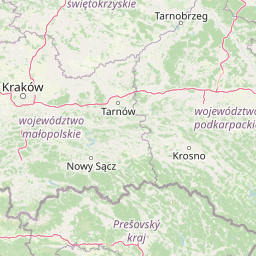
The sanctuary lies within the Pogórze Rożnowskie, a foothill belt that forms the outer northwestern margin of the Carpathians in southern Poland. The terrain is gently to moderately hilly, shaped by ancient erosion into a mosaic of ridges, valleys, and small stream courses. Elevation is moderate, with the surroundings characterised by wooded slopes, agricultural patches in the valleys, and scattered villages whose parish churches serve an unexpected ecological role as bat roosts.
A defining physical element of the site is Diabla Dziura w Bukowcu, a natural cave used by bats for hibernation. The Diable Skały (Devil's Rocks) reserve adds dramatic sandstone-like rock outcrops to the visual and geological character of the area. Together, the cave, the rock formations, and the surrounding forests create a varied microtopography despite the relatively compact overall footprint of the protected area.
Ostoje Nietoperzy okolic Bukowca ecosystems, habitats, and plant life
Ecologically, the sanctuary represents a transitional zone between the lowlands of the Polish interior and the more elevated Carpathian forests further south. The forest enclaves are dominated by beech woodland, with two distinct variants represented: the acidophilous mountain beech forest (Luzulo luzuloidis-Fagetum), which thrives on poorer, more acidic soils, and the fertile Carpathian beech forest (Dentario glandulosae-Fagetum), found on richer substrates. A third forest type, the oak-hornbeam woodland (Tilio-Carpinetum, or grąd), adds floristic diversity with its mix of broadleaf species.
The unvisited cave habitat contributes stable microclimates that are vital for hibernating bats and shelter a distinct subterranean ecological niche. Forested patches connect, at least functionally, the bat roosts with feeding areas, supporting the insects on which the bats depend. Standing water and wet microhabitats in the broader landscape provide breeding habitat for amphibians of conservation concern.
Ostoje Nietoperzy okolic Bukowca wildlife and species highlights
The wildlife profile of Ostoje Nietoperzy okolic Bukowca is defined by its bat assemblage. Two Annex II species, the lesser horseshoe bat (Rhinolophus hipposideros) and the greater mouse-eared bat (Myotis myotis), form the primary conservation subject of the site. Both species depend on undisturbed roosting sites that maintain stable temperatures and humidity, which is why both the warm attics and the cave are protected as a unified ecological unit.
Beyond bats, the sanctuary supports two amphibians that are also of conservation interest: the yellow-bellied toad (Bombina variegata), associated with small water bodies and wet microhabitats, and the Carpathian newt (Lissotriton montandoni), a regional amphibian species characteristic of the Carpathian foothills. Whether by coincidence or by careful selection, the area's mix of forest, water features, and sheltered rock environments provides habitat conditions favourable to a broader suite of fauna than the headline bats alone.
Ostoje Nietoperzy okolic Bukowca conservation status and protection priorities
From a conservation standpoint, the site is an excellent example of how the European Natura 2000 framework can be applied at a very small and fragmented scale when the species of interest require it. By declaring the church attics and their surrounding forest patches, along with a single cave, as a single Site of Community Importance, the designation formally acknowledges the functional ecological linkage across human-modified habitats.
The site's Annex II bat species and its four Annex I habitats (acidophilous beech forest, fertile Carpathian beech forest, oak-hornbeam woodland, and an unvisited cave) give it cross-cutting conservation value, and the presence of the Diable Skały nature reserve inside its boundaries adds a national-level protection layer. The combination of EU and national designations effectively doubles the regulatory protections, helping buffer the area against habitat loss, roost disturbance, and forest degradation.
Ostoje Nietoperzy okolic Bukowca cultural meaning and human context
The site's cultural context is rooted in the rural traditions of Małopolska, where historic parish churches have long coexisted with local wildlife. The churches that host bat colonies are not purpose-built conservation structures but functioning village churches, illustrating how religious and vernacular heritage buildings can accidentally serve as critical wildlife habitat. This relationship has shaped local awareness of bats and likely supports a regional tradition of tolerance toward, and curiosity about, the colonies that emerge from church eaves during summer evenings.
Top sights and standout views in Ostoje Nietoperzy okolic Bukowca
Four church-attic bat colonies across a single Natura 2000 designation, a natural cave used as a winter hibernation site, four protected habitat types under Annex I, presence of the Diable Skały nature reserve, and a small but ecologically coherent Carpathian foothill forest mosaic.
Best time to visit Ostoje Nietoperzy okolic Bukowca
Visiting is more an exercise in landscape awareness than in tourism, but the warmer months from late spring through early autumn are when bats are most active. This is also when the surrounding beech and oak-hornbeam forests are most accessible on foot and when the agricultural landscape around the villages is at its most visually expressive. Winter visits would coincide with the hibernation period for bats and are not advisable from a conservation perspective in or near the cave and roosting sites.