Why Periochi Kosiis - Pallourokampou stands out
The site is best known for its role as a bird protection area in inland Cyprus, supporting a diverse community of Mediterranean and migratory bird species. Its designation reflects the broader ecological importance of Cyprus for birds that move through the eastern Mediterranean and for species that rely on open countryside within the island's Mediterranean ecoregion.
Periochi Kosiis - Pallourokampou history and protected-area timeline
Periochi Kosiis - Pallourokampou was officially established as a Special Protection Area for birds in October 2007. The designation followed an assessment of the site's importance for avian species, leading to its inclusion in the Natura 2000 network, the European Union's coordinated framework for nature protection. The site's recognition reflects the broader European effort to identify and safeguard areas that play a key role in maintaining healthy bird populations, especially migratory and threatened species.
Periochi Kosiis - Pallourokampou landscape and geographic character
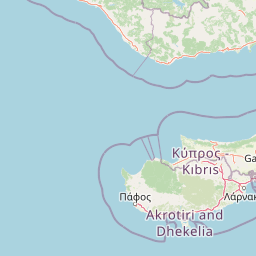
The landscape of Periochi Kosiis - Pallourokampou reflects the inland geography of central Cyprus, situated at around 35 degrees north latitude and 33.5 degrees east longitude. The terrain lies entirely on land, away from coastal influences, suggesting an environment of open Mediterranean countryside rather than coastal or marine scenery. The area's broader landscape pattern likely includes dry farmland, scrubland, and scattered woodland patches typical of central Cyprus, although the source material does not provide detailed topographical descriptions.
Periochi Kosiis - Pallourokampou ecosystems, habitats, and plant life
The site sits within the Mediterranean ecoregion, an area defined by its seasonal climate, drought-adapted vegetation, and long history of human-influenced landscapes. Although the official site documentation notes that no specific habitat types are formally protected within its boundaries, the broader ecological character of the surroundings is shaped by traditional Mediterranean land use, including agriculture, grazing, and seminatural vegetation communities.
The Mediterranean ecoregion supports distinctive bird communities, and the area's protection focus highlights the continued ecological value of inland Cyprus for species that depend on varied open environments, seasonal moisture patterns, and mosaics of natural and managed landscapes.
Periochi Kosiis - Pallourokampou wildlife and species highlights
Wildlife is the central reason for the site's protection, with the designation focused entirely on birds. The site supports 74 protected bird species and an additional 7 bird species recorded in the area but not formally listed among the protected triggers of the designation.
The protected avifauna includes a broad mix of passerines, birds of prey, water-associated species, and ground-nesting birds typical of Mediterranean and European bird communities. Notable species listed include the aquatic warbler (Acrocephalus paludicola), the common kingfisher (Alcedo atthis), the purple heron (Ardea purpurea), the stone curlew (Burhinus oedicnemus), the white stork (Ciconia ciconia), the hen harrier (Circus cyaneus), the pallid harrier (Circus macrourus), the great bustard-adjacent Clamator glandarius, the European turtle dove (Streptopelia turtur), the European roller (Coracias garrulus), the European bee-eater (Merops apiaster), the Eurasian hobby (Falco peregrinus referred in designation lists), and endemic or regional species such as Oenanthe cypriaca, the Cyprus wheatear.
The site also lists the black francolin (Francolinus francolinus), an important species for Cyprus, alongside familiar European songbirds, larks, warblers, finches, and shrikes. The overall species list emphasizes the site's role as a stronghold for both widespread European species and regionally important Mediterranean and Cypriot bird populations.
Periochi Kosiis - Pallourokampou conservation status and protection priorities
Periochi Kosiis - Pallourokampou is part of the Natura 2000 network, the European Union's central instrument for protecting biodiversity through the Birds Directive and Habitats Directive. Its 2007 designation recognizes the site as an area of European importance for the conservation of birds, particularly those that are migratory, threatened, or declining across their range.
Although the site does not formally protect specific habitat types, its SPA status commits Cyprus to managing the area in ways that maintain the ecological conditions required by the 74 listed bird species. This places the site within a broader conservation framework that values working landscapes and traditional land use as essential components of biodiversity protection, especially in the Mediterranean region.
Top sights and standout views in Periochi Kosiis - Pallourokampou
The site's strongest distinction lies in its breadth of protected birdlife, with 74 species formally recognized as conservation targets and an additional 7 species documented in the area. As an entirely terrestrial inland SPA in central Cyprus, it adds depth to the island's Natura 2000 network and complements coastal and mountain protected sites elsewhere in the country.
Best time to visit Periochi Kosiis - Pallourokampou
Because Periochi Kosiis - Pallourokampou is a bird protection area, seasonal timing matters for anyone interested in observing its wildlife. Spring and autumn are typically the most meaningful periods for bird activity in Mediterranean inland sites, with spring supporting breeding displays and songbird activity, and autumn bringing migratory species passing through the eastern Mediterranean. Summer in central Cyprus is hot and dry, which can reduce visible bird activity, while winter can be mild and remain conducive to observation of resident species.