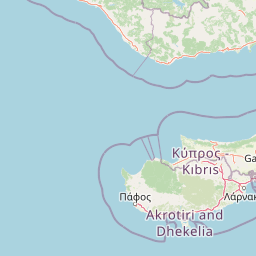
Why Periochi Lefkaron stands out
Periochi Lefkaron is best known for its concentration of Mediterranean phrygana and thermomediterranean shrubland habitats in combination with small, ecologically distinctive stands of oriental plane and liquidambar forest. These eastern Mediterranean woodland types, associated with the Platanion orientalis habitat classification, are among the rarer forest communities in Cyprus and considerably increase the site's conservation weight. The area is also distinguished by the breadth of its formally protected avifauna, with dozens of bird species listed as a basis for its Special Protection Area status. Among these are priority and range-restricted species such as Bonelli's eagle, the European roller, the masked shrike, the Cyprus wheatear, the Eurasian hobby, the European honey buzzard and several migratory warblers, shrikes and flycatchers that rely on Mediterranean scrub and open woodland during passage or breeding.
Periochi Lefkaron landscape and geographic character
The landscape of Periochi Lefkaron reflects the classic Mediterranean terrain of inland Cyprus, marked by gentle variations in topography that support a patchwork of dry slopes, sheltered hollows and small woodland patches. Because the entire area is terrestrial and modest in extent, the physical relief is limited, but subtle differences in slope, soil depth and exposure create pronounced contrasts in vegetation cover.
Open expanses are dominated by low shrublands where Sarcopoterium spinosum and other drought-adapted species form a tightly knit phrygana layer. These phryganas are typical of the Mediterranean basin and lend the surrounding views their characteristic look: silvery, sun-bleached vegetation punctuated by spiny dwarf shrubs and scattered taller bushes. On more mesic sites, the landscape shifts noticeably into closed-canopy oriental plane and liquidambar forest, with associated understorey that thrives where moisture persists longer into the dry season.
Beyond these signature habitats, the terrain also includes olive and carob groves, which are emblematic of long-standing Cypriot rural land use, and patches of Quercus infectoria oak woodland on suitable soils. Together these elements create a working rural landscape whose scenic character is defined by the contrast between austere, sunlit scrub and the deeper green of small, shadowy forest groves.
Periochi Lefkaron ecosystems, habitats, and plant life
Ecologically, Periochi Lefkaron belongs firmly to the Mediterranean ecoregion and is shaped by the seasonal rhythm of dry, hot summers interrupted by cool, moist winters. Within this climatic envelope, the site preserves five formally recognised natural habitat types, ranging from thermomediterranean and pre-desert shrub formations to distinctly eastern Mediterranean forest communities. The combination of habitat types within a relatively small territory gives the site an unusually rich ecological texture.
The thermomediterranean shrubland and Sarcopoterium phryganas represent the most resilient component of the local ecology, harbouring specialist flora and providing nesting and foraging opportunities for many bird species. Platanus orientalis and Liquidambar orientalis forests, classified under the Platanion orientalis habitat group, are far rarer on the island and depend on reliable access to subsurface moisture, often along seasonal watercourses or seepage zones. Where these conditions occur, the plane and liquidambar trees form small, ecologically distinctive galleries that contrast strongly with the surrounding arid scrub.
Olive and carob groves, along with Quercus infectoria oak forests, complete the vegetation mosaic and reflect the long interaction between rural land use and natural systems in Cyprus. These habitats are not only reservoirs of biodiversity in their own right but also support wildlife such as birds, bats and invertebrates by providing structurally diverse vegetation, perennial foliage and a more reliable source of fruit, shelter and roosting sites than the open phrygana.
Periochi Lefkaron wildlife and species highlights
Although modest in area, Periochi Lefkaron supports a remarkable density of protected and noteworthy wildlife species for its size. Its bird fauna in particular has been a primary driver of its formal protection, with the site designated for fifty-seven animal species overall, most of which are birds recorded during breeding or passage.
The site's birdlife includes several raptors and larger species of high conservation interest, such as Bonelli's eagle, the long-legged buzzard, the European honey buzzard, the hen harrier, the red-footed falcon and the western barn owl. Open scrub and woodland edges host characteristic Mediterranean species like the European roller, the great spotted cuckoo, the masked shrike, the lesser grey shrike, the woodchat shrike, the red-backed shrike and the Eurasian golden oriole. Specialist and range-restricted passerines are also present, notably the Cyprus wheatear and the isabelline wheatear, alongside the melodious warbler, the Cyprus warbler and the migratory common whitethroat, barred warbler and a suite of other warblers, flycatchers and thrushes.
Beyond birds, the site provides habitat for the lesser horseshoe bat, a small but ecologically important mammal species that depends on older trees, caves or built structures for roosting and forages across the surrounding mosaic of scrub and woodland. Reptiles, invertebrates and additional plants recorded in the area contribute to a broader faunal and floral richness that complements the headline protected species.
Periochi Lefkaron conservation status and protection priorities
Periochi Lefkaron is significant primarily as a Mediterranean conservation site, with its importance anchored in the European Natura 2000 framework. The site's triple designation as a Special Protection Area for birds, a Site of Community Importance and a Special Area of Conservation reflects a deliberate effort to safeguard both its ornithological value and its broader ecological character.
The Special Protection Area designation, in place since December 2002, highlights the site's role in protecting migratory and breeding birds across an increasingly developed Cypriot landscape. The subsequent Site of Community Importance status, granted in May 2004, and the Special Area of Conservation designation, confirmed in September 2015, extend this protection to the site's habitats and non-avian fauna, including the lesser horseshoe bat and the reptile, invertebrate and plant species that occur here.
At a wider scale, Periochi Lefkaron contributes to the conservation of habitat types such as thermomediterranean shrubland, Sarcopoterium phryganas, Platanion orientalis forests, olea-ceratonia woodland and Quercus infectoria forests, all of which are prioritised within the EU Habitats Directive. By preserving these habitats in a representative condition, the site helps maintain ecological connectivity across the Cypriot Natura 2000 network and supports the long-term survival of plant and animal species that depend on the subtle environmental gradients characteristic of Mediterranean rural landscapes.
Top sights and standout views in Periochi Lefkaron
Periochi Lefkaron's most distinctive features include its concentration of thermomediterranean phrygana and relict eastern Mediterranean forest types within a very compact area, its triple Natura 2000 designation and its unusually rich protected avifauna.
The site is also notable for protecting locally endemic or range-restricted plants such as Astragalus macrocarpus subsp. lefkarensis, Phlomis brevibracteata and Ophrys kotschyi, and for combining traditional rural landscape elements, including olive and carob groves, with habitats of high European conservation priority. This blend of cultural landscape and ecological function is itself one of the site's most recognisable qualities.