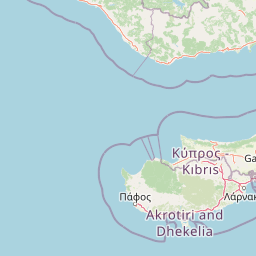
Why Periochi Skoulli stands out
Periochi Skoulli is best known for being a small but ecologically dense Mediterranean protected landscape that safeguards a remarkable variety of habitat types in a single compact area, including Platanus orientalis and Liquidambar orientalis galleries, Quercus infectoria forests, and Mediterranean wet meadows. Its signature value, however, is its avifauna: the site formally protects an exceptional list of nearly 90 bird species, spanning resident raptors, passage migrants, and Mediterranean specialists such as the European roller and the Cyprus wheatear.
Periochi Skoulli history and protected-area timeline
Periochi Skoulli entered the formal protected area system of Cyprus through the Natura 2000 network rather than through a national park designation. The site was first declared a Special Protection Area for birds in December 2002, an initial recognition anchored in the exceptional birdlife present across its 100 hectares. This early designation laid the groundwork for subsequent layers of protection, reflecting the European Union's broader effort to safeguard important habitats and species through coordinated international legislation.
In May 2004, following Cyprus's accession to the European Union, Periochi Skoulli was formally listed as a Site of Community Importance, placing it within the pan-European Natura 2000 system of ecologically significant zones. Several years later, in September 2015, it was confirmed as a Special Area of Conservation, completing the institutional process of recognizing its long-term ecological value. The site has always been protected predominantly on land, with no marine component, and its history of protection is essentially the story of its gradual integration into successive layers of European conservation law.
Periochi Skoulli landscape and geographic character
The landscape of Periochi Skoulli reflects the broader character of inland western Cyprus, where Mediterranean forests, lowland terrain, and seasonal river systems create a varied ecological mosaic. Although the protected area is small, its terrain supports an unusually broad range of physical settings, from dry pseudo-steppe grasslands to forested ravines and riparian corridors formed along intermittent waterways. The site's interior geography is shaped largely by water flow patterns, with the seasonal rivers and streams carving narrow, sheltered valleys that support distinct microclimates compared with the surrounding countryside.
The elevation profile and topography of Periochi Skoulli favor a vertical layering of habitats, with valley bottoms holding wetter vegetation and upper slopes supporting drier Mediterranean forest and scrubland. This landscape pattern is typical of Mediterranean ecoregions where water availability, soil depth, and exposure combine to create closely interlocked habitat types within a small area. The result is a visibly diverse landscape where gallery forests, oak woodlands, wet meadows, and pseudo-steppe patches can occur in close proximity.
Periochi Skoulli ecosystems, habitats, and plant life
Ecologically, Periochi Skoulli belongs entirely to the Mediterranean ecoregion, but within that regional classification it captures a surprisingly wide cross-section of habitat types. Eight natural habitat types are formally recognized within its boundaries, spanning aquatic, wetland, riparian, Mediterranean scrub, and forest environments. Among the most ecologically distinctive are periodic Mediterranean rivers with Paspalo-Agrostidion vegetation, Mediterranean wet meadows with tall Molinio-Holoschoenion grasses, Salix alba and Populus alba galleries, and forest formations of Platanus orientalis combined with Liquidambar orientalis, a habitat type that is globally rare and increasingly threatened.
Additional habitats include southern riparian galleries and thickets of the Nerio-Tamaricetea and Securinegion tinctoriae types, olive and carob forests (Olea and Ceratonia), pseudo-steppe grasslands of the Thero-Brachypodietea class, and Mediterranean oak forests dominated by Quercus infectoria and the Anagyro foetidae-Quercetum infectoriae association. Together, these habitats form a coherent ecological network within the protected area, linking riparian systems with the surrounding Mediterranean vegetation and supporting both specialist forest species and opportunistic migrants.
Periochi Skoulli wildlife and species highlights
The wildlife profile of Periochi Skoulli is dominated by its exceptional bird diversity, which is the central justification for the site's formal protection. No fewer than 89 bird species are part of the official basis for its designation, including resident and migratory species such as the goshawk, sparrowhawk, European honey buzzard, common buzzard, lesser kestrel, hobby, and red-footed falcon among raptors, while waders and waterbirds include the little egret, grey heron, purple heron, squacco heron, black-crowned night heron, little bittern, common kingfisher, garganey, and northern lapwing. The site is also a seasonal home for an exceptional range of passerines, including several Mediterranean endemics and species such as the Cyprus wheatear, Ruppell's warbler, spectacled warbler, and lesser grey shrike.
Beyond birds, the protected area harbors at least one reptile of conservation interest, the Western Caspian turtle (Mauremys rivulata), and two mammal species of formal conservation relevance, the Mediterranean horseshoe bat (Rhinolophus euryale) and the Egyptian fruit bat (Rousettus aegyptiacus). Surveys have additionally identified a broader fauna including several amphibian species, additional reptile species, invertebrates, and other mammals, alongside a recorded flora of at least eight plant species. The combination of varied habitats and protected status makes the site a meaningful refuge for wildlife typical of the eastern Mediterranean.
Periochi Skoulli conservation status and protection priorities
Conservation value is the core identity of Periochi Skoulli. The site is formally protected under three overlapping European designations that together ensure durable legal safeguards: Special Protection Area (for birds), Site of Community Importance, and Special Area of Conservation. The Special Protection Area designation is anchored in the presence of at least 92 protected animal species, the large majority of them birds, which gives the site a strong international profile within the European bird conservation framework.
The site's Special Area of Conservation status further reinforces the protection of its eight formally recognized habitat types, several of which are considered priorities within the European Union's Habitats Directive. Habitats such as Platanus orientalis and Liquidambar orientalis galleries, Quercus infectoria forests, and Mediterranean wet meadows carry particular conservation weight because they are localized, ecologically distinctive, and vulnerable to pressures such as water abstraction, land-use change, and tourism development. By extending protections to both species and habitats in a layered legal framework, Periochi Skoulli contributes meaningfully to biodiversity preservation in Cyprus and to the coherence of the broader Mediterranean Natura 2000 network.
Top sights and standout views in Periochi Skoulli
Periochi Skoulli stands out for the unusual density of formally protected species and habitats within a small territory. Its most distinctive feature is the rare Platanus orientalis and Liquidambar orientalis riparian forest, a habitat type found in only a handful of sites across the Mediterranean. Equally important is its exceptional bird list, which includes classic Mediterranean and European species such as the European roller, hoopoe, Eurasian golden oriole, Eurasian hobby, and the Cyprus wheatear, an island endemic. The site's location in the Paphos region of western Cyprus also places it within an area of strong ecological continuity, allowing it to function as a stepping stone for migratory bird routes between Europe, Africa, and the Levant.