Why Phu Soi Dao National Park stands out
Phu Soi Dao National Park is most notable for protecting Phu Soi Dao, the fifth-highest mountain in Thailand, and its surrounding highland ecosystems. The park contains Thailand's largest field of Crested Naga flowers (Lan Son Phu Soi Dao), a spectacular high-altitude plain at 1,630 meters elevation where this striking flowering plant creates a remarkable seasonal display. The park's multiple waterfalls, including the five-tiered Namtok Phu Soi Dao and seven-tiered Namtok Sai Thip, provide dramatic natural attractions. Its location along the Luang Prabang Range at the Thai-Lao border places it within a biogeographically significant zone supporting diverse forest types and species assemblages.
Phu Soi Dao National Park history and protected-area timeline
The protection of Phu Soi Dao began with a formal survey initiated in November 1990, covering an initial area of 32 square kilometers. This initial protected area was expanded to 78 square kilometers in 1992 as survey work revealed the significance of the broader ecosystem. In August 1993, authorities proposed formal designation as a national park, incorporating the Phu Soi Dao waterfall as a key attraction. The proposal process continued for nearly fifteen years before the park was finally declared on May 28, 2008, when an area of approximately 340 square kilometers (212,633 rai) encompassing Nam Pat forest and Phu Soi Dao forest was officially established as Thailand's 109th national park. The park has been managed by the Phitsanulok Regional Office (Region 11) of the Department of National Parks, Wildlife and Plant Conservation since 2002, providing ongoing administrative continuity for the protected area.
Phu Soi Dao National Park landscape and geographic character
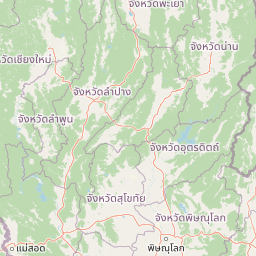
The terrain of Phu Soi Dao National Park is characterized by mountainous topography that dominates approximately 85% of its area, with the remaining portion consisting of small highland plains. The park's highest point is Phu Soi Dao at 2,120 meters, ranking as the fifth-highest mountain in Thailand and creating a prominent landmark visible across the surrounding region. The park extends up to 10 kilometers at its widest point and stretches along the border with Laos for roughly 60 kilometers to the east. Several rivers have their source within the park boundaries, including the Pat River and Kwae Noi River, which drain the mountain watersheds and contribute to downstream hydrological systems. The combination of steep mountain slopes, ridgelines, and valley floors creates a complex topography that supports the park's diverse ecological communities. Adjacent protected areas including Phu Miang-Phu Thong Wildlife Sanctuary to the southwest and Nam Pat Wildlife Sanctuary to the west create an interconnected conservation landscape.
Phu Soi Dao National Park ecosystems, habitats, and plant life
The park's ecological diversity is reflected in its multiple forest types, which vary with elevation and aspect. Mixed deciduous forest dominates portions of the lower slopes, while dry dipterocarp forest occurs in drier sections. The higher elevations support hill evergreen forest characterized by broadleaf evergreen species, and conifer forest appears near the summit zones. This vertical stratification of vegetation creates distinct ecological communities that house different species assemblages. The park's flora includes commercially valuable timber species such as Afzelia xylocarpa, Hopea odorata, Pterocarpus macrocarpus, and Shorea species, as well as numerous other trees including Betula alnoides, Magnolia champaca, Pinus kesiya, and various Quercus species. The diversity of plant life extends to flowering plants, orchids, and even carnivorous plants including several Utricularia species and Drosera peltata. The highland meadows, particularly Lan Son Phu Soi Dao, support specialized plant communities adapted to the cooler, more exposed conditions at higher elevations.
Phu Soi Dao National Park wildlife and species highlights
Phu Soi Dao National Park supports a notable array of wildlife, with mammal species including the Asian black bear, Asian palm civet, barking deer, Burmese hare, mainland serow, Malayan porcupine, sambar deer, and wild boar. The park's bird fauna is particularly diverse, with approximately 190 species documented, including roughly 130 passerine species from 32 families and about 60 non-passerine species from 14 families. Notable bird species include the mountain hawk-eagle, red-headed trogon, Asian barred owlet, and various thrushes, flycatchers, babblers, and sunbirds. Reptiles found in the park include the Bengal monitor, king cobra, reticulated python, and softshell turtle. This assembly of species reflects the park's diverse habitats and its position within a biogeographically significant region along the Thai-Lao border.
Phu Soi Dao National Park conservation status and protection priorities
Phu Soi Dao National Park contributes to Thailand's protected area network by preserving representative examples of highland forest ecosystems in the Luang Prabang Range. The park's multiple forest types, from mixed deciduous through hill evergreen to conifer, represent ecological communities that have been subject to logging and agricultural pressure in the broader region. Protection of this area helps maintain watershed functions for rivers originating within its boundaries, including the Pat and Kwae Noi systems. The park's adjacency to other protected areas, including the Phu Miang-Phu Thong and Nam Pat wildlife sanctuaries, creates a larger conservation landscape that facilitates wildlife movement and ecological processes across administrative boundaries. The establishment of the park in 2008 reflected recognition of the need to protect the highland ecosystems surrounding one of Thailand's most significant mountains and to maintain the biodiversity associated with these habitats.
Phu Soi Dao National Park cultural meaning and human context
Phu Soi Dao National Park is situated in a region of northern Thailand with traditional communities whose livelihoods are closely tied to the surrounding forests and mountainous terrain. The park's name, derived from the Thai language, translates roughly to indicate its identity as a mountain area of astronomical observation, reflecting traditional relationships between local communities and the landscape. The highland plains within the park, particularly Lan Son Phu Soi Dao, have been significant locations for local communities, with the seasonal blooming of the Crested Naga flowers creating a notable natural phenomenon that has drawn attention throughout the region's history.
Top sights and standout views in Phu Soi Dao National Park
The park's defining feature is Phu Soi Dao mountain itself, the fifth-highest in Thailand, offering dramatic highland scenery and challenging trails to its summit at 2,120 meters. The summit plateau, Yod Phu Soi Dao, covers approximately 160 hectares of alpine terrain. The five-tiered Namtok Phu Soi Dao waterfall and seven-tiered Namtok Sai Thip provide spectacular water features amid the forested landscape. Lan Son Phu Soi Dao, a 640-hectare highland plain at 1,630 meters, contains Thailand's largest concentration of Crested Naga flowers, creating an extraordinary seasonal display. The diverse forest types, from deciduous through evergreen to conifer, support rich biodiversity and create scenic variety throughout the park.
Best time to visit Phu Soi Dao National Park
The park can be visited throughout the year, though the cool season from November to February offers the most comfortable conditions for hiking and outdoor exploration, with temperatures remaining moderate even at higher elevations. The summer months from April to June bring warmer conditions, while the rainy season from May through October supports the park's waterfalls and lush vegetation but may create challenging trail conditions. The Crested Naga flower bloom at Lan Son Phu Soi Dao typically occurs during the cooler months, making the winter and early spring period particularly rewarding for visitors seeking to witness this spectacular natural display.