Mori Atlas logo
Protected areaPotamos Panagias Stazousas

A vital riverine habitat and bird sanctuary within the central Mediterranean inland terrain

Potamos Panagias Stazousas Protected Area: Geographic Context and Landscape Features in Cyprus

Potamos Panagias Stazousas functions as a significant protected area within the central inland regions of Cyprus. Centered on the Panagias Stazousas river corridor, this protected landscape encompasses a mosaic of Mediterranean farmland, scrubland, and woodland patches. It serves as an essential ecological node for numerous migratory and resident bird species, illustrating the complex relationship between riparian zones and Mediterranean terrain.

bird sanctuarySpecial Protection AreaNatura 2000Mediterranean birdsriver corridorinland Cyprus

Potamos Panagias Stazousas

Protected area

Park overview

Structured park overview, official facts, and landscape profile for Potamos Panagias Stazousas

Potamos Panagias Stazousas park facts, protected area profile, and essential visitor context

Review the core facts for Potamos Panagias Stazousas, including designation, size, terrain, visitor scale, habitats, and operating context in one park-focused overview.

About Potamos Panagias Stazousas

Potamos Panagias Stazousas is a Natura 2000 Special Protection Area in central Cyprus, established under the European Union Birds Directive to safeguard important bird populations and their habitats. The site takes its name from the river Panagias Stazousas, around which the protected landscape is organized. Covering roughly 1,744 hectares entirely on land, it forms part of the country's contribution to the EU-wide Natura 2000 ecological network.

Although the site falls within the Mediterranean ecoregion, it has no specifically listed protected habitat types; instead, it is valued primarily for the bird species it supports. Some 53 protected species are mentioned in the designation, with an additional two non-listed bird species recorded within the site. The species mix reflects a combination of Mediterranean farmland, open scrubland, woodland patches, and the river corridor, each providing different ecological niches that together support a notably rich bird community.

The site's central coordinates, around 34.9 degrees north and 33.5 degrees east, place it firmly within the inland landscape of Cyprus rather than along the coast. This inland position is characteristic of many of Cyprus's Natura 2000 sites, where river valleys and dryland mosaics create corridors of ecological productivity. Potamos Panagias Stazousas contributes to the broader strategy of protecting migratory pathways and resident populations along these interior corridors.

Quick facts and research context for Potamos Panagias Stazousas

Potamos Panagias Stazousas is a Special Protection Area for birds, classified under the European Natura 2000 framework. It is located in Cyprus and occupies approximately 1,744 hectares of terrestrial land, entirely inland. The site was officially designated as an SPA in October 2007. Its Natura 2000 code is CY6000007.

Protection and recognition

Documented terrestrial protection scope and Natura 2000 designation data

Potamos Panagias Stazousas Protection Status and International Recognition

Potamos Panagias Stazousas maintains documented terrestrial protection status supported by official Natura 2000 recognition data records. Comprehensive conservation tracking details provide clear insight into the protected landscape designation framework.
Park context

Deeper park guide and search-rich context for Potamos Panagias Stazousas

Potamos Panagias Stazousas history, landscape, wildlife, and travel context

Explore Potamos Panagias Stazousas through its history, landscape character, ecosystems, wildlife, conservation priorities, cultural context, and seasonal travel timing in a structured park guide built for atlas discovery and search intent.

Why Potamos Panagias Stazousas stands out

The site is best known for the diversity and richness of its protected birdlife. It supports 53 protected bird species, including several raptors, harriers, falcons, shrikes, warblers, and the endemic Cypriot wheatear (Oenanthe cypriaca). Its conservation value lies in providing refuge and habitat for a wide range of species across Mediterranean farmland, scrub, woodland, and riverine environments.

Potamos Panagias Stazousas history and protected-area timeline

Potamos Panagias Stazousas was formally designated as a Special Protection Area in October 2007 under the Natura 2000 framework. The designation was driven by the need to protect the large number of bird species recorded at the site, totaling 53 protected species. Its establishment reflects Cyprus's broader integration into the EU's nature conservation system, in which SPAs are designated to safeguard birds listed under the Birds Directive and the species that depend on their habitats. Beyond this foundational designation, the available sources do not provide additional historical detail about the site itself.

Potamos Panagias Stazousas landscape and geographic character

The landscape of Potamos Panagias Stazousas is shaped by the river Panagias Stazousas and its surrounding Mediterranean environment in central Cyprus. The river corridor functions as a structuring feature of the site, with associated riparian vegetation forming a distinct linear element within predominantly terrestrial, Mediterranean terrain.

The broader landscape reflects the typical inland character of Cyprus, with a mosaic of dry plains, agricultural land, open scrub, and patches of woodland that together generate habitat diversity. The Mediterranean ecoregional setting gives the area its characteristic pattern of seasonal aridity and vegetation adapted to dry summers and mild wet winters. Although the site lacks officially listed habitat types, this mosaic of land uses sustains the bird populations for which it was designated.

Potamos Panagias Stazousas ecosystems, habitats, and plant life

Ecologically, the site belongs to the Mediterranean ecoregion, where plant and animal communities are adapted to seasonal drought and relatively mild winters. The protected area does not include any officially listed habitat types under the Natura 2000 framework, but the surrounding environment provides a varied mosaic of riparian vegetation along the river, agricultural margins, open scrubland, and patches of woodland.

This variety of land cover creates complementary habitats that allow both resident and migratory species to find shelter, feeding opportunities, and nesting sites. The river corridor in particular serves as a seasonal refuge and a movement pathway through the surrounding dryland, while the open spaces support ground-nesting and farmland-associated species. Together, these features shape the ecological character of the site and underpin its value for biodiversity.

Potamos Panagias Stazousas wildlife and species highlights

The wildlife significance of Potamos Panagias Stazousas lies overwhelmingly in its rich bird fauna, which was the direct justification for its SPA designation. A total of 53 protected bird species are associated with the site, representing raptors, owls, nightjars, pigeons, cuckoos, larks, shrikes, wheatears, warblers, thrushes, finches, and others, plus two additional non-protected bird species recorded within the area.

Key species include several birds of prey and harriers such as the sparrowhawk (Accipiter nisus), Bonelli's eagle (Aquila fasciata), common buzzard (Buteo buteo), long-legged buzzard (Buteo rufinus), Eurasian honey buzzard (Pernis apivorus), western marsh harrier (Circus aeruginosus), hen harrier (Circus cyaneus), pallid harrier (Circus macrourus), and Montagu's harrier (Circus pygargus), along with smaller falcons such as the hobby (Falco subbuteo) and red-footed falcon (Falco vespertinus). The great spotted cuckoo (Clamator glandarius) and the European roller (Coracias garrulus) add a Mediterranean character to the avifauna.

The site also supports a wide range of smaller passerines and ground-nesting species, including the Eurasian stone curlew (Burhinus oedicnemus), common quail (Coturnix coturnix), European bee-eater (Merops apiaster), Eurasian golden oriole related species, woodlark (Lullula arborea), several shrike species (Lanius collurio, Lanius minor, Lanius nubicus, Lanius senator), various Oenanthe wheatears including the endemic Cypriot wheatear (Oenanthe cypriaca), and a suite of warblers and thrushes typical of Mediterranean woodland and farmland. The overall species list reflects the site's role as a Mediterranean bird refuge.

Potamos Panagias Stazousas conservation status and protection priorities

The conservation profile of Potamos Panagias Stazousas is anchored in its designation as a Natura 2000 Special Protection Area for birds, completed in October 2007. This status places the site within the European Union's framework for protecting wild birds and their associated habitats. The site's protected designation is fundamentally about safeguarding the bird species that breed, winter, or pass through the area.

The 53 protected bird species tied to the site demonstrate a high concentration of conservation interest in a relatively compact area of inland Cyprus. Although no formally listed habitat types are part of the designation, the protection of these bird species implicitly extends to the maintenance of the river corridor, scrubland, woodland patches, and farmland edges that they depend on. Potamos Panagias Stazousas therefore functions as a node in the wider network of Natura 2000 sites across Cyprus, helping maintain ecological connectivity in the eastern Mediterranean and supporting the broader strategy of protecting migratory and resident birdlife.

Top sights and standout views in Potamos Panagias Stazousas

Potamos Panagias Stazousas stands out as one of the most bird-rich Natura 2000 sites in Cyprus, designated specifically for the protection of birds rather than for habitat types. The combination of a river-based landscape, Mediterranean farmland, scrubland, and woodland creates the ecological conditions that support a remarkable list of 53 protected bird species plus two additional recorded species.

Its role as a Special Protection Area under the EU Natura 2000 framework since 2007 places it among Cyprus's structured efforts to conserve Mediterranean avifauna. The site's inland, river-centered geography gives it a particular character within the national network, offering a contrast to the coastal sites that often dominate public discussion of Cypriot nature protection.

Best time to visit Potamos Panagias Stazousas

Given the site's primary importance as a bird protection area, the most meaningful times for any observational or ecological engagement align with the broader Mediterranean bird calendar in Cyprus: spring and autumn, when migratory species are moving through, and the winter months, when some additional species may be present. Summer in Cyprus is dry and hot, with reduced bird activity and heat-driven landscape conditions. The available source material does not provide detailed seasonal guidance, so visitors should treat any planning as general birdwatching timing rather than site-specific operational information.

Monthly climate preview

Long-term monthly temperature and precipitation rhythm recorded at a representative coordinate

Potamos Panagias Stazousas Climate Normals and Annual Temperature Patterns

Representative coordinates for Potamos Panagias Stazousas reveal a measured annual progression of average temperatures from 13.5 degrees Celsius up to 30.01 degrees Celsius alongside shifting monthly precipitation levels. Detailed monthly climate records expand on these foundational temperature and precipitation normals across the entire annual cycle.
Annual mean21 °C
14 °C30 °C
Jan14°
Feb14°
Mar15°
Apr18°
May23°
Jun27°
Jul30°
Aug30°
Sep28°
Oct24°
Nov19°
Dec15°
Warmest month
August

30 °C

Coolest month
January

13.5 °C

Wettest month
December

2.3 mm/day

Driest month
July

0 mm/day

Park location guide

Geography guide, regional context, and park location map for Potamos Panagias Stazousas

Potamos Panagias Stazousas park geography, regions, and map view in Cyprus

Understand where Potamos Panagias Stazousas sits in Cyprus through a broader geographic reading of the surrounding landscape, nearby location context, and its mapped position within the national park landscape.

How Potamos Panagias Stazousas fits into Cyprus

Cyprus is an island nation in the eastern Mediterranean Sea, positioned at the crossroads of Europe, Africa, and Asia. The Republic of Cyprus governs the southern portion of the island, with Nicosia as its capital and largest city. The island has a complex political situation due to the Turkish occupation in the north and contains British military bases in the south. Cyprus gained independence from Britain in 1960 and is a member of the European Union.

Wider geography shaping Potamos Panagias Stazousas in Cyprus

Cyprus is an island located in the eastern Mediterranean Sea, off the coast of the Levant in West Asia. The island lies approximately 75 km south of Turkey, 105 km west of Syria, and 380 km north of Egypt. The terrain varies from mountainous regions in the north and interior to plains and coastal areas. The Troodos Mountains dominate the central and southwestern part of the island. The island has no land borders as it is entirely surrounded by sea.

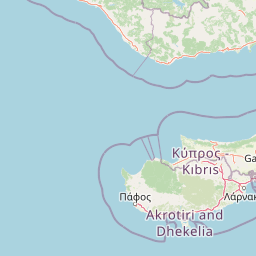
Map view of Potamos Panagias Stazousas

Use this park location map to pinpoint Potamos Panagias Stazousas in Cyprus, understand its exact geographic position, and read its mapped placement within the surrounding landscape more clearly.

Pigeon | © OpenStreetMap contributors
Recorded earthquake history

View Recorded Seismic Activity and Earthquake History Near Potamos Panagias Stazousas

Examine the historical catalogue of earthquakes mapped near the Potamos Panagias Stazousas protected area. This MoriAtlas collection offers a direct way to browse past seismic events and understand their regional proximity to the park landscape without implying causation or hazard.

Potamos Panagias Stazousas Earthquake History

Catalogued events

204 events

Strongest magnitude

Magnitude 5.6

Most recent event

Dec 2, 2024

This history includes earthquakes recorded inside the park or within 50 km of its borders

Park atlas

Compare regional geography, river corridors, and adjacent protected natural areas

Explore Parks Near Potamos Panagias Stazousas and Surrounding Protected Landscapes

Browse protected areas and river-centered reserves located near Potamos Panagias Stazousas in central Cyprus. Comparing adjacent natural habitats helps reveal broader regional biodiversity patterns and connected Mediterranean landscapes.
Nature reserveCyprus
Park boundaries overlap#1 closest

Southwest

Dasos Stavrovouniou Nature Reserve: Central Cyprus Protected Geography and Map

Mediterranean pine woodlands and avian habitat mosaic

Spanning 1,930 hectares of central Cyprus, Dasos Stavrovouniou features a varied topography of stony ridges, ravines, and siliceous cliffs. This protected area supports a dense habitat mosaic, including phrygana shrublands and evergreen forests that provide essential shelter for endemic Cyprus species and migratory raptors within the Natura 2000 framework.

Area
19.281 km²
Established
2002
Relief
Upland
Climate
Mediterranean
Nature reserveCyprus
2.1 km away#2 closest

North

Periochi Lympion - Agias Annas: Inland Protected Landscapes and Nature Reserve Atlas

Mediterranean shrubland and bird conservation zones in central Cyprus

Periochi Lympion - Agias Annas preserves essential thermo-Mediterranean shrubland and Sarcopoterium-dominated phrygana formations within the Cyprus interior. This protected landscape sustains a mosaic of pseudo-steppe grasslands and diverse bird populations, providing a focused view of inland habitat conservation within the eastern Mediterranean ecoregion.

Area
5.167 km²
Established
2002
Relief
Lowland
Scope
Terrestrial
Protected areaTajikistan
About 5.9 km away#3 closest

Northeast

Periochi Moytti Toy Ziou: Protected Landscape and Geographic Overview in Tajikistan

Mapped boundaries and regional protected area context

Discover the geographic identity of Periochi Moytti Toy Ziou, a key protected area situated in Tajikistan. This entry provides essential mapping and landscape data to help visualize the park's boundaries, surrounding terrain, and its contribution to regional conservation geography.

Area
0.181 km²
Relief
Lowland
Scope
Terrestrial
Water
Minor water
Protected areaCyprus
6.7 km away#4 closest

East

Ethniko Dasiko Parko Rizoelias: A Natura 2000 Protected Area and Mediterranean Habitat Mosaic

Ecological geography and landscape context in inland Cyprus

Ethniko Dasiko Parko Rizoelias represents a significant conservation effort in Cyprus, balancing rare gypsophilous vegetation with Mediterranean shrubland. Its triple Natura 2000 status protects 34 bird species and reptile communities within a compact, structurally diverse terrestrial environment.

Area
1.238 km²
Established
2004
Relief
Lowland
Climate
Mediterranean
Nature reserveCyprus
7.1 km away#5 closest

Northeast

Periochi Kosiis - Pallourokampou Nature Reserve: Regional Geography and Protected Boundaries

Inland Cyprus protected landscape and natural terrain mapping

Periochi Kosiis - Pallourokampou represents a crucial nature reserve within the Mediterranean ecoregion of Cyprus. Examine the park boundaries and regional geographic context through this structured atlas entry, which details the terrestrial landscape features defining this inland conservation area.

Area
37.178 km²
Established
2007
Climate
Mediterranean
Scope
Terrestrial
A horizontal watercolor illustration of a wetland scene with a calm body of water, grassy shorelines, and distant rolling hills under a soft sky.
Nature reserveLarnaca District
7.2 km away#6 closest

East

Alykes Larnakas Nature Reserve: Atlas of Protected Wetlands and Coastal Mediterranean Terrain

Ecological landscape mapping in the Larnaca District of Cyprus

Alykes Larnakas functions as a cohesive wetland landscape featuring the expansive Larnaka Salt Lake alongside smaller basins like Orfani and Soros. The reserve protects a gradient of ecosystems ranging from coastal lagoons and salt-crust basins to Mediterranean phrygana and dry grassland textures that define the southeastern coast of Cyprus.

Area
15.602 km²
Established
2008
Nature reserveCyprus
About 11 km away#7 closest

Northwest

Potamos Gialias Nature Reserve: Mapping Protected River Habitats in Cyprus

An analysis of riverine corridors, Mediterranean shrublands, and regional biodiversity.

Potamos Gialias represents a focused nature reserve in Cyprus, protecting an intricate mosaic of riparian galleries, phrygana shrublands, and endemic pine forests. This site offers a clear view into the Mediterranean ecological gradient, where seasonal riverbeds intersect with rocky slopes to support unique fauna and resilient plant communities within a compact geographic boundary.

Area
0.934 km²
Relief
Mixed relief
Climate
Mediterranean
Scope
Terrestrial
Nature reserveCyprus
11 km away#8 closest

Northwest

Alykos Potamos - Agios Sozomenos: Inland Nature Reserve and Protected Landscape in Cyprus

A diverse Mediterranean mosaic of riparian gallery and halophytic scrub habitats.

Located in central Cyprus, this nature reserve protects a sensitive inland landscape where stream corridors meet Mediterranean salt meadows and dryland shrub formations. The site is a critical refuge for numerous bird species and the rare orchid Ophrys kotschyi, reflecting a high density of protected habitats within a compact, geographically rich area.

Area
3.728 km²
Established
2002
Relief
Lowland
Climate
Mediterranean

Common questions about visiting, size, designation, and location context for Potamos Panagias Stazousas

Potamos Panagias Stazousas FAQs for park facts, access, geography, and protected area context

Find quick answers about Potamos Panagias Stazousas, including protected-area facts, park geography, trail and visitor context, and how the park fits into its surrounding country and regional landscape.
MoriAtlas Explorer

Continue Your Protected Areas Search Across the Global Atlas

Deepen your exploration by continuing the structured search for national parks and protected areas worldwide. Utilize the comprehensive filtering capabilities to compare different conservation landscapes and refine your understanding of global park geography. Discover more about the distribution and characteristics of protected natural areas.

Global natural geography