
Why Ramsey's Draft Wilderness stands out
Old-growth Canadian hemlock stands in its northern drainage, and a native Appalachian brook trout stream that gives the wilderness its name. It is also well known for the rare combination of high-elevation deciduous forest, neotropical migrant nesting habitat, and rugged, roadless terrain only miles from the Shenandoah Valley. The wilderness reflects a classic central Appalachian setting, where steep hollows, ridge-top balds, and unlogged forest converge to support a mix of large mammals, migratory songbirds, and an exceptionally intact native fishery. Few other Virginia wildernesses concentrate this range of ecological interest within a relatively compact footprint.
Ramsey's Draft Wilderness history and protected-area timeline
The story of Ramsey's Draft begins long before its 1984 designation. The U.S. Forest Service first acquired land in this part of Virginia in 1913 as part of the original Shenandoah National Forest, the administrative ancestor of today's George Washington National Forest. Because much of the drainage had never been logged, the Forest Service managed the area essentially as wilderness from 1935 onward.
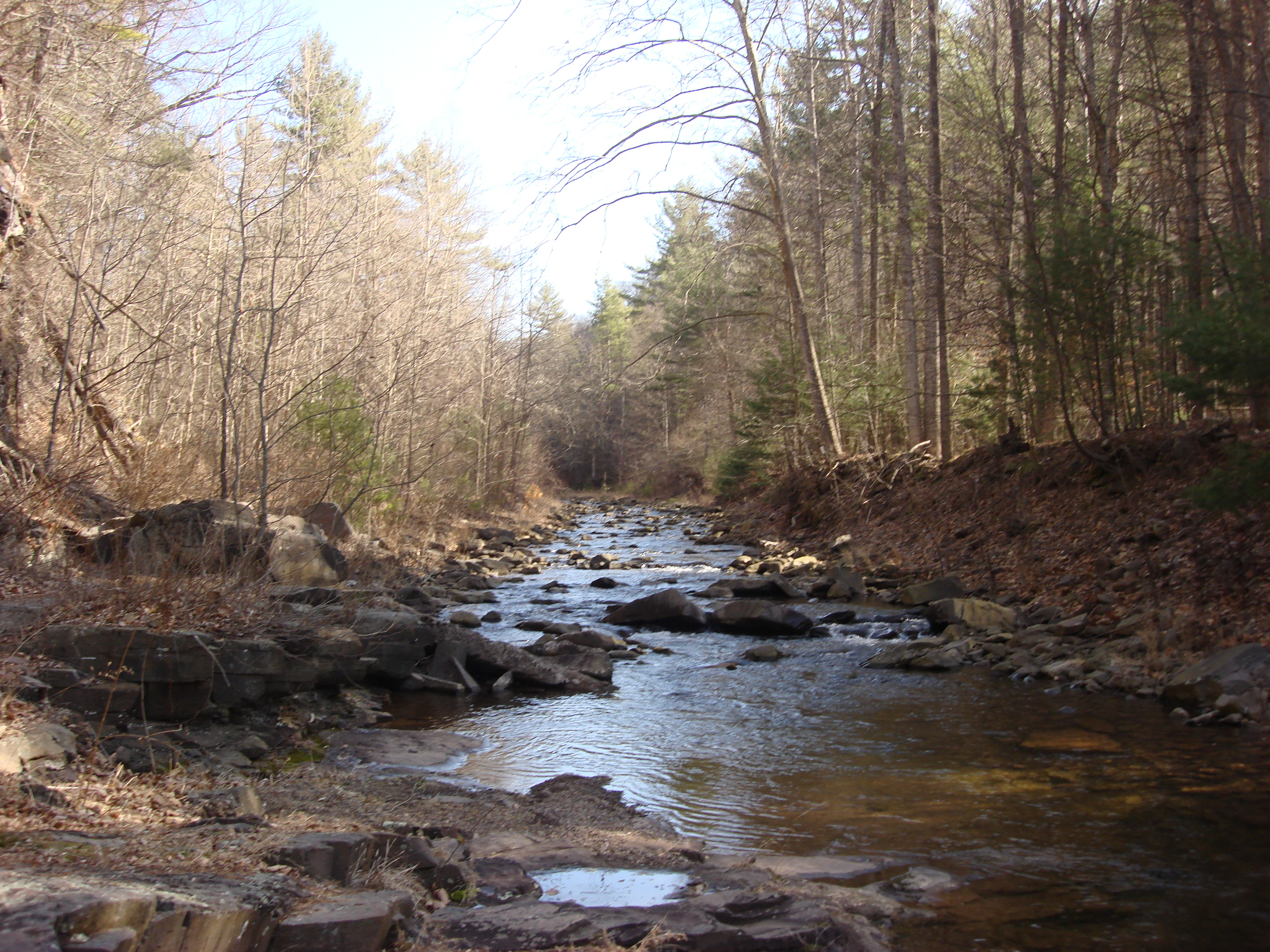
In the 1930s, the Civilian Conservation Corps built a road extending more than three miles upstream from U.S. Route 250 to support early management and recreational use. That road survived for roughly three decades until 1969, when rainfall associated with Hurricane Camille destroyed most of it at the stream crossings. A second major flood in November 1985 eliminated the remaining traces of the original road and reshaped the streambed in several places, fortuitously restoring a wild character just months after the area was officially designated.
Recreational use of the area also has a long human story. The Potomac Appalachian Trail Club constructed the Sexton Cabin inside the present wilderness boundaries in 1938; the cabin was destroyed by fire in 1967 and later rebuilt. After the 1984 Virginia Wilderness Act designated the area as wilderness, the Forest Service removed the structure under its interpretation of the Wilderness Act, though only the chimney survives today. Logs from Sexton Cabin were later used to build the PATC's Mutton Top Cabin.
The size and shape of Ramsey's Draft Wilderness have been debated for decades. An early 1970s proposal, backed by the Virginia Wilderness Committee and the Potomac Chapter of the Sierra Club, envisioned a much larger area covering most of Shenandoah Mountain between U.S. Route 250 and FDR 95, the western slope down toward Shaws Fork, and much of Bald Ridge. The Forest Service recommended a smaller core of roughly 6,500 acres, and that is the tract that became law in 1984.
Ramsey's Draft Wilderness landscape and geographic character
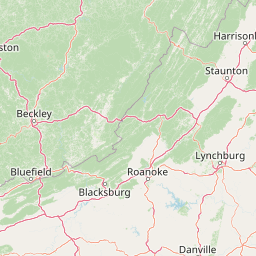
Ramsey's Draft Wilderness occupies a classic Appalachian ridge-and-valley setting where high, narrow ridges enclose a long, dendritic drainage. The terrain sits between two structural features: the main crest of Shenandoah Mountain to the west and Bald Ridge to the east, with the wilderness occupying the hollows and slopes that fall between them.
The vertical relief is dramatic for such a compact area. Lowest ground along Ramsey's Draft itself sits near 1,600 feet, while ridges and knobs rise to roughly 4,282 feet at Hardscrabble Knob, creating an elevational span of more than 2,500 feet. The topography is steep and rugged, with narrow hollows, sharp benches, and rocky streambeds that have limited any lasting road construction. The result is a strongly dissected landscape that feels far more remote than its proximity to the Shenandoah Valley would suggest.
Water shapes much of the scenery. Ramsey's Draft itself runs southward toward U.S. Route 250, ultimately joining the Calfpasture River, then the Maury River, the James River, and eventually the Chesapeake Bay. Side hollows such as Jerry's Run, Road Hollow, Bridge Hollow, and Sinclair Hollow branch off the main drainage, each contributing its own small watershed to the broader James River basin. Floods from Hurricane Camille in 1969 and a major storm in 1985 reshaped the channel, removed most of the old road, and helped restore a more natural stream course.
Ramsey's Draft Wilderness ecosystems, habitats, and plant life
The wilderness contains a notably diverse Appalachian forest system concentrated in a small geographic footprint. Mixed mesophytic communities dominate lower and mid-elevation hollows, while northern hardwoods and high-elevation oak forests occupy the upper slopes and ridge tops.
The defining ecological feature is a sizeable stand of old-growth Canadian hemlock along the northern reaches of Ramsey's Draft. These hemlocks, which can reach large size and considerable age, occupy moist, sheltered sites along the creek's upper tributaries. Like hemlocks across much of the Appalachians, they face a serious threat from hemlock woolly adelgid, an invasive insect whose presence has raised concern about the long-term survival of these stands.
Surrounding the hemlock are extensive populations of tulip poplar, eastern white pine, sugar maple, black birch, shagbark hickory, and northern red oak, with a documented flora of more than 250 vascular plant species. Such species richness, combined with the elevation gradient, supports both lowland and high-elevation plant communities within a relatively short distance.
Ramsey's Draft Wilderness wildlife and species highlights
Ramsey's Draft supports a broad assemblage of Appalachian wildlife typical of large, unroaded tracts in the central Appalachians. Common mammals include white-tailed deer, American black bear, wild turkey, eastern gray squirrel, grouse, raccoon, beaver, and eastern cottontail rabbit, all of which rely on the unbroken forest cover and remote hollows for cover, food, and movement corridors.
Rivers and streams likewise contribute strongly to the area's wildlife character. Ramsey's Draft is recognized as a native brook trout stream, meaning it supports self-sustaining populations of this cold-water Appalachian species rather than hatchery-stocked fish, and the creek is considered a particularly important example of intact native trout habitat in the region.
The area is also notable for birdlife. As one of the official stops on the Virginia Birding and Wildlife Trail, the wilderness is recognized for its role as a nesting area for neotropical migrant songbirds that tend to nest at higher elevations. The mix of mature interior forest, ridge-top edge habitats, and a remote, lightly disturbed setting makes the area especially attractive to birders interested in breeding-season species that can be difficult to find elsewhere in Virginia.
Ramsey's Draft Wilderness conservation status and protection priorities
As a congressionally designated wilderness under the 1964 Wilderness Act and the 1984 Virginia Wilderness Act, Ramsey's Draft receives the highest level of federal land protection short of national park status. Motorized equipment, mechanized travel, most commercial activity, and new structures are prohibited, ensuring that the area continues to function under natural ecological processes.
The area's conservation significance lies in its largely unroaded condition, its intact native brook trout fishery, and the presence of old-growth hemlock stands that have been spared extensive historical logging. Many surrounding Appalachian landscapes were heavily cut in the late 19th and 20th centuries, leaving few sizable examples of unlogged forest. The wilderness preserves one such example, where natural forest succession, hydrology, and wildlife populations can continue without significant direct human manipulation.
The hemlock woolly adelgid represents one of the most pressing conservation pressures on the area. The insect has spread across much of the eastern United States and threatens the long-term survival of both young and old Canadian hemlock trees. The outcome of the infestation will significantly shape the future structure of the northern drainage, with cascading effects on shade, stream temperature, and habitat for brook trout and other moisture-dependent species.
Long-running proposals from the Virginia Wilderness Committee, the Potomac Appalachian Trail Club, the Sierra Club, and the Friends of Shenandoah Mountain have suggested expanding the wilderness north and east and adding a separate wilderness on the western slope of Shenandoah Mountain. These ideas have not been enacted, but they reflect how the area is viewed as a core ecological anchor for a much larger conservation landscape in western Virginia.
Top sights and standout views in Ramsey's Draft Wilderness
Stands of old-growth Canadian hemlock in the upper Ramsey's Draft drainage, even as the hemlock woolly adelgid continues to threaten them. The named stream itself, a self-sustaining native brook trout water that flows into the Calfpasture and James rivers.
Recognized high-elevation nesting habitat for neotropical migrant songbirds, with the area's status as a Virginia Birding and Wildlife Trail stop underscoring that ecological value. A trail network centered on the Ramsey's Draft Trail, which follows the streambed and old road remnants through the heart of the wilderness, complemented by ridge-top and side-hollow routes including the Shenandoah Mountain Trail portion of the Great Eastern Trail.
Best time to visit Ramsey's Draft Wilderness
Spring and early summer are especially rewarding for birding, when neotropical migrants arrive to nest in the high-elevation forest; wildflowers also begin to emerge along the lower trail sections during this period. Cooler temperatures and generally stable footing make spring a good time for longer hikes into the upper drainage.
Fall brings strong leaf color across the mixed hardwood canopy, with maple, oak, hickory, and tulip poplar contributing to varied autumn displays, and cooler weather that makes creek-side walking more comfortable in the rougher lower reaches. Winter offers quieter conditions and crisper views along ridge lines, though trail surfaces may include ice, snow, and high water at stream crossings, and remote conditions demand extra preparation.