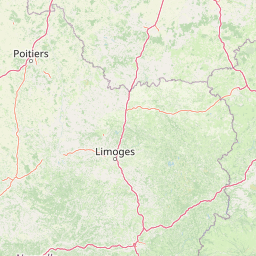
Why Réserve naturelle régionale du réseau de landes atlantiques du Parc naturel régional Périgord-Limousin stands out
The reserve is best known for protecting a network of Atlantic heathland (landes atlantiques) sites on the eastern fringes of the Périgord-Limousin Regional Natural Park, one of the easternmost inland strongholds of this typically western French habitat. Its defining identity is the contrast between the open, low heathland vegetation and the surrounding bocage, forest, and farmland of the Limousin countryside. The reserve's structure, as a scattered network of small protected patches rather than a single block, is itself one of its most distinctive features and reflects how fragmented this habitat has become in the region.
Réserve naturelle régionale du réseau de landes atlantiques du Parc naturel régional Périgord-Limousin history and protected-area timeline
The reserve has a relatively short formal history. It was created on 20 November 2015 by a deliberation of the Conseil régional, the governing regional council of what was then the Limousin region and is now part of the larger Nouvelle-Aquitaine region following the 2016 administrative reorganization of France. The classification was made under the framework of France's regional nature reserve (réserve naturelle régionale) system, which allows regional authorities to designate protected areas of regional ecological significance.
Beyond the moment of classification, the underlying ecological history of the sites is tied to the long-term presence of Atlantic heathland vegetation in the eastern part of the Périgord-Limousin territory. Open heathlands of this type are traditionally associated with pastoral and marginal agricultural land use, and their contraction in the modern era is linked to woodland regrowth, the abandonment of certain land uses, and the intensification of agriculture. The 2015 designation reflects a deliberate regional decision to halt and reverse that loss by formally safeguarding the surviving fragments.
Because the reserve's creation is relatively recent and the protected area has only a brief documented history as an RNR, deeper historical narrative is not currently present in available sources. The reserve's continuing story will be shaped by the management decisions taken within the regional natural park framework and by the long-term ecological trajectory of Atlantic heathland in the Limousin interior.
Réserve naturelle régionale du réseau de landes atlantiques du Parc naturel régional Périgord-Limousin landscape and geographic character
The landscape character of the reserve is defined by Atlantic heathland, a type of open, low vegetation that contrasts strongly with the broader Limousin countryside of mixed broadleaf woodland, bocage farmland, and small river valleys. Heathland of this kind is dominated by low shrubs, heathers, gorse, and grasses adapted to acidic, often shallow soils. The terrain within the reserve sites is typically gentle, reflecting the rolling topography of the Haute-Vienne rather than dramatic relief or exposed rock.
Because the reserve is split across multiple sites distributed over eight communes, visitors and managers experience it as a series of isolated habitat patches embedded within a working rural landscape. These patches are not large continuous expanses but rather isolated clearings and slopes where the soil, exposure, and historical land use have combined to keep the land open. Between and around them lie the dense hedgerows, pastures, ponds, and woodlands that make up the typical Périgord-Limousin countryside.
The broader setting of the reserve lies at the eastern limits of where Atlantic-influenced vegetation naturally occurs in France. While Atlantic heathland is common along the French Atlantic coast and in parts of Brittany, its survival this far inland, on the threshold of the Massif Central, gives the landscape of these sites a distinctive biogeographic flavor. The reserve's protected patches can be read as small ecological islands of a coastal-flavor habitat preserved far from the sea, surrounded by ecosystems more typical of continental central France.
Réserve naturelle régionale du réseau de landes atlantiques du Parc naturel régional Périgord-Limousin ecosystems, habitats, and plant life
The reserve's ecological identity is built around Atlantic heathland, a habitat type that in France is more often associated with the western seaboard than with the limousin interior. Atlantic heathland communities are typically composed of ericaceous shrubs such as heather, broom, and gorse, together with tough grasses and herbaceous plants adapted to acidic, nutrient-poor soils that are often shallow or seasonally dry.
These heathland patches are ecologically valuable precisely because they differ so strongly from the surrounding woodland and improved farmland. They support plant and animal species that depend on open conditions, low vegetation, and particular soil chemistry that is no longer widely available in the modern Limousin landscape. Maintaining open habitat in equilibrium with surrounding forest is a central ecological challenge, since heathland left unmanaged tends to be colonized by shrubs and trees and to lose its distinctive character.
The reserve's networked structure, composed of several separate sites rather than one continuous territory, is itself a reflection of how fragmented this habitat has become. By protecting multiple discrete patches in a single formal designation, the regional authorities aim to maintain a viable network of heathland habitat across the park territory rather than relying on any single surviving location. This networked approach is consistent with how ecologists understand the conservation needs of small, scattered open habitats in heavily managed European landscapes.
In the broader context of the Périgord-Limousin Regional Natural Park, the reserve complements other protected and managed areas that together sustain the diversity of habitats in the region, including woodland, river valleys, wetlands, and traditional farmland. The heathland sites add an open-habitat layer that would otherwise be poorly represented in the regional conservation network.
Réserve naturelle régionale du réseau de landes atlantiques du Parc naturel régional Périgord-Limousin wildlife and species highlights
The specific wildlife profile of the reserve is not detailed in the available public sources, which mark the wildlife section as still to be developed. However, the ecological context allows for an informed understanding of what kind of fauna the reserve is intended to support.
Atlantic heathland habitats of this type are typically associated with bird species adapted to open low vegetation and scattered shrubs, including ground-nesting and shrub-nesting passerines, as well as certain reptiles and insects that depend on warm, open ground and specific plant communities. Heathland also tends to support distinctive invertebrate faunas tied to heathers, gorse, and associated flowering plants.
Because the reserve exists as multiple small patches within a wider landscape of bocage and woodland, the wildlife value of the sites depends heavily on connectivity to the surrounding countryside. Species that require large open expanses are unlikely to find sufficient habitat inside the reserve alone, while species that benefit from a mosaic of open heath, hedgerow, woodland edge, and small water bodies may find a particularly favorable setting across the network of protected sites. The reserve's significance for wildlife is best understood in this landscape-mosaic context rather than as a standalone wildlife sanctuary.
Réserve naturelle régionale du réseau de landes atlantiques du Parc naturel régional Périgord-Limousin conservation status and protection priorities
The reserve was created to address a specific conservation problem: the progressive disappearance of Atlantic heathland habitat from the Limousin countryside. Heathland is a declining habitat across Europe, and in inland France the loss has been driven by land-use change, including agricultural intensification on productive soils and the abandonment or afforestation of marginal open land. By formally classifying multiple heathland sites as a single regional nature reserve, the regional authorities have provided a stronger and more durable protection framework than would otherwise be available.
Within France's system of protected areas, the reserve is classified as a réserve naturelle régionale, a designation that allows the region to set specific management objectives, regulate certain activities, and oversee a tailored management plan. Its IUCN Category IV status indicates that it is managed primarily for the conservation of particular habitats and species, which matches the reserve's role in maintaining the heathland network rather than functioning as a strict wilderness area.
The reserve also illustrates the layered conservation landscape typical of France's regional natural parks. It sits inside the larger Périgord-Limousin Regional Natural Park, which provides the broader territorial framework and coordinates complementary conservation tools. This nesting of protection instruments, with a regional nature reserve operating inside a regional natural park, is a deliberate French approach to addressing conservation at both site-specific and landscape scales.
Réserve naturelle régionale du réseau de landes atlantiques du Parc naturel régional Périgord-Limousin cultural meaning and human context
The reserve is closely tied to the broader cultural landscape of the Limousin and the Périgord-Limousin region. Atlantic heathland in this area has historically been associated with marginal agricultural and pastoral land use, and the surviving patches reflect long-standing patterns of how local communities have interacted with acidic, less productive soils. Open heathlands have often been part of mixed rural economies that included grazing, rough pasture, and the harvesting of brush.
The reserve's location inside a regional natural park also places it within an active regional effort to maintain the identity of the Périgord-Limousin landscape, including its open spaces, bocage patterns, and traditional land uses. While the reserve itself is primarily an ecological designation, its presence helps sustain elements of the cultural landscape that have shaped local identity in the Haute-Vienne.
Top sights and standout views in Réserve naturelle régionale du réseau de landes atlantiques du Parc naturel régional Périgord-Limousin
The reserve's main highlights are its ecological rather than scenic. Its protection of a rare inland extension of Atlantic heathland, the unusual structure of the reserve as a formal network of scattered sites, and its position inside the Périgord-Limousin Regional Natural Park together form its strongest points of distinction. The reserve also represents one of the more recent additions to France's regional nature reserve system, illustrating how regional authorities increasingly use formal site networks to conserve fragmented habitats. For visitors interested in biodiversity and landscape conservation, the reserve offers an opportunity to encounter a habitat type that contrasts with the more familiar wooded and agricultural character of the surrounding Limousin countryside.
Best time to visit Réserve naturelle régionale du réseau de landes atlantiques du Parc naturel régional Périgord-Limousin
Because the reserve is a relatively small, ecologically focused protected area and detailed visitor guidance is not well documented in the available sources, broad seasonal advice is necessarily limited. Atlantic heathland typically shows its most expressive character in late spring and summer, when heathers and associated flowering plants are in bloom and when open-ground fauna, including many insects, are most active. Late spring through early autumn is therefore the most natural window for observing the habitat at its most distinctive. Autumn can also highlight contrasts between the open heathland and surrounding woodland. Because much of the reserve's interest lies in subtle ecological detail rather than dramatic scenery, visits in mild, clear weather are likely to be more rewarding than visits in poor conditions, when low vegetation and access paths become harder to appreciate.