Why Rezerwat przyrody Bagno w Ewinie stands out
Bagno w Ewinie is best known for its raised bog ecosystem, particularly the presence of a high bog community of the Oxycocco-Sphagnetea class alongside a boggy pine forest community known as Vaccinio uliginosi-Pinetum. The combination of a regenerating high bog, transitional mires with floating mats, and boggy conifer woodland makes the reserve a compact but textbook example of central European peatland ecology. The reserve is also notable as one of the youngest nature reserves in Poland, created as part of the "100 rezerwatów na 100-lecie Lasów Państwowych" program. Its flagship species is the royal fern (Osmunda regalis), a striking fern whose Polish occurrence is closely tied to boggy, acidic habitats and which is explicitly cited in the reserve's official conservation objectives.
Rezerwat przyrody Bagno w Ewinie history and protected-area timeline
Bagno w Ewinie is among the newest officially designated nature reserves in Poland. It was created on 26 December 2024 through an order issued by the Regional Director for Environmental Protection in Łódź on 10 December 2024, formally recognizing the site as a peatland nature reserve under the name „Bagno w Ewinie." The legal basis was published in the official journal of Łódzkie Voivodeship.
The reserve was established as part of the program „100 rezerwatów na 100-lecie Lasów Państwowych," an initiative developed to mark the centennial of the Polish State Forests by designating a hundred new small nature reserves across the country. That institutional context frames the reserve's creation as part of a nationwide push to formalize protection of ecologically valuable but under-recognized sites, rather than as the result of a single local campaign.
Administratively, the reserve is integrated into the management framework of the State Forests from its inception: it lies within the Niesulów forestry unit of Gidle Forest District, which is part of the Regional Directorate of State Forests in Katowice. As of early 2025, the reserve had not yet been assigned a formal protection plan (plan ochrony) or a defined set of conservation tasks, marking the early operational phase of its existence.
Rezerwat przyrody Bagno w Ewinie landscape and geographic character
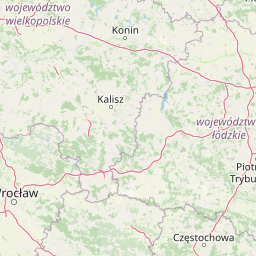
Bagno w Ewinie lies within the Wzgórza Radomszczańskie mesoregion, a band of low and gently rolling hills in central Poland that forms a transitional landscape between the broader Polish uplands and the central lowlands. The reserve's terrain reflects this setting, with undulating hillslopes giving way to flat, waterlogged peatland basins.
The site's core landform is a closed raised bog basin, where peat has accumulated over time to create a domed, acidic, nutrient-poor surface. Around the bog margins, transitional mires with quaking, partially floating mats add micro-topographic variation, while the outer ring of the reserve is formed by boggy pine forest on somewhat firmer peat substrates. The small surrounding buffer zone helps shield these landforms from hydrological disturbance and edge effects.
Beyond the reserve itself, the broader landscape includes mixed forest, agricultural fields typical of the Gidle commune, and the scattered buildings of nearby villages, most notably Ewina. The reserve also sits in the vicinity of the Piliczański Protected Landscape Area, suggesting a wider matrix of natural and semi-natural land cover that softens the transition between the bog and the surrounding countryside.
Rezerwat przyrody Bagno w Ewinie ecosystems, habitats, and plant life
Ecologically, Bagno w Ewinie is a peatland-dominated reserve shaped by acidic, waterlogged soils, slow decomposition, and specialized bog communities. The site is classified as a peatland nature reserve and is primarily a phytocoenotic reserve focused on plant communities, with an emphasis on both non-forest and forest peatland ecosystems.
The reserve's habitats include degraded high bog (habitat type 7120) capable of natural or assisted regeneration; this is the most extensive and ecologically valuable component of the site. Two patches of transitional mire and quaking bog (habitat type 7140) add ecological diversity and connect the high bog to surrounding wetland communities. Boggy pine forests and wooded bog habitats (habitat type 91D0) ring the peatland core.
In the high bog zone, vegetation is dominated by sphagnum mosses and characteristic vascular plants such as round-leaved sundew, common bog rosemary, cranberry, narrow-leaved cotton grass, and sheath cotton grass. Transitional mires feature sedge communities, including thread sedge, alongside cotton grass and sphagnum mats. The boggy forests carry pine with birch admixture, bog myrtle, bog bilberry, common bilberry, and the reserve's signature species, the royal fern.
Rezerwat przyrody Bagno w Ewinie wildlife and species highlights
As a small peatland reserve, Bagno w Ewinie is overwhelmingly defined by its plant communities and habitat structure rather than by charismatic large fauna. The site's ecological significance lies less in individual species counts and more in the presence of peatland indicator species and the integrity of bog habitat mosaics.
The reserve's most notable wildlife-related value is its plant fauna, particularly the royal fern, a large, eye-catching fern strongly associated with boggy, acidic environments and considered a meaningful flagship species for the site. Typical bog plants, such as sundews, bog rosemary, and cotton grasses, also represent the carnivorous and stress-tolerant plant groups typical of central European peatlands, rather than animal life.
While the source documentation does not detail vertebrate fauna, peatland and boggy pine forest habitats of this kind in central Poland generally support characteristic bog-margin birdlife, amphibian presence in wetter pockets, and invertebrate communities tied to sphagnum and bog flora. The reserve's value in this respect lies in maintaining suitable habitat conditions rather than in hosting a defined list of declared animal species.
Rezerwat przyrody Bagno w Ewinie conservation status and protection priorities
Bagno w Ewinie has clear and explicit conservation significance. Its official designation aims to preserve, for scientific and educational purposes, a raised bog community of the Oxycocco-Sphagnetea class and a boggy pine forest community of the Vaccinio uliginosi-Pinetum type, including the site of the royal fern (Osmunda regalis). This framing ties the reserve to habitat-based and species-based conservation goals typical of Polish peatland reserves.
The site protects habitat types recognized under the European Natura 2000 framework, including degraded high bog capable of regeneration (7120), transitional mires and quaking bogs (7140), and boggy woodlands (91D0). The high bog is recognized as the largest and most ecologically valuable component of the reserve, reflecting its priority significance for peatland conservation at the regional level.
Establishment of the reserve in 2024 under the „100 rezerwatów na 100-lecie Lasów Państwowych" program places it within a coordinated national effort to bolster Poland's network of strictly protected small natural sites. Its proximity to the Piliczański Protected Landscape Area further enhances its conservation role by strengthening habitat continuity in the broader Pilica basin area. The reserve's protected buffer zone adds an additional layer of hydrological and edge protection, although as of early 2025 a formal protection plan and defined conservation tasks had not yet been adopted.
Rezerwat przyrody Bagno w Ewinie cultural meaning and human context
There is no prominent cultural, historical, or indigenous context highlighted in the source material for Bagno w Ewinie. The reserve's identity is shaped almost entirely by its ecological and landscape character rather than by human cultural associations.
Top sights and standout views in Rezerwat przyrody Bagno w Ewinie
Bagno w Ewinie stands out for combining three peatland habitat types in a compact area: regenerating high bog, transitional mire with floating mats, and boggy pine forest. The reserve's flagship species, the royal fern, adds a distinctive botanical feature that anchors its conservation identity.
As one of the youngest nature reserves in Poland, established in 2024 under the State Forests centennial program, it represents a modern, programmatic approach to small-scale peatland protection. Its location in the Wzgórza Radomszczańskie hills and proximity to the Piliczański Protected Landscape Area further reinforce its value as part of a connected mosaic of natural and protected landscapes in central Poland.
Best time to visit Rezerwat przyrody Bagno w Ewinie
The reserve is a young, ecologically focused site, and source documentation does not address seasonal visit conditions in detail. Peatlands like Bagno w Ewinie are typically most atmospheric in late spring and early summer, when sphagnum and cotton grass greens are vivid and bog-margin vegetation is most active, and they can be visually distinctive in autumn as bog plants shift color. Visitors should treat the reserve primarily as an ecologically sensitive area rather than a recreational destination, and always stay on whatever access route local forest management provides.