
Why Seelbachs- und Eulenbruchswald stands out
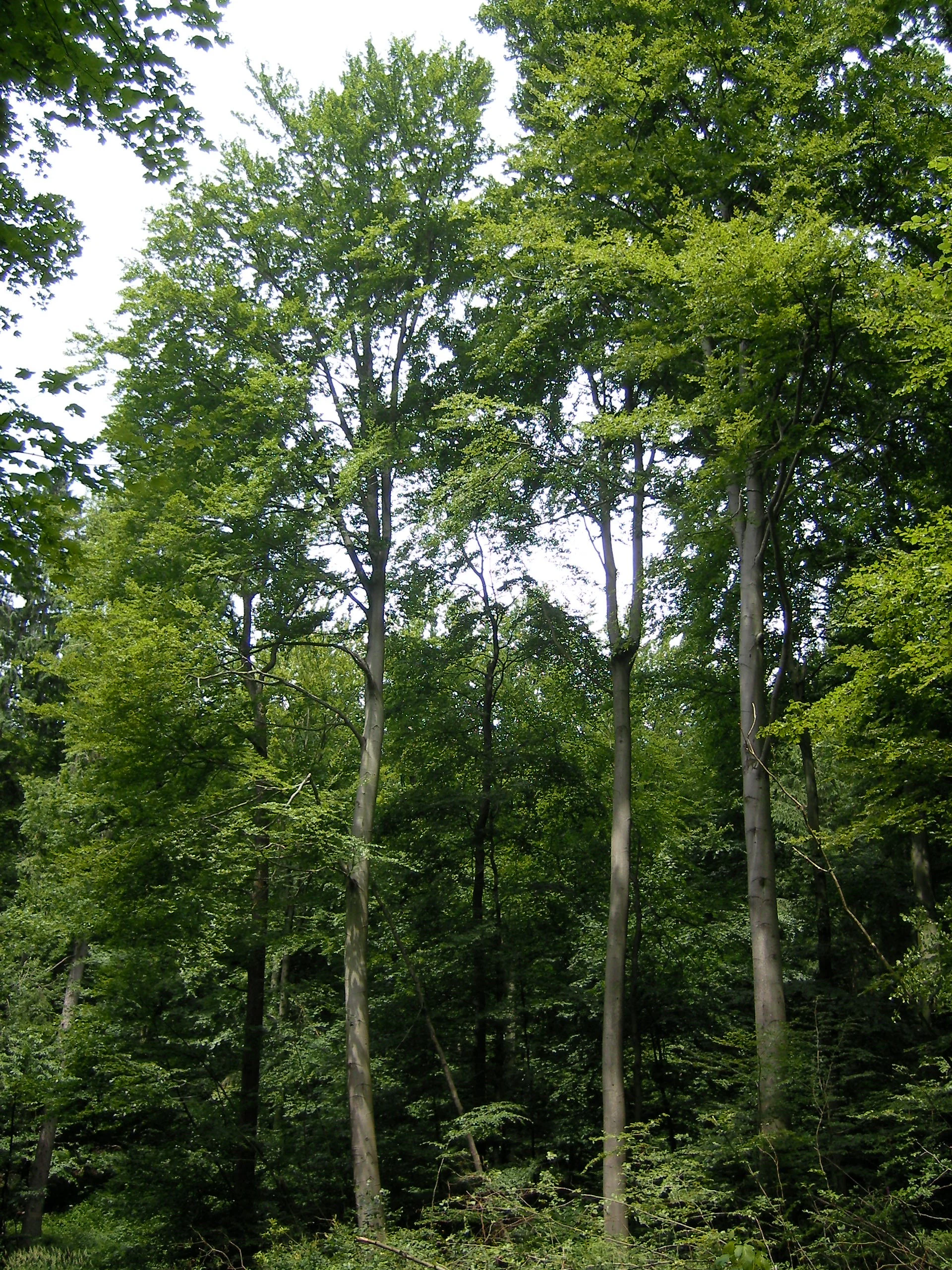
Seelbachs- und Eulenbruchswald is best known as one of the largest contiguous mixed deciduous forests in the Freudenberg area, dominated by old-growth beech with naturally layered understory. It is equally recognized as a stronghold for several rare woodpecker species and other woodland birds of conservation concern, with black woodpecker, middle-spotted woodpecker, grey-headed woodpecker, and red kite all noted as key species. The reserve also stands out for its combination of protected habitats at the European level. It unites acid beech forests (Luzulo-Fagenion), alder-ash floodplain forests, spring-fed brook corridors, and marsh marigold wet meadows in a single protected area. This combination of forest, stream, and meadow habitats in a relatively compact area makes it a representative example of central European low mountain woodland.
Seelbachs- und Eulenbruchswald history and protected-area timeline
The reserve was formally designated to preserve and restore the characteristic communities of a large, connected forest landscape. Its establishment reflects the broader German and European movement to safeguard representative woodland ecosystems, particularly acid beech forest and alder-ash floodplain forest, through the national Naturschutzgebiet framework and the EU Habitats Directive (FFH).
Protected status was driven by the presence of habitats and species of community interest. The site overlaps with the FFH area DE-5013-301, focusing particularly on acidophile beech forests of the Luzulo-Fagenion type, alder-ash gallery forests along natural brook courses, spring-fed wetland zones, and small wet meadows with marsh marigold. Species of community interest highlighted in the designation include the middle-spotted woodpecker, black woodpecker, grey-headed woodpecker, and red kite.
Over time, the reserve's management direction has emphasized near-natural forestry, with the explicit goal of gradually transitioning non-native conifer stands into mixed deciduous woodland and limiting spruce to isolated individuals. Detailed landscape planning by Kreis Siegen-Wittgenstein has shaped this approach, integrating the reserve into the wider network of protected areas within the district.
Seelbachs- und Eulenbruchswald landscape and geographic character
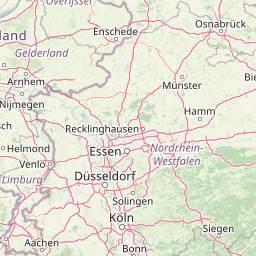
The reserve lies within the Rhenish Slate Mountains, in the Siegerland natural region west of Freudenberg. The terrain reflects the character of the central German low mountain belt: incised valleys, forested ridges, and a mosaic of small watercourses. Roads L 562 and K 21 cut through the area, separating it into two main forest sections that nonetheless remain functionally connected as a single forest complex.
Within this broader setting, the reserve is defined by its forested surface rather than dramatic relief. Sloping, forested hillsides carry old beech stands, while the lower-lying stream corridors create cooler, moister microhabitats. Numerous small brooks, seepage areas, and spring-fed flushes break up the forest matrix, sometimes opening into small wet meadows where marsh marigolds bloom in spring. These meadow openings are a small but important counterpoint to the surrounding forest, contributing openness and edge habitat to an otherwise wooded landscape.
Seelbachs- und Eulenbruchswald ecosystems, habitats, and plant life
Ecologically, Seelbachs- und Eulenbruchswald is defined by a layered mosaic of habitats rather than a single dominant type. The core of the reserve is acid beech forest (Luzulo-Fagenion), an FFH-listed habitat type found in more nutrient-poor, often steeper, and slightly acidic soils. These beech stands are generally well-structured, with old trees, abundant natural regeneration, and a diverse understory that mirrors what would have existed under pre-management forest conditions.
Around the streams and spring lines, habitat character shifts to a richer, more moisture-loving assemblage. Alder-ash gallery forests with a softwood fringe occupy the immediate brook corridors, while small marshy clearings support Calthion wet meadows, dominated by marsh marigold (Caltha palustris). These riparian and wetland features are integrated into the forest matrix, creating fine-scale transitions between dry woodland, moist slope forest, and open wet meadow. Together, this combination of habitats supports a wide range of ecological niches within a compact area.
Seelbachs- und Eulenbruchswald wildlife and species highlights
The reserve is strongly associated with its birdlife, which has played a central role in justifying and shaping its protected status. Woodpeckers are particularly prominent: the black woodpecker, middle-spotted woodpecker, lesser spotted woodpecker, great spotted woodpecker, grey-headed woodpecker, and green woodpecker all occur. Of these, the middle-spotted, black, and grey-headed woodpeckers, together with the red kite, are considered species of community interest under the EU Habitats Directive and were specifically considered during the reserve's designation.
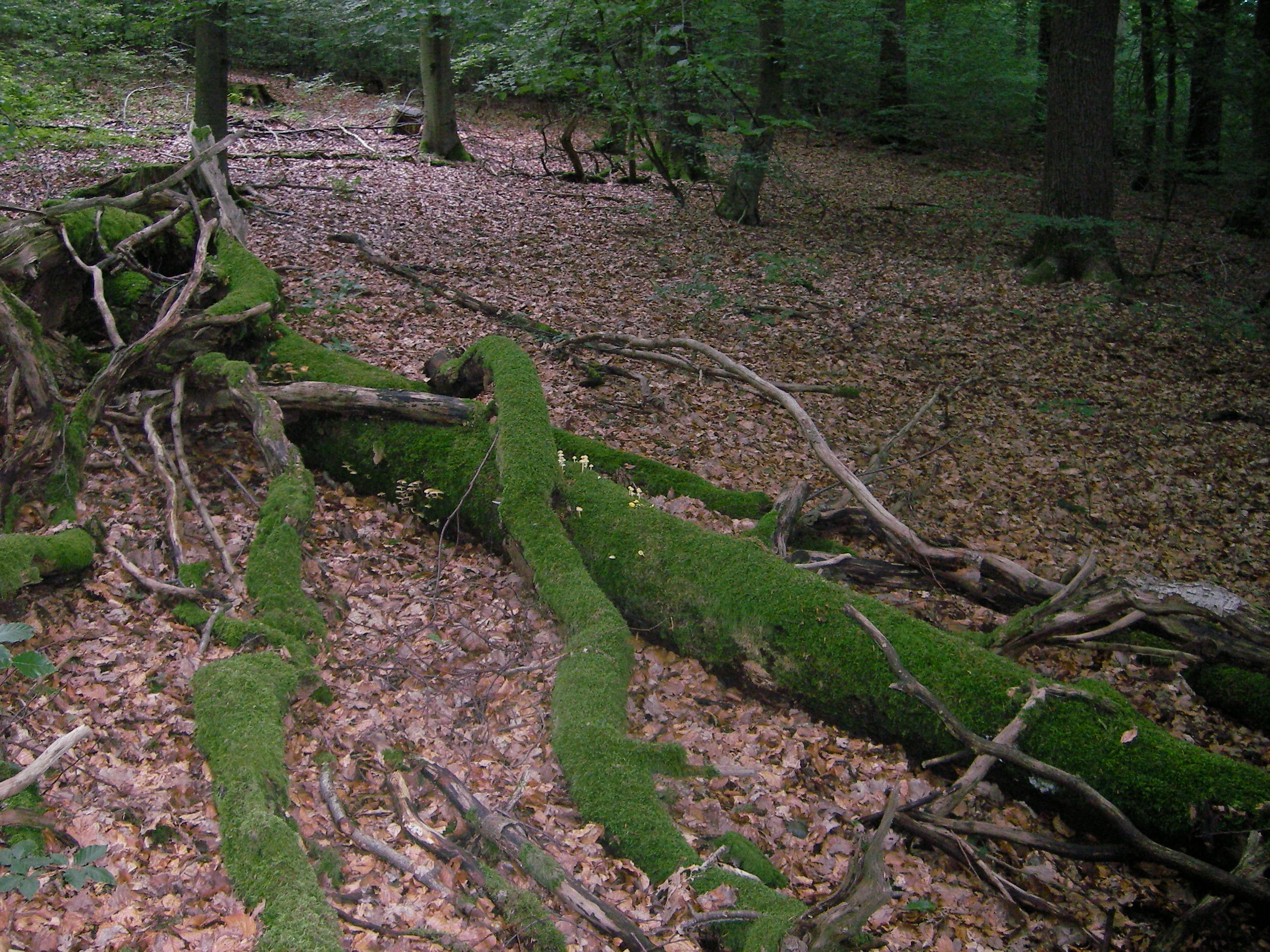
Other characteristic woodland birds include the Eurasian pygmy owl, the long-eared owl, the Eurasian woodcock, and the western jackdaw. The abundance of standing and fallen deadwood underpins much of this avifauna, providing nesting cavities, drumming sites, and rich invertebrate prey. Amphibians such as the common toad, fire salamander, and common frog also occur, especially around the wetter brook and spring areas. Among insects, notable butterflies include the purple emperor and the silver-washed fritillary, both of which depend on the structural continuity of mature deciduous woodland.
Seelbachs- und Eulenbruchswald conservation status and protection priorities
Seelbachs- und Eulenbruchswald holds conservation significance at multiple levels. Within North Rhine-Westphalia, it is one of the more substantial mixed deciduous forest reserves in the Siegerland region, providing protection for old beech stands and the ecological processes, such as natural regeneration and deadwood dynamics, that underpin them. At the European level, its overlap with the FFH site DE-5013-301 links it to the Natura 2000 network, aligning national protection with broader EU biodiversity commitments.
The reserve's conservation targets explicitly include the maintenance of well-structured, near-natural, layered beech forests with rich herb layers and active regeneration; the preservation and recovery of declining and highly endangered near-natural brook sections with alder-ash floodplain woodland; the protection of spring and seepage zones; and the conservation of marsh marigold wet meadows. Protection of woodpecker populations, especially the middle-spotted, black, and grey-headed woodpecker, as well as the red kite, is a central conservation objective.
Active management focuses on near-natural forestry, gradual replacement of non-native conifers with site-appropriate broadleaf species, and control of ungulate populations to reduce browsing and bark-peeling damage that would otherwise undermine natural regeneration. Open meadow habitats are also maintained through targeted mowing or grazing to prevent them from being lost to scrub encroachment.
Top sights and standout views in Seelbachs- und Eulenbruchswald
Among the reserve's most distinctive features is its sheer scale as one of the largest contiguous mixed deciduous forests in the Freudenberg area, a quality that gives ecological processes real spatial room to operate. Within this forested setting, old beech stands with abundant standing and fallen deadwood form a classic embodiment of central European low mountain forest habitat.
The reserve's combination of acid beech forest, alder-ash brook corridors, spring-fed flushes, and small marsh marigold meadows is also a highlight, producing a fine-grained habitat mosaic within a single protected area. Finally, its significance as habitat for several rare woodpeckers and the red kite ties the site directly into European species conservation priorities and gives it recognition well beyond the local region.
Best time to visit Seelbachs- und Eulenbruchswald
In this Atlantic-influenced part of the Rhenish Slate Mountains, late spring through early autumn is generally the most favorable period for experiencing the forest. Spring brings fresh leaf-out in the beech canopy and the bloom of marsh marigolds in the wet meadows, along with heightened bird activity as woodpeckers and other species establish territories and drumming activity becomes especially audible. Summer offers the densest, fully leafed forest conditions, with cool, shaded conditions along the brook corridors and active butterfly and insect life. Autumn is marked by rich coloration in the beech stands and a pronounced seasonal shift in fungal and deadwood communities. Winters in the Siegerland are mild to cool and wet, with reduced visibility into the forest but potential for tracking signs of larger mammals on softer ground.