
Why Seifersdorfer Tal stands out
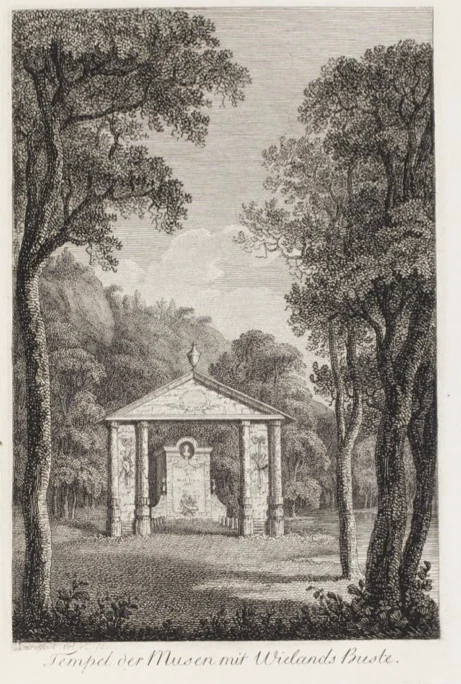
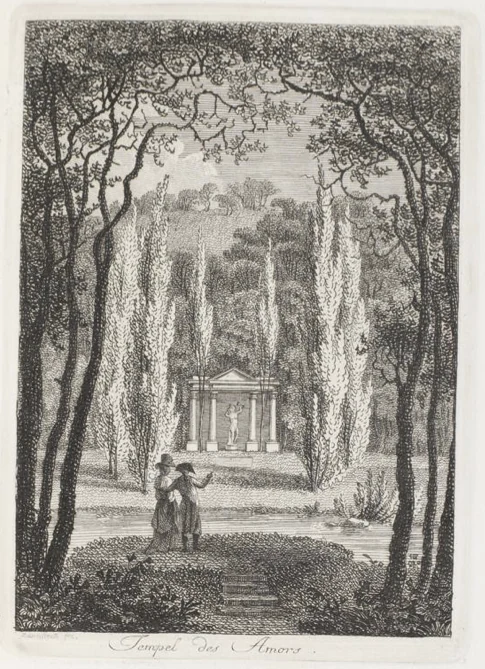
The Seifersdorfer Tal is best known as one of Germany's earliest surviving English-style landscape gardens, designed in the late 18th century as a so-called pedagogical landscape. Christina von Brühl placed dozens of allegorical monuments, rustic huts, temples, fountains, and inscribed stones within the natural valley setting, each tied to themes of virtue, friendship, transience, and natural feeling drawn from Enlightenment thinking and the literature of Empfindsamkeit. It is also recognized as a layered cultural landscape where literary references to Sterne, Wieland, Klopstock, and Petrarca are made physically present in the terrain. The combination of a historic garden monument with a legally protected river valley gives it a distinctive dual identity as both a Romantic-era art work and a contemporary nature protection area.
Seifersdorfer Tal history and protected-area timeline
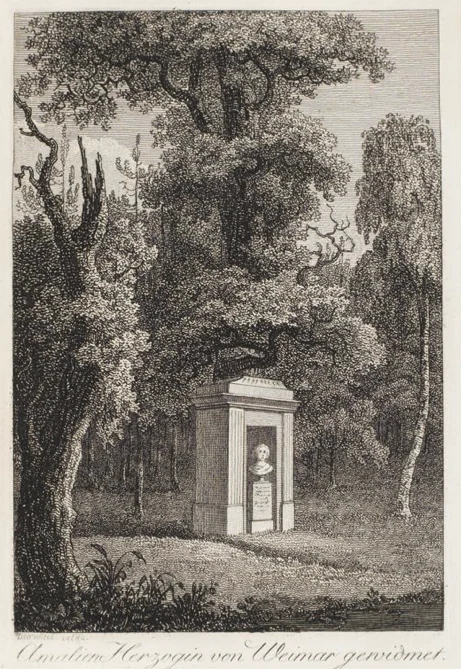
The cultural history of the Seifersdorfer Tal begins in 1781, when Christina von Brühl, daughter-in-law of the Saxon Prime Minister Heinrich Count von Brühl, began transforming the natural valley of the Große Röder into an English-style landscape park. She had lived near the valley since 1775, in the manor house of the Seifersdorf estate, and worked on the park's design until its main completion in 1791.
Christina von Brühl drew direct inspiration from the Enlightenment garden theorist Christian Cay Lorenz Hirschfeld, whose work Gartentheorie had appeared in 1779, and from her personal exchanges with Goethe, Herder, Wieland, and Klopstock. The park was conceived as a pedagogical landscape, where allegory, inscriptions, and architectural features were intended to evoke civic virtues and emotional resonance rather than to dominate nature.
After Christina left Seifersdorf in 1811 following the death of her husband and died in Berlin in 1816, the valley gradually fell into neglect. It was rediscovered in 1881 by the geographer Sophus Ruge, and early protection efforts began in the late 19th century. The first formal conservation step came on 7 March 1960, when the valley and the adjacent Hermsdorf park were declared a protected landscape area. The core area around the Marienmühle received nature reserve status in 1982, and since 2006 the wider valley has belonged to the European Natura 2000 network within the Rödertal oberhalb Medingen Habitat Directive site. Volunteer restoration work has been ongoing since 1990 under the Verein Seifersdorfer Thal and, since 1997, under the ownership of the Landesverein Sächsischer Heimatschutz.
Seifersdorfer Tal landscape and geographic character
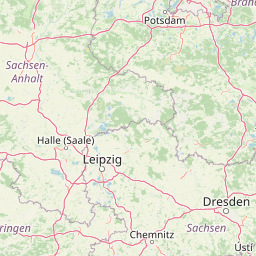
The Seifersdorfer Tal follows the course of the Große Röder through a modest, gently sloping valley. On either side of the small river, meadows, terraces, and wooded slopes alternate with old fieldstone walls, springs, and footpaths. The valley runs between the Grundmühle near Liegau-Augustusbad in the south and the Niedermühle near Grünberg, passing the Marienmühle where the road from Schönborn to Seifersdorf crosses the river at right angles. This crossing effectively divides the park into four quadrants that organize its many garden scenes.
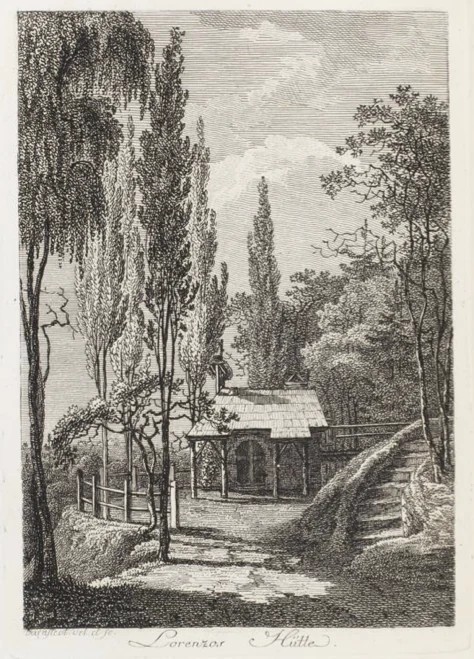
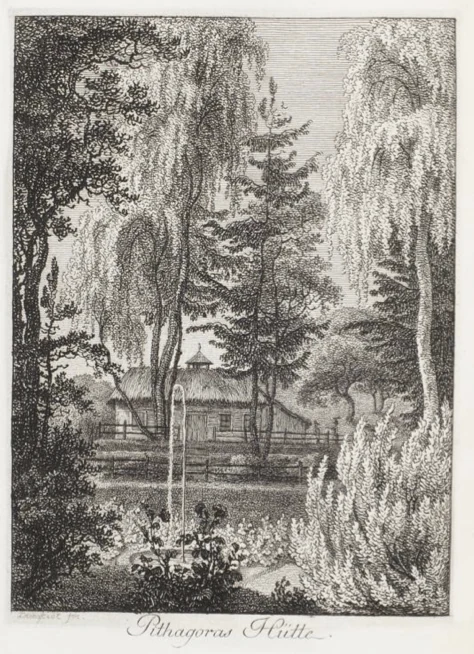
The terrain offers varied micro-settings: open meadows, shaded groves of alder, oak, spruce, and linden, rocky outcrops carved by water, small cascades and spring-fed pools, and quiet waterside banks along the meandering river. Natural rock formations and the steep western slope were deliberately incorporated into the garden design, with terraced paths leading to elevated vantage points and to structures such as Petrarch's Hut or the Pythoras hut on the upper terraces.
This natural setting was deliberately preserved as the framework of the landscape garden, which is why the valley still reads as both a designed cultural landscape and a functioning lowland river ecosystem with mixed woodland, meadow, and riparian elements.
Seifersdorfer Tal ecosystems, habitats, and plant life
Ecologically, the Seifersdorfer Tal functions as a protected lowland river valley. The riparian vegetation along the Große Röder includes alder, willow, and ash, with oak, spruce, and linden dominating the slopes and higher terraces. Meadows, springs, and small rocky brooks contribute to a mosaic of habitat types within a relatively small area, including wet meadows near the river banks and drier oak-dominated woodland on the upper slopes.
The protected status of the valley reflects the value of this habitat mosaic. The valley has been a protected landscape area since 1960, the core around the Marienmühle a nature reserve since 1982, and the entire valley, together with the adjacent Hermsdorf park, became part of the European Natura 2000 network in 2006 as part of the larger Rödertal oberhalb Medingen Habitat Directive site. This designation imposes strict nature and bird protection rules intended to preserve the valley's flora, fauna, and hydrological character alongside its cultural heritage.
Seifersdorfer Tal wildlife and species highlights
While the Seifersdorfer Tal is best known as a cultural landscape, its protected ecological status means that the valley also functions as wildlife habitat. The waters, alder-willow gallery forests, springs, and meadows along the Große Röder support the typical fauna of Saxon lowland river valleys, including breeding and foraging habitat for birds that depend on riparian and meadow environments. The integration of the valley into the Natura 2000 network underscores its importance for habitat-continue species typical of Central European brook and stream valleys.
In the 18th-century garden era, the valley's naturalist layers included keystone features such as a small cascade, a natural bathing grotto on the Röder, and groves of oak and alder that provided both scenic setting and shelter for woodland species. Today the combination of old trees, undisturbed water edges, and adjacent agricultural land sustains a habitat structure that is rare in such a densely settled region near Dresden.
Seifersdorfer Tal conservation status and protection priorities
The Seifersdorfer Tal is a clear example of layered conservation. In 1960 the valley and the downstream Hermsdorf park were declared a Saxon protected landscape area of roughly 288 hectares, providing a broad legal umbrella for the cultural and natural features of the valley. In 1982 a 58.6-hectare core around the Marienmühle received stricter nature reserve protection, focusing on the most ecologically sensitive riverine and meadow sections.
Since 2006 the entire valley has been incorporated into the European Natura 2000 network as part of the larger 770-hectare Habitat Directive site Rödertal oberhalb Medingen, binding the valley to EU-level habitat and species protection requirements. Conservation work is carried out by the Verein Seifersdorfer Thal in cooperation with the Landesverein Sächsischer Heimatschutz, which has owned the site since 1997. Major restoration efforts, supported by public funding, have been underway since 1999 to stabilize monuments, replant historic tree lines, and recover lost garden structures after decades of weathering and storm damage, notably the 2010 Whitsun tornado.
Seifersdorfer Tal cultural meaning and human context
The Seifersdorfer Tal is a landmark of 18th-century German garden culture and of the literary movement known as Empfindsamkeit. Christina von Brühl developed the valley into a physical, walkable encyclopedia of Enlightenment ideas, civic virtues, and literary references, drawing on Christian Cay Lorenz Hirschfeld's garden theory and on direct personal ties with Goethe, Herder, Wieland, Klopstock, Schiller, and other leading figures of late 18th-century German letters.
The park is also a site of family memory. Christina and her husband Hans Moritz Count von Brühl used the garden as an allegorical self-portrait of the Brühl family, including memorials to Christina's father-in-law, the controversial Saxon Prime Minister Heinrich Count von Brühl. Their son Carl, later Intendant of the Royal Theatres in Berlin, together with his wife Johanna, added additional monuments after 1811. After Christina's death in 1816, the valley fell into relative obscurity for several decades before being rediscovered by heritage-minded writers and associations in the late 19th and early 20th centuries.
Today the valley also hosts an annual Whitsun singing tradition, the Pfingstsingen, organized by the Seifersdorfer Heimatverein since 1959, which revives the original 18th-century use of the Sängerwiese as a stage for communal music and theatrical performance. The garden and valley are part of the cross-border Gartenkulturpfad beiderseits der Neiße, linking Seifersdorf to other historic garden sites along the Neiße river.
Top sights and standout views in Seifersdorfer Tal
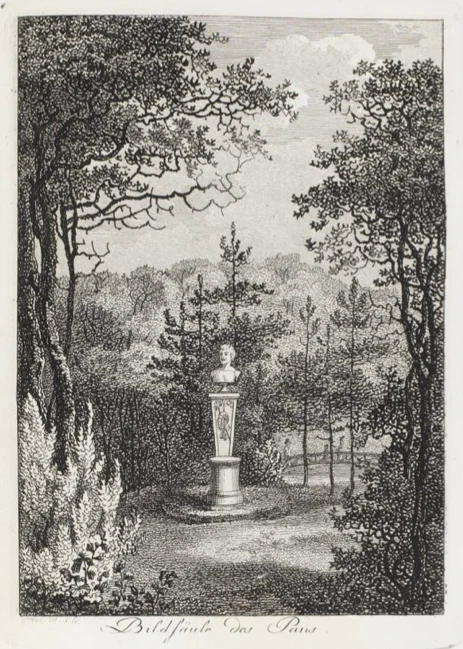
Christina von Brühl's allegory-laden garden design of the 1780s and 1790s, with its surviving monuments such as the Altar of Truth, the Linde der Ruhe, Petrarch's Hut with the Vaucluse spring, the Pan statue site, and the Herder monument.
The layered legal protection of the valley as a Saxon protected landscape area, a nature reserve around the Marienmühle, and part of the European Natura 2000 network within the Rödertal oberhalb Medingen site.
The continued living tradition of the Pfingstsingen Whitsun singing festival and the long-running volunteer conservation work by the Verein Seifersdorfer Thal and the Landesverein Sächsischer Heimatschutz.
Best time to visit Seifersdorfer Tal
The Seifersdorfer Tal has a markedly seasonal character. Spring and early summer bring fresh green foliage, full flowing springs such as the Bergquelle Schöpfe schweigend, and the famous Whitsun Pfingstsingen music festival that fills the valley with choirs and visitors. Late spring is also the most atmospheric time to see the meadows around the Sängerwiese and the Laurawiese in bloom.
Summer offers the densest green tunnel effect along the valley paths, but also heavier shade that obscures some of the sightlines and inscriptions the original garden was designed around. Autumn arguably shows the valley at its most picturesque, with colored foliage highlighting the steep slopes and the gentle meanders of the Große Röder. Winter visits are quieter and reveal the underlying valley topography, water system, and surviving stone monuments most clearly, although some paths may be muddy in wet conditions.