

Why Pučanka stands out
Pučanka is best known for its orchid-rich beech forest growing on crystalline limestone, a rare combination of bedrock, tree cover, and herbaceous flora in the Czech landscape. The site hosts a striking diversity of orchids and other uncommon flowering plants, including several species of Cephalanthera, Epipactis, Platanthera, Neottia, and the striking Lilium martagon. The reserve also stands out as an early postwar declaration of nature protection in Bohemia, with a formal protection date of 23 October 1948. Its continuous protection since that time has helped maintain a stable, ecologically valuable fragment of limestone beech woodland in a region otherwise dominated by farmland.
Pučanka history and protected-area timeline
Pučanka has been under formal nature protection since 23 October 1948, when it was declared a natural reserve (přírodní rezervace) under Czechoslovak conservation law. Its declaration came during the early postwar expansion of protected areas in what is now the Czech Republic, when many smaller but ecologically distinctive sites were placed under conservation status.
The reserve was established to protect the beech forest and rare flora growing on the limestone bedrock of the hill near Hejná. Because the area has retained protected status continuously since 1948, Pučanka represents more than seven decades of consistent conservation attention. The site remains under the administration of the Czech Agency for Nature Conservation and Landscape Protection, and it is registered under nature conservation code 349 in the national database of protected areas.
Pučanka landscape and geographic character
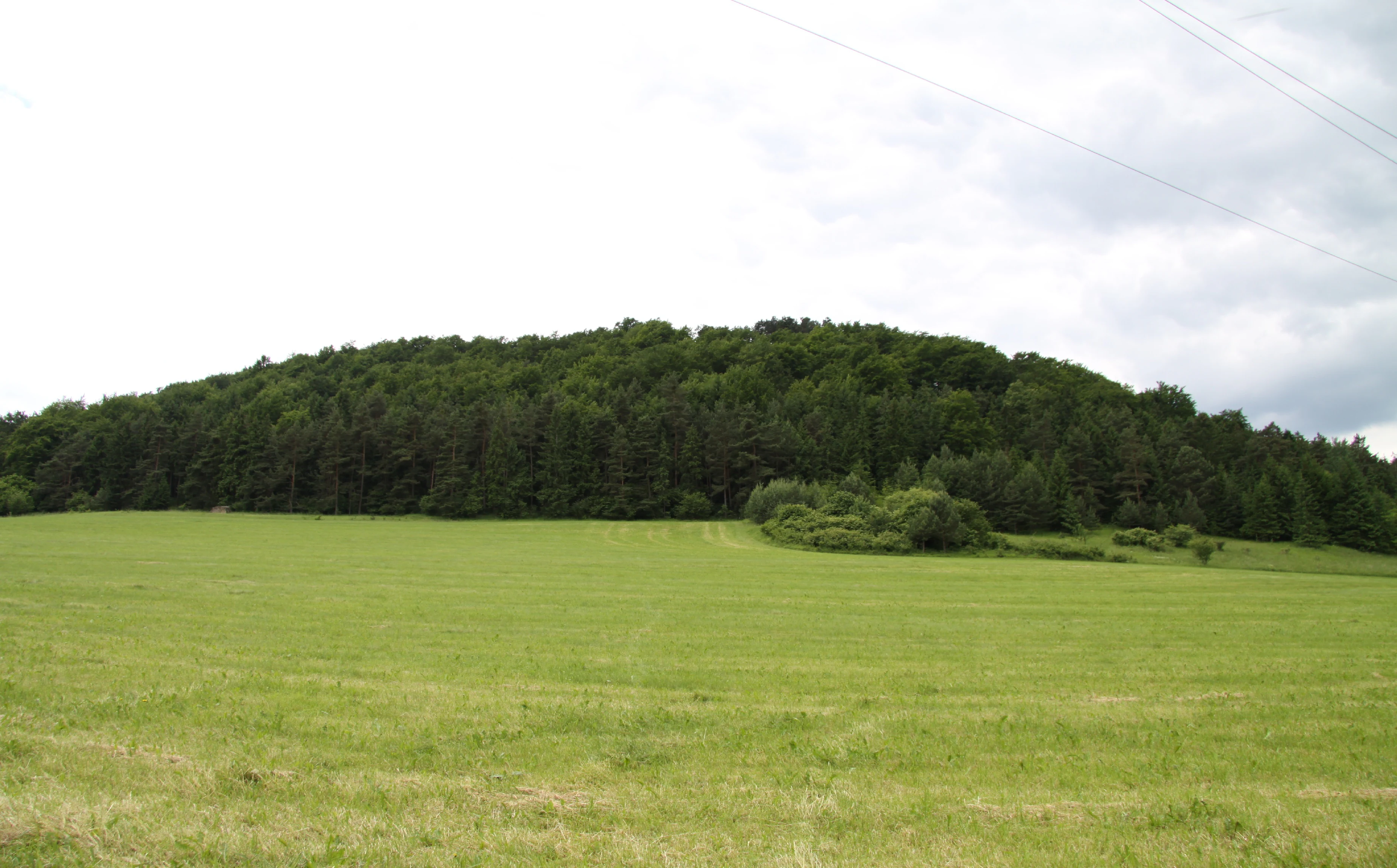
Pučanka is centered on a single limestone hill in the gentle uplands of southwestern Bohemia. The hill rises to 616 meters at its summit, with the broader protected area occupying a vertical range of roughly 520 to 616 meters. Its position within the Sušice-Horažďovice limestone belt gives the hill a distinctive geological character compared to surrounding terrain, where non-calcareous substrates are more typical.
The protected area includes the ridge of the hill and parts of its slope, encompassing woodland on well-drained, base-rich limestone soils. Although the topography is modest rather than dramatic, the hill's limestone bedrock defines its visual and ecological identity. Surrounding land use is largely agricultural, which makes the wooded limestone ridge appear as a marked landscape feature in the local scenery.
Pučanka ecosystems, habitats, and plant life
Ecologically, Pučanka is defined by the combination of crystalline limestone bedrock and beech forest. The base-rich soils derived from this limestone support a notably diverse herbaceous layer, in strong contrast to the more species-poor understory typical of acidic Bohemian woodlands.
The reserve protects one of the more orchid-rich beech woodland sites in the region. Orchid species recorded here include white helleborine (Cephalanthera damasonium), red helleborine (Cephalanthera rubra), lesser butterfly orchid (Platanthera bifolia), dark red helleborine (Epipactis atrorubens), and bird's-nest orchid (Neottia nidus-avis). Other notable flowering plants found in the reserve include autumn gentian (Gentianella amarella), fringed gentian (Gentianopsis ciliata), moonwort (Botrychium lunaria), Irish fleabane (Inula salicina), branching St Bernard's lily (Anthericum ramosum), box-leaved milkwort (Polygala chamaebuxus), sickle-leaved hare's ear (Bupleurum falcatum), broad-leaved laserwort (Laserpitium latifolium), and martagon lily (Lilium martagon).
Together these species make Pučanka a small but botanically significant site, illustrating how a minor change in bedrock chemistry can produce a disproportionately rich community of flowering plants within a beech forest setting.
Pučanka wildlife and species highlights
The recorded wildlife interest at Pučanka is overwhelmingly botanical, reflecting the site's character as a forest reserve established to protect a particular plant community. The reserve's primary faunal significance lies in supporting the invertebrate communities associated with its rich understory flora, including the pollinators and other insects dependent on the diverse flowering plants of the limestone beech forest.
The presence of multiple orchid species is also ecologically important in itself, because orchids often support specialized mycorrhizal relationships and associated insect interactions. Aside from these broader ecological patterns, the source material does not record specific mammal, bird, or reptile species of note, and the site's overall importance is best understood through its botanical rather than its faunal profile.
Pučanka conservation status and protection priorities
Pučanka's conservation value centers on preserving a representative fragment of limestone beech woodland in southwestern Bohemia, with particular emphasis on its orchid-rich herbaceous layer. The site is classified as IUCN Category IV, meaning it is managed primarily for the conservation of specific habitats and species rather than for broad ecosystem-scale protection.
By protecting a coherent stand of beech on crystalline limestone, the reserve safeguards a habitat type that is uncommon in the region and that supports a disproportionate share of regional botanical diversity relative to its small area. Its continuous protection since 1948 has helped maintain the structural and floristic continuity of the woodland, which is important for the long-term survival of slow-colonizing woodland plants such as orchids and other specialist species of calcareous beech forests.
The site's small size also makes it a useful example of how conservation of dispersed, geologically distinctive features can contribute meaningfully to overall regional biodiversity, even within a largely agricultural landscape.
Pučanka cultural meaning and human context
The Pučanka reserve sits near the village of Hejná in the Klatovy district, an area with a long history of rural settlement in southwestern Bohemia. The hill itself has been part of the local landscape and traditional land use for centuries, with surrounding terrain shaped largely by agriculture and small-scale forestry.
In a cultural sense, the reserve reflects the early postwar Czech and Czechoslovak commitment to formal nature protection. Its 1948 declaration places it among the first generation of small natural reserves established under the modern Czech conservation framework, embodying the regional recognition that even modest, geographically distinct natural features warranted formal protection.
Top sights and standout views in Pučanka
The key highlights of Pučanka center on its dense orchid flora, its base-rich beech woodland on crystalline limestone, and its long continuous history of formal protection dating to 1948. The reserve illustrates how a very small site, when defined by distinctive geology and well-preserved forest cover, can support an unusually rich plant community.
Visitors interested in botany, woodland ecology, and conservation history will find Pučanka a compact but rewarding example of limestone beech forest in southwestern Bohemia. Its combination of protected status, scenic setting, and ecological richness gives it significance well beyond its modest 24.7-hectare footprint.
Best time to visit Pučanka
The most rewarding time to experience Pučanka is during late spring and summer, when the herbaceous layer of the beech forest, including the reserve's notable orchids and other flowering plants, is at its seasonal peak. Late spring typically brings the main orchid flowering period, while early to mid summer supports wildflowers such as martagon lily and branching St Bernard's lily.
Autumn is also attractive for general woodland scenery, with the beech forest taking on characteristic seasonal color. As a small, ecologically focused site rather than a major tourist destination, Pučanka is best approached as a quiet nature visit, with timing chosen around botanical interest rather than operational considerations.