
Why Um den Eibsee Nature Reserve stands out
Um den Eibsee is best known for being one of Chemnitz's locally significant nature reserves, centered on the Eibsee lake and maintained through extensive grazing with Deutsch Angus cattle and Boer goats. The reserve illustrates how small urban-edge landscapes in Saxony can support meaningful habitat conservation when traditional land use is preserved. Its defining identity is the combination of a protected lake basin, surrounding open countryside at risk of natural overgrowth, and an active conservation grazing program coordinated by the local nature association Natur-Hof Chemnitz. Together, these elements shape a reserve that is as much about cultural land management as it is about natural habitat protection.
Um den Eibsee Nature Reserve history and protected-area timeline
The landscape around the Eibsee in eastern Chemnitz has a longstanding rural character, with open and semi-open areas historically shaped by agricultural use. Conservation-oriented management of the site began formally in 1997, when the local association Natur-Hof Chemnitz launched an extensive grazing project using Deutsch Angus cattle and Boer goats to maintain the open structure of the land.
The ecological recognition of the area culminated in 2000, when the surrounding landscape, encompassing around 39 hectares, was officially designated as the Naturschutzgebiet Um den Eibsee. The designation carried the official identifier C 89 and placed the site under formal German nature protection law. Since then, the reserve has been maintained primarily through continuing grazing-based stewardship rather than through strict exclusion of land use, reflecting a balance between protection and active habitat management.
Um den Eibsee Nature Reserve landscape and geographic character
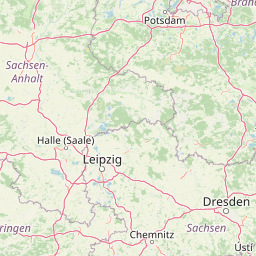
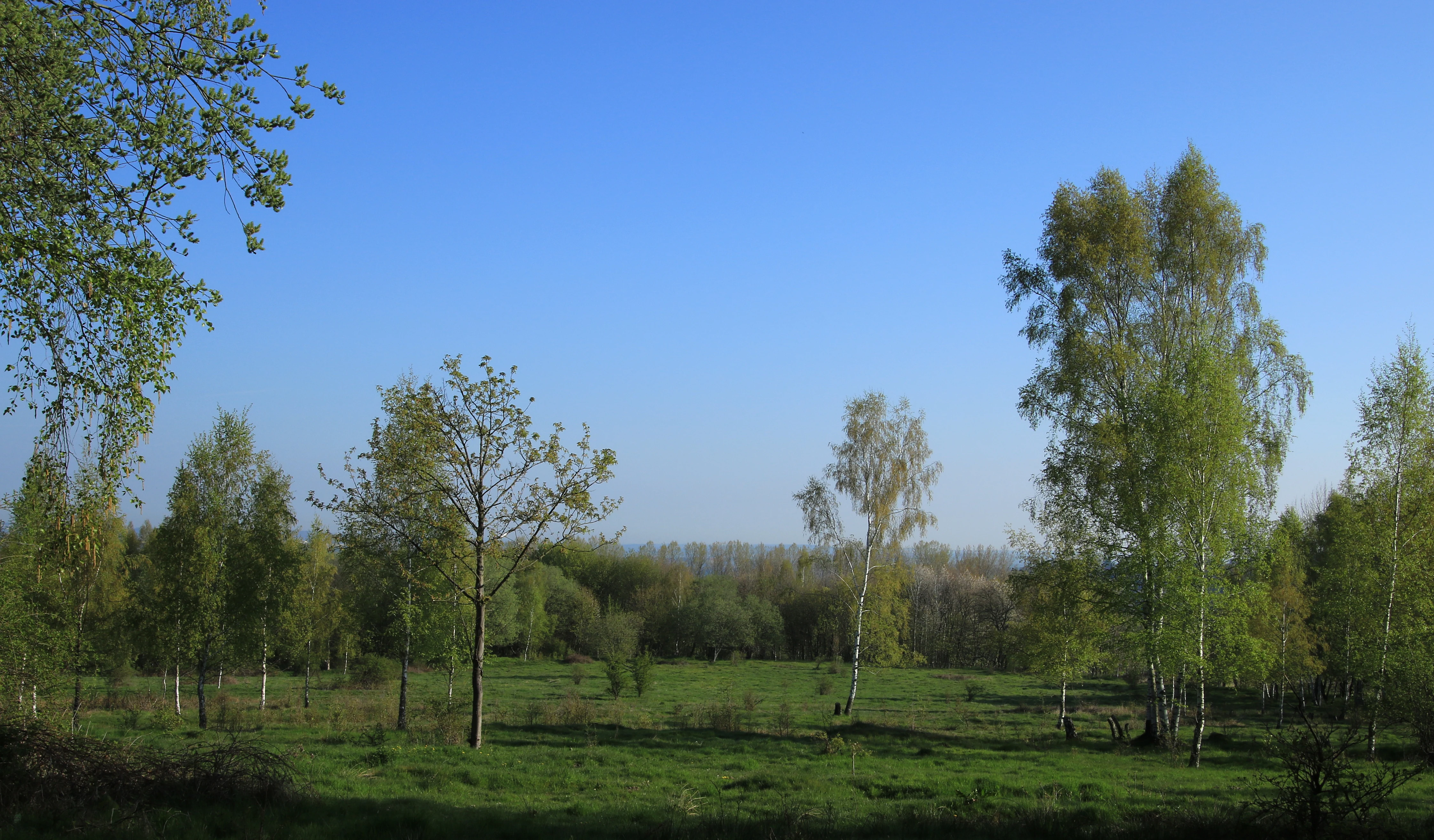
The landscape of Um den Eibsee is defined by the small Eibsee lake and the gently rolling open and semi-open countryside that surrounds it. Situated on the eastern edge of Chemnitz between the districts of Adelsberg and Euba, the terrain is shaped by a mix of grassy areas, scattered shrubs, and transitional zones that give the site its distinctive mosaic character.
Because of the risk of natural overgrowth in such a setting, much of the physical landscape is actively maintained through grazing. Deutsch Angus cattle and Boer goats roam the area, suppressing invasive shrub encroachment and keeping the open character of meadows and edges intact. The result is a deliberately preserved cultural landscape where the visual openness is as much a product of ongoing stewardship as of natural conditions.
The lake itself anchors the reserve geographically and ecologically, providing the hydrological basis for the surrounding habitat. The combination of water, open pasture, and patchy woody vegetation gives Um den Eibsee a layered and varied terrain despite its relatively small footprint.
Um den Eibsee Nature Reserve ecosystems, habitats, and plant life
Um den Eibsee is ecologically defined by its combination of aquatic, grassland, and transitional habitats. The Eibsee lake, around which the reserve is centered, forms the hydrological core of the protected area and supports the moisture-dependent vegetation communities along its margins.
Surrounding the lake is a mosaic of open and semi-open vegetation that includes grasslands, scattered shrub patches, and edges where forest would naturally regenerate. Without active management, this landscape would gradually close over, which is why extensive grazing has been central to the site's ecological character since the late 1990s. The grazing regime is designed to preserve habitat for species that depend on continued openness.
Together, these habitats create a compact but ecologically layered reserve. The interaction between water, open land, and managed grazing results in habitat diversity that would not persist under passive protection alone, making the reserve an example of how active land management can sustain ecological value in small protected areas.
Um den Eibsee Nature Reserve wildlife and species highlights
Um den Eibsee's wildlife value is closely tied to its open and semi-open habitat structure and the management practices that maintain it. The reserve's grasslands and edges provide habitat for plant and animal species that benefit from traditional grazing regimes and that would decline if shrub and tree cover expanded.
The presence of Deutsch Angus cattle and Boer goats as part of the conservation grazing project is itself a distinctive feature of the reserve. While these animals are managed primarily for habitat maintenance rather than as wildlife in the strict sense, their role in shaping vegetation structure directly influences which wild species can thrive in the area.
The lake and its shoreline further contribute to the site's ecological diversity, supporting moisture-associated fauna typical of small standing-water bodies in the Saxon countryside. The overall wildlife profile of Um den Eibsee reflects the importance of small, actively managed reserves for sustaining species that depend on culturally maintained open landscapes.
Um den Eibsee Nature Reserve conservation status and protection priorities
Um den Eibsee's conservation significance lies in the protection of a small but ecologically meaningful mosaic of open and semi-open habitat around the Eibsee lake. Designated as a Naturschutzgebiet in 2000, the reserve is officially placed under German nature protection law, with the stated goal of preserving habitat for rare and threatened plant and animal species.
The reserve's conservation approach is notable for its reliance on active land management rather than strict exclusion. Through the Natur-Hof Chemnitz association, extensive grazing with Deutsch Angus cattle and Boer goats has been used since 1997 to prevent the natural shrub encroachment that would otherwise degrade the open habitat structure. This strategy reflects a broader conservation philosophy in which traditional land-use practices are valued as tools for maintaining biodiversity.
As part of Chemnitz's wider network of protected areas, Um den Eibsee contributes to local conservation efforts by anchoring a lake-centered habitat complex within a broader urban-region context. Its small size is offset by the intensity and continuity of its management, demonstrating how local stewardship can sustain ecological value even in compact protected landscapes.
Um den Eibsee Nature Reserve cultural meaning and human context
The cultural context of Um den Eibsee is closely tied to the rural land-use traditions of the Saxon countryside. Before its formal protection, the landscape around the Eibsee was shaped by grazing and other agricultural practices typical of eastern Chemnitz's outskirts, and the reserve's modern management intentionally preserves elements of this heritage.
The use of traditional hardy breeds such as Deutsch Angus cattle and Boer goats in the conservation grazing project reflects a conscious link between ecological conservation and cultural continuity. Rather than abandoning the land to natural succession, the reserve treats grazing as both a habitat-management tool and a continuation of regional land-use identity.
This blending of ecological and cultural values is characteristic of many small German Naturschutzgebiete, and Um den Eibsee exemplifies how a modest urban-edge reserve can carry layered significance for local communities that value both biodiversity and traditional landscapes.
Top sights and standout views in Um den Eibsee Nature Reserve
Um den Eibsee stands out for its compact but well-structured mosaic of open, semi-open, and lakeside habitats surrounding the Eibsee in eastern Chemnitz. Its lake-centered geography gives it a clearer ecological anchor than many similarly sized reserves.
Another defining feature is the long-running conservation grazing program coordinated by Natur-Hof Chemnitz, which has used hardy cattle and goat breeds since 1997 to keep the landscape open. This active stewardship is central to the reserve's identity and ecological success.
As an officially designated Naturschutzgebiet since 2000, Um den Eibsee also represents a successful example of how small, urban-adjacent landscapes in Saxony can achieve meaningful protection through a combination of formal designation and ongoing community-led management.
Best time to visit Um den Eibsee Nature Reserve
Um den Eibsee's character changes with the seasons in ways that reflect both its ecological value and its role as a local landscape. Spring and early summer typically bring the most active vegetation growth, with grasses and meadow plants in their full seasonal development and the lakeside habitat at its most visibly lush.
Late summer and early autumn offer a calmer atmosphere, when grazing animals are actively shaping the landscape and open views across the reserve are most pronounced. In winter, the open character of the grazing landscape becomes especially visible, though conditions for exploring the area are more weather-dependent.
Because the reserve's ecological condition is closely tied to ongoing grazing management, any visit will encounter a landscape shaped by continuous stewardship rather than by purely wild processes.