Why Velický hliník stands out
Velický hliník is best known as a small but ecologically rich former clay pit that supports the yellow-bellied toad (Bombina variegata) alongside a suite of protected orchids, gentians, and rare butterflies. The combination of standing seasonal water, exposed mineral substrate, and species-rich semi-natural grassland makes the site disproportionately important for its size. The area is also notable for its role within the European ecological network, contributing to the Javorník, hliník Site of Community Importance and illustrating how disused extractive sites in the Western Carpathian flysch zone can develop into valuable refuges for species that depend on open, mineral-rich habitats.
Velický hliník history and protected-area timeline
Velický hliník does not have a long narrative of wilderness protection. Instead, its story begins as a working clay pit (hliniště), where mineral raw material was extracted through much of the twentieth century, with extraction continuing into the 1990s. When mining ceased, the abandoned workings were left to recover on their own terms, and the periodic pools left behind by the excavation gradually became habitat for amphibians and aquatic invertebrates.
Recognition of the site's ecological value grew alongside this natural recovery. On January 1, 2013, the Rada Jihomoravského kraje (South Moravian Regional Council) formally declared the area a přírodní památka, giving it national-level protected status focused on species conservation. Its broader significance was subsequently reflected in the inclusion of the area within the European Site of Community Importance Javorník – hliník, anchoring it in the wider Natura 2000 framework.
The history of Velický hliník is therefore less about a long human relationship with a single landscape and more about a transition: from extractive industrial use, through abandonment, to formal ecological protection once the site's biodiversity value became evident.
Velický hliník landscape and geographic character
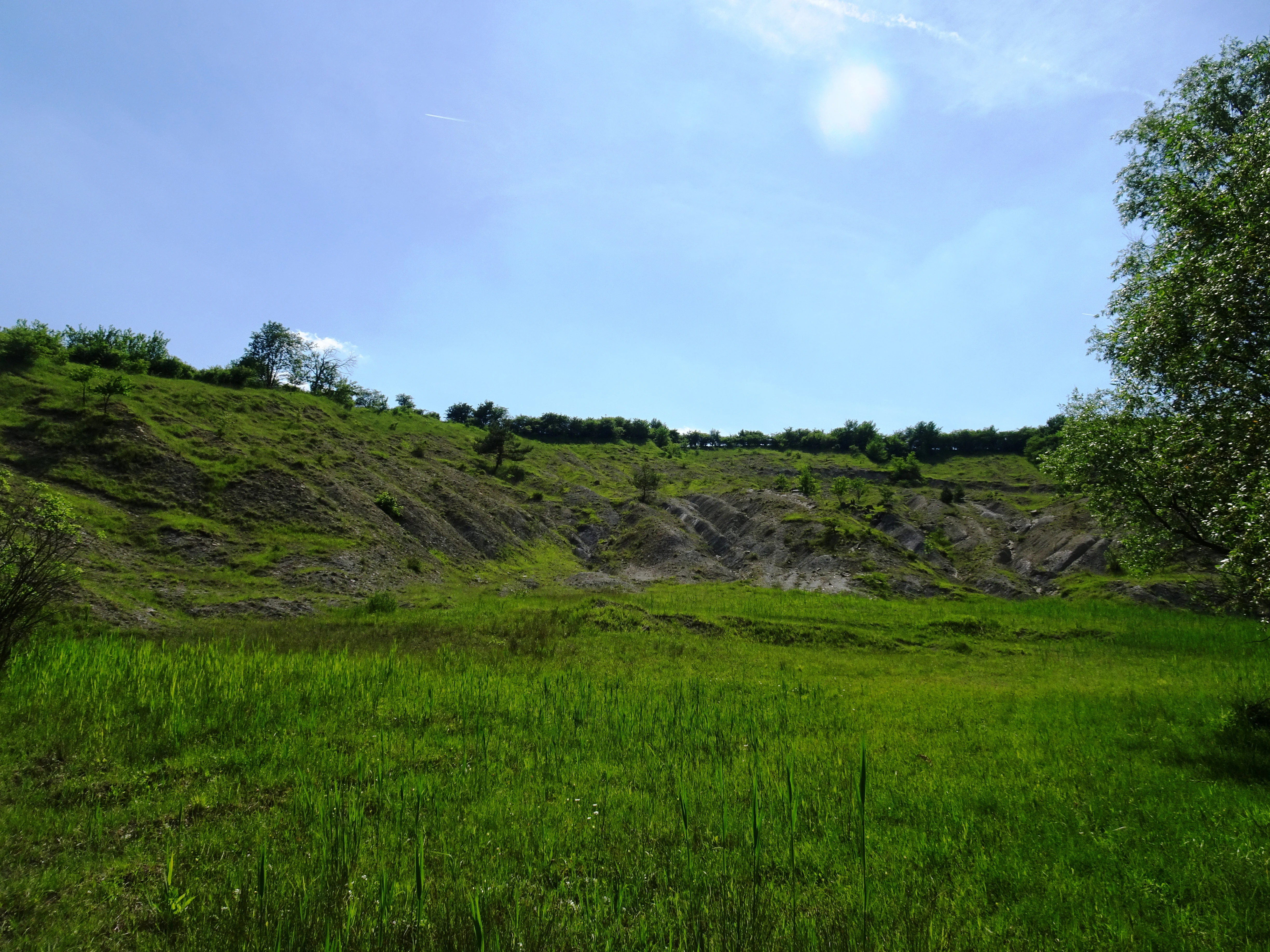
The landscape of Velický hliník is defined by its origin as an excavated clay site rather than by natural topography. The terrain reflects the imprint of twentieth-century extraction, with multiple shallow basins and seasonal pools left behind where clay was once removed. These basins hold water intermittently, producing a fluctuating wetland mosaic that shifts between fully flooded, marginal, and dry states through the course of the year.
Surrounding the excavated basins, the broader setting belongs to the Žalustín Highlands (Žalustínská vrchovina), a geomorphological unit characterized by gently rolling hills typical of the Outer Western Carpathians. The bedrock is flysch of Carpathian origin, dominated by calcareous claystones belonging to the geological Kuželov Formation. Over these bedrock layers lie deluvial and fluvial sandy-clayey to clayey-sandy sediments, producing substrates that range from compact clay to looser, mineral-rich soils.
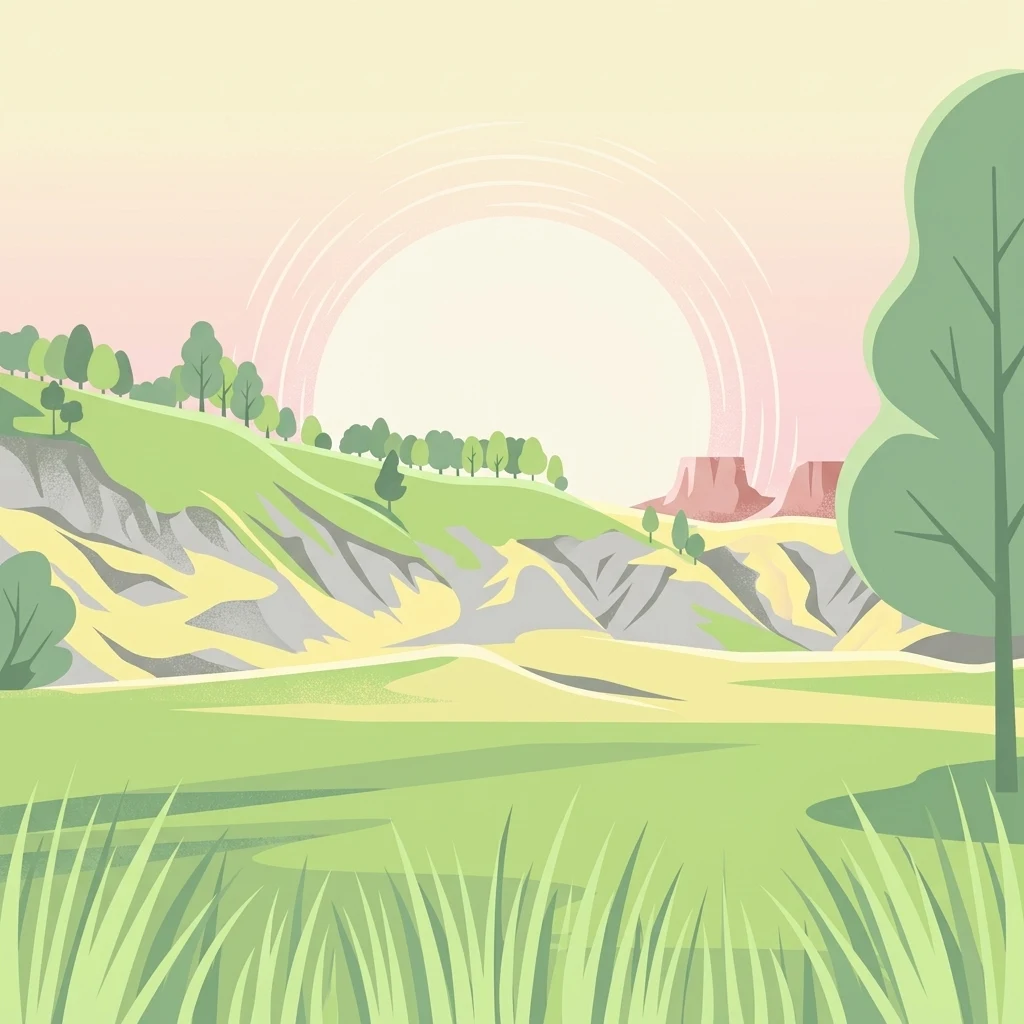
The resulting visual character is highly textural rather than dramatic: shallow water surfaces, exposed pale clay, grassy banks, and a network of small pools set against a backdrop of low hills. Even though it is a small site, this combination of microtopography, variable moisture, and mineral substrate is what gives the reserve its distinctive landscape character within the Carpathian foothills.
Velický hliník ecosystems, habitats, and plant life
Ecologically, Velický hliník stands out for the diversity it supports across a tiny footprint. The mosaic of disused clay workings, periodic pools, and surrounding vegetation produces a variety of microhabitats within a very small area. These range from open water and wet margins suitable for amphibians, to species-rich grassland and exposed mineral ground favored by thermophilic plants and insects.
The calcareous claystones of the underlying flysch and the sandy-clayey surface sediments help produce base-rich soils, which in turn support several orchid and herb species characteristic of mineral-rich, semi-open habitats. The combination of these soils with the fluctuating water regime means that very dry, very wet, and intermediate conditions can all be present in close proximity, allowing different communities to coexist within the boundaries of the protected monument.
The site's status as an IUCN Category IV protected area reflects its role as a habitat specifically managed around species persistence. The ecological focus is on maintaining the dynamic mix of pools, bare substrate, and species-rich vegetation that has emerged since clay extraction ended, rather than restoring the area to any single pre-industrial vegetation type.
Velický hliník wildlife and species highlights
Wildlife is the most prominent reason for Velický hliník's protection. The site is particularly associated with the yellow-bellied toad (Bombina variegata), a species that depends on shallow, sun-exposed, often temporary water bodies, which the site's clay-pit pools provide in abundance. The species is a key subject of the reserve's conservation designation and the European Site of Community Importance that includes the area.
The reserve also supports a remarkable suite of other specially protected species. Botanically, the site harbors the marsh helleborine (Epipactis palustris), the early marsh orchid (Dactylorhiza incarnata), the military orchid (Orchis militaris), the cross gentian (Gentiana cruciata), the narrow-leaved flax (Linum tenuifolium), and the crested cow-wheat (Melampyrum cristatum). The presence of several orchid species in such a compact area is a defining feature of the site's natural character.
The insect fauna includes notable butterflies and other invertebrates, among them Maculinea rebeli (Rebel's blue), the large copper (Lycaena dispar), and the praying mantis (Mantis religiosa). These species highlight the importance of warm, open, and partially bare habitats, and they indicate that the site provides both larval host plants and the structural complexity needed for different insect life cycles.
Velický hliník conservation status and protection priorities
From a conservation perspective, Velický hliník illustrates how small, formally protected sites can carry outsized biodiversity value. Although the monument covers only about 5.27 hectares, its formal recognition at multiple levels (national, regional, and European) reflects the site's importance for rare amphibians, orchids, and insects tied to mineral-rich and seasonally wet habitats.
The reserve's designation as a přírodní památka under Czech law places its management under the responsibility of the South Moravian Region, with the protection regime focusing on the maintenance of habitat conditions suitable for the yellow-bellied toad and other specially protected species. Within the European ecological network, the area contributes to the Site of Community Importance Javorník – hliník, aligning the site with broader Natura 2000 priorities.
The conservation story of Velický hliník is also a cautionary one about inertia. Ongoing public discussion in Czech conservation circles has noted that several natural monuments in the country are not always actively managed under approved management plans, which can threaten the long-term maintenance of species-rich habitats. In that context, Velický hliník represents both a successful designation and a reminder of the practical work required to keep small, species-rich sites healthy over time.
Velický hliník cultural meaning and human context
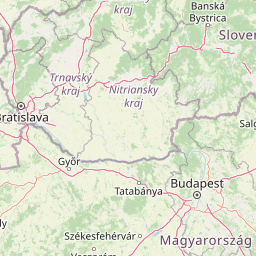
Velický hliník is not a traditional cultural landscape in the sense of long-standing settlement or sacred geography; its identity is more closely tied to twentieth-century industrial use and subsequent natural recovery. The site sits near the village of Javorník and the disused Javorník nad Veličkou railway halt in the Hodonín District, an area that lies along the historical boundary between Moravia and Slovakia.
Local identity in this part of the Moravian-Slovak borderland is deeply shaped by Carpathian flysch landscapes, small dispersed settlements, and a tradition of small-scale rural resource use, including clay extraction. The clay pit at Velický hliník is part of that regional industrial heritage, and its transformation from working quarry to protected natural monument mirrors similar transitions elsewhere in the Czech countryside, where former extractive sites have become refuges for biodiversity and, increasingly, for cultural memory of older land-use patterns.
Top sights and standout views in Velický hliník
Velický hliník's standout quality is the way a tiny, deeply modified site has developed into a biodiversity hotspot, supporting yellow-bellied toads, several protected orchid species, and rare butterflies within a footprint of only a few hectares. Its periodic pools, minerally rich substrates, and semi-open vegetation create a habitat mosaic that is uncommon in the surrounding Carpathian foothills.
Equally notable is the site's role within the European ecological network, as part of the Javorník – hliník Site of Community Importance, which connects it to broader conservation efforts for amphibian and orchid habitats across the Western Carpathians. For visitors and ecologists, Velický hliník is a compelling example of how industrial abandonment and ecological protection can, over time, generate a small but genuinely rich natural area.
Best time to visit Velický hliník
As a small, ecologically focused site rather than a developed visitor destination, Velický hliník is best appreciated from late spring into early summer, when the periodic pools are most likely to retain water, amphibian activity is at its peak, and the site's orchids and herb-rich vegetation come into flower. Late spring and early summer also tend to be the most active period for many of the butterfly and insect species for which the site is protected.
In high summer, exposed clay surfaces and shallow pools can dry out rapidly, which alters both the visual character of the site and the composition of its wildlife. Autumn and winter bring quieter conditions and reduced ecological visibility, but can also reveal the site's geological texture and the broader Carpathian landscape context. Because the reserve is small and ecologically sensitive, any visit should be approached with care for the very species and habitats that make the site noteworthy.