

Mori Atlas logo
Natural monumentVlkoš - statek

Examining the ecological role of building-based protected landscapes in lowland agricultural geography

Vlkoš - statek Natural Monument: A Protected Wildlife Haven in the Olomouc Region of Czechia

Vlkoš - statek represents a distinct model of small-scale conservation located within the Hornomoravský úval alluvial plain. This natural monument safeguards critical attic roosting habitats for Geoffroy's bat, illustrating how traditional rural structures function as essential nodes of biodiversity within the broader agricultural mosaic of the Czech landscape. The site demonstrates the importance of micro-habitats in maintaining ecological connectivity across the flat, sediment-rich terrain of the Morava river basin.

natural monumentbat conservationGeoffroy's batrural building habitatfarmhouse attic roostOlomouc Region

Vlkoš - statek

Natural monument

Park overview

Structured park overview, official facts, and landscape profile for Vlkoš, statek

Vlkoš, statek park facts, protected area profile, and essential visitor context

Review the core facts for Vlkoš, statek, including designation, size, terrain, visitor scale, habitats, and operating context in one park-focused overview.

About Vlkoš, statek

Vlkoš – statek is one of many small-scale protected areas in the Czech Republic that target a single, very specific ecological feature rather than a broader landscape. In this case, the protected object is the attic of a farmhouse in the village of Kanovsko, which has served as a summer roost for a colony of Geoffroy's bat. By declaring the building and a tiny buffer of land around it as a natural monument, Czech authorities provided legal protection for the roosting habitat and created a framework for ongoing monitoring and management.

The site sits in the flat, fertile lowland of the Hornomoravský úval, along the alluvial plain of the Morava River, a region long dominated by agriculture. Even though the immediate protected footprint is barely two hundredths of a hectare, the broader surroundings include surviving fragments of floodplain forest, meadows, and wetland features that support the wider ecological character of the area. Within this largely transformed agricultural landscape, the bat colony represents one of the few persistent links to the wildlife heritage of the original Morava floodplain ecosystem.

The natural monument also plays a role within the European Natura 2000 network, as the territory overlaps with a Site of Community Importance designated for the same bat species. This dual recognition, both at the national and European levels, reflects the wider biogeographical significance of Geoffroy's bat colonies and the importance of conserving even very small features that are critical to the species' life cycle. The story of Vlkoš – statek is essentially a story about coexistence between a working farmhouse and a sensitive bat colony that depends on it.

Quick facts and research context for Vlkoš, statek

Vlkoš – statek is a Czech natural monument (přírodní památka) declared on 31 December 2013 by the Regional Authority of the Olomouc Region. It lies in Kanovsko, part of Vlkoš in the Přerov district, at an elevation of about 200 meters. The protected territory covers roughly 0.024 hectares and overlaps with the Natura 2000 Site of Community Importance of the same name. The protection target is the summer colony of Geoffroy's bat (Myotis emarginatus) that roosts in the attic of farmhouse number 25, with the colony historically counted at 80 to 130 individuals.

Protection and recognition

Documented terrestrial protection and Natura 2000 designation records

Vlkoš - statek Protection Status and International Recognition Sources

Vlkoš - statek maintains recorded terrestrial protection backed by official Natura 2000 designation sources. Systematic evaluation details the conservation framework and formal recognition data associated with this protected area.

International recognition

Protection details

Protection scope
Terrestrial
Transboundary protection
No
Park context

Deeper park guide and search-rich context for Vlkoš, statek

Vlkoš, statek history, landscape, wildlife, and travel context

Explore Vlkoš, statek through its history, landscape character, ecosystems, wildlife, conservation priorities, cultural context, and seasonal travel timing in a structured park guide built for atlas discovery and search intent.

Why Vlkoš, statek stands out

Vlkoš, statek is known above all for its role as a protected summer roost of Geoffroy's bat, one of the more conservation-relevant bat species in Central Europe. The attic of a traditional farm building has supported a breeding and resting colony for at least two decades, surviving building works and everyday use of the structure. The site is a clear example of how cultural buildings, particularly older rural attics, can serve as critical wildlife refuges in heavily cultivated lowland landscapes.

Vlkoš, statek history and protected-area timeline

The bat colony at the heart of Vlkoš – statek was first documented in 1998, when the presence of Geoffroy's bat in the attic of farmhouse number 25 was recorded. Even though residents continued to use the attic and the building underwent various modifications, the colony persisted in the structure.

By 2005, regular monitoring of the colony had been established, providing a clearer picture of its size and significance over time. These observations created the basis for seeking formal protection, and in 2013 the Regional Authority of the Olomouc Region declared the area as a natural monument, with effect from 31 December 2013. The designation made the colony's habitat the explicit subject of protection and anchored ongoing conservation management in a legally defined framework.

Vlkoš, statek landscape and geographic character

The natural monument occupies a very small, built footprint on the alluvial plain of the Morava River, within the wider Hornomoravský úval lowland. Geologically, the site sits on Quaternary sediments, with sandy loams and loamy sands at the surface overlying a deeper layer of gravelly sands. Although the protected object is a single building, geomorphologically the location belongs to the Středomoravská niva sub-unit, a flat alluvial plain shaped by long-term river action.

Around the village, agricultural land use dominates the visible landscape, but traces of the original natural setting survive as scattered fragments of floodplain forest, meadows, and wetland hollows. The broader mosaic of these surviving semi-natural patches, combined with the flat agricultural setting, defines the visual and ecological character of the area surrounding the monument.

Vlkoš, statek ecosystems, habitats, and plant life

Ecologically, Vlkoš – statek is defined less by the building itself and more by what it represents in the wider landscape context. The surrounding countryside retains fragments of floodplain forest, meadow communities, and wetland microhabitats, including flood-cycle pools that support mollusk and crustacean communities. These remnants stand in sharp contrast to the otherwise intensively farmed fields that dominate the immediate surroundings.

The protected object, the attic of the farmhouse, functions as a structural habitat, an artificial but ecologically vital roosting space. Warm summer attic conditions and the stability of a traditional rural building make it a particularly suitable summer refuge for a cave-dwelling bat species that has adapted to using such human-made structures in lowland agricultural regions where natural roosting options are scarce.

Vlkoš, statek wildlife and species highlights

The defining wildlife feature of Vlkoš – statek is the summer colony of Geoffroy's bat that roosts in the attic of farmhouse number 25. Before the area received formal protection, the colony typically numbered between 80 and 130 individuals, making it a significant aggregation for the species in the regional context. Geoffroy's bat is generally associated with warm summer roosts in attics and similar structures and with foraging in habitats rich in arthropods, including the wooded floodplain mosaic that still partially survives around the village.

In the surrounding landscape, the surviving wetland hollows and floodplain fragments support additional wildlife communities, particularly mollusks and crustaceans adapted to periodically flooded pools. These groups, though less conspicuous than the bat colony, form part of the broader ecological character that the wider protected region is intended to support.

Vlkoš, statek conservation status and protection priorities

The primary conservation significance of Vlkoš – statek lies in safeguarding a small but ecologically critical roosting site for Geoffroy's bat, a species whose populations across Central Europe frequently depend on a limited number of suitable attic roosts. By protecting the building and its immediate surroundings as a natural monument, Czech authorities ensured that the colony's habitat cannot be altered without oversight and that monitoring and management obligations are linked to a specific site.

The site also intersects with European conservation priorities through its overlap with a Site of Community Importance designated within the Natura 2000 network, recognizing the bat population as part of the continent's broader effort to maintain biodiversity in agricultural landscapes. Together, these national and European designations frame Vlkoš – statek as a small but meaningful link in regional bat conservation, particularly in lowland areas where older farm buildings still offer viable alternatives to disappearing natural roosts.

Vlkoš, statek cultural meaning and human context

Vlkoš – statek reflects the broader Czech tradition of small rural settlements embedded in intensively farmed lowland landscapes, where traditional farmhouses remain in active use. The protected building itself is a working part of this cultural fabric, occupied by residents who continue to live alongside the bat colony. This coexistence of everyday rural life and a protected wildlife feature is itself part of the area's character, illustrating how older Czech farm architecture continues to provide habitats that modern construction rarely replicates.

Top sights and standout views in Vlkoš, statek

Vlkoš – statek stands out as a textbook example of building-based bat conservation in the Czech Republic, combining a tiny protected footprint with nationally and European-level nature protection designations. Its overlap with a Natura 2000 Site of Community Importance and its long-running monitoring program since 2005 give it a profile well beyond its size, and the site continues to demonstrate how traditional rural structures can host ecologically important bat colonies when properly recognized and protected.

Best time to visit Vlkoš, statek

As a small protected site focused on the conservation of a bat roost in a working farmhouse rather than a visitor destination, Vlkoš – statek does not have a developed public access profile. For naturalists interested in bat roosts in general, late spring through summer is typically the period when attic colonies of Geoffroy's bat are active, though access and observation at the specific site are subject to the requirements of the protected area and the residents of the building.
Monthly climate preview

Long-term monthly temperature averages and precipitation patterns for Vlkoš - statek

Vlkoš - statek Climate Normals and Annual Temperature Rhythm

Representative coordinates record measured monthly temperature swings from sub-zero winter lows to warm summer highs alongside year-round precipitation rates. Detailed monthly normals provide a complete climatological profile across all twelve representative periods.
Annual mean8 °C
-4 °C19 °C
Jan-4°
Feb-2°
Mar
Apr
May13°
Jun17°
Jul19°
Aug19°
Sep14°
Oct
Nov
Dec-2°
Warmest month
July

19.3 °C

Coolest month
January

-3.8 °C

Wettest month
July

2.9 mm/day

Driest month
January

1.3 mm/day

Park location guide

Geography guide, regional context, and park location map for Vlkoš, statek

Vlkoš, statek park geography, regions, and map view in Czechia

Understand where Vlkoš, statek sits in Czechia through a broader geographic reading of the surrounding landscape, nearby location context, and its mapped position within the national park landscape.

How Vlkoš, statek fits into Czechia

Czech Republic is a landlocked Central European country with a population of approximately 10.9 million people. The nation was established as an independent state on January 1, 1993, following the dissolution of Czechoslovakia. Its capital and largest city is Prague, with other major urban centers including Brno, Ostrava, Plzeň, and Liberec.

Wider geography shaping Vlkoš, statek in Czechia

The Czech Republic is a landlocked country in Central Europe. It is bordered by Germany to the west, Austria to the south, Poland to the northeast, and Slovakia to the southeast. The landscape is predominantly hilly, with the territory covering 78,871 square kilometers.

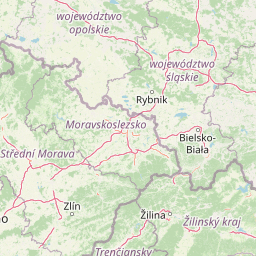
Map view of Vlkoš, statek

Use this park location map to pinpoint Vlkoš, statek in Czechia, understand its exact geographic position, and read its mapped placement within the surrounding landscape more clearly.

Pigeon | © OpenStreetMap contributors

Location context for Vlkoš, statek

Olomouc Region
Recorded earthquake history

Explore Historical Earthquake Records Associated with Vlkoš - statek

Review a detailed catalogue of recorded seismic events that have occurred in the vicinity of Vlkoš - statek. This MoriAtlas collection provides researchers and enthusiasts with an organized look at historical earthquake data, including magnitudes and epicenter distances for this specific location in the Olomouc Region.

Vlkoš - statek Earthquake Records

Catalogued events

4 events

Strongest magnitude

Magnitude 3.5

Most recent event

Mar 2, 1988

This history includes earthquakes recorded inside the park or within 50 km of its borders

Park atlas

Compare adjacent lowland habitats and connected regional conservation sites

Other Parks and Protected Areas Near Vlkoš - statek in Regional Context

Browsing other parks near Vlkoš - statek reveals broader patterns of lowland biodiversity and specialized rural habitats across the Olomouc Region. Continuing the geographic comparison helps connect single building reserves to wider protected landscapes.
Natural monumentZlínský kraj
About 8.5 km away#1 closest

Southwest

Rameno Moravy Natural Monument: Protected Oxbow and Wetland Geography in Zlínský kraj

Mapping floodplain habitats and riverine natural monuments.

Rameno Moravy is a significant natural monument in the Czech Republic, encompassing a unique oxbow of the Morava River. The site provides a rare example of preserved still-water wetland habitats and diverse marsh communities within the lowland geography of the Zlínský kraj, standing out as a critical botanical site in the broader river basin.

Area
0.02 km²
Established
1995
IUCN
IV
Relief
Lowland
Natural monumentOlomouc Region
16 km away#2 closest

North

Veselíčko Natural Monument: Geographic Profile of a Czech Protected Area

Concentrated conservation and habitat mapping in the Olomouc Region

Located in the Olomouc District, Veselíčko is a compact natural monument dedicated to specialized habitat protection. This site acts as a key component of the regional conservation network, offering insight into the intersection of cultural heritage and wildlife refuge management in the Czech Republic.

Area
0.001 km²
Established
2013
IUCN
III
Relief
Lowland
Nature reserveZlín District
About 23 km away#3 closest

South

Na letišti Nature Reserve: Mapped Floodplain Landscapes in the Zlín District

A rare oxbow wetland refuge in Eastern Czechia

Located in the Zlín District, Na letišti is a protected natural monument formed from a regulated meander of the Morava River. This site functions as an isolated aquatic refuge, featuring a rich community of beetles and wetland flora that define the character of this lowland floodplain landscape within the Czech Republic.

Area
0.027 km²
Established
1956
IUCN
IV
Relief
Lowland
Protected landscapeCzechia
About 23 km away#4 closest

East

Hostýnské vrchy Nature Park: Protected Landscape and Carpathian Foothill Geography

Forested ridge terrain across Zlín and Kroměříž districts

Hostýnské vrchy Nature Park represents a significant protected unit in the eastern Czech Republic, characterized by its deep forested ridges and open meadow clearings. As part of the outer Western Carpathians, the area supports diverse habitats including ancient beech and mixed forest stands alongside rare orchid populations. The landscape provides a clear window into the natural geography of central Moravia, with its intricate network of small watercourses and slopes.

Area
204 km²
Established
1989
Water
Minor water
Season
Year-round
Natural monumentJihomoravský kraj
About 28 km away#5 closest

Southwest

Roznitál Natural Monument: Protected Steppe Biodiversity and Regional Landscape Context

A rare habitat island within the South Moravian agricultural mosaic

Located in the Vyškov district, Roznitál is a formally protected natural monument defined by its open, dry grassland and thermophilic flora. This site provides a vital refuge for relict plant communities that have largely vanished from the surrounding farmed countryside, offering a clear example of small-scale landscape conservation in the heart of Moravia.

Area
0.01 km²
Established
1990
IUCN
IV
Relief
Lowland
Natural monumentZlínský kraj
About 32 km away#6 closest

Southeast

Na želechovických pasekách Natural Monument: Geographic Context and Botanical Protected Area

Located in Zlínský kraj, eastern Moravia, Czech Republic.

Na želechovických pasekách represents a significant protected area within the Czech Republic. This small natural monument safeguards light-rich deciduous woodland slopes and serves as the sole known site for specific local flora. Explore the mapped terrain and environmental boundaries of this unique botanical site nested within the broader Vizovické vrchy natural park landscape.

Area
0.011 km²
Established
1949
IUCN
IV
Relief
Upland
Natural monumentZlín Region
32 km away#7 closest

Southeast

Uhliska Natural Monument: Protected Stream Valley Geography and Moravian Habitats

A diverse protected wetland and meadow mosaic in the Zlín Region.

The Uhliska natural monument protects a narrow, meandering valley corridor along the Černý potok stream in eastern Moravia. This high-value habitat mosaic features wet Cirsium meadows, broad-leaved dry grasslands, and ash alder gallery forests. The site provides a critical refuge for protected butterflies of European importance, serving as an exemplary model of small-scale landscape conservation in the Zlín Region.

Area
0.143 km²
Established
1991
IUCN
IV
Relief
Upland
Protected landscapeZlín District
About 32 km away#8 closest

Southeast

Želechovické paseky Protected Landscape: Map and Regional Geography in Zlín District

Carpathian foothill terrain and mosaic meadow landscapes

An extensive protected area near Zlín, Želechovické paseky features a blend of traditional forest clearing, hillside meadows, and stream valleys. This mapped landscape demonstrates the continuity of the Moravian Carpathian foothills, providing a distinct look at historical land use patterns and natural ecological corridors.

Area
10.479 km²
Relief
Upland
Climate
Temperate
Scope
Terrestrial

Common questions about visiting, size, designation, and location context for Vlkoš, statek

Vlkoš, statek FAQs for park facts, access, geography, and protected area context

Find quick answers about Vlkoš, statek, including protected-area facts, park geography, trail and visitor context, and how the park fits into its surrounding country and regional landscape.
MoriAtlas Explorer

Continue Your Protected Areas Search Across the Global Atlas

Deepen your exploration by continuing the structured search for national parks and protected areas worldwide. Utilize the comprehensive filtering capabilities to compare different conservation landscapes and refine your understanding of global park geography. Discover more about the distribution and characteristics of protected natural areas.

Global natural geography