
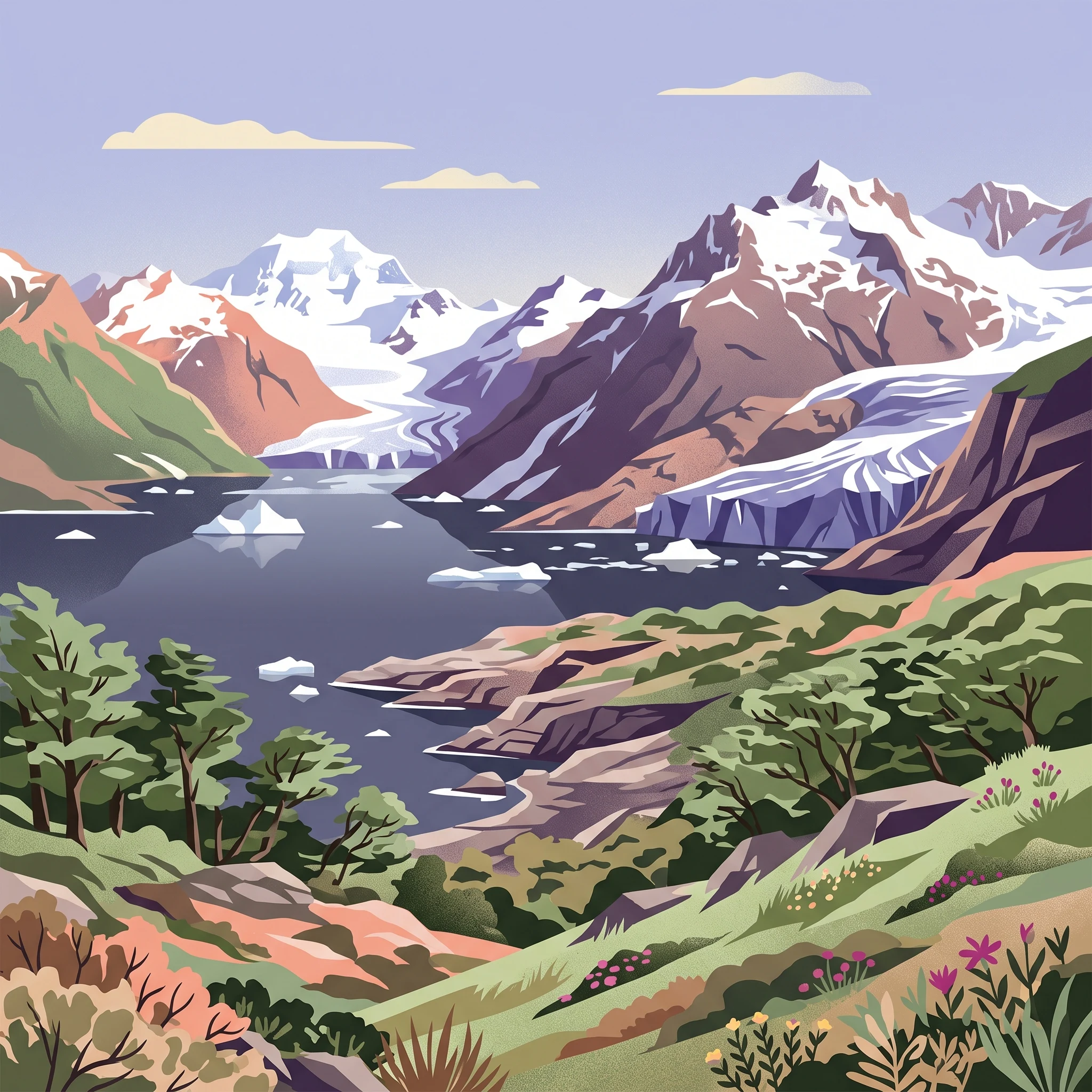
Planning Essentials
When to Visit Alberto de Agostini National Park: The Essential Timing Overview
For those planning a journey to Alberto de Agostini National Park, the best time to visit centers on the brief window between December and February. During these months, travelers gain access to the maximum possible daylight hours, which is critical for navigating the remote fjords and viewing the glaciers of the Cordillera Darwin. While these summer months represent the peak of the visitor season, they also coincide with the park's inherently variable climate. Choosing when to visit requires a careful balance between seeking milder temperatures and managing the reality of the subpolar environment, where wind, precipitation, and rapid weather shifts occur year-round regardless of the calendar month.
The Relationship Between Daylight and Access
Daylight is perhaps the most defining constraint for exploring this park. In mid-summer, daylight can extend to nearly seventeen hours per day, providing a significant advantage for boat-based excursions and maritime navigation around the tidewater glaciers. As the season transitions into autumn and winter, daylight hours drop sharply, falling to seven hours by June and July. This reduction in light, paired with the park's extreme southern latitude, makes winter exploration exceptionally challenging. The decision of when to visit is therefore tied less to the possibility of a warm day and more to the logistical necessity of having enough light to safely traverse the landscape of ice and ocean.
Balancing Temperature with Unpredictable Conditions
Visitors often look for the warmest month to visit, but this search can be misleading in a subpolar region. While January and February offer mean temperatures hovering around five degrees Celsius with maximums near twelve degrees, these figures are climate normals, not guarantees of pleasant weather. The proximity to the Cordillera Darwin and the surrounding channels means that local conditions remain cold and humid throughout the year. Precipitation is a constant factor that does not fluctuate drastically by season. Because the park lacks land-based infrastructure like roads, your experience will always be dictated by the sea. Wind speeds, which remain high throughout the year, play a larger role in your comfort and the feasibility of excursions than the actual temperature. Travelers should approach their planning by expecting a highly dynamic environment where safety and mobility are dictated by wind and visibility rather than seasonal warmth. By prioritizing the periods with the most reliable daylight, visitors maximize their chances of witnessing the park's tidewater glaciers and mountain vistas without the severe restrictions of the polar winter.
Seasonal Outlook
Best months to visit Alberto de Agostini National Park at a glance
The Peak Summer Window: December to February
For most travelers, the period from December through February represents the most practical window for reaching the park. This timeframe offers the highest mean temperatures of the year, peaking with averages near 12.87°C in February, and the longest daily daylight cycles, which stretch toward 17 hours in December. These extended light hours provide a substantial advantage for viewing the expansive Cordillera Darwin and the glaciers lining the Beagle Channel, where visibility and stable conditions are primary goals. The trade-off for these favorable conditions is persistent wind, as southern currents remain active throughout the summer, and the inherent unpredictability of a maritime subpolar climate that can produce rapid weather shifts regardless of the season.
The Transition Months: October, November, and March
Visitors seeking to avoid the peak activity of mid-summer often look to the shoulder months of late spring and early autumn. October and November provide increasing daylight, though average temperatures remain lower than in December. These months feature winds that are often comparable to, or even stronger than, mid-summer patterns, sometimes exceeding 6.5 m/s. March serves as a notable bridge to the cooler season, offering a reduction in wind speeds compared to the peak summer months and more manageable daylight hours, even as temperatures begin to retreat toward a monthly mean of 4.5°C. Travelers choosing these periods must accept shorter days and a higher likelihood of cold, damp conditions, though they gain the benefit of a quieter, more solitary experience in one of the world's most isolated wilderness areas.
Managing the Cold Season: April to September
From April through September, the park enters a phase defined by significantly reduced daylight and dropping temperatures, with minima frequently dipping well below freezing. June and July are the most challenging months, characterized by average daily maximums struggling to reach 3°C to 4°C and daylight hours falling below eight hours per day. While the aesthetic appeal of a snow-covered Cordillera Darwin is immense, the operational reality of this period is restrictive. Access to the park, which is primarily facilitated by maritime transport, becomes significantly more complex during these months. Travelers interested in these colder periods should anticipate that the environment is hostile, requiring specialized preparation and a high tolerance for minimal light and frequent precipitation. This window is rarely suited for standard visitation, serving instead as a period for extreme expeditionary work where the focus shifts entirely from accessibility to survival in a sub-zero, sub-Antarctic landscape.
Annual Climate Overview
Monthly Weather and Climate Trends in Alberto de Agostini National Park
Understanding the Subpolar Climate Patterns
The climate of Alberto de Agostini National Park is defined by its extreme southern latitude and maritime location, which creates a persistent subpolar oceanic environment. Unlike many continental regions where climate shifts are dictated primarily by solar heating, this landscape is governed by the constant influence of the Pacific and Beagle Channel. Visitors should note that the climate normals provided here reflect long-term trends recorded at a specific sample elevation of approximately 350 meters. These figures are not real-time forecasts or site-specific guarantees for the diverse terrain of the Cordillera Darwin, where conditions can change rapidly due to altitude, proximity to glacial ice, and exposure to wind.
The Relationship Between Daylight and Temperature
The annual cycle in this park is best understood through the stark contrast in daylight duration, which ranges from roughly 7 hours in mid-winter to nearly 17 hours at the summer solstice in December. This shift drives the thermal character of the park, though the maritime effect keeps temperatures remarkably compressed throughout the year. Mean temperatures fluctuate from just below freezing in the darkest months of June and July to around 5.4 degrees Celsius during the peak summer months of January and February. Travelers should not mistake the seasonal warmth for heat; even at the height of summer, average maximum temperatures hover around 12 to 13 degrees Celsius. This consistency is a hallmark of the subpolar influence, ensuring that ice and snow remain year-round features at higher elevations regardless of the calendar month.
Precipitation, Humidity, and the Persistent Wind
A critical aspect of the park climate is the consistently high relative humidity and significant precipitation, which remain elevated across the year. The data indicates that humidity rarely drops significantly, maintaining a range typically above 88 percent. Precipitation is a constant factor as well, though the monthly distribution shows slightly higher intensity during the warmer periods from November through February compared to the relative lows in mid-winter. However, the most challenging atmospheric element for visitors is the wind. Wind speeds exhibit a subtle pattern of peaking during the transition months of October and November, when they reach over 6.5 meters per second on average. These values, while seemingly moderate as averages, represent the continuous, often turbulent airflow that defines the exposed coastal and mountainous sections of the park. Visitors should expect wind to be a permanent companion, capable of magnifying the effect of even minor temperature drops and significantly impacting the perceived chill of the landscape.
Seasonal Transitions and Environmental Stability
Transition periods, specifically the shoulders leading into and out of the core summer window, act as a bridge between the extremes of the year. September shows a distinct shift as daylight expands to over 11 hours, providing a noticeable psychological and practical change even while average temperatures remain near the freezing point. Similarly, the period from March through April sees a rapid contraction of light, marking the retreat into the longer, colder nights of autumn. Throughout all these shifts, the environmental character of the park remains essentially unchanged in its core features, as the influence of the Southern Ocean prevents the extremes of continental seasonal cycling. Planning should focus on these long-term trends rather than expecting a departure from the cold, humid, and windy reality that defines this remote wilderness.
Seasonal dynamics
Understanding Seasonal Weather Patterns in Alberto de Agostini National Park
Defining the Annual Environmental Rhythm
Alberto de Agostini National Park does not adhere to the traditional four-season model common in continental temperate zones. Instead, the park operates on a binary annual rhythm dictated by daylight availability and the persistence of subpolar oceanic forces. Rather than seeking a spring or autumn, visitors should view the year as a movement between a highly dynamic, light-filled window and a restrictive, low-light period defined by deep thermal depression.
The Extended Light-Phase: December through March
This phase represents the peak of environmental accessibility, though it is not a period of calm. Spanning from the summer solstice into the early weeks of autumn, this period is defined by maximum daylight, reaching nearly 17 hours in December. During these months, the daily mean temperature sits at its highest, typically fluctuating between 4 and 6 degrees Celsius.
This phase is characterized by the highest probability of marine navigation success. While precipitation remains a constant factor throughout the year, the slightly higher thermal averages mean that what falls as rain at sea level is less likely to accumulate as permanent snow in the fjords compared to the winter months. However, this is also when wind patterns are most active. Visitors should not equate these warmer temperatures with stable or mild weather. The landscape is consistently exposed to high-velocity winds that can shift conditions within minutes, necessitating a robust approach to gear and planning regardless of the calendar month.
The Transitional Windows: October to November and April
Transition periods in the Cordillera Darwin are brief and unpredictable. October and November serve as the ramp-up to the long-light season, where daylight hours expand rapidly, increasing from approximately 14 hours in October to nearly 16 hours by late November. During these months, the environmental stress of the previous winter begins to wane, yet the ground and water temperatures remain low. This is a period of high volatility, where the shift in day length outpaces the shift in thermal reality.
April acts as the closing window of the year. As daylight drops sharply to about 10 hours, the biological and navigational activity of the park shifts toward dormancy. Travelers often notice a change in the light quality and a perceptible increase in humidity, as the transition into the darker months begins to limit the window for safe movement through the complex channel systems.
The Deep Subpolar Phase: May through September
From May through September, the park enters a phase defined by minimal daylight and significantly lower average temperatures. Daylight hours shrink to a low of approximately 7 hours in June, effectively creating a logistical ceiling for any activity. During this phase, average temperatures dip below freezing, often staying at or below zero throughout the day. Humidity levels remain persistently high, often exceeding 95 percent, which, when combined with sub-zero temperatures, creates a challenging environment for equipment and human endurance. This period is not merely a colder version of the summer, but an entirely different operational environment where the limited light and the likelihood of ice-related hazards define the physical limits of the landscape.
Seasonal Experiences
Experiencing the Glacial Landscapes and Wildlife of Alberto de Agostini National Park Throughout the Year
Navigating the Glacier Alley and Fjord Systems
The experience of Alberto de Agostini National Park is defined by its maritime accessibility, as the park lacks land-based road infrastructure. The most iconic feature, the Avenue of the Glaciers along the Beagle Channel, is primarily experienced via marine transit. The window from December through February offers the highest probability of stable sea conditions for navigating these channels, though even during these months, wind speeds remain a dominant factor. Travelers looking to view the Italia, Holanda, or Romanche glaciers are dependent on the lower average wind speeds, which peak in late spring and early summer before moderating slightly in the height of the summer season.
Seasonal Wildlife Observations and Marine Life
The marine ecosystems of the Magallanes region remain active throughout the year, but the opportunities for observation are heavily dictated by the sea states and daylight windows. During the peak of the southern summer, from December to February, the extended daylight reaching over 16 hours allows for longer intervals of observation from the water. Marine mammals, including sea lions and dolphins, as well as seabirds like albatrosses and petrels, are present in the fjord systems, but their visibility is tied to the operator access schedules which generally align with the period of maximum daylight. The winter months, while technically supporting these species, see daylight hours drop to as low as seven per day, drastically limiting the functional time available for wildlife observation in these remote, high-latitude environments.
Interpreting Landscape Transitions in the Cordillera Darwin
The high mountain landscapes of the Cordillera Darwin, including peaks like Monte Darwin and Monte Sarmiento, exhibit clear seasonal transitions linked to humidity and precipitation patterns rather than temperature fluctuations alone. The humidity remains consistently high, often exceeding 90 percent year-round, which contributes to the dynamic nature of the glaciers. The period from October to November, characterized by rising temperatures and slightly higher wind speeds, is when the landscape begins to shed the heavier, more pervasive winter snow cover from lower elevations. This transition phase is critical for those focusing on the aesthetic and geological study of the glaciers, as the reduced snow load can reveal more of the underlying glacial ice and moraine structures compared to the deep winter months of June and July, when consistent freezing leads to a more uniform, ice-locked appearance of the mountain slopes.
The Relationship Between Daylight and Exploration
Visitors should calibrate their expectations regarding activity duration based on the seasonal daylight curve. The sharp difference between the 16.95 hours of daylight in December and the 7.06 hours in June is the primary driver of what is logistically possible in a single day. Expeditions requiring navigation through the Agostini Fjord or deeper reaches of the park are logically centered in the December through March period. Outside of this window, the compressed daylight and the increase in average wind intensity during the shoulder months create a different experience, one defined by limited exposure and shorter operational windows for vessel-based exploration.
Visitor Priorities
Optimizing Your Alberto de Agostini National Park Visit Based on Interests
Balancing Daylight and Stability for Wildlife Observation
For travelers focused on observing marine mammals and the birdlife of the Beagle Channel, the prime window centers on December and January. These months provide the longest daily periods of light, exceeding 16 hours in December, which significantly extends the potential window for spotting dolphins, sea lions, or albatrosses against the backdrop of tidewater glaciers. The primary trade-off during this period is the persistence of strong, gusty winds. While maritime conditions are at their most predictable in mid-summer, the extreme exposure of the Cordillera Darwin means that high-wind events can occur regardless of the season, potentially limiting boat-based viewing opportunities. Choosing early summer offers a slight buffer, as the wind speed averages in February begin a modest descent, though this comes at the cost of a slightly shorter, though still substantial, daylight window.
Prioritizing Milder Temperature Windows for Coastal Exploration
Visitors who prioritize milder thermal conditions for navigating the fjords should look toward the late spring and early summer window of November through January. During this period, average maximum temperatures reach their annual peak, hovering between 10.8°C and 12.8°C. This is the most comfortable timeframe for spending extended hours on deck during excursions. The compromise here is the regional volatility. Because the park is a subpolar maritime environment, even these warmer months experience daily temperature fluctuations that can feel significantly colder due to wind chill and high humidity, which remains consistently near 90 percent. Relying on these slightly higher averages does not exempt a visitor from preparing for near-freezing conditions, as the nighttime lows throughout the summer consistently hover near the freezing point.
Navigating the Trade-offs of the Shoulder Seasons
For those who seek to avoid the peak activity windows but still require sufficient daylight, the transitional month of March presents a distinct set of priorities. Daylight hours in March remain respectable at over 12 hours, allowing for substantive exploration. This period often sees a reduction in mean wind speeds compared to the high-wind months of October and November, which can make the marine environment feel more stable for photography and glacial observation. However, the trade-off is the declining thermal profile. As the season turns toward autumn, the average maximum temperature drops toward 11°C, and the frequency of overcast, damp days increases. While the light is often described as softer and more conducive to photography compared to the high-glare conditions of the peak summer, the rapidly shortening days mean that the window for meaningful wilderness activity closes much earlier in the evening than it does in December or January.
Access & Logistics
Planning Your Visit and Seasonal Access to Alberto de Agostini National Park
Accessing Alberto de Agostini National Park requires a departure from standard land-based travel expectations. Because there are no roads reaching or traversing the park, visitors must rely entirely on maritime or aerial transit to enter this remote territory. Most travelers coordinate their arrival through established regional hubs like Punta Arenas or Puerto Williams in Chile, or Ushuaia in Argentina. Navigating the Beagle Channel and the surrounding fjords is the primary method for experiencing the park, and these maritime journeys are highly sensitive to the environmental conditions previously described.
Maritime and Air Access Realities
Travelers planning their visit must account for the fact that access is almost exclusively boat-based. Commercial tour operators and catamarans typically depart from regional ports to navigate the Avenue of the Glaciers. Because these routes pass through exposed oceanic and channel environments, they are subject to strict maritime safety regulations and local weather closures. While the summer months from December through February offer the most consistent daylight and generally calmer sea conditions, even these periods can experience sudden wind-driven swells. There is no scheduled public bus or road network, meaning logistics are dictated by the schedules of licensed maritime operators or private charter services. Prospective visitors should consult the official website of the Corporacion Nacional Forestal (CONAF) for the current list of authorized operators and any specific entry procedures that may be in effect.
Verifying Regulations and Requirements
Beyond physical transit, the status of permits, entry requirements, and facility availability is subject to change based on management policies and regional environmental conditions. National parks in this extreme southern zone often undergo changes to their access regulations, especially concerning protected wildlife areas and sensitive glacial zones. Consequently, it is necessary to verify the latest regulations directly with the CONAF regional office or through their official digital resources shortly before finalizing your travel dates. Do not rely on third-party itineraries or historical guidebooks, as they may reflect conditions that are no longer accurate or permitted. Always check the park status for any temporary closures, which can occur due to extreme weather, safety alerts, or ongoing conservation projects.
Planning and Operational Lead Times
Due to the remote location, booking your logistics months in advance is the standard practice. The limited number of vessels permitted to operate in these sensitive protected waters means that capacity is constrained. When selecting your travel dates, consider that even if your chosen month is climatically favorable, the practical success of the trip remains dependent on the specific operator's schedule and the immediate weather forecast. Confirm with your tour provider whether your trip includes necessary permits for landing in restricted areas or if the experience is limited to vessel-based sightseeing. Preparation should always focus on flexibility, as maritime travel in this subpolar region is defined by its unpredictability rather than fixed itineraries.
Safety and Preparation
Weather Expectations and Seasonal Safety in Alberto de Agostini National Park
Navigating Subpolar Weather Patterns
Preparation for this remote wilderness begins with acknowledging that the environment does not operate on a traditional seasonal spectrum. Because the park is situated within a subpolar oceanic climate, the most significant safety factor is the constant potential for rapid shifts in local weather conditions. Visitors should expect high humidity and persistent wind throughout the year, which fundamentally alters how individuals experience ambient temperatures. Even during the peak summer months, when temperatures might reach daily maximums around 12 degrees Celsius, the combination of moisture and wind can significantly accelerate body heat loss.
Managing Exposure and Environmental Factors
Effective preparation hinges on layering systems designed for high-moisture, high-wind environments rather than extreme cold alone. While the deepest winter months from June to August see average temperatures dip below freezing, the primary challenge for the majority of visitors, who arrive during the warmer months, is protection against wetting and wind chill. The high relative humidity, often exceeding 90 percent year-round, means that damp conditions are the default expectation. Planning must account for the reality that gear which works in drier, high-altitude mountain environments may fail to provide adequate thermal retention here. It is important to rely on clothing that maintains its insulating properties when damp and offers reliable wind resistance. Always consult the latest regional meteorological reports and official park service alerts before departure, as these records provide the only reliable indicator of immediate conditions rather than long-term climate normals.
Preparing for Daylight and Accessibility
Daylight hours serve as a critical component of safety and itinerary management. During the height of summer in December and January, you will benefit from nearly 17 hours of daylight, which provides an extended window for navigation and observation. Conversely, as you move toward the shoulder months of April and May, daylight shrinks rapidly to approximately 8 hours. This reduction is not just a logistical hurdle but a safety factor. Because the park lacks land-based infrastructure and emergency services, your ability to remain visible and reach secure transit points before nightfall is paramount. Travelers must calibrate their expectations to these daylight cycles, as late-season trips require much tighter adherence to schedules. Always verify current transit operator guidance and stay connected to authorized communication channels for any potential changes to marine access or regional safety protocols. By focusing on robust wind and water protection and respecting the daylight window, you can better align your physical preparations with the realities of the Cordillera Darwin.
Final Planning
How to Select the Right Time to Visit Alberto de Agostini National Park
Selecting the right time for your journey into this remote glacial wilderness requires a focus on personal tolerance for environmental volatility rather than searching for an ideal calendar date. Because the Cordillera Darwin experiences a maritime subpolar climate where daylight hours and wind speed are the primary determinants of access and comfort, your decision should align with your specific comfort thresholds for the region's inherent unpredictability. The period from December through February provides the most extended daylight and the lowest probability of severe weather interruptions for maritime transit, making these months the most reliable for viewing the Avenue of the Glaciers and the coastal topography. If your priority is maximizing your time on the water or observing wildlife in the Beagle Channel, the high-sun season offers the best operational window. Choosing this period acknowledges that even in the height of summer, high winds and localized storm systems remain a persistent reality that can shift conditions rapidly. For travelers who prefer a quieter environment and are prepared for more challenging weather, the shoulder months of October, November, and March offer a compromise. These periods see slightly fewer vessels in the fjords and potentially different light qualities for landscape observation, though you must accept shorter days and a higher likelihood of wind-driven sea states. The late-autumn and winter months, spanning from April to September, present a starkly different landscape defined by minimal daylight and significantly colder temperatures. This window is typically reserved for highly specialized travel or those with strict logistical requirements that bypass the standard seasonal constraints. Regardless of when you choose to visit, remember that the environmental data used to inform these decisions consists of long-term climate normals, which provide a reliable baseline for trends but never serve as a forecast for your specific travel dates. Before finalizing your plans or departing for the region, you must verify current operational status through official channels, consult real-time meteorological reports, and confirm that your transit provider has authorized access to your intended destinations. There is no universally superior month for every visitor, as the most successful trips are those where your expectations are calibrated to the reality of a raw, exposed, and dynamic maritime landscape.