Why Bullock Hill Conservation Park stands out
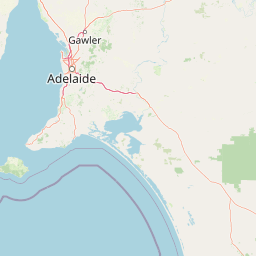
Bullock Hill Conservation Park is best known for protecting a stand of pink gum woodland in the rural countryside south of Adelaide, dominated by pink gums and cup gums with a strong acacia understory. The park also takes its name from the conspicuous 188-metre Bullock Hill that rises within its boundaries, which is the defining natural landmark around which the reserve was established. Although small, the park is notable for the way it consolidates a block of native eucalypt vegetation and associated grassland that had been identified for protection since the 1990s and was finally formally proclaimed as a conservation park in 2014. Its blend of woodland, grassy edge habitat, and resident western grey kangaroos gives it a recognisable character within the broader network of small reserves across southern South Australia.
Bullock Hill Conservation Park history and protected-area timeline
The land now comprising Bullock Hill Conservation Park had been earmarked for formal protection since at least the 1990s. The name adopted for the eventual reserve, derived from Bullock Hill, a prominent 188-metre hill within the area, was approved by the Surveyor General of South Australia on 11 March 1997, signalling the early recognition of this landscape as a feature worth protecting.
A 2011 brochure published by the Department of Environment and Natural Resources, several years before the park was formally established, described the land as a forest of pink gums and cup gums with an acacia-dominated understory and a grassy eastern edge, framing it as a candidate block of native vegetation worthy of inclusion in the state's protected-area system.
The park was ultimately proclaimed on 30 January 2014, bringing together land in Sections 2082 to 2084 and 2086 in the Hundred of Kondoparinga. On the same day, a separate proclamation was issued to preserve existing rights of entry, prospecting, exploration, or mining over the land, reflecting the layered rights and interests that had been associated with the area prior to its conservation designation. The reserve was placed under the management of what is now the Department of Environment and Water and classified as an IUCN Category III protected area.
Bullock Hill Conservation Park landscape and geographic character
The physical landscape of Bullock Hill Conservation Park is shaped by its namesake, Bullock Hill, a 188-metre rise that anchors the reserve and gives it its distinctive topographic identity. Surrounding the hill, the terrain transitions into a mix of eucalypt forest and a more open grassy margin along the park's eastern edge, where scattered blue gums rise above a grassland layer. The result is a gently undulating countryside typical of the southern foothills of the Mt Lofty Ranges and the broader Fleurieu region.
The cadastral setting of the park, within the Hundred of Kondoparinga, places it in a traditional South Australian land-division framework that reflects the long history of pastoral and agricultural settlement in this part of the state. Within that broader rural mosaic, the conservation park represents a retained pocket of native vegetation and topography, with Bullock Hill itself serving as the principal natural landmark and the woodland and grassland around it forming the wider setting of the reserve.
Bullock Hill Conservation Park ecosystems, habitats, and plant life
Bullock Hill Conservation Park protects a representative example of southern South Australian eucalypt woodland, dominated primarily by pink gums and cup gums. These canopy species form the backbone of the park's forest structure, while an understory dominated by acacia species contributes a dense mid-layer that is characteristic of many native vegetation remnants in this part of the state.
Along the eastern side of the reserve, the vegetation shifts into a more open grassland with scattered blue gums, creating a transitional habitat between closed forest and cleared agricultural land. This patchwork of canopy, understory, and grassy edge gives the park a degree of habitat complexity that supports both woodland-dependent and edge-tolerant species, reinforcing its ecological value even at a relatively small size.
Bullock Hill Conservation Park wildlife and species highlights
The wildlife profile of Bullock Hill Conservation Park centres on a resident population of western grey kangaroos, which are the most prominent large mammal associated with the reserve. Kangaroo presence is consistent with the mix of eucalypt forest and open grassy edges, which provide both shelter and forage.
The park's bird list, as noted on its official page, includes a mix of honeyeaters, insectivores, and shrikes typical of southern Australian eucalypt woodlands. Red wattlebirds and brown-headed honeyeaters are common nectar feeders in flowering gum woodland, while rainbow bee-eaters add a seasonal, aerial-hawking presence in more open areas. Black-faced cuckoo-shrikes and grey shrike-thrushes round out a community of mid-storey and canopy-foraging species that together reflect the broader south-eastern Australian woodland avifauna.
Bullock Hill Conservation Park conservation status and protection priorities
Bullock Hill Conservation Park contributes to the conservation of native eucalypt vegetation in a rural landscape south of Adelaide where significant clearing has occurred for agriculture. By formalising an area of pink gum and cup gum forest, together with its associated acacia understory and grassy eastern margin, the park helps maintain a block of habitat for species that depend on remnant woodland cover, including western grey kangaroos and a suite of woodland birds.
The park's IUCN Category III designation highlights the conservation significance of Bullock Hill itself as a natural feature, and the reserve's small footprint makes it a focused rather than landscape-scale protection unit. The history of the site, with the intent to protect it dating back to the 1990s and the name approved in 1997, underscores the role of long-term planning in securing these smaller blocks of native vegetation within South Australia's broader reserve system.
Bullock Hill Conservation Park cultural meaning and human context
The cultural setting of Bullock Hill Conservation Park is closely tied to the European-style agricultural settlement pattern of southern South Australia, with the park lying within the cadastral unit of the Hundred of Kondoparinga, a land division reflective of early colonial surveying and pastoral development. Its proximity to established rural communities such as Strathalbyn and Ashbourne places it within a landscape shaped by long-running grazing and farming activity.
The preservation of rights of entry, prospecting, exploration, or mining over the park land at the time of its 2014 proclamation reflects the broader tradition in South Australia of layering extractive and access rights alongside conservation status, an arrangement that carries its own cultural and legal significance for how the region's land has historically been used and contested.
Top sights and standout views in Bullock Hill Conservation Park
The standout feature of Bullock Hill Conservation Park is its 188-metre namesake hill, Bullock Hill, which defines both the park's geography and its legal identity as an IUCN Category III natural feature. The reserve also stands out for its pink gum and cup gum canopy, its acacia-dominated understory, and the open blue gum-scattered grassland that runs along its eastern edge.
Beyond its vegetation structure, the park is notable for the wildlife it supports within a small footprint, including western grey kangaroos and a recognisable suite of woodland bird species. The combination of a deliberately named landmark, a long period of protection planning from the 1990s through to its 2014 formal proclamation, and its position within a working agricultural landscape gives Bullock Hill Conservation Park a distinctive local identity among South Australia's smaller conservation reserves.
Best time to visit Bullock Hill Conservation Park
Bullock Hill Conservation Park is a year-round rural reserve, but spring and early summer tend to be especially rewarding for visitors interested in its birdlife and wildflowers, when many eucalypts and acacias are in bloom and woodland birds such as red wattlebirds and brown-headed honeyeaters are most active around flowering trees. Cooler, settled autumn and winter days can also offer calmer conditions for short walks, when the structure of the woodland and the prominence of Bullock Hill itself are easier to appreciate in softer, low-angle light.
Summer in southern South Australia can be hot and dry, and visitors planning a trip in that season should be prepared for warm conditions in this exposed rural setting. The park's mix of shaded forest and open grassy areas means that any season can provide a different perspective on its woodland character, and visitors with an interest in kangaroo sightings often find early morning and late afternoon the most productive times.