Why Chayu Nain Communal Reserve stands out
Chayu Nain is known above all for protecting one of the last strongholds of the yellow-tailed woolly monkey, an endangered primate endemic to a narrow Andean-Amazonian corridor in northern Peru and southern Ecuador. The reserve also conserves high-altitude shrublands and grasslands on sandstone formations of the Cordillera del Cóndor, a geological and ecological gradient between the Andes and the Amazon basin. It is equally recognized as a model of communal conservation, created at the request of local Awajun communities as part of Peru's framework for Indigenous-led protected areas. The reserve's profile combines threatened primates, the only Andean bear species in South America, lowland tapirs, unusual endemic marsupials, and a distinctive bird community associated with the sandstone ridges and forests that define the area.
Chayu Nain Communal Reserve history and protected-area timeline
The Chayu Nain Communal Reserve was officially established on December 9, 2009, through Supreme Decree No. 021-2009-MINAM, signed under Peru's Ministry of Environment. Its creation formalized decades of Indigenous presence and stewardship in the area by the Awajun, whose traditional lands include the forests and sandstone ridges now encompassed by the reserve.
The reserve joined Peru's National System of Natural Protected Areas as a communal reserve, a category that reflects the country's evolving approach to conservation. Communal reserves are typically created at the initiative of local communities and are intended to combine the protection of biodiversity with the recognition of Indigenous land use, traditional knowledge, and community governance structures. Chayu Nain's inclusion in this category marked a milestone in expanding Indigenous-led conservation in the Amazonas Region.
Since its creation, the reserve has been administered by SERNANP, Peru's national service for natural protected areas, in coordination with the local Awajun communities. The protected-area status has helped consolidate attention on the area's threatened primates and other endemic species, while reinforcing local claims to traditional territory in a region where Andean and Amazonian ecosystems meet.
Chayu Nain Communal Reserve landscape and geographic character
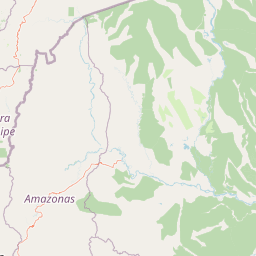
The terrain of Chayu Nain is defined by the eastern flank of the Cordillera del Cóndor, a mountain range that forms part of the Andes-Amazon transition in northern Peru. Sandstone is a dominant geological feature, producing ridges, cliffs, and dissected plateaus that shape both the scenery and the drainage patterns of the reserve. These formations create abrupt transitions between high-elevation open habitats and steep forested slopes.
Above the forest line, the landscape includes high-altitude shrublands and grasslands growing on shallow soils over sandstone. These open habitats are interspersed with patches of stunted vegetation adapted to rocky substrates, and they contrast sharply with the dense evergreen forests found at lower elevations. Together, the elevation gradients and geological structure create a layered landscape in which Andean and Amazonian environments meet within a single protected area.
Below the sandstone ridges, the reserve extends into the upper tributaries of the Marañón river basin. Forest cover here is dense, and the terrain becomes more broken as streams cut through valleys between the ridges. The combination of rivers, valleys, sandstone walls, and high-elevation open country makes Chayu Nain a visually distinctive and ecologically varied protected area.
Chayu Nain Communal Reserve ecosystems, habitats, and plant life
The reserve protects a stratified set of ecosystems along the Andes-Amazon transition. At higher elevations, sandstone scrublands and grasslands host plant communities adapted to thin soils, cool temperatures, and high exposure. Moving downslope, vegetation shifts into montane and cloud-forest formations, eventually giving way to lowland tropical forest in the valleys and along the river systems that drain the reserve toward the Marañón basin.
This gradient allows Andean, sub-Andean, and Amazonian species to coexist in relatively close proximity. The high-altitude shrublands and grasslands of the sandstone plateaus support hardy vegetation specialized for rocky terrain, while the forested slopes below provide habitat for larger mammals and dense populations of trees and epiphytes. The mosaic of habitats is one of the defining ecological features of Chayu Nain and explains why the area harbors both cloud-forest and lowland-forest species.
The reserve's biodiversity is enhanced by its position along the Cordillera del Cóndor, a range known for endemic species tied to its sandstone geology. The combination of unusual substrates, altitudinal range, and relatively intact forest cover gives Chayu Nain a strong role within Peru's broader network of Andean-Amazon protected areas.
Chayu Nain Communal Reserve wildlife and species highlights
Chayu Nain is most strongly associated with the yellow-tailed woolly monkey, an endangered primate that survives in only a handful of Andean-Amazonian forests in northern Peru and southern Ecuador. The reserve is considered one of the important refuges for this species, which depends on primary forest along the eastern Andean slopes. Its presence is a central reason the area has received protected status and conservation attention.
The reserve also supports the spectacled bear, the only bear species in South America, which ranges across the upper elevations of the Cordillera del Cóndor and into the forested slopes. The South American tapir, a large browsing mammal associated with well-preserved forest, is also recorded in Chayu Nain, highlighting the presence of wide-ranging mammals that depend on extensive tracts of intact habitat. Birdlife in the reserve includes species tied to the sandstone ridges and humid forests, contributing to the region's growing profile for ornithology.
A particularly notable wildlife feature is the record of Caenolestes condorensis, an endemic marsupial described from the Cordillera del Cóndor. Its presence underlines the scientific importance of the reserve's high-elevation habitats and supports the recognition of the Cordillera del Cóndor as a center of endemism for small mammals as well as primates.
Chayu Nain Communal Reserve conservation status and protection priorities
Chayu Nain contributes to the protection of a recognized biodiversity corridor between the Andes and the Amazon, an interface consistently highlighted as a conservation priority in northern Peru. By encompassing a continuous gradient from sandstone highlands through cloud forest to lowland forest, the reserve buffers multiple ecosystems against the fragmentation pressures affecting the surrounding landscape. Its protected status places large tracts of the Cordillera del Cóndor under formal conservation management for the long term.
The reserve is also significant for threatened species conservation. The protection of remaining populations of the yellow-tailed woolly monkey, the maintenance of habitat for spectacled bears and tapirs, and the safeguarding of endemic species tied to the Cordillera del Cóndor's sandstone formations all give the area an outsized conservation value relative to its size. The presence of recently described endemic species suggests that further undocumented biodiversity may yet be found within the reserve.
Its IUCN Category VI status reflects the role of the Awajun communities and other local inhabitants as partners in conservation. By recognizing traditional land use alongside biodiversity protection, the reserve exemplifies an approach in which Indigenous stewardship and formal protection reinforce each other. Administered by SERNANP, Chayu Nain is part of the national strategy for protecting the country's distinctive Andean-Amazonian ecosystems and the species that depend on them.
Chayu Nain Communal Reserve cultural meaning and human context
Chayu Nain takes its name and character from the Awajun, an Indigenous people whose territories stretch across the forests and foothills of the Cordillera del Cóndor in northern Peru. The creation of the reserve at their request reflects a long-standing relationship between Awajun communities and the land it protects. Traditional knowledge of forest resources, hunting grounds, and sacred areas is closely tied to the geography of the reserve.
Communal reserves in Peru are designed to recognize the role of Indigenous and local communities in maintaining biodiversity through sustainable use of forest products, traditional management practices, and cultural continuity. Chayu Nain operates within this framework, and the cultural identity of the Awajun is woven into the reserve's purpose and governance. The combination of cultural heritage and ecological protection is one of the defining features of the protected area.
Top sights and standout views in Chayu Nain Communal Reserve
Chayu Nain protects a near-continuous Andean-Amazon gradient of more than 23,500 hectares along the eastern flank of the Cordillera del Cóndor. Its sandstone ridges, shrublands, cloud forests, and lowland forests support a level of ecological diversity that is rare within a single accessible protected area. The reserve is a recognized refuge for the endangered yellow-tailed woolly monkey and continues to produce significant records of endemic species, including marsupials unique to the Cordillera del Cóndor.
The reserve's character is shaped by its Awajun-led governance and its IUCN Category VI status, which together make it an important example of community-based conservation in Peru. The mix of threatened primates, Andean bears, lowland tapirs, and unusual endemic wildlife places Chayu Nain among the more distinctive protected areas in the country's northern Andean-Amazonian corridor.
Best time to visit Chayu Nain Communal Reserve
The climate of northern Peru's Andean-Amazon transition influences both the atmosphere and accessibility of Chayu Nain. The region has a markedly wet and dry seasonal pattern, with the dry months generally offering more stable conditions for traveling through forested terrain and along rural roads, while the wetter months bring heavy rainfall that can complicate trail travel and increase river levels. Cooler, clearer conditions often occur at higher elevations along the sandstone ridges during the dry season.
Wildlife observation tends to benefit from periods when fruiting trees support key species such as primates and birds, and from quieter forest conditions in the early dry months. Visitors focused on the area's endemic fauna and on experiencing the landscape in its more open, less rainy configuration generally find the dry season more suitable, while the wetter months emphasize the lush, fog-laden character of the cloud forests.