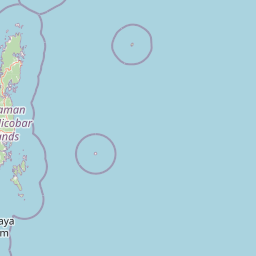
Why Cuthbert Bay Wildlife Sanctuary stands out
Cuthbert Bay Wildlife Sanctuary is best known as one of the most important sea turtle nesting sites in the Andaman and Nicobar Islands. Each year, hundreds of marine turtles arrive at its beaches to lay their eggs, including Olive Ridley, Leatherback, and Green sea turtles. This concentrated annual nesting activity, combined with the sanctuary's comparatively small area, gives the reserve an outsized ecological importance relative to its size. Beyond the nesting beaches, the sanctuary is recognised for the broader coastal habitat mosaic it protects on the eastern side of Middle Andaman. Forest patches, shoreline vegetation, and surrounding terrestrial environments support additional wildlife such as spotted deer, birds, and butterflies, making the reserve a small but ecologically diverse refuge along the Andaman coast.
Cuthbert Bay Wildlife Sanctuary history and protected-area timeline
Cuthbert Bay Wildlife Sanctuary was formally established in 1997, creating an officially protected coastal reserve along the eastern shore of the Middle Andaman Islands. The sanctuary was designated as part of the broader Indian framework for wildlife sanctuaries administered within the Andaman and Nicobar Islands, and it was later classified under IUCN Category IV as a habitat and species management area.
The reserve's establishment reflected growing recognition of the ecological importance of the Andaman coastline for marine turtles, particularly as nesting pressures and coastal development elsewhere in the region increased concerns about habitat loss. Designating Cuthbert Bay as a sanctuary provided a basic legal and administrative framework for protecting the nesting beaches and their immediate surroundings from activities that could disrupt nesting activity or degrade coastal habitat. Since its founding, the sanctuary has continued to function as a dedicated refuge for marine turtle nesting rather than evolving toward a larger or differently mandated protected area.
Cuthbert Bay Wildlife Sanctuary landscape and geographic character
The landscape of Cuthbert Bay Wildlife Sanctuary is defined primarily by its coastal setting along the eastern shore of Middle Andaman Island. The terrain is low-lying and shoreline-focused, with sandy nesting beaches forming the core physical feature of the reserve. Behind the beaches, the land rises gently into coastal forest and vegetation, transitioning from open sand to denser plant cover over a relatively short distance.
The sanctuary stretches across roughly 5.8 square kilometres, making it a compact protected area. Despite the small extent, the combination of open beach, dune or strand vegetation, and inland forest patches creates a layered coastal landscape. The eastern exposure of the bay places the sanctuary in direct contact with open sea, and the beach profile is the key landform that determines where marine turtles can nest successfully each season.
Surrounding the protected area, the broader Middle Andaman landscape is characterised by tropical island terrain typical of the Andaman chain, with forested interior regions and a coastline shaped by bays and headlands. Within this setting, Cuthbert Bay represents one of the specific coastal pockets that has been set aside to maintain natural beach processes and habitat continuity.
Cuthbert Bay Wildlife Sanctuary ecosystems, habitats, and plant life
The sanctuary's ecological character is built around the interface between marine and terrestrial environments. Sandy beaches and the adjacent shoreline zone provide the nesting habitat that defines the reserve's most important ecological function, while the inland vegetation supplies cover and foraging habitat for the terrestrial species that also live within the protected area.
Coastal flora along the eastern Andaman shoreline typically includes salt-tolerant and beach-adapted plant communities that thrive in sandy, sun-exposed conditions. Moving slightly inland from the beach, vegetation shifts toward denser tropical growth, supporting a more shaded understorey and offering habitat structure for non-marine wildlife such as deer, birds, and insects. This zonation, from open beach to forest edge, creates the habitat mosaic on which the sanctuary's broader biodiversity depends.
The reserve's marine and coastal ecosystems are especially important for seasonal reproductive activity, as the beaches serve as a recurrent nesting destination for marine turtles. The presence of multiple turtle species using the same general coastline indicates that the bay offers the right combination of sand quality, slope, and reduced disturbance for successful nesting over multiple breeding cycles.
Cuthbert Bay Wildlife Sanctuary wildlife and species highlights
Wildlife in Cuthbert Bay Wildlife Sanctuary is centred on marine turtles, which are the headline fauna of the reserve. The sanctuary supports nesting populations of three species that regularly visit the Andaman and Nicobar Islands: the Olive Ridley turtle, the Leatherback turtle, and the Green sea turtle. Each year, hundreds of turtles come ashore to lay their eggs, making the sanctuary one of the most active turtle nesting areas in the archipelago.
Alongside the marine turtle activity, the reserve also hosts terrestrial wildlife associated with the forests and coastal scrub inland from the beach. Spotted deer are present within the sanctuary, adding a notable mammal presence to a reserve that is otherwise dominated by shoreline habitat. The combination of coastal and forested environments also sustains a variety of birdlife, including resident and possibly migratory species that use the shoreline and adjacent vegetation for feeding and shelter.
Butterflies are also reported from the sanctuary, reflecting the broader insect diversity typical of tropical island habitats in the Andamans. While the turtle nesting activity is the most ecologically significant phenomenon, the presence of deer, birds, and butterflies gives the sanctuary a more varied faunal profile than its small size and coastal focus might suggest.
Cuthbert Bay Wildlife Sanctuary conservation status and protection priorities
Cuthbert Bay Wildlife Sanctuary holds a clearly targeted conservation role focused on protecting marine turtle nesting habitat along the eastern coast of Middle Andaman. By safeguarding a stretch of beach and its immediate hinterland from activities that could disturb nesting turtles or degrade nesting habitat, the reserve helps maintain the reproductive cycle of multiple sea turtle species, including the Olive Ridley, Leatherback, and Green sea turtle.
The sanctuary's IUCN Category IV designation underscores its management intent as a habitat and species management area. Rather than attempting to preserve an entire large-scale ecosystem, the reserve is structured around the conservation of specific habitats and species, with nesting beaches and coastal vegetation as the primary conservation targets. This targeted approach is particularly relevant in the Andaman context, where coastal development, tourism pressure, and habitat fragmentation elsewhere in the region pose ongoing risks to nesting sites.
As one of several recognised wildlife sanctuaries in the Andaman and Nicobar Islands, Cuthbert Bay also contributes to a wider island conservation network. Even at a modest 5.8 square kilometres, the reserve plays a meaningful role in keeping critical nesting habitat intact and in supporting the broader biodiversity of the Middle Andaman coastline, including its populations of spotted deer, resident birds, and butterflies.
Cuthbert Bay Wildlife Sanctuary cultural meaning and human context
Cuthbert Bay lies within the Andaman and Nicobar Islands, a region historically associated with indigenous communities such as the various Andamanese groups, as well as later settler populations from the Indian mainland. The eastern coast of Middle Andaman, where the sanctuary is situated, sits within this broader cultural and administrative landscape of the islands. However, the available source material does not provide specific cultural or community details directly tied to the sanctuary itself, so deeper cultural context beyond its regional island setting is not strongly supported.
Top sights and standout views in Cuthbert Bay Wildlife Sanctuary
Cuthbert Bay Wildlife Sanctuary stands out for the concentration of marine turtle nesting activity along a relatively small stretch of protected beach. The presence of three turtle species: Olive Ridley, Leatherback, and Green sea turtle: and the annual arrival of hundreds of nesting females give the reserve a distinctive identity among Andaman protected areas.
Beyond its nesting beaches, the sanctuary offers a layered coastal habitat that supports spotted deer, birds, and butterflies, providing visitors and conservationists with a compact but biologically varied destination. Its location on the eastern coast of Middle Andaman also places it within easy reach of other parts of the central Andaman Islands, reinforcing its role as a small but ecologically significant waypoint along the archipelago.
Best time to visit Cuthbert Bay Wildlife Sanctuary
The most meaningful time to consider Cuthbert Bay Wildlife Sanctuary is during the marine turtle nesting season on the Andaman coast, when hundreds of turtles come ashore to lay their eggs across the sanctuary's beaches. This seasonal nesting activity defines the reserve's ecological character and the period of greatest interest for visitors seeking to observe nesting behaviour.
Outside of the nesting season, the sanctuary's coastal forest, inland vegetation, and surrounding shoreline still support populations of spotted deer, birds, and butterflies, making any tropical-season visit suitable for general nature interest. Because specific operational or month-by-month access details are not documented in the available sources, seasonal guidance is best framed around the natural rhythm of turtle nesting rather than travel logistics.