Mori Atlas logo
Nature reserveDąbrowa Radziejowska Nature Reserve

A detailed geographic look at forest boundaries and botanical ecosystems within the Masovian Voivodeship.

Dąbrowa Radziejowska Nature Reserve: Mapping the Protected Light Oakwood Landscapes of Mazovia

The Dąbrowa Radziejowska Nature Reserve represents a critical protected landscape in the Masovian Voivodeship of central Poland. This forest entity preserves a rare example of light oakwood, where sparse canopy structures allow sunlight to foster diverse protected plant communities across the herb layer. By integrating into the broader Radziejowice Forest complex, the reserve serves as a vital ecological anchor within the regional terrain.

forest reservelight oakwoodoak woodlandprotected floraMasovian Voivodeshiplowland forest

Dąbrowa Radziejowska Nature Reserve

Nature reserve

Park overview

Structured park overview, official facts, and landscape profile for Dąbrowa Radziejowska Nature Reserve

Dąbrowa Radziejowska Nature Reserve park facts, protected area profile, and essential visitor context

Review the core facts for Dąbrowa Radziejowska Nature Reserve, including designation, size, terrain, visitor scale, habitats, and operating context in one park-focused overview.

About Dąbrowa Radziejowska Nature Reserve

Dąbrowa Radziejowska Nature Reserve is a compact forest reserve in central Poland, set within the larger Radziejowice Forest complex in the Masovian Voivodeship. Although modest in size, the reserve plays an important role in safeguarding one of Poland's characteristic but increasingly uncommon woodland types: the light oakwood, known in Polish as dąbrowa świetlista. Its loose tree canopy and sparse understory allow sunlight to reach the forest floor, shaping the ecological identity of the site and giving rise to a layered community of flowering plants that thrives in dappled light rather than deep shade.

The reserve sits within Gmina Radziejowice, a region that combines agricultural land, historic estates, and valuable forest patches. Its inclusion in the Bolimów-Radziejowice with the Middle Rawka Valley Protected Landscape Area places it inside a broader network of landscape-level protections in central Poland. This regional context matters: the reserve is not an isolated fragment but rather a carefully chosen example of a habitat type that the surrounding landscape has historically supported.

Since 1984, the reserve has been subject to active conservation management, meaning that the responsible authority not only restricts activities within its boundaries but also takes deliberate steps to maintain or restore favorable conditions. This approach is well matched to the light oakwood's ecological needs, which depend on a delicate balance between canopy openness, soil conditions, and disturbance-sensitive ground flora.

For visitors, the reserve is closely tied to its surrounding landscape. A black-marked hiking trail connects it to nearby settlements at Międzyborów and Radziejowice, allowing for short, easy walks through the woodland during spring and early summer when the herb layer is at its most striking. Although the reserve itself is relatively small, the combination of habitat specificity, protected species, and a well-defined trail network gives it a focused and memorable character.

Quick facts and research context for Dąbrowa Radziejowska Nature Reserve

Dąbrowa Radziejowska was established in 1984 under Polish legal notice M.P. of 1984, No. 17, item 125. It is designated as a forest nature reserve (rezerwat leśny) covering roughly 51.71 hectares in Gmina Radziejowice, Żyrardów County, Masovian Voivodeship. The reserve is administered under active protection (ochrona czynna) and lies within the Bolimów-Radziejowice with the Middle Rawka Valley Protected Landscape Area.

Protection and recognition

Terrestrial protected area designation details and formal conservation records

Dąbrowa Radziejowska Nature Reserve Protection Status and Governance Data

Dąbrowa Radziejowska Nature Reserve maintains a documented terrestrial protection scope within official conservation inventories. Structured records assemble verified management parameters and designated area attributes for systematic geographic analysis.

Protection details

Protection scope
Terrestrial
Park context

Deeper park guide and search-rich context for Dąbrowa Radziejowska Nature Reserve

Dąbrowa Radziejowska Nature Reserve history, landscape, wildlife, and travel context

Explore Dąbrowa Radziejowska Nature Reserve through its history, landscape character, ecosystems, wildlife, conservation priorities, cultural context, and seasonal travel timing in a structured park guide built for atlas discovery and search intent.

Why Dąbrowa Radziejowska Nature Reserve stands out

The reserve is best known for protecting a rare example of light oak woodland (dąbrowa świetlista), a habitat type where light penetrates a sparse canopy of oak, birch, and aspen to reach a diverse, partly protected herb layer. The presence of species such as martagon lily, lily of the valley, and narrow-leaved lungwort gives the reserve a notable botanical interest well beyond its small size.
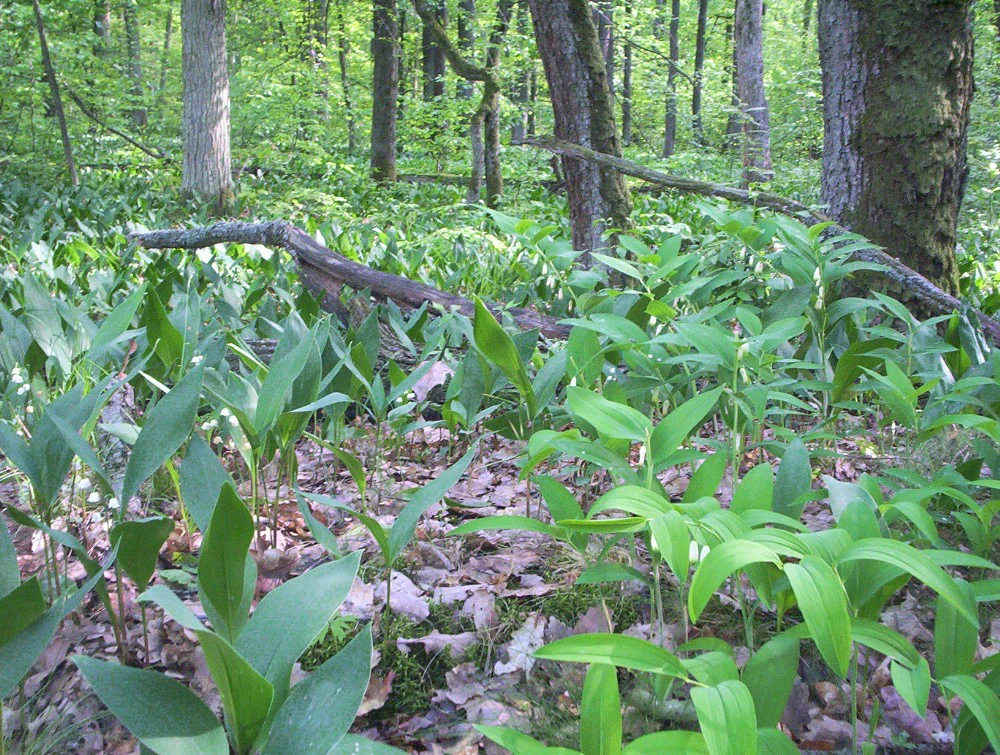
A close up view of a forest floor densely covered in green, leafy plants with small white bell shaped flowers, under a canopy of deciduous trees.
Forest floor vegetation featuring lily of the valley within Dąbrowa Radziejowska Nature Reserve.

Dąbrowa Radziejowska Nature Reserve history and protected-area timeline

Dąbrowa Radziejowska was officially established as a nature reserve in 1984. Its designation was formalized through Polish legal notice M.P. z 1984 r. Nr 17, poz. 125, issued under the legal provisions in force in Poland at that time. The reserve's founding reflected growing scientific and conservation recognition of the dąbrowa świetlista habitat type and the protected plant species found within its herb layer.

The reserve has been managed under an active protection regime (ochrona czynna), indicating that its administration involves ongoing interventions rather than purely passive restrictions. While the surrounding Radziejowice Forest complex has a longer history of use and ownership changes typical of Masovian woodlands, the reserve's designated boundaries and management approach have remained anchored to its 1984 purpose: preserving a representative example of light oak woodland within the broader Mazovian landscape.

Dąbrowa Radziejowska Nature Reserve landscape and geographic character

The reserve's landscape is defined by the gentle, lowland character of central Poland. The terrain is largely flat to gently undulating, typical of the Masovian Plain, with elevations and landforms that fall within the broader Radziejowice Forest landscape.

The defining visual and ecological feature of the site is its light oakwood structure. Rather than forming a dense, shady forest, the oak-dominated canopy contains gaps that flood the understory with light. The forest therefore feels more open than many of Poland's woodlands, with bright patches on the forest floor and clearly visible individual tree trunks.

The reserve lies within a wider forested landscape near Radziejowice, and its boundaries blend into broader woodland tracts and rural surroundings of the Bolimów-Radziejowice Protected Landscape Area. Streams and small valleys typical of the Middle Rawka catchment influence the regional setting, though the reserve itself is firmly a forest rather than a wetland or river habitat.

Dąbrowa Radziejowska Nature Reserve ecosystems, habitats, and plant life

Ecologically, Dąbrowa Radziejowska is defined by its light oakwood community in which oak (dąb) is the principal tree species, accompanied by birch and aspen. This mixture produces a sparse upper canopy; the understory layer is also poorly developed, leaving much of the light to reach the forest floor. The result is an unusual forest interior where the herb layer, not the shrub layer, dominates seasonal interest.

The understory includes rowan, wild pear, common hawthorn, Midland hawthorn, black buckthorn, common barberry, and blackthorn, contributing to a species-rich shrub community along the reserve's edges and in openings. Meanwhile, the forest floor supports numerous flowering plants typical of light oakwoods, including martagon lily, lily of the valley, white cinquefoil, narrow-leaved lungwort, peach-leaved bellflower, salad burnet, and broad-leaved astragalus. Several of these species have protected status in Poland, which is precisely why the reserve was created.

At a regional scale, the reserve contributes to the habitat mosaic of the Bolimów-Radziejowice with the Middle Rawka Valley Protected Landscape Area, where forests, agricultural land, and riparian corridors together support a diverse array of plant communities. Within this wider context, the light oakwood is an ecologically specialized fragment whose preservation adds resilience and diversity to the broader landscape.

Dąbrowa Radziejowska Nature Reserve wildlife and species highlights

The source material for Dąbrowa Radziejowska focuses primarily on its botanical communities, and there is no detailed treatment of fauna. That said, the structure of the woodland offers some useful ecological context. The open, light-filled character of the canopy, the presence of berry-bearing shrubs such as hawthorn, blackthorn, and rowan, and the diverse herb layer create a habitat mosaic that supports common woodland invertebrates, songbirds typical of mixed lowland forests, and small mammals associated with forest edge and understory habitats in the Masovian region.

Because the reserve sits within a larger protected landscape area that includes riparian habitats along the Middle Rawka, the wider landscape provides additional wildlife value beyond the reserve's boundaries. Within the reserve itself, however, the documented wildlife image is botanically driven rather than faunally driven.

Dąbrowa Radziejowska Nature Reserve conservation status and protection priorities

Dąbrowa Radziejowska's conservation value lies in its faithful representation of a specific, ecologically specialized habitat: light oakwood with protected herb-layer species. Reserves created explicitly for dąbrowa świetlista communities are important because this habitat type has been historically threatened by canopy closure, changes in land use, and the gradual loss of traditional woodland management patterns across central Europe.

By designating this site and managing it under active conservation, Polish authorities have committed to maintaining the conditions that allow the light-demanding herb layer to persist. The reserve also contributes to the integrity of the broader Bolimów-Radziejowice with the Middle Rawka Valley Protected Landscape Area, reinforcing a layered network of protections that combines landscape-level and site-level measures.

Dąbrowa Radziejowska Nature Reserve cultural meaning and human context

The reserve sits within the cultural landscape of Gmina Radziejowice, an area historically associated with the Radziejowice Palace and estate, regarded as an important example of Polish nobility architecture and landscape design. While the reserve itself is defined by ecological rather than cultural criteria, its location in a region with aristocratic estates, historic villages, and established tourist routes ties it to a broader cultural geography of the Mazovian lowlands.

Top sights and standout views in Dąbrowa Radziejowska Nature Reserve

The principal highlight of Dąbrowa Radziejowska is the reserve's ecologically distinctive light oakwood, where a sparse oak-birch-aspen canopy allows light to penetrate to a species-rich herb layer. Visiting in late spring or early summer reveals flowering species such as martagon lily and lily of the valley. The relatively compact area, its integration into the larger Radziejowice Forest complex, and its position within a broader protected landscape area all reinforce its significance as a small but focused biodiversity site.

Best time to visit Dąbrowa Radziejowska Nature Reserve

Late spring and early summer are the most rewarding periods to experience Dąbrowa Radziejowska. During this window, the herb layer is at its most expressive, with species like lily of the valley and martagon lily often in bloom and the open canopy conditions fully visible. Autumn also offers a quieter, more subdued experience of the light oakwood, with seasonal color in the broadleaf canopy. Winter visits are workable for those interested in forest structure rather than flora but should be approached with awareness of shorter daylight hours in central Poland.

Monthly climate preview

Long term temperature and precipitation normals sampled at a representative coordinate

Dabrowa Radziejowska Nature Reserve Climate and Average Monthly Temperature Patterns

Representative coordinate records show average monthly temperatures ranging from sub-zero winter minimums to warm summer maximums alongside steady daily precipitation rates. Examining the full twelve month profile reveals detailed climate normals for Dabrowa Radziejowska Nature Reserve across every season.
Annual mean8 °C
-3 °C20 °C
Jan-3°
Feb-2°
Mar
Apr
May14°
Jun18°
Jul20°
Aug20°
Sep14°
Oct
Nov
Dec-2°
Warmest month
July

20.2 °C

Coolest month
January

-3.5 °C

Wettest month
July

2.5 mm/day

Driest month
March

1.3 mm/day

Park location guide

Geography guide, regional context, and park location map for Dąbrowa Radziejowska Nature Reserve

Dąbrowa Radziejowska Nature Reserve park geography, regions, and map view in Poland

Understand where Dąbrowa Radziejowska Nature Reserve sits in Poland through a broader geographic reading of the surrounding landscape, nearby location context, and its mapped position within the national park landscape.

How Dąbrowa Radziejowska Nature Reserve fits into Poland

Poland, officially the Republic of Poland, is a Central European country spanning from the Baltic Sea in the north to the Carpathian Mountains in the south. It borders Germany, Czech Republic, Slovakia, Ukraine, Belarus, Lithuania, and Kaliningrad Oblast. The country has a temperate climate, diverse landscapes, and is known for its rich history, cultural heritage, and strong economic position within the EU.

Wider geography shaping Dąbrowa Radziejowska Nature Reserve in Poland

Poland occupies 312,696 km2 in Central Europe, extending from the Baltic Sea coast in the north to the Sudetes and Carpathian Mountains in the south. It borders Germany to the west, Czech Republic and Slovakia to the south, Ukraine and Belarus to the east, and Lithuania and Kaliningrad Oblast to the northeast. The landscape includes lowland plains, uplands, and mountain ranges.

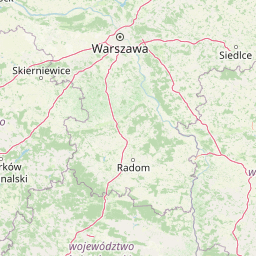
Map view of Dąbrowa Radziejowska Nature Reserve

Use this park location map to pinpoint Dąbrowa Radziejowska Nature Reserve in Poland, understand its exact geographic position, and read its mapped placement within the surrounding landscape more clearly.

Pigeon | © OpenStreetMap contributors

Location context for Dąbrowa Radziejowska Nature Reserve

Masovian Voivodeship

Visual exploration of light oak woodland habitats and lowland forest terrain in central Poland

Dąbrowa Radziejowska Nature Reserve Photos, Landscape, and Scenery Views

Visual records illustrate the rare light oak woodland structure and sparse canopy characteristic of Dąbrowa Radziejowska Nature Reserve. Examining these park photographs reveals the open forest floor habitats and lowland terrain that define the protected area.

A close up view of a forest floor densely covered in green, leafy plants with small white bell shaped flowers, under a canopy of deciduous trees.

A view inside a lush, green deciduous forest with tall tree trunks and a forest floor densely covered in low-lying green plants.

Park atlas

Compare adjacent forest reserves and lowland woodlands across the Masovian landscape

Parks near Dąbrowa Radziejowska Nature Reserve and Surrounding Protected Areas

Browsing other protected areas near Dąbrowa Radziejowska Nature Reserve reveals wider woodland habitats and connected lowland ecosystems across central Poland. Regional park comparison provides essential context for understanding botanical diversity and woodland management in the Masovian Plain.
Watercolor painting of a meandering river landscape with gentle hills, light green foliage in the foreground, and soft washes of color.
Protected landscapeLodz Voivodeship
About 9.8 km away#1 closest

West

Bolimowski Park Krajobrazowy: Geography of a Central Polish Protected Landscape Area

Rawka River valley mapping and Puszcza Bolimowska forest terrain

Bolimowski Park Krajobrazowy encompasses a unique mosaic of postglacial plains and riverine ecosystems in central Poland. The area is defined by the Rawka River, which forms a network of meanders, oxbow lakes, and terraces, while surrounding forests retain historical links to the vast primeval woods of Puszcza Bolimowska. This protected territory offers a significant habitat for diverse wildlife, including moose and beaver, within a landscape characterized by its shifting transition between deep forest, wet meadows, and light oak groves.

Area
205.123 km²
Established
1986
Relief
Lowland
Climate
Temperate
Nature reserveMasovian Voivodeship
About 16 km away#2 closest

East

Młochowski Łęg Nature Reserve: Mapping Floodplain Forests in Masovian Voivodeship

A protected wetland woodland sanctuary along the Utrata River.

Located within the flat terrain of the Łowicz-Błonie Plain, this nature reserve conserves a representative ash-alder floodplain forest. The site serves as a vital wetland woodland refugium, featuring a complex mosaic of riparian vegetation that highlights the regional ecological character of central Poland's river valleys.

Area
0.12 km²
Established
1984
Relief
Lowland
Climate
Temperate
Nature reserveMasovian Voivodeship
About 16 km away#3 closest

East

Rezerwat przyrody Młochowski Grąd: Protected Forest Geography and Nature Reserve Map

Mapping lowland woodland communities in Masovian Voivodeship

Rezerwat przyrody Młochowski Grąd preserves a representative fragment of natural oak and pine forest within the flat plains of central Poland. Discover the ecological layout of this protected area, including its grąd deciduous communities and its role as a reference site for forest research in the Masovian Voivodeship landscape.

Area
0.27 km²
Established
1983
Relief
Lowland
Climate
Temperate
Nature reserveMasovian Voivodeship
About 26 km away#4 closest

Southeast

Modrzewina Nature Reserve: Geographic Analysis of a Protected Polish Larch Forest

Protected forest landscape in the Masovian Voivodeship, Poland

Gain insights into the geographic and ecological structure of Modrzewina Nature Reserve. This protected area on the Wysoczyzna Rawska plateau serves as a critical site for the Polish larch, offering a unique window into the natural history and morainic terrain of central Poland.

Area
3.322 km²
Established
1959
Relief
Upland
Climate
Temperate
Protected areaLodzkie Voivodeship
About 27 km away#5 closest

West

Polany Puszczy Bolimowskiej: Protected Meadow Enclaves within the Lodzkie Voivodeship Landscape

Mapped meadow clearings and wetland habitat geography

Polany Puszczy Bolimowskiej serves as a critical protected area in central Poland, encompassing a series of connected meadow clearings within the Bolimów Forest. This site preserves rare Molinion wet meadows and tall herb floodplains, offering a distinct study of how open habitats persist in a forest-dominated matrix.

Area
1.341 km²
Relief
Lowland
Water
Minor water
National parkMasovian Voivodeship
About 27 km away#6 closest

North

Kampinos National Park: Geographic Profile and Protected Forest Landscape Map

Inland dune formations and wetland habitats in Masovian Voivodeship

The expansive woodland of Kampinos National Park represents a critical protected area in Poland, characterized by its parabolic sand dunes and low-lying marshes. Gain insights into the geomorphological features of this UNESCO biosphere reserve and trace the complex hydrological network that defines its unique forest environment.

Area
385.44 km²
Established
1959
IUCN
II
Relief
Lowland
A soft watercolor illustration of a marshy landscape with low rolling hills, scattered trees, and a winding stream, rendered in light green and yellow tones on a white background.
National parkMasovian Voivodeship
About 27 km away#7 closest

North

Kampinoski Park Narodowy: Mapping the Inland Dune and Wetland Landscapes of Central Poland

A vital protected area in Masovian Voivodeship

The landscape of Kampinoski Park Narodowy is defined by the Grochalskie Piachy dune complex and diverse riparian habitats. This atlas entry covers the geological history and protected boundaries of this significant lowland forest, tracing the Vistula river valley's influence on the surrounding terrain and ecological character.

Area
385.443 km²
Established
1959
Visitors
1M annual
Relief
Lowland
Protected landscapeMasovian Voivodeship
About 39 km away#8 closest

East

Chojnowski Park Krajobrazowy: Atlas of Protected Landscapes and Forested Terrain

Geographic overview of the Masovian Voivodeship forest belt

Investigate the topographical complexity of Chojnowski Park Krajobrazowy, where flat glacial plains meet the dramatic Vistula escarpment. This protected area offers detailed mapping of forest stands, aquatic habitats, and riparian zones within the Masovian landscape, providing an essential look at the ecological connectivity of the region south of Warsaw.

Area
67.96 km²
Established
1993
Relief
Lowland
Climate
Temperate

Common questions about visiting, size, designation, and location context for Dąbrowa Radziejowska Nature Reserve

Dąbrowa Radziejowska Nature Reserve FAQs for park facts, access, geography, and protected area context

Find quick answers about Dąbrowa Radziejowska Nature Reserve, including protected-area facts, park geography, trail and visitor context, and how the park fits into its surrounding country and regional landscape.
MoriAtlas Explorer

Continue Your Protected Areas Search Across the Global Atlas

Deepen your exploration by continuing the structured search for national parks and protected areas worldwide. Utilize the comprehensive filtering capabilities to compare different conservation landscapes and refine your understanding of global park geography. Discover more about the distribution and characteristics of protected natural areas.

Global natural geography