

Mori Atlas logo
National parkDavies Creek National Park

Mapping the protected boundaries and regional geography of this Queensland National Park.

Davies Creek National Park: Protected Landscape in Queensland, Australia

Davies Creek National Park represents a distinct protected landscape within the diverse geography of Queensland, Australia. As a designated National Park, it offers a clear point of geographic discovery for understanding regional conservation efforts and mapped natural terrain. This page serves as the atlas entry for Davies Creek National Park, providing essential context for its protected-area identity and its location within the broader landscape of northeastern Australia.

WaterfallGranite landscapesEndangered species habitatAtherton TablelandWet TropicsEucalypt woodland
Waterfall flowing over rocky cliffs surrounded by dense green trees and foliage

Davies Creek National Park

National park

Park overview

Structured park overview, official facts, and landscape profile for Davies Creek National Park

Davies Creek National Park park facts, protected area profile, and essential visitor context
Review the core facts for Davies Creek National Park, including designation, size, terrain, visitor scale, habitats, and operating context in one park-focused overview.

About Davies Creek National Park

Davies Creek National Park occupies a distinctive position in Queensland's protected area network, protecting a landscape of unusual geological character within the Wet Tropics bioregion. The park's terrain is dominated by exposed granite domes and boulders that rise abruptly from the surrounding terrain, creating a landscape more reminiscent of temperate rock habitats than the typical tropical forests of Far North Queensland. These granite outcrops support specialized plant communities adapted to the nutrient-poor, free-draining substrates, while also providing sheltered microhabitats for wildlife. The Davies Creek corridor, with its waterfall and adjacent woodlands, forms the ecological heart of the park, offering both aquatic habitat and riparian vegetation that contrasts with the surrounding eucalypt woodland. The park's location on the Atherton Tableland places it at an elevation that supports species from both tropical and temperate origins, creating an ecological混合 of significance for researchers and conservation planners. Water from Davies Creek eventually flows into the Barron River, connecting the park's protected catchment to the broader hydrological system of Far North Queensland. The Queensland Parks and Wildlife Service manages the area with a focus on protecting the endangered northern bettong population while providing sustainable recreation opportunities for visitors seeking to experience this unique landscape.

Quick facts and research context for Davies Creek National Park

Davies Creek National Park occupies 4.86 square kilometers on the Atherton Tableland in Far North Queensland, established in 1971 and managed by the Queensland Parks and Wildlife Service. The park features granite dome formations, the 15-meter Davies Creek Falls, and drainage into the Barron River catchment. Five rare or threatened species have been recorded within the park boundaries. Access is via the Kennedy Highway, approximately 21 kilometers southwest of Kuranda. Visitors can enjoy a two-kilometer walking trail to the waterfall base,picnic facilities, and camping opportunities with permits.

Park context

Deeper park guide and search-rich context for Davies Creek National Park

Davies Creek National Park history, landscape, wildlife, and travel context
Explore Davies Creek National Park through its history, landscape character, ecosystems, wildlife, conservation priorities, cultural context, and seasonal travel timing in a structured park guide built for atlas discovery and search intent.

Why Davies Creek National Park stands out

Davies Creek National Park is best known for its dramatic granite outcrops and the scenic Davies Creek Falls, where granite boulders create a picturesque waterfall setting amid otherwise tropical terrain. The park holds particular conservation fame as a stronghold for the endangered northern bettong, a small marsupial whose primary population in Australia survives within this protected area. The park also claims distinction for being home to the world's largest bird-eating and barking spiders, with specimens recorded at up to 16 centimeters in diameter, representing an unusual wildlife attraction for such a small protected area. This combination of striking geological features, rare mammal conservation, and remarkable invertebrate fauna gives Davies Creek a distinctive identity despite its modest footprint.
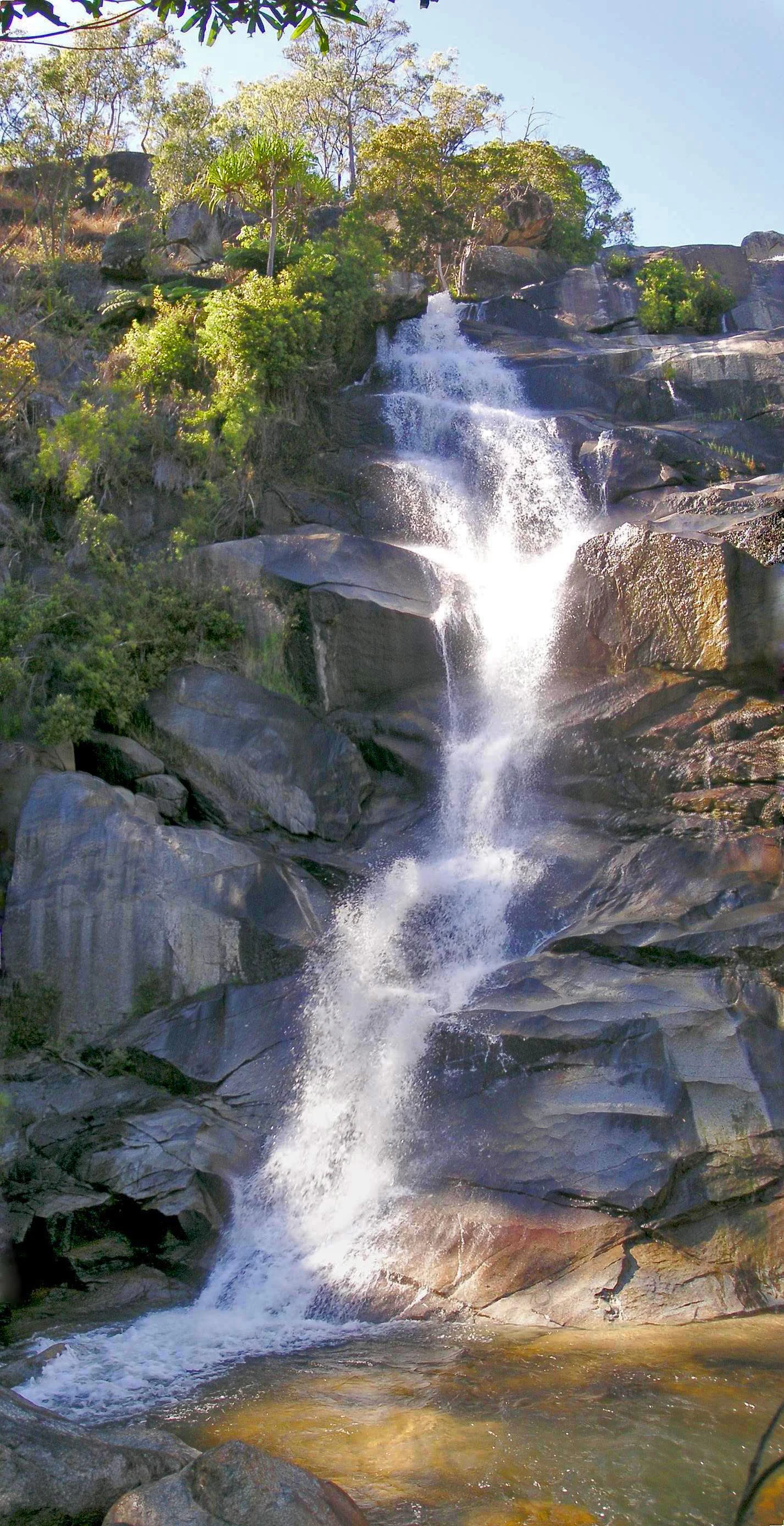
Waterfall flowing over rocky cliffs with lush green vegetation under clear blue sky
Davies Creek Falls cascading over rocky cliffs in Davies Creek National Park, Queensland, Australia

Davies Creek National Park history and protected-area timeline

Davies Creek National Park was established in 1971 as part of Queensland's expanding protected area network during a period of increased recognition of the need to preserve unique landscapes and threatened species habitat. The park was created specifically to protect the granite outcrop environment and the populations of native species, particularly the northern bettong, that depended on these specialized habitats. At the time of establishment, the Atherton Tableland region was experiencing ongoing land clearing for agriculture, making the reservation of remaining natural areas increasingly urgent. The selection of Davies Creek for national park status reflected growing scientific understanding of the area's ecological significance, particularly regarding the endangered marsupial populations. Management by the Queensland Parks and Wildlife Service has continued since the park's creation, with conservation of the northern bettong remaining a primary objective throughout the park's operational history. The park has maintained its protective status for over five decades, surviving various pressures from surrounding agricultural development to remain a refuge for native species.

Davies Creek National Park landscape and geographic character

The landscape of Davies Creek National Park is defined by its prominent granite outcrops, which form the most visually striking feature of the protected area. These massive granite domes and boulder fields create a terrain unlike the typical deeply weathered landscapes of the Wet Tropics, instead presenting a more exposed, rocky environment with thin soils and specialized vegetation adapted to harsh conditions. The Davies Creek itself cuts through this granite terrain, dropping over a series of boulders to form the Davies Creek Falls, a waterfall of approximately 15 meters that represents a focal point for park visitors. The creek originates in the elevated Lamb Range and flows northward through the park before joining the Barron River system, providing permanent water through the landscape. Between the rocky outcrops, the park supports open eucalypt woodland with a grassy understory, creating a savanna-like appearance that contrasts sharply with the dense rainforests found at lower elevations nearby. The combination of exposed granite, water features, and woodland creates a varied but compact landscape that supports distinct ecological communities within a small geographic area.

Davies Creek National Park ecosystems, habitats, and plant life

The nature of Davies Creek National Park reflects its position at the intersection of multiple bioregions, combining elements of the Wet Tropics and Einasleigh Uplands into a unique ecological assemblage. The open eucalypt woodland that dominates much of the park supports a diverse understory of grasses and shrubs, creating habitat that differs substantially from the closed rainforests that characterize lower elevations in the region. Granite outcrop areas support specialized rock communities adapted to extreme conditions, including lichens, mosses, and drought-tolerant plant species that can survive on thin soils and exposed positions. The riparian corridor along Davies Creek provides more mesic conditions, supporting paperbark trees and aquatic vegetation along the watercourse. This variety of habitats within a small area supports remarkable biodiversity, with five rare or threatened species recorded within the park boundaries. The park's position on the Atherton Tableland also places it in a transition zone where tropical and temperate species overlap, creating ecological interest beyond what the small area might suggest.

Davies Creek National Park wildlife and species highlights

The wildlife of Davies Creek National Park is notable for the presence of several rare and threatened species, with the northern bettong being the most significant conservation priority. This small marsupial, also known as a rat-kangaroo, has its main Australian population surviving within this park, making Davies Creek crucial for species survival. The bettong occupies the open woodland and forest edges, feeding on fungi, roots, and vegetation in a role that contributes to soil health and seed dispersal. Beyond mammals, the park supports diverse birdlife associated with eucalypt woodland, including various honeyeaters, parrots, and raptors that use the habitat for foraging and nesting. The invertebrate fauna includes remarkable species, with the world's largest bird-eating and barking spiders recorded in the park, reaching up to 16 centimeters in diameter. These large spiders represent an unusual wildlife attraction, though they remain largely hidden during daylight hours. Reptiles and smaller mammals occupy the various microhabitats throughout the park, from rock crevices to tree hollows, creating a wildlife community of conservation interest well beyond what the small park size might suggest.

Davies Creek National Park conservation status and protection priorities

Davies Creek National Park serves as an important conservation refuge within the heavily modified agricultural landscape of the Atherton Tableland. The park's primary conservation significance lies in its role as habitat for the endangered northern bettong, a species that has suffered substantial range reduction across its former distribution. Protection of this population within a secure national park provides essential assurance against further decline, though the species remains vulnerable to threats including climate change, fire, and potential disease. The presence of five rare or threatened species within the park elevates its conservation value considerably, justifying ongoing management investment despite the small area. The granite outcrop habitats represent a specialized environment that is not well-protected elsewhere in the region, making Davies Creek's reservation important for representing this rare habitat type. The park contributes to the broader Wet Tropics conservation network, connecting with larger protected areas to support landscape-scale biodiversity conservation in Far North Queensland.

Davies Creek National Park cultural meaning and human context

Davies Creek National Park lies within the traditional Country of Indigenous peoples who have occupied the Atherton Tableland region for thousands of years. The specific Traditional Owner groups for this area would have utilized the granite outcrop environments and the creek corridor for various resources, though detailed historical documentation of Indigenous use specific to the park area is limited in the available sources. The landscape would have held cultural significance for local Aboriginal communities, with particular sites potentially associated with the water features and rock formations found throughout the park. European settlement of the Atherton Tableland began in the late nineteenth century, with agricultural conversion dramatically altering the surrounding landscape while the Davies Creek area remained largely undeveloped due to the rocky terrain. The reservation of the area as a national park in 1971 reflects a later recognition of both cultural and natural values, though the primary focus has been on biodiversity conservation rather than cultural heritage management.

Top sights and standout views in Davies Creek National Park

Davies Creek Falls stands as the centerpiece attraction, where granite boulders channel the creek into a 15-meter cascade visible from a two-kilometer walking trail. The dramatic granite outcrops create a distinctive landscape unlike typical Wet Tropics terrain, offering scenic views and interesting geological features. The endangered northern bettong population represents a rare wildlife conservation opportunity, with the park serving as a critical stronghold for this marsupial. The presence of the world's largest bird-eating and barking spiders adds an unusual invertebrate highlight that distinguishes this park from others in the region. Open eucalypt woodland provides habitat for diverse birdlife and offers a pleasant setting for bushwalking and nature observation.

Best time to visit Davies Creek National Park

The park can be visited throughout the year, though the dry season from May to October generally offers more comfortable conditions for walking and outdoor activities. During the wet season from November to April, higher rainfall can affect trail conditions and access, though the waterfall flow may be more impressive during this period. The Atherton Tableland sits at elevation, meaning temperatures are cooler than the coastal areas near Cairns, making the park accessible even during the hotter months. Visitors should note that creek water must be boiled for at least five minutes before drinking, reflecting the need for caution regarding water quality in the park environment.

Park location guide

Geography guide, regional context, and park location map for Davies Creek National Park

Davies Creek National Park park geography, regions, and map view in Australia
Understand where Davies Creek National Park sits in Australia through a broader geographic reading of the surrounding landscape, nearby location context, and its mapped position within the national park landscape.

How Davies Creek National Park fits into Australia

Australia is a constitutional monarchy and federal parliamentary democracy comprising six states and ten territories. With a population of nearly 28 million, it is one of the world's most urbanised countries, with most people concentrated on the eastern seaboard. The country has a high Human Development Index and is known for its cultural diversity, ancient Aboriginal heritage, and unique wildlife.

Wider geography shaping Davies Creek National Park in Australia

Australia occupies the entire Australian continent, the island of Tasmania, and numerous smaller islands. It is the world's flattest and driest inhabited continent, featuring vast deserts in the interior (the Outback), tropical rainforests along the eastern coast, and a coastline bordering the Indian and Pacific Oceans.

Map view of Davies Creek National Park

Use this park location map to pinpoint Davies Creek National Park in Australia, understand its exact geographic position, and read its mapped placement within the surrounding landscape more clearly.

Pigeon | © OpenStreetMap contributors

Location context for Davies Creek National Park

Queensland

Explore the Scenery, Terrain, and Distinct Protected-Area Environment of this Queensland Park

Davies Creek National Park Photos: Visualizing Unique Granite Landscapes and Protected Habitat
Explore detailed imagery of Davies Creek National Park to visually understand its dramatic granite outcrops, the cascading Davies Creek Falls, and unique open eucalypt woodlands within its protected boundaries. These photos provide essential context for the park's distinct terrain and vital habitats, showcasing its environment as a crucial stronghold for the endangered northern bettong in Far North Queensland.

Waterfall flowing over rocky cliffs with lush green vegetation under clear blue sky

Park atlas

Trace the regional park geography of Queensland's Atherton Tableland, comparing granite outcrops and eucalypt woodlands.

Explore Nearby National Parks and Protected Areas Beyond Davies Creek National Park
Users exploring Davies Creek National Park can browse other national parks and protected areas across Far North Queensland, identifying similar granite landscapes, diverse eucalypt woodlands, and conservation efforts. This geographic comparison helps trace the regional spread of protected habitats, revealing how unique bioregions support distinct ecological communities and endangered species.
National parkQueensland

Barron Gorge National Park: Queensland Protected Area Atlas and Landscape Discovery

Mapped boundaries and regional geographic context.

Delve into Barron Gorge National Park, a protected landscape integral to Queensland's geographic tapestry. This dedicated atlas entry provides critical details for understanding the park's mapped boundaries and its role as a national park within the broader regional context. Explore its identity as a protected natural area, enhancing your comprehension of Australia's diverse geography.

Area
28 km²
Established
1940
IUCN
II
Relief
Mixed relief
National parkQueensland

Crater Lakes National Park: Queensland's Volcanic Crater Lakes and Ancient Rainforest Atlas

Explore the mapped boundaries and natural geography of this protected landscape.

Crater Lakes National Park in Queensland, Australia, preserves two spectacular volcanic crater lakes formed by ancient phreatomagmatic eruptions. This protected area is renowned for its unique geological formations, including Lake Barrine and Lake Eacham, set amidst a lush subtropical rainforest dotted with iconic giant bull kauri pines. Dive into the detailed geography and mapped landscape context of this significant national park, offering insights into its volcanic origins and ecological significance within the Wet Tropics.

Area
9.59 km²
Established
1994
IUCN
II
Relief
Mixed relief
National parkQueensland

Wooroonooran National Park: Queensland's Protected Landscape Atlas Explorer

Mapping the geography and protected area context of Queensland.

Delve into the specifics of Wooroonooran National Park, a nationally designated protected area situated in Queensland. This section offers detailed geographic insights, focusing on its mapped boundaries and the surrounding natural landscape. Understand how Wooroonooran National Park fits within the broader regional geography of northeastern Australia, supporting structured atlas exploration of protected lands.

Area
798 km²
Established
1991
IUCN
II
Relief
Mountain
National parkQueensland

Kuranda National Park: Protected Landscape and Mapped Geography in Queensland

Discover the natural terrain and park boundaries.

Kuranda National Park represents a distinct protected landscape within the state of Queensland, Australia. This detail page offers an atlas-centric view, focusing on the park's geographic setting, its mapped boundaries, and its contribution to the understanding of natural terrain across the region. Explore the core protected-area identity of Kuranda National Park to enhance your geographic discovery.

Area
271 km²
IUCN
II
Relief
Mountain
Climate
Tropical
National parkQueensland

Grey Peaks National Park: Queensland's Protected Landscape Atlas Entry

Mapped geography and protected area details for Queensland.

This entry details Grey Peaks National Park, a designated national park located in Queensland, Australia. It serves as a critical point for understanding the park's geographic footprint, its mapped boundaries, and its contribution to the protected landscapes of northeastern Australia. Explore the atlas context of this significant natural area.

Area
9.2 km²
Established
1971
IUCN
II
Relief
Mixed relief
National parkQueensland

Curtain Fig National Park: Queensland National Park with Mapped Boundaries

Explore its protected landscape and regional geography.

Curtain Fig National Park serves as a key protected landscape within Queensland, Australia, offering critical geographic context for atlas exploration. Understanding its mapped boundaries and regional placement provides valuable insights into the natural areas of northeastern Australia. This national park is a focal point for detailed discovery of its specific terrain and protected status.

Area
1.95 km²
Established
2008
IUCN
II
Visitors
100K annual
National parkQueensland

Hasties Swamp National Park: A Queensland National Park for Wetland Birdwatching

Discover unique seasonal wetland and eucalypt forest landscapes.

Hasties Swamp National Park in Queensland, Australia, offers a unique ecological focus as a protected wetland area. Its primary significance lies in its role as a crucial habitat for an extensive array of bird species, including the notable sarus crane. The landscape is characterized by a seasonal wetland surrounded by open eucalypt forests, providing rich natural context. This compact national park is ideal for understanding specific wetland ecosystems and their role within the broader regional geography.

Area
0.57 km²
Established
1980
IUCN
II
Relief
Upland
National parkTablelands Region

Herberton Range National Park: Protected Landscape and Regional Geographic Context

Explore mapped forest ecosystems and watershed importance in North Queensland.

Herberton Range National Park represents a crucial protected landscape within Australia's Tablelands Region. This national park is notable for preserving endangered wet sclerophyll forests, a vital ecosystem that has diminished across Queensland. Its boundaries encompass a rich mosaic of tropical rainforest and open forest, contributing to ecological diversity and providing essential watershed protection for three major river systems. The park's location offers a compelling case study in regional land conservation and landscape mapping.

Area
65.36 km²
Established
2008
IUCN
II
Relief
Mountain

Common questions about visiting, size, designation, and location context for Davies Creek National Park

Davies Creek National Park FAQs for park facts, access, geography, and protected area context
Find quick answers about Davies Creek National Park, including protected-area facts, park geography, trail and visitor context, and how the park fits into its surrounding country and regional landscape.
MoriAtlas Explorer

Continue Your Protected Areas Search Across the Global Atlas

Deepen your exploration by continuing the structured search for national parks and protected areas worldwide. Utilize the comprehensive filtering capabilities to compare different conservation landscapes and refine your understanding of global park geography. Discover more about the distribution and characteristics of protected natural areas.

Global natural geography