A private Dutch national park where heathland, sand dunes and woodland shelter a world-famous art museum
De Hoge Veluwe National Park
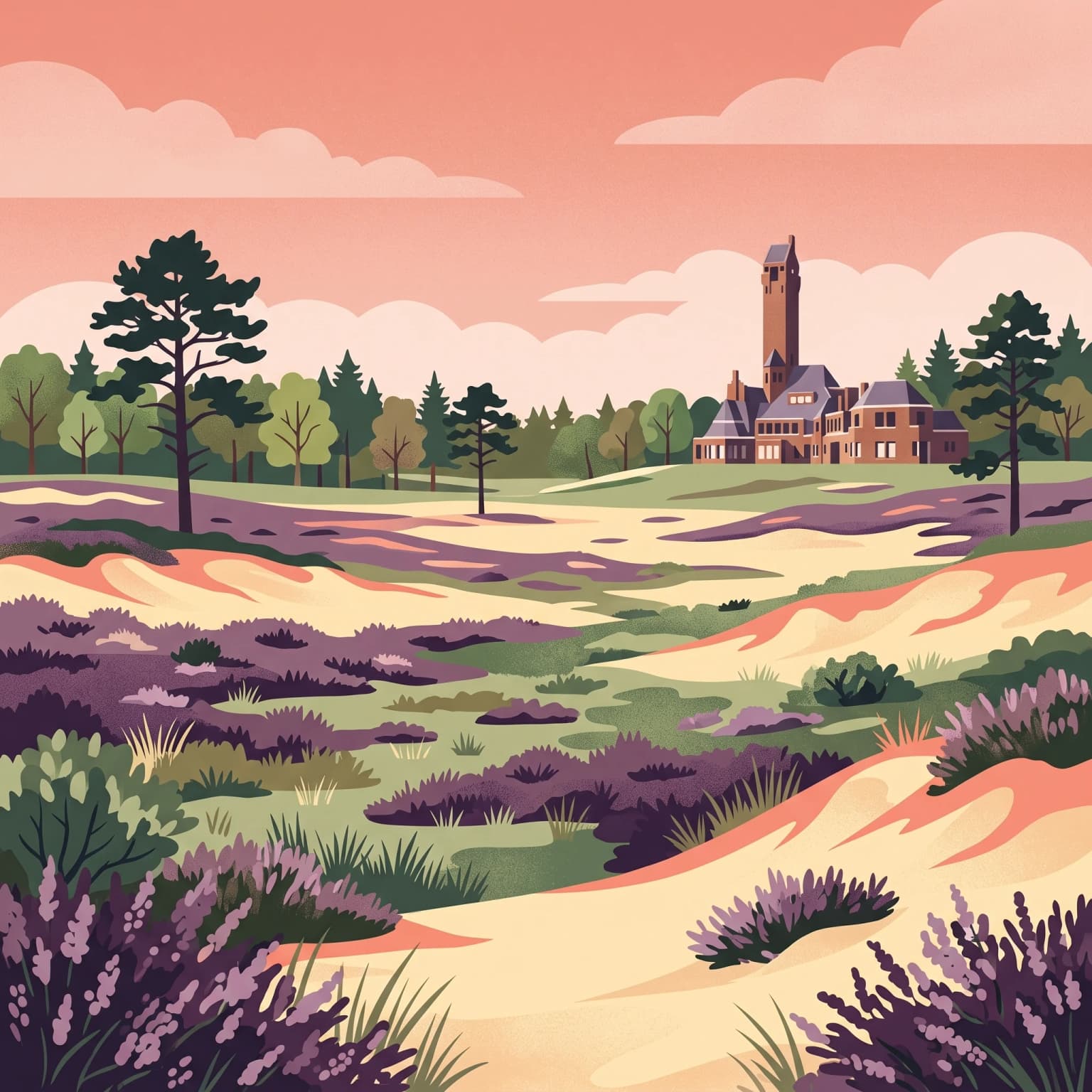
De Hoge Veluwe National Park represents a remarkable convergence of natural and cultural heritage in the Dutch landscape. Located in the Veluwe region of Gelderland, the park occupies a landscape shaped during the last ice age when glacial processes created the terminal moraine that forms the physical foundation of the wider Veluwe area. The park's contemporary character, however, reflects a more complex history of human interaction with the land. Originally heavily forested, the area underwent transformation through centuries of woodcutting and grazing, which created the open heathlands and shifting sand dunes that now define much of the park's visual identity. In the late nineteenth century, extensive afforestation stabilized many of the sand drift areas, though a deliberate decision was made to maintain portions of open heathland and dune to preserve the characteristically Veluwe landscape types.
The park's establishment as a protected area stems from the vision of Anton Kröller and his wife Helene Kröller-Müller, who began acquiring land in the area from 1909 onward. Helene Kröller-Müller assembled a distinguished art collection, initially intended to be housed in a museum within the park. Though economic difficulties prevented completion of the original museum plans, the collection was ultimately donated to the Dutch state in 1935, and the Kröller-Müller Museum was completed afterward under state auspices. That same year, the park itself was transferred to a foundation established for its management, becoming the second national park in the Netherlands.
What distinguishes De Hoge Veluwe from other Dutch protected areas is its privately-owned status and the absence of government operating subsidies. The park generates revenue through entrance fees and commercial activities, allowing it to operate independently while maintaining high standards of conservation. The enclosing fence, necessary to contain wildlife and justify the entrance fee, has sometimes been controversial among cyclists and hikers who must pay to cross through or detour around the park, though reduced rates are available for brief visits. The management approach places emphasis on landscape aesthetics, large mammals and cultural history, creating a distinctive visitor experience that combines outdoor recreation with cultural enrichment.