Mori Atlas logo
Nature reserveRezerwat przyrody Dębowa Góra

Examining the ecological boundaries and terrain of a significant near-natural oak forest fragment.

Rezerwat przyrody Dębowa Góra: A Detailed Geographic Map of Protected Deciduous Woodlands in Lubusz Voivodeship

(Rezerwat przyrody „Dębowa Góra”)

Rezerwat przyrody Dębowa Góra represents a critical piece of protected lowland forest within the Równina Gorzowska mesoregion of western Poland. This nature reserve serves as a prime example of the Central European oak-lime-hornbeam forest, characterized by mature, near-natural deciduous stands that have been formally preserved since 1995. The site offers a unique look at the fertile woodland habitats that define the post-glacial plains of the Lubusz Voivodeship, managed today under a formal active conservation plan.

nature reservePolish lowlandsdeciduous forestoak forestmixed woodlandCentral European oak-lime-hornbeam forest

Rezerwat przyrody Dębowa Góra

Nature reserve

Park overview

Structured park overview, official facts, and landscape profile for Dębowa Góra Nature Reserve

Dębowa Góra Nature Reserve park facts, protected area profile, and essential visitor context

Review the core facts for Dębowa Góra Nature Reserve, including designation, size, terrain, visitor scale, habitats, and operating context in one park-focused overview.

About Dębowa Góra Nature Reserve

Dębowa Góra Nature Reserve is a compact protected forest area in the Bogdaniec commune of the Lubusz Voivodeship in western Poland, just east of the city of Gorzów Wielkopolski. It sits within the Równina Gorzowska mesoregion, a landscape defined by glacial plains and river valleys that characterize much of the northern Lubusz region.

The reserve was created in the mid-1990s to safeguard a surviving fragment of Central European oak-lime-hornbeam forest, known in Polish as grąd środkowoeuropejski, maintained in a state close to natural. While the grąd is the dominant habitat, a smaller portion of the reserve features fertile lowland beech forest, a related deciduous woodland type that adds ecological variety to the site. Together these habitats represent well the kinds of mixed deciduous forests that once covered large parts of the region and whose remnants are now fragmented across the Polish countryside.

At roughly eleven hectares, Dębowa Góra is a small reserve, but its forest cover is exceptionally high, with tree stands occupying nearly the entire area. The woodland is dominated by oak, with pine and beech also represented, alongside lime, spruce, hornbeam, birch, and black locust. The average age of the trees is about 94 years, placing the stand in a maturing phase of development that lends the reserve its structural richness.

The reserve operates under active conservation, with a formal protection plan in place. This means that habitat management is an intentional part of preservation, aimed at maintaining the forest's composition and near-natural character rather than simply leaving the area untouched. The forest district of Bogdaniec is responsible for its administration, embedding the reserve within a broader managed forested landscape.

Quick facts and research context for Dębowa Góra Nature Reserve

Dębowa Góra is a Polish nature reserve situated in the Lubusz Voivodeship, in Gorzów County, within Gmina Bogdaniec. It was established on 11 December 1995 by ministerial order and entered into force on 25 January 1996, occupying an area of about 11.27 hectares on parcels managed by the Bogdaniec Forest District. The reserve protects Central European oak-lime-hornbeam forest (grąd środkowoeuropejski) in a near-natural condition, along with a small patch of fertile lowland beech forest, and is managed under active conservation with a formal protection plan.

Park context

Deeper park guide and search-rich context for Dębowa Góra Nature Reserve

Dębowa Góra Nature Reserve history, landscape, wildlife, and travel context

Explore Dębowa Góra Nature Reserve through its history, landscape character, ecosystems, wildlife, conservation priorities, cultural context, and seasonal travel timing in a structured park guide built for atlas discovery and search intent.

Why Dębowa Góra Nature Reserve stands out

Dębowa Góra is best known for preserving a near-natural fragment of Central European oak-lime-hornbeam forest, one of the characteristic deciduous forest types of the Polish lowlands. The reserve's mature oak-dominated stand, averaging around 94 years of age, gives the site its defining identity and conservation value. The site is also recognized for combining this grąd habitat with a smaller area of fertile lowland beech forest, making it a compact but ecologically informative example of mixed deciduous woodland management under active protection.

Dębowa Góra Nature Reserve history and protected-area timeline

Dębowa Góra Nature Reserve was established by order of the Minister of the Environment, Natural Resources and Forestry on 11 December 1995, entering into force on 25 January 1996. The legal basis for the designation was published in the Polish Monitor (M.P.) of 1996, No. 2, item 20.

Before receiving its current name, the area was referred to as Bogdaniec III, reflecting its administrative origin as a designated parcel within the Bogdaniec Forest District. The protection was driven by the desire to preserve, for scientific and educational reasons, a fragment of Central European oak-lime-hornbeam forest in a near-natural state. The reserve was assigned an active conservation regime and given its own protection plan, ensuring ongoing management of the woodland rather than passive protection alone.

Dębowa Góra Nature Reserve landscape and geographic character

The landscape of Dębowa Góra is that of the Polish lowlands: a gently rolling plain shaped by glacial processes, part of the broader Równina Gorzowska mesoregion. The reserve itself sits on a patch of nearly flat to slightly undulating terrain, typical of the post-glacial landscape that dominates this part of the Lubusz region.

There are no dramatic landforms within the reserve; instead, the visual character is defined by closed mature deciduous and mixed forest, with a continuous canopy broken only by occasional natural gaps and management interventions. The surrounding region features similar forest cover, farmland, and the river systems that drain toward the Noteć and Warta basins, providing context for the forested plain that the reserve represents.

Dębowa Góra Nature Reserve ecosystems, habitats, and plant life

Ecologically, Dębowa Góra is defined by its near-natural Central European oak-lime-hornbeam forest, the grąd środkowoeuropejski that gives the reserve its primary conservation purpose. This is a deciduous forest type historically common across the lowlands of central Europe, characterized by oak alongside lime, hornbeam, and beech, and structured in a distinctive multi-layered canopy-understory-floor pattern.

A small portion of the reserve also supports fertile lowland beech forest, indicating the transitional character of the woodland between different lowland forest types. The high share of tree cover, roughly 94% of the reserve's area, and the dominance of a single maturing stand phase (trees averaging about 94 years old) give the site a coherent and undisturbed forest atmosphere. The understory includes common hazel, while the herb layer features woodland species such as one-flowered wood reedgrass, sweet woodruff, yellow archangel, male fern, and spreading bellflower, collectively signalling the relatively stable, shaded conditions of a mature deciduous forest.

Dębowa Góra Nature Reserve wildlife and species highlights

The reserve's wildlife is shaped primarily by its dense, mature deciduous forest habitat rather than by specialization on particular large or rare animal species. The closed canopy and well-developed understory provide shelter and foraging conditions for typical woodland fauna associated with Central European oak-lime-hornbeam forests.

The herb layer, with species such as one-flowered wood reedgrass, sweet woodruff, yellow archangel, and male fern, supports the invertebrates and soil communities typical of mature grąd habitats, which in turn sustain bird and small mammal populations adapted to shaded deciduous woodland. While the reserve is too small to sustain wide-ranging species, it functions as a refuge of natural forest conditions within a broader managed landscape.

Dębowa Góra Nature Reserve conservation status and protection priorities

Dębowa Góra's conservation value lies in the preservation of a near-natural Central European oak-lime-hornbeam forest, a habitat type once widespread across the region but now much reduced and fragmented by centuries of agriculture and forestry. The reserve safeguards a stand in a maturing development phase, with trees averaging around 94 years, providing continuity of old-forest structure that is increasingly rare at this scale.

Protection is implemented through active conservation, supported by a formal protection plan. This active management approach is characteristic of Polish nature reserves that aim to maintain specific forest compositions and ecological processes, ensuring that the dominance of oak, along with the secondary presence of beech and other species, is preserved rather than lost to successional change or competing vegetation.

Top sights and standout views in Dębowa Góra Nature Reserve

The standout feature of Dębowa Góra is its compact representation of a near-natural Central European oak-lime-hornbeam forest, complemented by a small area of fertile lowland beech forest. The high proportion of forested area and the maturity of the dominant oak stand give the reserve a sense of coherence that is unusual for such a small protected site.

Its active conservation regime and formal protection plan further distinguish the reserve, signalling that the woodland is not simply left alone but deliberately managed to preserve its ecological character.
Park location guide

Geography guide, regional context, and park location map for Dębowa Góra Nature Reserve

Dębowa Góra Nature Reserve park geography, regions, and map view in Poland

Understand where Dębowa Góra Nature Reserve sits in Poland through a broader geographic reading of the surrounding landscape, nearby location context, and its mapped position within the national park landscape.

How Dębowa Góra Nature Reserve fits into Poland

Poland, officially the Republic of Poland, is a Central European country spanning from the Baltic Sea in the north to the Carpathian Mountains in the south. It borders Germany, Czech Republic, Slovakia, Ukraine, Belarus, Lithuania, and Kaliningrad Oblast. The country has a temperate climate, diverse landscapes, and is known for its rich history, cultural heritage, and strong economic position within the EU.

Wider geography shaping Dębowa Góra Nature Reserve in Poland

Poland occupies 312,696 km2 in Central Europe, extending from the Baltic Sea coast in the north to the Sudetes and Carpathian Mountains in the south. It borders Germany to the west, Czech Republic and Slovakia to the south, Ukraine and Belarus to the east, and Lithuania and Kaliningrad Oblast to the northeast. The landscape includes lowland plains, uplands, and mountain ranges.

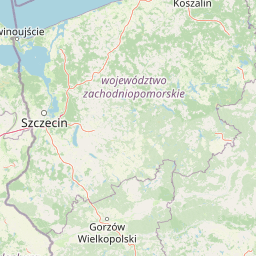
Map view of Dębowa Góra Nature Reserve

Use this park location map to pinpoint Dębowa Góra Nature Reserve in Poland, understand its exact geographic position, and read its mapped placement within the surrounding landscape more clearly.

Pigeon | © OpenStreetMap contributors

Location context for Dębowa Góra Nature Reserve

Lubusz Voivodeship

Common questions about visiting, size, designation, and location context for Dębowa Góra Nature Reserve

Dębowa Góra Nature Reserve FAQs for park facts, access, geography, and protected area context

Find quick answers about Dębowa Góra Nature Reserve, including protected-area facts, park geography, trail and visitor context, and how the park fits into its surrounding country and regional landscape.
MoriAtlas Explorer

Continue Your Protected Areas Search Across the Global Atlas

Deepen your exploration by continuing the structured search for national parks and protected areas worldwide. Utilize the comprehensive filtering capabilities to compare different conservation landscapes and refine your understanding of global park geography. Discover more about the distribution and characteristics of protected natural areas.

Global natural geography