Why Dębowiec Nature Reserve stands out
Dębowiec is primarily known as one of the very few Polish nature reserves established specifically for the conservation of rare saproxylic beetles associated with veteran oak trees. Its old sessile oak stand, some trees over 250 years old, provides critical habitat for the stag beetle (jelonek rogacz) and the great capricorn beetle (kozioróg dębosz), two of Europe's most threatened forest-dwelling invertebrates. Beyond its entomological importance, the reserve is recognized for preserving a rare example of acidic oak woodland in the Wzniesienia Gubińskie landscape. The combination of ancient oaks, mature pine stands, a documented bird community, and a sensitive small reserve footprint gives the site a distinct identity that blends entomological, botanical, and forest-conservation values within a single protected area.
Dębowiec Nature Reserve history and protected-area timeline
Dębowiec was formally established as a nature reserve in 1984 through Polish legal measures promulgated that same year. Its founding legal act specified the reserve's area at 9.73 hectares, although the actual surveyed surface area is closer to 9.39 hectares. The reserve was created with the dual intent of safeguarding an ancient stand of oak trees and, more unusually, of explicitly conserving the habitat of two protected beetle species: the stag beetle and the great capricorn beetle. This combination of forest preservation and invertebrate conservation gave the site its distinctive identity from the very beginning.
In 2003, a formal conservation plan for the reserve was introduced, establishing an active protection regime (ochrona czynna) rather than a strictly passive one. Under this plan, recurring management activities have been undertaken to maintain the habitat conditions needed for both the veteran trees and the rare beetle populations they support. The trail infrastructure around the reserve is also tied to this period: the nearby Dzikowo educational trail was prepared by the Gubin Forest District to raise public awareness of the surrounding forest landscape and once passed through the reserve itself.
Although the reserve's formal history is comparatively short, the biological value it protects is the result of a much longer ecological process. The presence of oaks more than 250 years old and pines more than 200 years old indicates that the core woodland here has been continuously forested for several centuries, allowing rare saproxylic invertebrate populations to establish in the aging wood of the canopy trees.
Dębowiec Nature Reserve landscape and geographic character
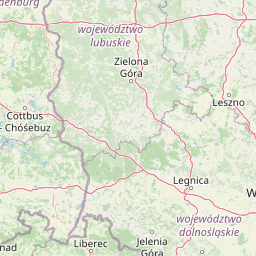
Dębowiec lies within the Wzniesienia Gubińskie, a mesoregion of gentle hills and undulating terrain that forms part of the broader transition landscape between the lowlands of central-western Poland and the river valleys close to the German border. The reserve itself occupies a small, mature woodland site that visually reads as a mixed, slightly dry forest with a clear dominance of broadleaf oaks over conifers. The slightly elevated terrain of this mesoregion gives the local forest an unusual dryness and acidic character compared with surrounding wetland or lowland habitats.
The most striking landscape feature within the reserve is the cathedral-like character of its ancient oak canopy. Many sessile oaks exceed 250 years in age and grow into broad, wide-spanning forms that dominate the upper canopy, while Scots pines more than 200 years old rise above them as emergent trees. Beneath this canopy, the acidic oak forest floor is shaded, leaf-littered, and relatively species-poor in vascular plants but rich in mosses and dead wood. A mosaic of decaying trunks, fallen branches, and veteran trees in various stages of decline is a defining physical feature of the site.
At the edges of the reserve the woodland merges with stands of fresh pine forest, including the small 0.29-hectare pine community that completes the protected mosaic. The wider landscape around the reserve includes agricultural land, the small settlements of Brzózka and Kaniów, the roads passing through Gmina Gubin, and the broader forest district of the Gubin Forest Inspectorate, which provides ecological continuity with neighboring woodlands.
Dębowiec Nature Reserve ecosystems, habitats, and plant life
Ecologically, Dębowiec is dominated by an acidic oak forest community (kwaśna dąbrowa), one of the more unusual forest types in lowland Poland. This community typically thrives on dry, sandy, nutrient-poor soils and supports a sparse understory of acid-tolerant vascular plants but a rich bryophyte layer. Within the reserve, this community covers the great majority of the protected area, while a much smaller area is composed of fresh continental pine forest, creating a subtle ecological mosaic within an otherwise small footprint.
The biological richness of the reserve is unusually concentrated. Surveys have recorded 24 vascular plant species, 18 bryophyte species, and 24 nesting bird species within just over nine hectares. The acidic, oak-dominated environment produces a habitat mosaic of rotting wood, leaf litter, moss carpets, and veteran tree cavities that supports both fungi-rich bryophyte communities and the nesting niches required by cavity-using birds.
The defining ecological feature of the reserve is the presence of ancient oaks in a continuous stage of natural decay, providing habitat for protected saproxylic invertebrates. This stage of forest succession, dominated by mature and aging trees rather than regenerating seedlings, is uncommon in intensively managed Polish forests and is the central reason the area received formal protected status.
Dębowiec Nature Reserve wildlife and species highlights
The wildlife profile of Dębowiec is unusual among Polish reserves because invertebrates are the central conservation target. Two protected beetle species define the site's ecological purpose: the stag beetle (jelonek rogacz) and the great capricorn beetle (kozioróg dębosz). Both species depend on microhabitats found in old, decaying broadleaf trees, primarily oak, and the reserve's veteran sessile oaks provide exactly this type of habitat in a very localized context.
Alongside these rare beetles, the reserve hosts an active breeding bird community of 24 nesting species. The combination of mature oaks for cavity nesting, mature pines for canopy nesting, and open woodland understory provides varied nesting niches for woodland birds typical of mixed lowland Polish forests. Although specific species are not enumerated in the available sources, the nesting bird diversity reflects the structural complexity of old oak-pine mixtures.
The broader landscape around the reserve, including the educational trail managed by the Gubin Forest District, supports additional wildlife interest such as ungulates that benefit from feeders and salt licks maintained nearby. Anthills visible along the Dzikowo educational trail point to a healthy population of wood ants, a keystone forest invertebrate group. The reserve thus combines invertebrate, bird, and broader forest fauna values within a single compact site.
Dębowiec Nature Reserve conservation status and protection priorities
Dębowiec is an unusual example of a Polish faunistic nature reserve established primarily for the protection of invertebrate species rather than typical forest, landscape, or plant-based objectives. Its designation as a faunistic reserve with an invertebrate focus (typ faunistyczny, podtyp bezkręgowców) reflects the recognition that rare beetle populations such as the stag beetle and the great capricorn beetle cannot survive without a continuous supply of old, decaying broadleaf trees. Protecting the trees effectively protects the beetles, but legal protection of the invertebrates themselves has been considered essential to anchor active forest management in conservation outcomes.
The reserve has been under an active protection regime since 2003, when a formal conservation plan (plan ochrony) was adopted. Active protection contrasts with strictly passive nature protection in that it allows and requires management interventions to maintain habitat conditions that might otherwise deteriorate through ecological succession. In practice, this approach helps preserve the open, sun-exposed, veteran-oak character of the forest that both rare beetles and oak-dependent nesting birds depend on.
Conservative significance also extends beyond the small polygon of the reserve itself. As part of the Gubin Forest District and adjacent to an educational trail with intentionally maintained features for wildlife (including nesting boxes, salt licks, feeders, and a seed stand for the local Gubin pine ecotype), the reserve functions as a nucleus within a broader landscape-level conservation context for the Wzniesienia Gubińskie mesoregion.
Dębowiec Nature Reserve cultural meaning and human context
Dębowiec sits in a cultural landscape shaped by centuries of Polish and German forestry along what became the Polish-German border after 1945. The area around Gubin, with its historic town of Gubin itself, has long been associated with mixed agricultural and forest land use, and the Gubin Forest District maintains a tradition of combining timber production with conservation and public education. The Gubin pine (sosna gubińska), a local pine ecotype preserved through a seed stand along the Dzikowo educational trail, reflects this regional identity.
The wider landscape also carries historical memory of the First World War. A commemorative stone on a pedestal along the Dzikowo trail marks victims of the First World War, adding a layer of historical and cultural meaning to an otherwise natural site. The educational trail infrastructure prepared by the Gubin Forest District further embeds the reserve within a tradition of public forest education in the region, connecting biological conservation with community awareness.
Top sights and standout views in Dębowiec Nature Reserve
Dębowiec protects one of Poland's most distinctive small reserves: an ancient acidic oak forest with trees over 250 years old, managed specifically for two of Europe's rarest saproxylic beetles. Its very compact size, just over nine hectares, amplifies rather than dilutes its conservation importance, concentrating rare habitat values into a tight ecological footprint.
The site's combination of features, ancient oaks, rare beetles, an active breeding bird community of 24 species, a bryophyte flora of 18 species, and active conservation management under a 2003 protection plan, makes it a particularly strong example of invertebrate-focused forest conservation in Poland. It also functions within a broader regional network of forest education through the Gubin Forest District and the Dzikowo trail.
Best time to visit Dębowiec Nature Reserve
As a small protected forest with year-round ecological value, Dębowiec can be appreciated in any season, but visiting in late spring or early summer provides the best conditions for observing the woodland bird community at peak activity, hearing insect life in the canopy, and walking the educational trail at its most visually lush. Late summer brings visible fruiting on the veteran oaks and more active insect behavior on decaying wood, which is also a good period for amateur naturalists interested in beetle habitat.
Autumn is particularly atmospheric in mature oak forests because of the seasonal coloration of the broadleaf canopy mixed with evergreen pines, and because fallen leaf litter reveals more of the forest floor structure that, in this reserve, is unusually rich in dead wood. Winter visits are quieter in terms of animal activity but offer clearer sightlines into the structure of the canopy and easier identification of veteran oaks and pines, especially from the adjacent Dzikowo educational trail.