Why Feuchtwiesen Atterwasch stands out
Feuchtwiesen Atterwasch is best known for its wet meadow and stream system centered on the Schwarze Fließ, which supports a richly patterned floodplain landscape of meadows, ditches, and alluvial forests. The reserve is particularly distinguished for harboring a high diversity of European-protected habitat types within a relatively compact area, including calcareous fens, lowland hay meadows, running waters with floating vegetation, and black alder and ash alluvial forests. It is also recognized for the unusual concentration of protected species attached to wet floodplain environments, from large mammals such as the European otter and Eurasian beaver to specialized invertebrates and birds of damp meadows and reeds. The combination of small-scale water features and extensively managed grassland makes it a reference site for floodplain meadow conservation in the Lusatian lowlands.
Feuchtwiesen Atterwasch history and protected-area timeline
The process leading to Feuchtwiesen Atterwasch becoming a protected area began in September 2000, when a proposal was submitted to designate the site as a Site of Community Importance under the European Habitats Directive. This proposal reflected growing awareness of the conservation value of the wet meadows, ditches, and alluvial forests around the Schwarze Fließ.
The area received formal protection at the national level on 9 October 2004, when it was designated as a Naturschutzgebiet by ordinance dated 27 August 2004. Shortly afterward, in December 2004, the European Commission recognized it as a Natura 2000 site, with the official code DE4053302. The underlying ordinance was later amended through Article 17 of a regulation issued on 19 August 2015, reflecting updates to the management framework and the addition of further habitat types to the management plan.
Administration of the reserve falls to the Landesamt für Umwelt (LfU) of Brandenburg, specifically its RW9 division. Management planning activities have progressively refined the habitat classification, including the addition of moist oak and hornbeam mixed woodland (habitat type 9160) and documentation of additional threatened species in the management plan over time.
Feuchtwiesen Atterwasch landscape and geographic character
Feuchtwiesen Atterwasch occupies a low-lying floodplain within the Gubener Land natural region, a part of the Lusatian glacially shaped landscape in southeastern Brandenburg. The terrain is flat to gently undulating, dominated by meadows, ditches, small streams, and patches of woodland, rather than dramatic relief. Elevations are modest, and the landscape quality comes primarily from the intricate network of water features and the alternation of open grassland with darker rows of trees along the watercourses.
The Schwarze Fließ stream is the defining hydrological element. It rises northwest of Bärenklau, threads through the reserve with numerous small tributaries and drainage ditches, and travels approximately fifteen kilometers before reaching the Lusatian Neiße. The stream and its ditches create corridors of wet woodland and tall herb vegetation in a broader matrix of meadows and arable land. Small standing waters interspersed across the reserve add further diversity, ranging from marshy hollows to more clearly defined ponds and lake basins.
In terms of land cover, the reserve reflects a classic mixed lowland floodplain. Inland waters, mires, and marshy fringes together account for a substantial share of the area, supplemented by substantial wet and mesophile grassland with smaller contributions from dry grassland, heath-type vegetation, arable land, broadleaf woodland, and mixed woodland. This mosaic of habitats, rather than any single feature, gives the landscape its distinctive modest but ecologically rich character.
Feuchtwiesen Atterwasch ecosystems, habitats, and plant life
Ecologically, Feuchtwiesen Atterwasch is defined by the interaction of water and meadow at the scale of the floodplain. The combination of slow-moving streams, drainage ditches, seepage areas, and small standing waters produces a moisture regime that supports diverse wetland communities. The reserve's protected habitat types include naturally eutrophic standing waters with Magnopotamion or Hydrocharition vegetation, lowland streams rich in floating Ranunculion fluitantis vegetation, species-rich matgrass swards in drier pockets, moist tall herb communities along ditches and stream margins, and calcareous fens that hold specialist mire plants.
The grassland habitats form a second pillar of the reserve's natural character. Extensive lowland hay meadows of the Arrhenatherion and Brachypodio-Centaureion nemoralis type are managed in ways that sustain wildflowers and pollinator habitat, while still functioning as working agricultural land. Surrounding these meadows are patches of dry grassland and steppe-like areas at higher, drier points, and broadleaf and mixed woodlands that act as buffers and ecological corridors. Alluvial forests of black alder and ash line the wetter stream corridors, and moist oak-and-hornbeam woodland occupies transitional areas.
This concentration of habitats is unusual for an area of its size in Brandenburg and explains why the site is integrated into the European Natura 2000 network. Plant surveys have identified numerous specialist wetland species across the reserve, including rare sedges, several orchid and broomrape relatives in the meadows, aquatic species in the lentic waters, and characteristic mire and woodland flora. The reserve thus functions as a working lowland landscape in which traditional land use and habitat diversity reinforce each other.
Feuchtwiesen Atterwasch wildlife and species highlights
Feuchtwiesen Atterwasch supports a wide range of fauna associated with wetland, meadow, and woodland habitats. Among the most prominent mammals, the European beaver (Castor fiber) inhabits the watercourses, and the European otter (Lutra lutra) is documented as breeding at the Torfstich Atterwasch peat-cutting area. Bats are also present, with barbastelle (Barbastella barbastellus), common pipistrelle (Pipistrellus pipistrellus), and brown long-eared bat (Plecotus auritus) recorded in the management plan.
The reserve's amphibian and reptile fauna mirrors the wet-meadow character of the site. Green toad (Bufotes viridis), moor frog (Rana arvalis), pool frog (Pelophylax lessonae), common frog (Rana temporaria), and agile lizard (Lacerta agilis) have been documented as valued or threatened species in the reserve's management plan. Fish life is represented in running water by the European brook lamprey (Lampetra planeri).
Invertebrates are a particular strength. The reserve supports Annex II species under the Habitats Directive including the large copper butterfly (Lycaena dispar), the hermit beetle (Osmoderma eremita), the narrow-mouthed whorl snail (Vertigo angustior), and the Desmoulins' whorl snail (Vertigo moulinsiana). Recent surveys added the yellow-spotted whiteface dragonfly (Leucorrhinia pectoralis) to the management plan, and notable moth records include the Jersey tiger (Callimorpha dominula) and Poplar underwing (Catocala elocata).
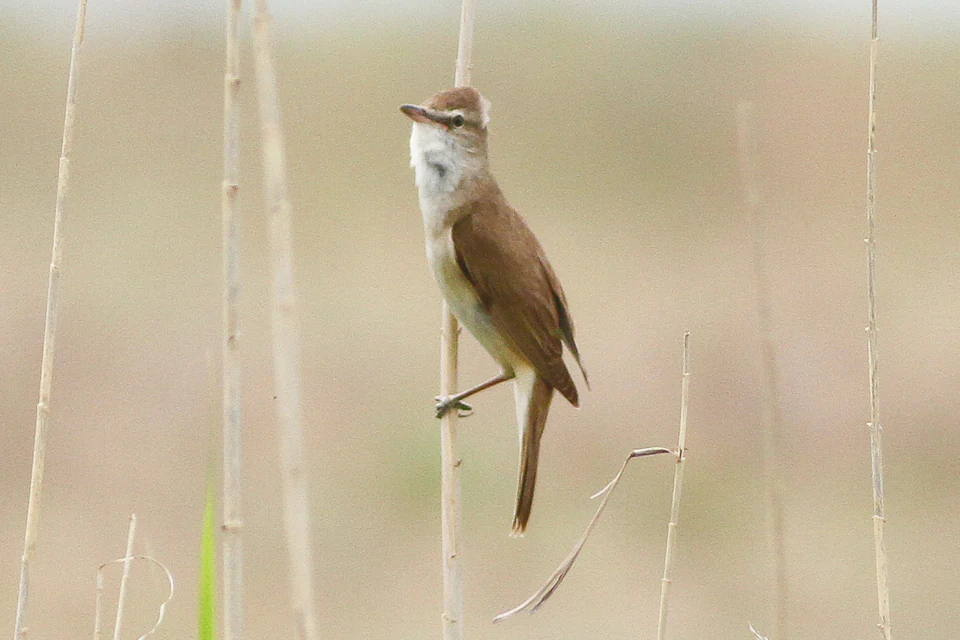
The bird community features both Annex I species of the EU Birds Directive and other characteristic wetland and meadow species. Kingfisher (Alcedo atthis), white stork (Ciconia ciconia), common crane (Grus grus), and red-backed shrike (Lanius collurio) are designated for protection. Additional recorded species include great reed warbler (Acrocephalus arundinaceus), mallard (Anas platyrhynchos), common nightingale (Luscinia megarhynchos), European turtle dove (Streptopelia turtur), northern lapwing (Vanellus vanellus), red kite (Milvus milvus), and common goldeneye (Bucephala clangula).
Feuchtwiesen Atterwasch conservation status and protection priorities
The conservation significance of Feuchtwiesen Atterwasch is embedded in its double status as a national nature reserve and a European Natura 2000 Special Area of Conservation under the Habitats Directive. The site is classified in the IUCN system as Category IV: a Habitat or Species Management Area, meaning the land is actively managed to maintain particular habitats and the species that depend on them.
At the European level, the reserve protects a notable suite of Annex I habitat types, including natural eutrophic lakes, lowland streams with floating vegetation, species-rich matgrass swards, moist tall herb fringes, lowland hay meadows, calcareous fens, black alder and ash alluvial forests, and moist mixed oak and hornbeam woodland. In addition, several Annex II species have been documented within the property, including European beaver, European otter, large copper butterfly, hermit beetle, narrow-mouthed whorl snail, and Desmoulins' whorl snail. Recent management planning has also extended coverage to the barbastelle bat and the yellow-spotted whiteface dragonfly.
At the national and regional level, the area is protected by the Brandenburg nature conservation ordinance of 27 August 2004, amended in 2015, and is fully included within the Gubener Fließtäler landscape protection area. This layering of national, landscape, and European designations reflects the importance of preserving floodplain meadow systems and their associated hydrology in the Lusatian-Guben region. The reserve illustrates how relatively small but well-managed lowland protected areas can contribute meaningfully to European biodiversity targets, especially for habitats that depend on continued low-intensity agricultural and water management.
Feuchtwiesen Atterwasch cultural meaning and human context
Feuchtwiesen Atterwasch can be understood as part of a long-running cultural landscape of wet meadow use in the Lusatian lowlands. The combination of mown meadows, ditches, and streams reflects centuries of pastoral and agricultural management in which communities shaped drainage and swards to maintain productive fodder land. The name Atterwasch itself is a local place name rooted in this small settlement tradition.
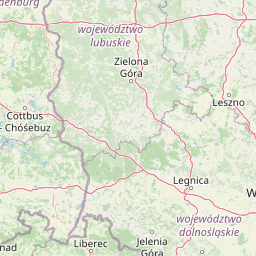
The reserve lies within the municipality of Schenkendöbern and the Spree-Neiße district, an area marked by close proximity to the Polish border, with Guben located on the opposite side of the Neiße river. The wider region has historically been shaped by mixed German and Sorbian cultural influences in Lower Lusatia, with traditional land use patterns that favored small-scale grazing, hay cutting, and pond management. The contemporary reserve therefore reflects not only ecological but also continuing agricultural heritage, maintaining the management practices that produced the habitat mosaic in the first place.
Top sights and standout views in Feuchtwiesen Atterwasch
Feuchtwiesen Atterwasch highlights include a tight concentration of European-protected habitat types within a compact 193-hectare reserve, from eutrophic lakes and flowing streams to calcareous fens and alluvial forests. The Schwarze Fließ anchors the landscape and creates the hydrological conditions that sustain the wet meadow mosaic. The reserve's species list is unusually rich for its size, encompassing beaver and otter, multiple Annex I and Annex II species under the Habitats Directive, breeding birds of wet meadows and reeds, and a diverse assemblage of dragonflies, butterflies, and snails. As a double-designated national and European site within the Gubener Fließtäler landscape protection area, it represents a small but high-value node in Brandenburg's contribution to European biodiversity conservation.
Best time to visit Feuchtwiesen Atterwasch
Spring through early summer tends to be the most rewarding period for experiencing Feuchtwiesen Atterwasch, when wet meadows support flowering hay plants, water plants bloom in ditches and ponds, and breeding birds such as common crane, lapwing, and reed warblers are active. Early mornings in late spring often bring the best chances of seeing mammals near watercourses. Autumn visits can also be productive for observing amphibian movements in damp weather and for appreciating the muted, atmospheric character of lowland floodplain mists; the area's climatologically prone fog and late frosts are part of the regional charm. Winter typically offers quieter, more contemplative conditions, though frost and snow can limit access to less-prepared paths.