Mori Atlas logo
Nature reserveDługosz Królewski w Węglewicach

Examining the ecological boundaries and botanical terrain within Łódź Voivodeship.

Długosz Królewski w Węglewicach: Protected Nature Reserve and Floristic Landscape in Poland

(Rezerwat przyrody Długosz Królewski w Węglewicach)

Długosz Królewski w Węglewicach serves as a specialized nature reserve in central Poland, established to safeguard a significant population of royal fern within the Kotlina Grabowska mesoregion. This protected landscape encompasses a complex mosaic of plant communities, ranging from suboceanic pine forests to sphagnum alder swamps, illustrating a concentrated gradient of boreal wetland habitats. The area remains a key reference point for regional conservation and habitat study in the Łódź Voivodeship.

floristic reservenature reservePolandŁódzkie VoivodeshipWieruszowski Countyroyal fern

Długosz Królewski w Węglewicach

Nature reserve

Park overview

Structured park overview, official facts, and landscape profile for Długosz Królewski w Węglewicach

Długosz Królewski w Węglewicach park facts, protected area profile, and essential visitor context

Review the core facts for Długosz Królewski w Węglewicach, including designation, size, terrain, visitor scale, habitats, and operating context in one park-focused overview.

About Długosz Królewski w Węglewicach

Długosz Królewski w Węglewicach is a compact floristic nature reserve in the Łódzkie region of central Poland, dedicated to the protection of the royal fern, Osmunda regalis. The reserve sits within the Kotlina Grabowska, a lowland mesoregion characterized by gentle terrain, glacial and post-glacial deposits, and locally wet, acidic soils suitable for distinctive plant communities. Although the reserve amounts to only a few hectares, its focused purpose gives it a clear identity within the Polish network of protected areas.

The site was established in 1965 through an order of the Minister of Forestry and the Wood Industry, with the explicit aim of preserving, for scientific and educational reasons, the natural occurrence of the royal fern. The royal fern is a large, elegant species whose fronds can reach about two meters, and it tends to grow in moist, acidic conditions such as boggy woodland edges, wet pine forests, and alder swamps. The Polish distribution of the species has become increasingly fragmented, making protected refuges like this reserve especially important for the long-term survival of the plant.

Within the reserve's small footprint, four plant communities coexist, reflecting the hydrological and soil gradients of the site. These include a fresh suboceanic pine forest, a boggy pine forest, an inland moist pine forest, and a sphagnum alder swamp. Together they form a habitat mosaic that supports both the royal fern and a wider set of wetland-dependent species, illustrating how even very small reserves can preserve meaningful environmental diversity when they target specific ecological conditions.

Quick facts and research context for Długosz Królewski w Węglewicach

The reserve lies in the Łódzkie Voivodeship in central Poland, within the Kotlina Grabowska mesoregion and the administrative area of Gmina Galewice, Wieruszowski County. It is a floristic nature reserve, more specifically classified as a reserve of spore-producing plants (rośliny zarodnikowe), and was created in 1965 by order of the Minister of Forestry and the Wood Industry. The current conservation plan, established in 2013 and amended in 2015, places the area under active protection (ochrona czynna).

Protection and recognition

Examine documented protection scope and international recognition records

Długosz Królewski w Węglewicach Protection Status and Terrestrial Designations

Długosz Królewski w Węglewicach maintains a terrestrial protection scope within the established conservation framework. Official records outline the recorded designation history and management parameters governing the protected area.

Protection details

Protection scope
Terrestrial
Transboundary protection
No
Park context

Deeper park guide and search-rich context for Długosz Królewski w Węglewicach

Długosz Królewski w Węglewicach history, landscape, wildlife, and travel context

Explore Długosz Królewski w Węglewicach through its history, landscape character, ecosystems, wildlife, conservation priorities, cultural context, and seasonal travel timing in a structured park guide built for atlas discovery and search intent.

Why Długosz Królewski w Węglewicach stands out

The reserve is best known for protecting a rare and visually striking population of royal fern (Osmunda regalis), a species whose tall, plume-like fronds can reach roughly two meters in height. As the only such reserve in the region, it serves as a focused stronghold for one of Poland's uncommon fern species and is valued for both its scientific and educational significance.

Długosz Królewski w Węglewicach history and protected-area timeline

The reserve was formally created on 23 October 1965 by an order of the Minister of Forestry and the Wood Industry, recorded in the Polish legal monitor as M.P. of 1965, No. 64, item 358. The founding act explicitly defined its purpose as preserving, for scientific and educational reasons, the natural occurrence of the royal fern (Osmunda regalis).

In 2013 the reserve received a formal protection plan, which was amended in 2015. Under this plan the area is managed through active protection (ochrona czynna), meaning that conservation interventions are used to maintain or improve habitat conditions rather than relying solely on passive protection. This management approach reflects the small and ecologically sensitive nature of the site.

Długosz Królewski w Węglewicach landscape and geographic character

The reserve lies within the Kotlina Grabowska, a low-lying mesoregion in central Poland shaped by glacial and post-glacial processes. The terrain is gentle, with local variations in hydrology creating pockets of wet, acidic ground interspersed with drier sandy soils. These conditions favor a mosaic of forest types rather than a single uniform landscape, and small reserves in such terrain often contain surprisingly varied plant communities.

The Węglewice reserve reflects this pattern on a miniature scale. Within just a few hectares, the vegetation shifts from fresher pine forest on relatively dry ground through increasingly wet boreal woodland types to a sphagnum alder swamp. The landscape is therefore defined less by dramatic topography than by subtle but ecologically important transitions between dry, moist, and waterlogged habitats.

Długosz Królewski w Węglewicach ecosystems, habitats, and plant life

The reserve's ecological character is defined by a small but distinct mosaic of four plant communities. A fresh suboceanic pine forest occupies the better-drained areas, while boggy pine forest and an inland moist pine forest occupy progressively wetter ground. A sphagnum alder swamp represents the wettest extreme of the habitat gradient and provides the acidic, waterlogged conditions that the royal fern favors.

The interplay of these communities, even within a few hectares, gives the site ecological value beyond its small size. The wet, peat-influenced soils support bryophyte-rich microhabitats typical of boreal mire edges, while the surrounding pine stands provide a more acidic litter environment. The reserve therefore functions as a compact refugium for habitat types and associated species that have become scarce across much of the surrounding agricultural landscape.

Długosz Królewski w Węglewicach wildlife and species highlights

The available source material focuses on the botanical significance of the reserve, particularly the royal fern population and its associated plant communities. Detailed wildlife data beyond the vegetation layer is not well documented in the supplied sources, so specific faunal content cannot be responsibly introduced.

Długosz Królewski w Węglewicach conservation status and protection priorities

Conservation significance of the Długosz Królewski w Węglewicach reserve centers on its role in safeguarding Osmunda regalis, a fern that has become rare across much of Poland. By formally protecting one of the few local strongholds of this species, the reserve contributes to the persistence of genetic resources and habitat conditions that are increasingly difficult to find outside protected sites.

The reserve's classification as a floristic reserve of spore-producing plants gives it a specialized role within the Polish protected-area network, and its management under active protection since the 2013 plan (amended in 2015) indicates ongoing attention to maintaining the ecological conditions that the royal fern depends on. Even though the area is very small, its focused mission illustrates the value of targeted reserve design for species that depend on specific microhabitats.

Top sights and standout views in Długosz Królewski w Węglewicach

The reserve's standout quality is its focused mission: a tiny protected area built specifically around a single charismatic plant, the royal fern. Because it is the only reserve of its kind in the broader Łódzkie region and one of very few in Poland dedicated to this species, it carries disproportionate importance for royal fern conservation relative to its size.

Equally notable is the diversity packed into its small footprint. The coexistence of suboceanic pine forest, boggy pine forest, moist inland pine forest, and sphagnum alder swamp within a few hectares creates a habitat gradient that is unusual for such a compact site. Visitors and researchers value the reserve not just as a fern sanctuary but as a miniature example of how boreal wetland vegetation can survive within an intensively used central Polish landscape.
Monthly climate preview

Long-term monthly temperature averages and precipitation patterns for Długosz Królewski w Węglewicach

Długosz Królewski w Węglewicach Climate Normals and Annual Temperature Rhythm

Representative point measurements reveal a measured annual temperature range from sub-zero winter means to warm summer peaks alongside steady precipitation values. Detailed monthly breakdowns provide complete long-term climatology data for deeper geographical analysis of the protected area.
Annual mean9 °C
-3 °C20 °C
Jan-3°
Feb-1°
Mar
Apr
May14°
Jun18°
Jul20°
Aug20°
Sep15°
Oct
Nov
Dec-1°
Warmest month
July

20.5 °C

Coolest month
January

-2.6 °C

Wettest month
July

2.5 mm/day

Driest month
April

1.2 mm/day

Park location guide

Geography guide, regional context, and park location map for Długosz Królewski w Węglewicach

Długosz Królewski w Węglewicach park geography, regions, and map view in Poland

Understand where Długosz Królewski w Węglewicach sits in Poland through a broader geographic reading of the surrounding landscape, nearby location context, and its mapped position within the national park landscape.

How Długosz Królewski w Węglewicach fits into Poland

Poland, officially the Republic of Poland, is a Central European country spanning from the Baltic Sea in the north to the Carpathian Mountains in the south. It borders Germany, Czech Republic, Slovakia, Ukraine, Belarus, Lithuania, and Kaliningrad Oblast. The country has a temperate climate, diverse landscapes, and is known for its rich history, cultural heritage, and strong economic position within the EU.

Wider geography shaping Długosz Królewski w Węglewicach in Poland

Poland occupies 312,696 km2 in Central Europe, extending from the Baltic Sea coast in the north to the Sudetes and Carpathian Mountains in the south. It borders Germany to the west, Czech Republic and Slovakia to the south, Ukraine and Belarus to the east, and Lithuania and Kaliningrad Oblast to the northeast. The landscape includes lowland plains, uplands, and mountain ranges.

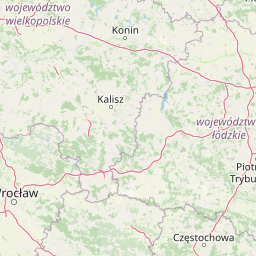
Map view of Długosz Królewski w Węglewicach

Use this park location map to pinpoint Długosz Królewski w Węglewicach in Poland, understand its exact geographic position, and read its mapped placement within the surrounding landscape more clearly.

Pigeon | © OpenStreetMap contributors

Location context for Długosz Królewski w Węglewicach

Łódź Voivodeship
Park atlas

Compare nearby regional nature reserves and connected protected landscapes in central Poland.

Exploring Parks Near Długosz Królewski w Węglewicach And Surrounding Protected Areas

Browse other parks near Długosz Królewski w Węglewicach to examine similar wetland habitats and regional conservation patterns across central Poland. Expanding the geographic comparison provides broader context on local forest ecosystems, glacial terrain, and protected natural areas.
Nature reserveGreater Poland Voivodeship
About 19 km away#1 closest

West

Rezerwat przyrody Jodły Ostrzeszowskie: Mapped Geography and Protected Forest Boundaries

Nature reserve study in the Greater Poland Voivodeship

Rezerwat przyrody Jodły Ostrzeszowskie functions as a critical floristic site in west-central Poland. Located in Ostrzeszów County, this protected area anchors a rare population of silver fir at the edge of its range. The site serves as a vital point for understanding lowland forest composition and range-limit ecology within the regional mosaic of the Kotlina Grabowska.

Area
0.087 km²
Established
1963
Relief
Lowland
Scope
Terrestrial
Nature reserveWielkopolska Voivodeship
About 27 km away#2 closest

Northwest

Rezerwat przyrody Majówka: Protected Nature Reserve and Woodland Geography

Geographic landscape mapping in Wielkopolska Voivodeship

Rezerwat przyrody Majówka offers a focused look at small-scale forest conservation in central-western Poland. Protecting approximately eight hectares of uneven-aged mixed woodland, the reserve serves as a vital ecological sentinel for silver fir and spruce populations, providing valuable data on lowland forest structure and regional biodiversity within the Kotlina Grabowska lowland mesoregion.

Area
0.08 km²
Established
1958
Relief
Lowland
Climate
Temperate
Protected landscapeŁódź Voivodeship
About 41 km away#3 closest

Southeast

Załęczański Park Krajobrazowy: Mapping the Karst Landscape and Warta River Geography

A comprehensive look at protected karst features in central Poland.

Spanning the Wieluńska Upland, Załęczański Park Krajobrazowy serves as a central protected landscape renowned for its geological diversity. From the Warta River meanders and oxbow lakes to the concentrated cave systems and pulsating karst springs, this geography provides an in-depth look at the intersection of river dynamics and limestone terrain within the Polish Jura.

Area
147.5 km²
Established
1978
Relief
Upland
Climate
Temperate
Protected landscapeLodzkie Voivodeship
About 41 km away#4 closest

Southeast

Osjakowski Zespół Przyrodniczo-Krajobrazowy: River Valley Geography and Protected Terrain

A vital wetland corridor within the Lodzkie Voivodeship landscape network.

Located in central Poland, this protected landscape safeguards a representative stretch of the Warta river valley. It acts as an essential ecological bridge, connecting surrounding regional parks through a diverse mosaic of floodplain habitats, riparian forests, and riverine terrain that host unique bird and plant communities.

Area
24.92 km²
Established
1998
Relief
Lowland
Scope
Terrestrial
Nature reserveLodzkie Voivodeship
About 47 km away#5 closest

Southeast

Rezerwat przyrody Mokry Las: Protected Oak-Hornbeam Forest and Regional Geography

A botanical forest refuge in the Kotlina Szczercowska basin.

Situated in the Pajęczno County of central Poland, Rezerwat przyrody Mokry Las is a dedicated nature reserve protecting a complete stand of oak-hornbeam forest. The area stands as an island of mixed deciduous and coniferous woodland within the gentle terrain of the Kotlina Szczercowska, offering a clear view of regional botanical conservation and forest ecology.

Area
0.146 km²
Established
1983
Relief
Lowland
Climate
Temperate
Nature reserveŁódź Voivodeship
About 48 km away#6 closest

Southeast

Dąbrowa w Niżankowicach Nature Reserve: Protected Forest Landscapes and Regional Geography

A vital oak forest sanctuary in Poland's Łódź Voivodeship.

Dąbrowa w Niżankowicach preserves a mosaic of acidophilous oak woodlands and rare flora within the Łódź Voivodeship. This nature reserve functions as a concentrated site for vegetation-focused conservation, maintaining natural forest structures that have become increasingly scarce throughout the wider Wyżyna Wieluńska landscape. Its mapped boundaries highlight a significant ecological island within a predominantly agricultural region.

Area
1.025 km²
Established
1983
Relief
Upland
Climate
Temperate
Nature reserveLodz Voivodeship
About 49 km away#7 closest

Northeast

Rezerwat przyrody Jeziorsko: Protected Wetland and Reservoir Geography

A significant inland nature reserve in Lodz Voivodeship

Spanning roughly 1,968 hectares on the Warta River, Rezerwat przyrody Jeziorsko functions as a primary faunal nature reserve and wetland sanctuary. It provides essential habitat for waterbirds, including significant breeding populations of the great egret, within the context of the larger Jeziorsko Reservoir. This area offers a unique look at inland aquatic landscapes and the conservation frameworks shaping regional geography in central Poland.

Area
19.677 km²
Established
1998
Water
Major water bodies
A soft, painterly watercolor illustration showing a landscape with distant rolling hills, a green meadow, and a winding path in the foreground against a white background.
Nature reserveGreater Poland Voivodeship
About 59 km away#8 closest

Northwest

Dąbrowa Smoszew Nature Reserve: Mapped Geography and Protected Forest Landscapes

A key ecological node in the Greater Poland Voivodeship landscape

Dąbrowa Smoszew protects a compact fragment of mature oak forest, providing a natural refuge with 120 to 150 year old tree stands. Positioned within the Wysoczyzna Kaliska, the area maintains a complex mosaic of woodland flora and forest communities that function as a critical part of the regional conservation network, bridging local habitat history with contemporary Natura 2000 protected status.

Area
0.139 km²
Established
1963
Relief
Lowland
Scope
Terrestrial

Common questions about visiting, size, designation, and location context for Długosz Królewski w Węglewicach

Długosz Królewski w Węglewicach FAQs for park facts, access, geography, and protected area context

Find quick answers about Długosz Królewski w Węglewicach, including protected-area facts, park geography, trail and visitor context, and how the park fits into its surrounding country and regional landscape.
MoriAtlas Explorer

Continue Your Protected Areas Search Across the Global Atlas

Deepen your exploration by continuing the structured search for national parks and protected areas worldwide. Utilize the comprehensive filtering capabilities to compare different conservation landscapes and refine your understanding of global park geography. Discover more about the distribution and characteristics of protected natural areas.

Global natural geography