
Why Dąbrowa Smoszew Nature Reserve stands out
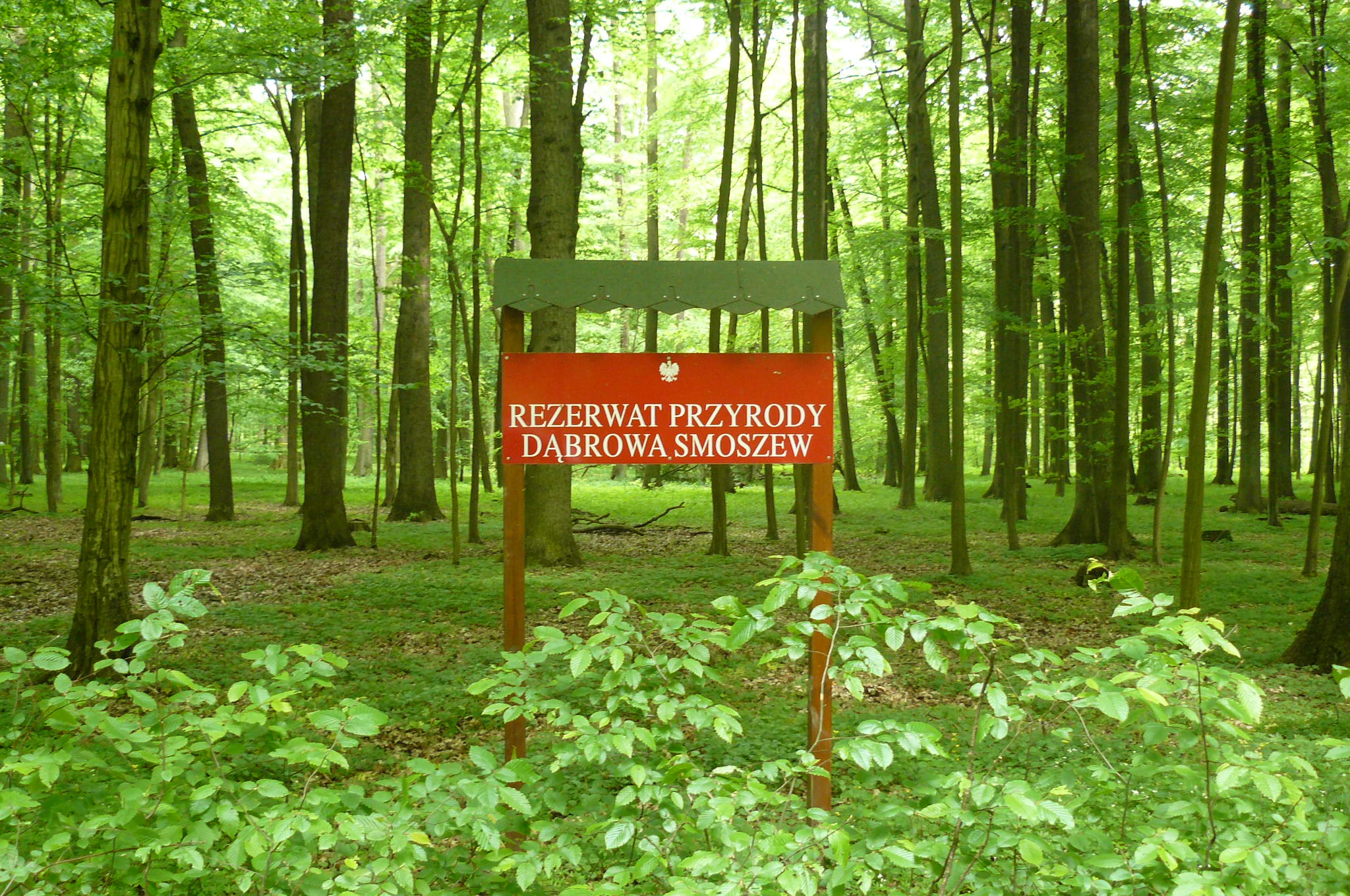
The reserve is best known for preserving a stand of natural oak forest that retains a notably old age structure, with trees averaging from 120 to 150 years old and reaching heights of around 30 meters. It represents one of the characteristic forest fragments of the Krotoszyn oaklands, where mixed communities transition from typical oak-hornbeam woodland toward ash-elm and alder riparian forest. The reserve is also recognized for protecting populations of rare and characteristic lowland woodland plants, including species of conservation interest such as wild service tree and woodland bulrush-adjacent flora typical of mature Central European deciduous forests.
Dąbrowa Smoszew Nature Reserve history and protected-area timeline
Dąbrowa Smoszew was formally designated as a nature reserve in 1963 by order of the Minister of Forestry and the Wood Industry, establishing it as one of the early postwar conservation sites dedicated to protecting natural oak forest in the Krotoszyn area. The founding legal act was published in the official Polish legal gazette Monitor Polski in 1963, marking the beginning of formal state protection for this forest fragment.
Following Poland's administrative reorganization, the reserve was reconfirmed through regional and national listings that consolidated its legal status, culminating in a detailed reaffirmation by the Regional Director of Environmental Protection in Poznań in 2011. This 2011 order formalized the modern management framework, including the active protection regime currently applied to the site.
The reserve's establishment in the early 1960s reflects a broader period in Polish conservation history when attention turned to preserving remaining patches of natural lowland forest amid expanding agriculture and forestry intensification. Dąbrowa Smoszew thus stands as a representative example of how small forested refuges were formally secured during that era to safeguard characteristic oak-dominated woodland communities that were otherwise declining across the lowlands.
Dąbrowa Smoszew Nature Reserve landscape and geographic character
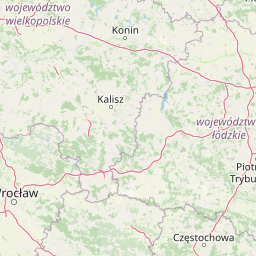
The reserve occupies a gently rolling portion of the Wysoczyzna Kaliska, a low upland mesoregion in west-central Poland characterized by subtle relief, glacial-sediment parent materials, and a long history of mixed agricultural and forest use. Within this broader landform, the protected forest forms a compact green patch contrasted against surrounding farmland.
Topographically, the landscape is modest and subdued, without dramatic relief, but it supports a layered vegetation structure shaped by soil, moisture gradients, and historical forest continuity. The wooded area transitions internally between drier oak-hornbeam-influenced communities and wetter ash-elm and alder-dominated stands, producing the variegated forest mosaic from which the reserve's name is drawn.
Canopy trees in the reserve reach heights of roughly 30 meters, with oaks forming the structural backbone and other species contributing to vertical diversity. The understory, shrub layer, and herbaceous flora further define the visual character of the interior, while at the boundary near the Smoszew forest lodge, a monumental triple-stemmed linden stands as a natural monument, anchoring the landscape's cultural-natural connection to its surroundings.
Dąbrowa Smoszew Nature Reserve ecosystems, habitats, and plant life
Dąbrowa Smoszew protects a fragment of natural lowland mixed oak forest, one of the characteristic forest types of the Krotoszyn region and a habitat of significant conservation interest across Central European lowlands. The forest community is structured around oak dominance, with a mixture of accompanying broadleaf and coniferous species that reflect both local soil conditions and regional woodland history.
Ecologically, the reserve spans a transition between several forest community types. The drier, more typical component resembles oak-hornbeam forest, while wetter microsites support ash-elm riparian forest and alder swamp forest, producing internal habitat diversity despite the reserve's small size. Such gradients are important for many forest-specialist species, including woodland herbs, invertebrates, and birds that depend on structural variation rather than uniform canopy.
The site's nature conservation value is reinforced at multiple levels. It lies within the Dąbrowy Krotoszyńskie Protected Landscape Area and is part of two Natura 2000 sites, including a bird protection area and a habitat area. These overlapping designations confirm the reserve's role in representing intact oak-forest habitat within a regional ecological network, rather than functioning as an isolated patch.
Dąbrowa Smoszew Nature Reserve wildlife and species highlights
The reserve supports the typical forest fauna associated with mature, structurally diverse oak-dominated woodland in the Polish lowlands. Because the canopy includes a meaningful component of old trees and the forest mosaic contains both drier and wetter habitats, the site offers nesting, shelter, and foraging opportunities for many woodland bird species typical of Central European deciduous forest.
The reserve's inclusion in the Natura 2000 bird area Dąbrowy Krotoszyńskie (PLB300007) reflects its contribution to broader avian conservation in eastern Greater Poland, particularly for species associated with extensive lowland oak forest landscapes. Woodpeckers, cavity-nesting birds, and understory-dwelling songbirds would be expected to use the older stands, snag resources, and varied shrub layer typical of such forest conditions.
Mammals and other forest-dwelling fauna common to similar Polish oak woodlands would also find suitable habitat in the reserve, supported by the available cover, structural diversity of the forest, and continuity provided by the surrounding protected landscape. The site's primary wildlife significance lies less in any single charismatic species and more in its role as a stable refuge of mature forest conditions within a heavily human-shaped regional landscape.
Dąbrowa Smoszew Nature Reserve conservation status and protection priorities
Dąbrowa Smoszew's primary conservation importance lies in safeguarding a small but representative fragment of natural oak-dominated forest that has retained its old-growth character. Such sites are increasingly rare in intensively used European lowlands, where most woodland has been converted to production forest or replaced by agriculture.
The reserve is under active protection, meaning management interventions are applied to maintain and, where necessary, restore the site's valuable habitat features rather than simply excluding human activity. This management approach is particularly important for oak forest ecosystems, where continuity of natural processes and removal of pressure from invasive or destabilizing influences help maintain the integrity of the stand and its associated flora.
At the broader conservation level, the reserve functions as a node within a network that includes both national and European designations. The surrounding Protected Landscape Area and the overlapping Natura 2000 sites elevate the reserve's status from a local protection to part of transnational habitat conservation efforts, particularly for lowland oak forest and associated bird populations. This integrated framework strengthens the long-term viability of the site despite its small core area.
Dąbrowa Smoszew Nature Reserve cultural meaning and human context
The reserve sits within the historically significant landscape of the Krotoszyn oaklands (Dąbrowy Krotoszyńskie), a region whose identity has long been shaped by extensive oak forest and traditional rural land use. The name "dąbrowa," meaning oak forest in Polish, directly reflects this regional woodland heritage.
Archaeological evidence enriches the cultural landscape around the reserve. Scattered throughout the broader forest area are groupings of prehistoric burial mounds (kurhany), indicating that the oak-dominated landscape has supported human communities for thousands of years. These features illustrate the long coexistence of people with the forest, and today contribute to the area's significance as a place where natural and cultural heritage intersect.
Near the reserve boundary, at the Smoszew forest lodge (Leśniczówka Smoszew), stands a triple-stemmed linden that is formally protected as a natural monument. Such trees traditionally hold both ecological and symbolic-cultural value in Polish rural landscapes, marking gathering places, significant sites, or simply longstanding landmarks. Their presence near the reserve underscores the deep intertwining of natural and cultural value in the regional landscape context.
Top sights and standout views in Dąbrowa Smoszew Nature Reserve
Dąbrowa Smoszew stands out for protecting one of the older mixed oak forest fragments of the Krotoszyn region, where trees average 120 to 150 years old and reach roughly 30 meters in height, providing structural continuity that is rare in surrounding production forest.
The reserve is small but ecologically meaningful, encompassing a gradient of forest communities ranging from oak-hornbeam woodland to ash-elm and alder-dominated stands. Its overlap with both a Protected Landscape Area and two Natura 2000 sites highlights its role as a local node within a much wider conservation network.
Surrounding cultural features, including prehistoric burial mounds scattered through the broader oaklands and a protected triple linden near the Smoszew forest lodge, enhance the reserve's significance by connecting its ecological value to the region's long human-natural landscape history.
Best time to visit Dąbrowa Smoszew Nature Reserve
Late spring and early summer are typically the most rewarding periods to visit woodland reserves of this character, when the herb layer is in active growth and characteristic forest species such as lily of the valley and sweet woodruff are flowering under the warming canopy. In the case of Dąbrowa Smoszew, these seasons allow visitors to experience the reserve's understory diversity, including the rare woodland plants that are part of its formal protection rationale.
Late summer through autumn can also be appealing for visitors interested in the structural character of the mature oak forest, when changing foliage highlights the layered composition of oak, hornbeam, alder, and other broadleaf species. Cooler, quieter seasons may suit those seeking observation of the older forest atmosphere rather than peak botanical display, with crisp conditions and reduced insect activity enhancing the experience of the woodland interior.
Because the reserve is a protected natural area focused on conservation rather than recreation, any visit should be approached with respect for active protection measures and minimal disturbance to the forest floor, nest sites, and understory communities that give the site its value.