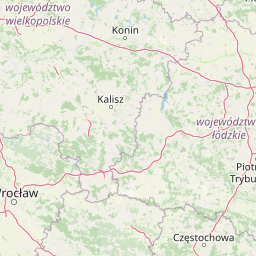
Why Długosz Królewski w Węglewicach stands out
The reserve is best known for protecting a rare and visually striking population of royal fern (Osmunda regalis), a species whose tall, plume-like fronds can reach roughly two meters in height. As the only such reserve in the region, it serves as a focused stronghold for one of Poland's uncommon fern species and is valued for both its scientific and educational significance.
Długosz Królewski w Węglewicach history and protected-area timeline
The reserve was formally created on 23 October 1965 by an order of the Minister of Forestry and the Wood Industry, recorded in the Polish legal monitor as M.P. of 1965, No. 64, item 358. The founding act explicitly defined its purpose as preserving, for scientific and educational reasons, the natural occurrence of the royal fern (Osmunda regalis).
In 2013 the reserve received a formal protection plan, which was amended in 2015. Under this plan the area is managed through active protection (ochrona czynna), meaning that conservation interventions are used to maintain or improve habitat conditions rather than relying solely on passive protection. This management approach reflects the small and ecologically sensitive nature of the site.
Długosz Królewski w Węglewicach landscape and geographic character
The reserve lies within the Kotlina Grabowska, a low-lying mesoregion in central Poland shaped by glacial and post-glacial processes. The terrain is gentle, with local variations in hydrology creating pockets of wet, acidic ground interspersed with drier sandy soils. These conditions favor a mosaic of forest types rather than a single uniform landscape, and small reserves in such terrain often contain surprisingly varied plant communities.
The Węglewice reserve reflects this pattern on a miniature scale. Within just a few hectares, the vegetation shifts from fresher pine forest on relatively dry ground through increasingly wet boreal woodland types to a sphagnum alder swamp. The landscape is therefore defined less by dramatic topography than by subtle but ecologically important transitions between dry, moist, and waterlogged habitats.
Długosz Królewski w Węglewicach ecosystems, habitats, and plant life
The reserve's ecological character is defined by a small but distinct mosaic of four plant communities. A fresh suboceanic pine forest occupies the better-drained areas, while boggy pine forest and an inland moist pine forest occupy progressively wetter ground. A sphagnum alder swamp represents the wettest extreme of the habitat gradient and provides the acidic, waterlogged conditions that the royal fern favors.
The interplay of these communities, even within a few hectares, gives the site ecological value beyond its small size. The wet, peat-influenced soils support bryophyte-rich microhabitats typical of boreal mire edges, while the surrounding pine stands provide a more acidic litter environment. The reserve therefore functions as a compact refugium for habitat types and associated species that have become scarce across much of the surrounding agricultural landscape.
Długosz Królewski w Węglewicach wildlife and species highlights
The available source material focuses on the botanical significance of the reserve, particularly the royal fern population and its associated plant communities. Detailed wildlife data beyond the vegetation layer is not well documented in the supplied sources, so specific faunal content cannot be responsibly introduced.
Długosz Królewski w Węglewicach conservation status and protection priorities
Conservation significance of the Długosz Królewski w Węglewicach reserve centers on its role in safeguarding Osmunda regalis, a fern that has become rare across much of Poland. By formally protecting one of the few local strongholds of this species, the reserve contributes to the persistence of genetic resources and habitat conditions that are increasingly difficult to find outside protected sites.
The reserve's classification as a floristic reserve of spore-producing plants gives it a specialized role within the Polish protected-area network, and its management under active protection since the 2013 plan (amended in 2015) indicates ongoing attention to maintaining the ecological conditions that the royal fern depends on. Even though the area is very small, its focused mission illustrates the value of targeted reserve design for species that depend on specific microhabitats.
Top sights and standout views in Długosz Królewski w Węglewicach
The reserve's standout quality is its focused mission: a tiny protected area built specifically around a single charismatic plant, the royal fern. Because it is the only reserve of its kind in the broader Łódzkie region and one of very few in Poland dedicated to this species, it carries disproportionate importance for royal fern conservation relative to its size.
Equally notable is the diversity packed into its small footprint. The coexistence of suboceanic pine forest, boggy pine forest, moist inland pine forest, and sphagnum alder swamp within a few hectares creates a habitat gradient that is unusual for such a compact site. Visitors and researchers value the reserve not just as a fern sanctuary but as a miniature example of how boreal wetland vegetation can survive within an intensively used central Polish landscape.