Mori Atlas logo
Nature reserveDoliska Nature Reserve

Understanding the ecological significance of out of range silver fir populations within the Lodzkie Voivodeship forest landscape

Doliska Nature Reserve: A Detailed Map and Geographic Overview of Central Polish Protected Forest

(Rezerwat przyrody Doliska)

Doliska Nature Reserve represents a critical site for the study of forest conservation in central Poland. Located within the Wzniesienia Lodzkie uplands, this protected area preserves a unique stand of mixed forest where silver fir grows far beyond its standard ecological range. The reserve functions as a scientific reference for lowland woodland composition, providing essential data on how relict tree populations persist within the shifting geographic context of the Lodzkie Voivodeship.

forest reservemixed forestsilver firphytocenotic reservelowland woodlandcentral Poland

Doliska Nature Reserve

Nature reserve

Park overview

Structured park overview, official facts, and landscape profile for Doliska Nature Reserve

Doliska Nature Reserve park facts, protected area profile, and essential visitor context

Review the core facts for Doliska Nature Reserve, including designation, size, terrain, visitor scale, habitats, and operating context in one park-focused overview.

About Doliska Nature Reserve

Doliska Nature Reserve is a small protected woodland in central Poland, administratively located within Gmina Rogów in Brzeziny County of the Łódź Voivodeship. Geographically, it sits within the Wzniesienia Łódzkie mesoregion, a landscape of modest hills, ridges, and forested lowlands that form part of the broader central Polish upland system. Within this regional context, Doliska is a very small but ecologically distinctive site.

The reserve was established in 1954 through an order of the Minister of Forestry. Its founding purpose was to preserve, for scientific and educational reasons, a stand of mixed forest that contains silver fir. The significance of this protection lies in the fact that the silver fir stand occurs outside the natural range of the species in Poland. In lowland and central Poland, silver fir populations of this kind are considered biologically unusual because the species' main range lies further south and in adjacent mountain regions.

As a phytocenotic forest reserve focused on woodland communities, Doliska represents a particular category of Polish nature protection, one that emphasizes the conservation of representative plant assemblages rather than single species, geological features, or landscape scenery. The reserve is currently subject to active protection under a management plan drawn up in 2013 and amended in 2015, indicating that ongoing ecological intervention is used to maintain the woodland character of the site.

Quick facts and research context for Doliska Nature Reserve

Doliska Nature Reserve is a forest nature reserve in the Łódź Voivodeship of central Poland, situated in Gmina Rogów in Brzeziny County. It lies within the Wzniesienia Łódzkie mesoregion, a hilly area of central Poland that historically supported mixed broadleaf and coniferous woodland.

The reserve was created in 1954 by ministerial order and is managed under an active protection regime. Its defining feature is the presence of silver fir growing in a mixed forest stand located outside the normal range of the species, a situation that frames the reserve as a small but ecologically unusual site.

Protection and recognition

Examine documented conservation scope and international recognition facts

Doliska Nature Reserve Protection Status and Terrestrial Designation

Doliska Nature Reserve maintains a registered terrestrial protection status within the global park database. Review the documented management scope and official designation records associated with this protected natural area.

Protection details

Protection scope
Terrestrial
Park context

Deeper park guide and search-rich context for Doliska Nature Reserve

Doliska Nature Reserve history, landscape, wildlife, and travel context

Explore Doliska Nature Reserve through its history, landscape character, ecosystems, wildlife, conservation priorities, cultural context, and seasonal travel timing in a structured park guide built for atlas discovery and search intent.

Why Doliska Nature Reserve stands out

Doliska is best known for preserving a small fragment of mixed forest that includes silver fir far beyond the species' natural distribution limit in Poland. This out-of-range silver fir population is the reserve's defining ecological feature and the reason for its establishment. The site is also appreciated as a compact example of a Polish phytocenotic forest reserve, focused on preserving a specific woodland community rather than a particular animal or geological feature.

Doliska Nature Reserve history and protected-area timeline

Doliska Nature Reserve was established in 1954 through an administrative order issued by the Minister of Forestry. The original founding act described the reserve's purpose as the preservation of a mixed forest containing silver fir for scientific and educational reasons, specifically because the stand was located outside the natural range of the species in Poland.

The original designation recorded a slightly smaller area than the reserve's current official extent, reflecting adjustments made to boundaries over time. In 2013 a formal protection plan was adopted for the reserve, and this plan was subsequently amended in 2015, bringing the site under an active protection regime that allows ongoing management interventions to maintain the woodland community.

Doliska Nature Reserve landscape and geographic character

The reserve lies within the Wzniesienia Łódzkie mesoregion, a region of low hills and gentle upland terrain in central Poland. The surrounding landscape is shaped by glacial and postglacial processes typical of the central Polish lowlands, with modest elevation differences, mixed agricultural land, and patches of woodland scattered across the rolling terrain.

Within this broader setting, Doliska itself represents one of the small forest fragments that historically survived across the Łódź uplands. The reserve protects a mixed forest stand rather than a visually dramatic landscape feature, and its value lies more in its ecological composition than in scenic topography.

Doliska Nature Reserve ecosystems, habitats, and plant life

The ecological core of the reserve is a mixed forest community that combines broadleaf tree species with the conifer silver fir. Silver fir is normally associated with the mountain and upland forests of southern Poland and adjacent regions, so its presence in a lowland central Polish location is considered ecologically noteworthy.

As a phytocenotic forest reserve, Doliska is protected primarily for its plant community structure rather than for individual species. The site's value rests on the persistence of this mixed woodland assemblage, including its silver fir component, in a location outside the main range of that species.

Doliska Nature Reserve wildlife and species highlights

The source material for Doliska Nature Reserve focuses on the forest community and the silver fir component of the woodland rather than on specific fauna. There is no detailed wildlife inventory presented in the available documentation, and the reserve's protected status centers on its phytocenotic character rather than on animal species.

Doliska Nature Reserve conservation status and protection priorities

Doliska's conservation significance lies in its role as a protected example of mixed forest containing silver fir outside the species' natural distribution range in Poland. The reserve was established specifically to preserve this unusual ecological situation for scientific study and educational use, making the site a small but meaningful reference point for forest ecology in central Poland.

The reserve operates under active protection management. A protection plan adopted in 2013 and amended in 2015 guides ongoing management of the woodland, indicating that conservation of the site's botanical character involves deliberate interventions rather than passive protection alone.

Top sights and standout views in Doliska Nature Reserve

Doliska Nature Reserve stands out for protecting a small fragment of mixed forest in which silver fir grows well beyond the species' natural range in Poland, a rare ecological configuration in lowland central Europe.

Although the reserve is tiny in size, its scientific and educational value is well defined, and its status as one of the older Polish forest reserves, established in 1954 and now managed under an active protection plan, gives it a meaningful place in the history of regional forest conservation in the Łódź Voivodeship.
Monthly climate preview

Long-term representative temperature and precipitation rhythm across twelve months

Doliska Nature Reserve Climate and Monthly Temperature Normals

Representative coordinate measurements reveal annual temperature and precipitation ranges spanning sub-zero winter minimums and warm summer maximums. Examining the complete monthly climate profile provides deeper context on long-term weather patterns across Doliska Nature Reserve.
Annual mean8 °C
-3 °C20 °C
Jan-3°
Feb-2°
Mar
Apr
May14°
Jun18°
Jul20°
Aug20°
Sep14°
Oct
Nov
Dec-2°
Warmest month
July

20.3 °C

Coolest month
January

-3.3 °C

Wettest month
July

2.5 mm/day

Driest month
March

1.3 mm/day

Park location guide

Geography guide, regional context, and park location map for Doliska Nature Reserve

Doliska Nature Reserve park geography, regions, and map view in Poland

Understand where Doliska Nature Reserve sits in Poland through a broader geographic reading of the surrounding landscape, nearby location context, and its mapped position within the national park landscape.

How Doliska Nature Reserve fits into Poland

Poland, officially the Republic of Poland, is a Central European country spanning from the Baltic Sea in the north to the Carpathian Mountains in the south. It borders Germany, Czech Republic, Slovakia, Ukraine, Belarus, Lithuania, and Kaliningrad Oblast. The country has a temperate climate, diverse landscapes, and is known for its rich history, cultural heritage, and strong economic position within the EU.

Wider geography shaping Doliska Nature Reserve in Poland

Poland occupies 312,696 km2 in Central Europe, extending from the Baltic Sea coast in the north to the Sudetes and Carpathian Mountains in the south. It borders Germany to the west, Czech Republic and Slovakia to the south, Ukraine and Belarus to the east, and Lithuania and Kaliningrad Oblast to the northeast. The landscape includes lowland plains, uplands, and mountain ranges.

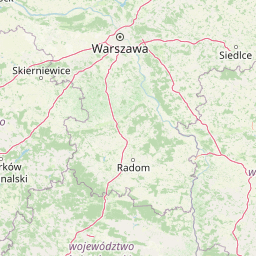
Map view of Doliska Nature Reserve

Use this park location map to pinpoint Doliska Nature Reserve in Poland, understand its exact geographic position, and read its mapped placement within the surrounding landscape more clearly.

Pigeon | © OpenStreetMap contributors

Location context for Doliska Nature Reserve

Lodzkie Voivodeship
Park atlas

Compare nearby forest reserves and regional conservation areas across central Poland

Explore Other Parks Near Doliska Nature Reserve and Surrounding Protected Landscapes

Visitors exploring Doliska Nature Reserve can continue browsing adjacent lowland woodlands and regional protected areas across the central Polish uplands. Comparing these nearby forest reserves reveals broader ecological patterns and connected conservation histories throughout the surrounding landscape.
A horizontal watercolor painting showing a soft, stylized landscape of rolling hills, grassy meadows, and clusters of trees under a bright, open sky.
Protected landscapeŁódź Voivodeship
About 18 km away#1 closest

West

Park Krajobrazowy Wzniesień Łódzkich: Geographic Overview of Central Poland's Uplands

Mapped protected landscape featuring glacial relief and forest ecosystems

Gain insights into the physical character of Park Krajobrazowy Wzniesień Łódzkich, an area defined by its striking northern edge and deep river valleys. This protected landscape preserves significant glacial erratics, a central watershed, and diverse forest cover that contrasts with the surrounding Polish plains.

Area
115.8 km²
Established
1996
Relief
Upland
Climate
Temperate
Watercolor painting of a meandering river landscape with gentle hills, light green foliage in the foreground, and soft washes of color.
Protected landscapeLodz Voivodeship
About 24 km away#2 closest

Northeast

Bolimowski Park Krajobrazowy: Geography of a Central Polish Protected Landscape Area

Rawka River valley mapping and Puszcza Bolimowska forest terrain

Bolimowski Park Krajobrazowy encompasses a unique mosaic of postglacial plains and riverine ecosystems in central Poland. The area is defined by the Rawka River, which forms a network of meanders, oxbow lakes, and terraces, while surrounding forests retain historical links to the vast primeval woods of Puszcza Bolimowska. This protected territory offers a significant habitat for diverse wildlife, including moose and beaver, within a landscape characterized by its shifting transition between deep forest, wet meadows, and light oak groves.

Area
205.123 km²
Established
1986
Relief
Lowland
Climate
Temperate
Protected areaLodzkie Voivodeship
About 25 km away#3 closest

Northeast

Polany Puszczy Bolimowskiej: Protected Meadow Enclaves within the Lodzkie Voivodeship Landscape

Mapped meadow clearings and wetland habitat geography

Polany Puszczy Bolimowskiej serves as a critical protected area in central Poland, encompassing a series of connected meadow clearings within the Bolimów Forest. This site preserves rare Molinion wet meadows and tall herb floodplains, offering a distinct study of how open habitats persist in a forest-dominated matrix.

Area
1.341 km²
Relief
Lowland
Water
Minor water
Nature reserveŁódź Voivodeship
About 26 km away#4 closest

South

Rezerwat przyrody Małecz: Protected Nature Reserve and Forest Landscape in Łódź Voivodeship

Floristic reserve and managed coniferous forest geography

Rezerwat przyrody Małecz is a key floristic site in Poland, safeguarding rare Pontic-origin flora and ancient forest stands. This reserve showcases the integration of strict protection zones with moist and dry mixed coniferous forest communities within the Spała Forest District, offering deep insight into regional botanical conservation.

Area
0.092 km²
Established
1987
Relief
Lowland
Climate
Temperate
Nature reserveLodzkie Voivodeship
About 35 km away#5 closest

Southeast

Łąki Ciebłowickie Nature Reserve: A Central Poland Floodplain Landscape Analysis

Protected riparian ecosystems and riverine lowland geography

Łąki Ciebłowickie represents an ecologically rich floodplain environment within the Lodzkie Voivodeship. This nature reserve preserves a sequence of vital lowland habitats ranging from marshy meadows to oak-hornbeam forests. Analyze the mapped boundaries and natural terrain features that define this protected riverine mosaic in the heart of central Europe.

Area
4.772 km²
Relief
Lowland
Climate
Temperate
Access
Access unknown
A watercolor painting of a rolling forested landscape with soft hills and light colors.
Nature reserveLodz Voivodeship
About 37 km away#6 closest

Southwest

Rezerwat przyrody Molenda: Nature Reserve and Ancient Forest Geography in Lodz Voivodeship

Mapping the protected old-growth forest stands of central Poland.

Rezerwat przyrody Molenda represents an essential piece of central Polish geography, safeguarding a mature mixed-forest enclave near Tuszyn. By protecting rare admixtures of fir and beech alongside 150-year-old oaks, the reserve maintains a distinct ecological character. This site provides a look into the region's historical forest heritage, showcasing structurally complex woodlands that contrast with the surrounding lowlands and agricultural terrain.

Area
1.471 km²
Established
1959
Relief
Lowland
Scope
Terrestrial
Protected landscapeLodzkie Voivodeship
About 41 km away#7 closest

South

Sulejowski Park Krajobrazowy: Geography and Protected Landscape Mapping

Central Polish river valley and reservoir terrain

Examine the territorial boundaries and landscape character of Sulejowski Park Krajobrazowy. This protected area integrates riverine corridors, large reservoir habitats, and mixed lowland forests across the Lodzkie Voivodeship, providing a core reference for understanding the ecological geography of the central Pilica valley.

Area
170.26 km²
Established
1994
Relief
Lowland
Climate
Temperate
National parkMasovian Voivodeship
About 41 km away#8 closest

Northeast

Kampinos National Park: Geographic Profile and Protected Forest Landscape Map

Inland dune formations and wetland habitats in Masovian Voivodeship

The expansive woodland of Kampinos National Park represents a critical protected area in Poland, characterized by its parabolic sand dunes and low-lying marshes. Gain insights into the geomorphological features of this UNESCO biosphere reserve and trace the complex hydrological network that defines its unique forest environment.

Area
385.44 km²
Established
1959
IUCN
II
Relief
Lowland

Common questions about visiting, size, designation, and location context for Doliska Nature Reserve

Doliska Nature Reserve FAQs for park facts, access, geography, and protected area context

Find quick answers about Doliska Nature Reserve, including protected-area facts, park geography, trail and visitor context, and how the park fits into its surrounding country and regional landscape.
MoriAtlas Explorer

Continue Your Protected Areas Search Across the Global Atlas

Deepen your exploration by continuing the structured search for national parks and protected areas worldwide. Utilize the comprehensive filtering capabilities to compare different conservation landscapes and refine your understanding of global park geography. Discover more about the distribution and characteristics of protected natural areas.

Global natural geography