Why Doliska Nature Reserve stands out
Doliska is best known for preserving a small fragment of mixed forest that includes silver fir far beyond the species' natural distribution limit in Poland. This out-of-range silver fir population is the reserve's defining ecological feature and the reason for its establishment. The site is also appreciated as a compact example of a Polish phytocenotic forest reserve, focused on preserving a specific woodland community rather than a particular animal or geological feature.
Doliska Nature Reserve history and protected-area timeline
Doliska Nature Reserve was established in 1954 through an administrative order issued by the Minister of Forestry. The original founding act described the reserve's purpose as the preservation of a mixed forest containing silver fir for scientific and educational reasons, specifically because the stand was located outside the natural range of the species in Poland.
The original designation recorded a slightly smaller area than the reserve's current official extent, reflecting adjustments made to boundaries over time. In 2013 a formal protection plan was adopted for the reserve, and this plan was subsequently amended in 2015, bringing the site under an active protection regime that allows ongoing management interventions to maintain the woodland community.
Doliska Nature Reserve landscape and geographic character
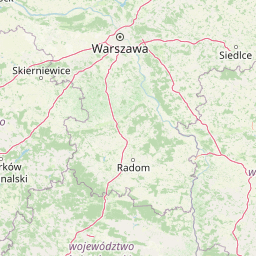
The reserve lies within the Wzniesienia Łódzkie mesoregion, a region of low hills and gentle upland terrain in central Poland. The surrounding landscape is shaped by glacial and postglacial processes typical of the central Polish lowlands, with modest elevation differences, mixed agricultural land, and patches of woodland scattered across the rolling terrain.
Within this broader setting, Doliska itself represents one of the small forest fragments that historically survived across the Łódź uplands. The reserve protects a mixed forest stand rather than a visually dramatic landscape feature, and its value lies more in its ecological composition than in scenic topography.
Doliska Nature Reserve ecosystems, habitats, and plant life
The ecological core of the reserve is a mixed forest community that combines broadleaf tree species with the conifer silver fir. Silver fir is normally associated with the mountain and upland forests of southern Poland and adjacent regions, so its presence in a lowland central Polish location is considered ecologically noteworthy.
As a phytocenotic forest reserve, Doliska is protected primarily for its plant community structure rather than for individual species. The site's value rests on the persistence of this mixed woodland assemblage, including its silver fir component, in a location outside the main range of that species.
Doliska Nature Reserve wildlife and species highlights
The source material for Doliska Nature Reserve focuses on the forest community and the silver fir component of the woodland rather than on specific fauna. There is no detailed wildlife inventory presented in the available documentation, and the reserve's protected status centers on its phytocenotic character rather than on animal species.
Doliska Nature Reserve conservation status and protection priorities
Doliska's conservation significance lies in its role as a protected example of mixed forest containing silver fir outside the species' natural distribution range in Poland. The reserve was established specifically to preserve this unusual ecological situation for scientific study and educational use, making the site a small but meaningful reference point for forest ecology in central Poland.
The reserve operates under active protection management. A protection plan adopted in 2013 and amended in 2015 guides ongoing management of the woodland, indicating that conservation of the site's botanical character involves deliberate interventions rather than passive protection alone.
Top sights and standout views in Doliska Nature Reserve
Doliska Nature Reserve stands out for protecting a small fragment of mixed forest in which silver fir grows well beyond the species' natural range in Poland, a rare ecological configuration in lowland central Europe.
Although the reserve is tiny in size, its scientific and educational value is well defined, and its status as one of the older Polish forest reserves, established in 1954 and now managed under an active protection plan, gives it a meaningful place in the history of regional forest conservation in the Łódź Voivodeship.