
Mori Atlas logo
Nature reserveDyrbek Nature Reserve

A defined mountain forest ecosystem preserving mature woodland and sensitive avian habitats

Dyrbek Nature Reserve: Protected Carpathian Beech Forests within the Słonne Mountains Range

Located in the Podkarpackie Voivodeship of southeastern Poland, Dyrbek Nature Reserve preserves a representative stand of Carpathian beech forest on the southwestern slopes of the Słonne Mountains. This protected area occupies approximately 130 hectares of mountainous terrain, providing a critical environment for mature woodland bird species and specialized forest flora. The reserve maintains the integrity of the lower mountain slope vegetation that characterizes the broader Sanocko Turczańskie mesoregion.

forest reservebeech forestCarpathian beechmountain forestSubcarpathian VoivodeshipSłonne Mountains

Dyrbek Nature Reserve

Nature reserve

Park overview

Structured park overview, official facts, and landscape profile for Dyrbek Nature Reserve

Dyrbek Nature Reserve park facts, protected area profile, and essential visitor context

Review the core facts for Dyrbek Nature Reserve, including designation, size, terrain, visitor scale, habitats, and operating context in one park-focused overview.

About Dyrbek Nature Reserve

Dyrbek Nature Reserve sits on the southwestern slope of a hill reaching about 640 meters in elevation within the Słonne Mountains, a mid-elevation Carpathian range in southeastern Poland. Although relatively modest in size at around 130 hectares, the reserve plays a focused role in the regional conservation network by safeguarding a natural Carpathian beech forest community in a landscape that has otherwise been shaped by centuries of forestry and small-scale agriculture. Its placement inside the broader Słonne Mountains Landscape Park adds an additional layer of regional protection, situating the reserve within a continuous mosaic of forest, pasture, and rural settlement typical of this part of the Polish Carpathians.

The reserve belongs administratively to the Subcarpathian Voivodeship and spans parts of Lesko and Olszanica communes in the Lesko powiat. From a broader geographic perspective, it lies in the transitory zone where the lower Carpathian foothills meet the mountain proper, an elevation band where beech forest historically dominates the canopy. The protection target explicitly named in the founding act, the natural community of Carpathian beech forest, reflects this ecological position. Conservation management here has been oriented toward maintaining the integrity of that forest community, with a protection plan covering the years 2003 to 2022 guiding active measures on the ground.

For visitors interested in regional biodiversity and the character of the Polish Carpathians, Dyrbek offers a compact but representative example of how a dedicated nature reserve can anchor habitat protection within a larger landscape park. The reserve complements a nearby protected site, the Buczyna w Wańkowej reserve, which also protects Carpathian beech stands in the same general area. Together with the surrounding Słonne Mountains Landscape Park, these reserves form part of a coherent network of forest protection that supports both characteristic woodland habitats and the bird species that depend on them.

Quick facts and research context for Dyrbek Nature Reserve

Dyrbek is a forest nature reserve (rezerwat leśny) of the phytocoenotic type, dedicated to the protection of forest communities. It was established on 12 November 1996 by a legal act published in the Polish Monitor. The reserve covers about 130 hectares and lies within Lesko and Olszanica communes in the Lesko powiat of the Subcarpathian Voivodeship. Its conservation target, defined in the founding act, is the natural community of Carpathian beech forest (buczyna karpacka), representing mountain and submontane forest ecosystems of the region.

Protection and recognition

Documented terrestrial protection scope and conservation designation details

Dyrbek Nature Reserve Protection Status and International Recognition Records

Terrestrial protection status records outline the documented management scope and official administrative framework governing Dyrbek Nature Reserve. International recognition sources remain unlisted for this protected area within current geographical datasets.

Protection details

Protection scope
Terrestrial
Transboundary protection
No
Park context

Deeper park guide and search-rich context for Dyrbek Nature Reserve

Dyrbek Nature Reserve history, landscape, wildlife, and travel context

Explore Dyrbek Nature Reserve through its history, landscape character, ecosystems, wildlife, conservation priorities, cultural context, and seasonal travel timing in a structured park guide built for atlas discovery and search intent.

Why Dyrbek Nature Reserve stands out

Dyrbek is best known for protecting a representative stand of Carpathian beech forest set within the Słonne Mountains Landscape Park. Its defining identity is the natural beech forest community of the lower Carpathian slopes, supported by the topography of a single southwestern hillside. The reserve is also valued for the birdlife associated with this habitat, including species such as the lesser spotted eagle, the Eurasian eagle-owl, the black stork, and the Ural owl, all of which favor mature, undisturbed woodland.

Dyrbek Nature Reserve history and protected-area timeline

Dyrbek was formally designated as a nature reserve on 12 November 1996 through a legal act published in the Polish Monitor (M.P. z 1996 r. Nr 75, poz. 678). It entered the regional register under number 57. The founding document identified the natural community of Carpathian beech forest as the explicit subject of protection, establishing the reserve as a phytocoenotic forest reserve dedicated to forest communities.

In its early years, Dyrbek operated under a protection plan covering the period 2003 to 2022, prepared in June 2002. That plan guided the practical management of the reserve, including measures to maintain the integrity of its forest communities. The slightly smaller current area relative to the 130.88 hectares cited in the founding act reflects minor adjustments over time, while the core purpose of protecting Carpathian beech forest has remained consistent since the reserve's establishment.

Dyrbek Nature Reserve landscape and geographic character

Dyrbek occupies a single southwestern slope of a hill within the Słonne Mountains, part of the broader Sanocko-Turczańskie mesoregion of the Eastern Carpathians. The hill reaches an elevation of about 640 meters above sea level, placing the reserve within the lower to middle elevation band that is typical for natural beech forests in this part of Poland. The aspect of the slope, together with the elevation, shapes the microclimate of the reserve and supports the development of moist, mesic forest communities favored by European beech.

The terrain is mountainous but not extreme, characterized by smooth, forested slopes and the valley systems typical of the Słonne range. Within the surrounding landscape park, this topography transitions gradually between closed forest cover and more open land used for small-scale agriculture and rural settlement, creating a patchwork of habitats around the reserve.

Dyrbek Nature Reserve ecosystems, habitats, and plant life

The defining ecological feature of Dyrbek is its natural Carpathian beech forest, the official subject of protection designated in the founding act. This habitat belongs to the broader category of mountain and submontane forests of the region, classified within the phytocoenotic framework as a forest community of the type associated with Carpathian foothills and middle-elevation slopes. The reserve's ecosystem type is identified as forest and boreal forest, with the specific subtype covering mountain and submontane forests.

In ecological terms, the Carpathian beech forest protected at Dyrbek is a mesic, broadleaf-dominated community in which European beech plays a central role in canopy composition. Such forests are characteristic of the transition zone between the lowlands and the higher Carpathian ranges, where climatic and edaphic conditions favor beech over oak and other deciduous competitors. Maintaining the continuity of this forest community is the central conservation objective of the reserve.

Dyrbek Nature Reserve wildlife and species highlights

Dyrbek supports a noteworthy community of forest birds, a pattern consistent with the maturity and structural complexity of its beech-dominated canopy. Among the species recorded in or near the reserve are the lesser spotted eagle, a forest-dwelling raptor sensitive to disturbance; the Eurasian eagle-owl, a large owl that requires extensive tracts of undisturbed woodland; the black stork, a shy wetland-forest species that nests in mature forest near water; and the Ural owl, another large forest owl associated with old-growth and near-natural woodland in the Carpathians.

The presence of these species reflects the value of Dyrbek as a refuge for fauna that depend on extensive, structurally diverse forest cover. The reserve thus contributes not only to botanical protection but also to the conservation of bird assemblages that are characteristic of near-natural Carpathian beech forests.

Dyrbek Nature Reserve conservation status and protection priorities

Dyrbek was established explicitly to safeguard a natural community of Carpathian beech forest, a habitat type of high conservation value across the Polish Carpathians. As a phytocoenotic forest reserve, its role is the preservation of forest communities rather than the protection of individual species, although the resulting habitat continuity also supports the wider forest biodiversity of the region.

The reserve is embedded within the larger Słonne Mountains Landscape Park, which provides additional landscape-scale protection around the reserve through broader regulations on land use, forestry, and development. Together, the reserve and its surrounding landscape park form a layered conservation network that helps maintain ecological connectivity in this part of the Eastern Carpathians. A protection plan covering the years 2003 to 2022 provided the management framework during the reserve's first decades of operation.

Top sights and standout views in Dyrbek Nature Reserve

Dyrbek stands out as a compact, well-defined example of Carpathian beech forest protection within the Polish nature reserve network. Its strengths lie in its clear conservation focus on a single, ecologically valuable forest community; its location within the larger Słonne Mountains Landscape Park, which extends protection beyond the reserve boundaries; and the birdlife associated with its mature canopy, including species of conservation concern such as the lesser spotted eagle, the Eurasian eagle-owl, the black stork, and the Ural owl. The reserve also complements the neighboring Buczyna w Wańkowej reserve, contributing to a small cluster of beech forest protections in the area.

Best time to visit Dyrbek Nature Reserve

Dyrbek is a forested mountain reserve visited primarily for appreciation of its beech forest habitat and birdlife. Spring and early summer bring active bird song and the fresh green canopy of beech leaves, a period when forest bird species, including the owls and raptors associated with the reserve, are most vocally present. Late summer and early autumn offer cooler, quieter forest conditions and a more muted palette as the beech canopy begins to turn. Winter can bring snow cover that highlights the structure of the bare deciduous canopy, though conditions on mountain slopes may be more demanding.
Monthly climate preview

Long-term temperature and precipitation averages across the year

Dyrbek Nature Reserve Climate Normals and Monthly Weather Records

Dyrbek Nature Reserve experiences a measured annual temperature range from deep winter sub-freezing minimums to warm summer maximums alongside consistent monthly precipitation patterns. Reviewing the complete twelve-month climatology data provides deeper context for long-term meteorological trends at this representative coordinate.
Annual mean7 °C
-5 °C19 °C
Jan-5°
Feb-3°
Mar
Apr
May13°
Jun17°
Jul19°
Aug19°
Sep13°
Oct
Nov
Dec-3°
Warmest month
July

18.8 °C

Coolest month
January

-4.9 °C

Wettest month
July

3.3 mm/day

Driest month
January

1.4 mm/day

Park location guide

Geography guide, regional context, and park location map for Dyrbek Nature Reserve

Dyrbek Nature Reserve park geography, regions, and map view in Poland

Understand where Dyrbek Nature Reserve sits in Poland through a broader geographic reading of the surrounding landscape, nearby location context, and its mapped position within the national park landscape.

How Dyrbek Nature Reserve fits into Poland

Poland, officially the Republic of Poland, is a Central European country spanning from the Baltic Sea in the north to the Carpathian Mountains in the south. It borders Germany, Czech Republic, Slovakia, Ukraine, Belarus, Lithuania, and Kaliningrad Oblast. The country has a temperate climate, diverse landscapes, and is known for its rich history, cultural heritage, and strong economic position within the EU.

Wider geography shaping Dyrbek Nature Reserve in Poland

Poland occupies 312,696 km2 in Central Europe, extending from the Baltic Sea coast in the north to the Sudetes and Carpathian Mountains in the south. It borders Germany to the west, Czech Republic and Slovakia to the south, Ukraine and Belarus to the east, and Lithuania and Kaliningrad Oblast to the northeast. The landscape includes lowland plains, uplands, and mountain ranges.

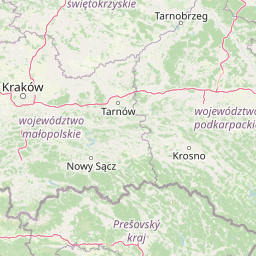
Map view of Dyrbek Nature Reserve

Use this park location map to pinpoint Dyrbek Nature Reserve in Poland, understand its exact geographic position, and read its mapped placement within the surrounding landscape more clearly.

Pigeon | © OpenStreetMap contributors

Location context for Dyrbek Nature Reserve

Podkarpackie Voivodeship
Park atlas

Compare adjacent forest reserves and mountain habitats across the region

Parks Near Dyrbek Nature Reserve and Surrounding Protected Landscapes

Continue exploring protected areas near Dyrbek Nature Reserve to examine similar beech forest ecosystems and mountain topography in the surrounding landscape. Comparing adjacent reserves reveals broader ecological patterns and regional conservation connections across the Carpathian foothills.
Protected areaPodkarpackie Voivodeship
Mapped location lies within the park boundary#1 closest

East

Ostoja Góry Słonne: Geographic Analysis of Protected Carpathian Forest and Foothills

Mapping natural boundaries in the Podkarpackie Voivodeship

Ostoja Góry Słonne represents a significant protected area within the Polish Carpathians, characterized by its dense beech forest cover and high biodiversity. This site serves as a vital refuge for large mammals and diverse riparian species, with its landscape of forested ridges and river valleys providing essential habitat connectivity across the Słonne Mountains and Przemyskie Foothills.

Area
460.715 km²
Established
2009
Relief
Mountain
Climate
Temperate
Protected areaPodkarpackie Voivodeship
About 10 km away#2 closest

West

Sanisko w Bykowcach Protected Area: Riverine and Floodplain Landscape Mapping

Ecological terrain study of the Osława and San river confluence.

Sanisko w Bykowcach encompasses a dense cluster of Annex I habitats, including old river arms, riparian forests, and fresh meadows. This site demonstrates the interplay between river dynamics and land management in the Podkarpackie region, offering a clear view of wetland ecological transitions.

Area
0.798 km²
Established
2011
Relief
Upland
Scope
Terrestrial
National parkSubcarpathian Voivodeship
About 15 km away#3 closest

South

Bieszczady National Park: A Protected Landscape of the Eastern Carpathians

Explore mapped terrain, alpine meadows, and old-growth forests.

Discover Bieszczady National Park, a significant national park located in the Subcarpathian Voivodeship of Poland, within the Eastern Carpathian mountain range. This protected area is renowned for its vast expanses of old-growth beech forests, the characteristic połoniny alpine meadows, and its status as a UNESCO World Heritage Site, underscoring its global conservation importance. The park's wild character and dramatic mountain geography make it a key destination for atlas-driven exploration of protected landscapes.

Area
292.02 km²
Established
1973
IUCN
II
Relief
Mountain
A horizontal watercolor painting depicting a soft, layered landscape of green rolling hills and mountain ridges under a bright, clear sky.
National parkPodkarpackie Voivodeship
About 15 km away#4 closest

South

Bieszczadzki Park Narodowy: Geographic Atlas of Poland's High Carpathian Grasslands and Forests

Protected mountain terrain in the Podkarpackie Voivodeship

Bieszczadzki Park Narodowy represents one of Poland's most significant protected landscapes, encompassing the unique połoniny highland plateaus and extensive tracts of old-growth forest. This detailed overview traces the park boundaries, mapping the transitions between forested valleys and the treeless summits that characterize this distinctive Carpathian region.

Area
292.02 km²
Established
1973
Visitors
388K annual
Relief
Mountain
Nature reservePodkarpackie Voivodeship
About 15 km away#5 closest

Northeast

Rzeka San Nature Reserve: Mapped Geographic Overview and Protected Riverine Corridor

Protected landscape geography in Podkarpackie Voivodeship

Rzeka San is a significant river-based nature reserve that defines a crucial ecological passage through southeastern Poland. By focusing on the aquatic and riparian habitats along the San River, this protected area provides vital support for diverse freshwater species. Its strategic position within the Podkarpackie Voivodeship and its integration with larger landscape parks showcase a complex, multi-layered approach to regional environmental conservation and riverine terrain management.

Area
13.75 km²
Established
2009
Scope
Terrestrial
Water
Water-dominated
Protected landscapePodkarpackie Voivodeship
About 22 km away#6 closest

South

Ciśniańsko-Wetliński Park Krajobrazowy: Geography and Protected Area Landscape Context

A vital Carpathian conservation corridor in Podkarpackie Voivodeship.

Spanning heavily forested peaks and deeply incised river gorges, Ciśniańsko-Wetliński Park Krajobrazowy functions as a core refuge for large carnivores and rare yew populations. Its distinct flysch geology and altitudinal vegetation sequences establish it as an essential component of the international Eastern Carpathians ecological network.

Area
514.61 km²
Established
1992
Relief
Mountain
Climate
Temperate
Protected areaPodkarpackie Voivodeship
About 27 km away#7 closest

West

Patria nad Odrzechową: A Detailed Geographic Study of Protected Polish Carpathian Forest Lands

Deciduous forest mosaic in the Bukowskie Foothills

Patria nad Odrzechową is a key protected area in Poland, renowned for its concentration of European-priority beech and oak-hornbeam forests. The site provides a compact, representative look at the transitional forest ecology of the Subcarpathian region, preserved within the larger Beskid Niski landscape framework. Explore the specific habitat boundaries and terrain features that define this essential woodland corridor.

Area
5.73 km²
Established
2011
Relief
Upland
Scope
Terrestrial
Protected areaPodkarpackie Voivodeship
About 31 km away#8 closest

West

Rymanów Protected Area: Map and Landscape Overview in Podkarpackie Voivodeship

Forested foothill geography and Natura 2000 site boundaries

Located in the Podkarpackie Voivodeship, Rymanów is a 52-square-kilometer protected area defined by its rolling Bukowskie Foothills terrain. This site highlights the intersection of traditional architecture and subcarpathian forest, providing critical habitat within the larger Beskid Niski Protected Landscape Area. Examine the spatial relationship between its protected roosts and surrounding foraging zones.

Area
52.41 km²
Established
2009
Relief
Upland
Scope
Terrestrial

Common questions about visiting, size, designation, and location context for Dyrbek Nature Reserve

Dyrbek Nature Reserve FAQs for park facts, access, geography, and protected area context

Find quick answers about Dyrbek Nature Reserve, including protected-area facts, park geography, trail and visitor context, and how the park fits into its surrounding country and regional landscape.
MoriAtlas Explorer

Continue Your Protected Areas Search Across the Global Atlas

Deepen your exploration by continuing the structured search for national parks and protected areas worldwide. Utilize the comprehensive filtering capabilities to compare different conservation landscapes and refine your understanding of global park geography. Discover more about the distribution and characteristics of protected natural areas.

Global natural geography